Sex-specific relations of ceramides and white matter hyperintensities in the Rhineland study
Elvire N. Landstra, Valerie Lohner, Monique M.B. Breteler

TL;DR
This study finds that ceramides are more strongly linked to brain changes called white matter hyperintensities in women than in men.
Contribution
The study reveals novel sex-specific associations between ceramides and white matter hyperintensity burden, particularly in women.
Findings
Multiple ceramides, ceramide ratios, and a ceramide score were associated with increased white matter hyperintensity load.
Associations between ceramides and white matter hyperintensities were significantly stronger in women than in men.
Menopausal status did not influence the observed associations between ceramides and white matter hyperintensities.
Abstract
Women have a higher white matter hyperintensity (WMH) burden compared to men of a similar age, but the causes of this remain unclear. Ceramide (CER) levels differ between men and women and were previously linked to WMH, suggesting they could underlie these sex differences. Therefore, we associated twelve CERs, CER totals, six CER ratios, and a CER score reflecting the CERs most strongly associated with cardiovascular disease, with WMH load in 3,283 participants (30–95 years) of the community-based Rhineland Study. We assessed sex-specific relations between CERs and WMH by including an interaction term and performing sex-stratified analyses. We further investigated the influence of menopause by comparing relations in pre- and postmenopausal women of the same age. Multiple CERs, CER ratios, and the CER score were associated with increased WMH load, with most associations being…
Genes, proteins, chemicals, diseases, species, mutations and cell lines named across the full text — each resolved to its canonical identifier and authoritative record.
Click any figure to enlarge with its caption.
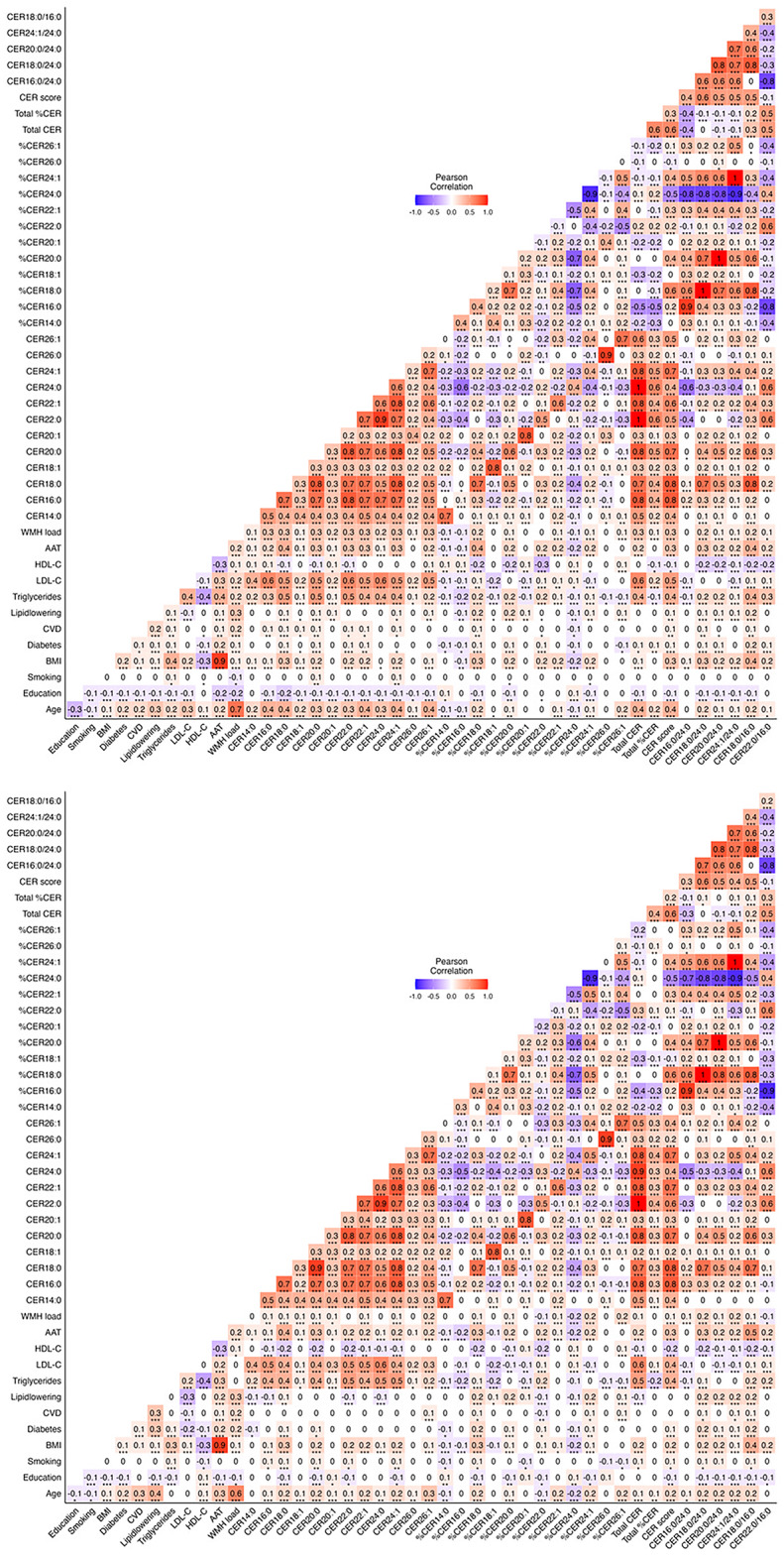 Figure 1
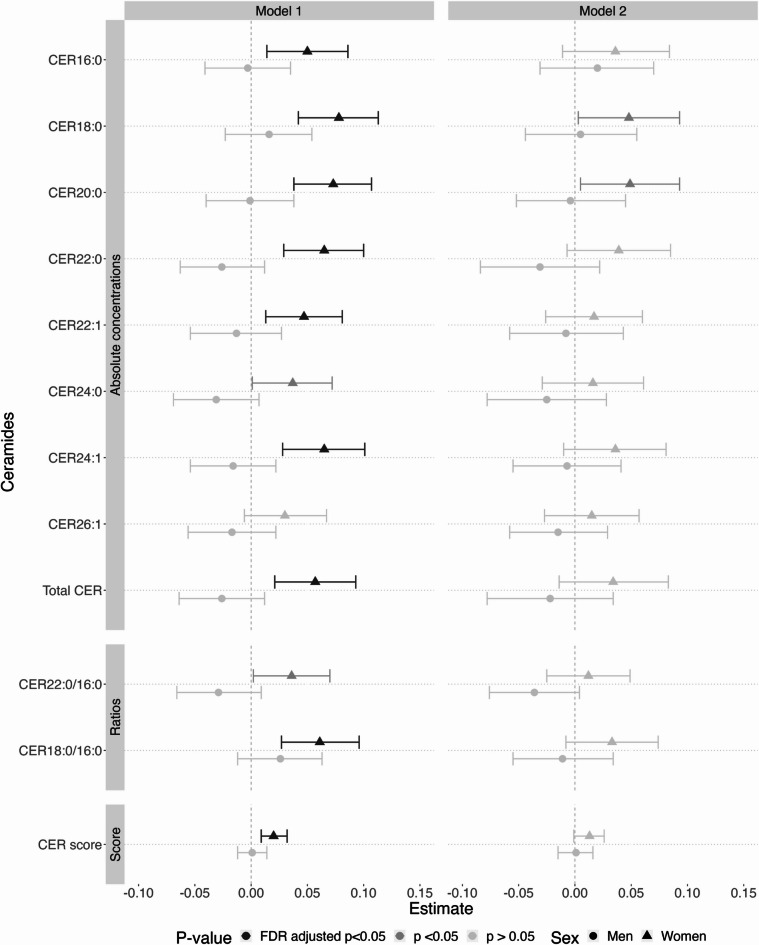 Figure 2
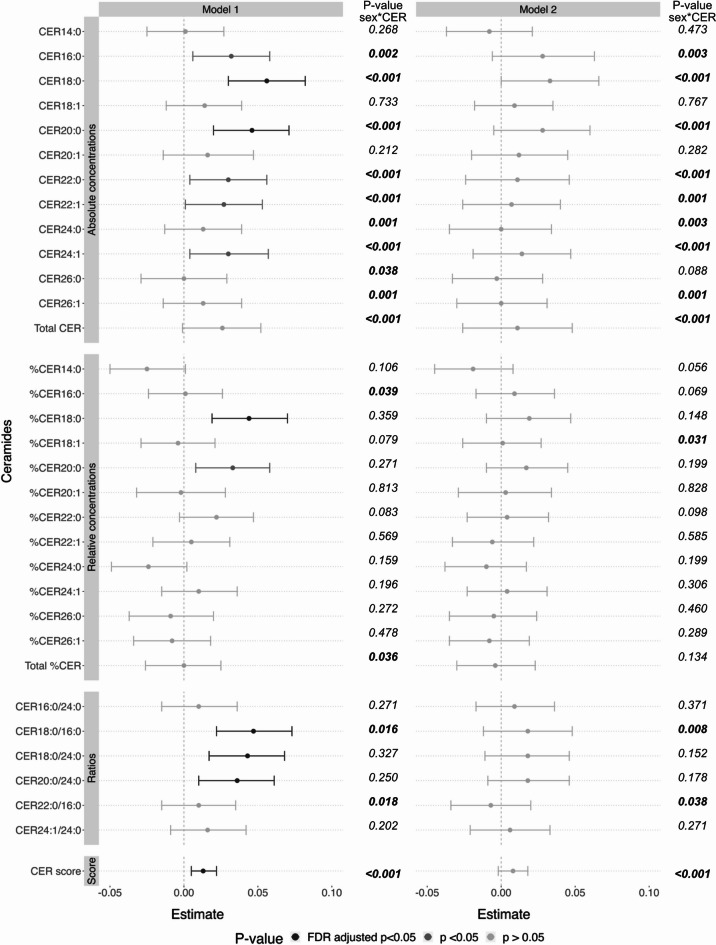 Figure 3
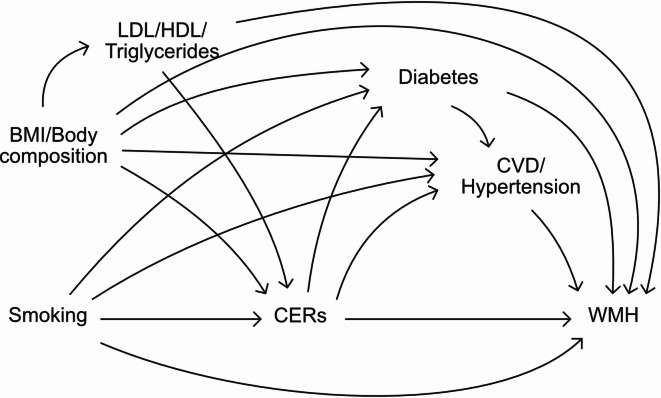 Figure 4
Peer Reviews
No public reviews on file for this paper yet. If you reviewed it on a platform where reviews are public (OpenReview, ICLR, NeurIPS, ICML), you can paste yours below so the community can read it here.
Videos
No videos yet. Explain this paper in a talk, walkthrough, or lecture? Add one.
Taxonomy
TopicsSphingolipid Metabolism and Signaling · Eicosanoids and Hypertension Pharmacology · Cardiovascular Health and Disease Prevention