Why the Delay? Factors Predicting Step 1 Delay
Jeannette Manger, Lindsay Benedik, Michael Matott, Chasity B. O’Malley

TL;DR
The study identifies factors that predict when medical students delay taking Step 1, focusing on performance in active learning curricula.
Contribution
The study introduces new insights into how formative assessments and later performance predict Step 1 delay in active learning environments.
Findings
Performance on NBME final exams in major modules correlates with Step 1 delay decisions.
Formative assessments are the earliest strong predictors of Step 1 delay.
Active learning curriculum participation is linked to success in Step 1.
Abstract
Few studies have examined Step 1 delay trends in active learning or identified other factors that could influence Step 1 delay, which could inform interventions for struggling students. Our study examines factors across an active learning curriculum that could potentially predict delaying Step 1. Using a multiple logistics regression model, we found that performance on NBME final exams in our major systems-based modules later in the curriculum correlated with the decision to delay, but that formative assessments were the earliest strong predictors. These findings indicate that successful participation in an active learning curriculum positions students for success in Step 1.
Genes, proteins, chemicals, diseases, species, mutations and cell lines named across the full text — each resolved to its canonical identifier and authoritative record.
Click any figure to enlarge with its caption.
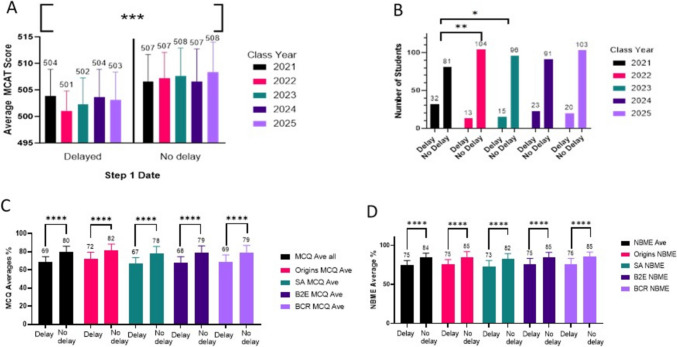 Figure 1
Peer Reviews
No public reviews on file for this paper yet. If you reviewed it on a platform where reviews are public (OpenReview, ICLR, NeurIPS, ICML), you can paste yours below so the community can read it here.
Videos
No videos yet. Explain this paper in a talk, walkthrough, or lecture? Add one.
Taxonomy
TopicsInnovative Teaching Methods · Student Assessment and Feedback · Experimental Learning in Engineering