KanuriSenti: A novel dataset for sentiment analysis in the under-resourced Kanuri language
Bashir Maina Saleh, Saurabh Bilgaiyan, Santwana Sagnika

TL;DR
This paper introduces KanuriSenti, a new sentiment analysis dataset for the under-resourced Kanuri language to improve NLP resources in Africa.
Contribution
KanuriSenti is the first structured and sentiment-annotated dataset for the Kanuri language.
Findings
KanuriSenti contains over 10,000 entries labeled with sentiment polarity and annotated for Valence, Arousal, and Dominance.
Annotation reliability was validated using Cohen’s Kappa, and lexical richness was confirmed via Type-Token Ratio.
The dataset provides a benchmark for sentiment analysis in low-resource language settings.
Abstract
This paper presents KanuriSenti, a novel sentiment analysis dataset developed for Kanuri, a major yet under-resourced language spoken across Nigeria and the Lake Chad region. The dataset addresses a critical gap in Natural Language Processing by providing structured and sentiment-annotated Kanuri data, which has been largely absent from existing resources. KanuriSenti consists of a lexicon-based dataset containing over 10,000 entries labeled with sentiment polarity (positive, negative, neutral), and an affective E-ANEW-style dataset annotated across Valence, Arousal, and Dominance dimensions by native Kanuri speakers. Annotation consistency and reliability was validated using Cohen’s Kappa, and lexical richness was measured using the Type-Token Ratio, confirming our dataset's suitability for sentiment-related tasks. While the dataset is designed specifically for sentiment analysis, its…
Genes, proteins, chemicals, diseases, species, mutations and cell lines named across the full text — each resolved to its canonical identifier and authoritative record.
Click any figure to enlarge with its caption.
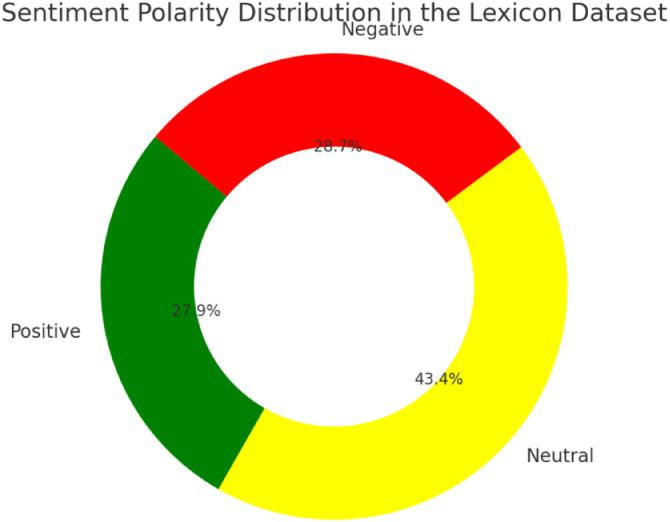 Figure 1
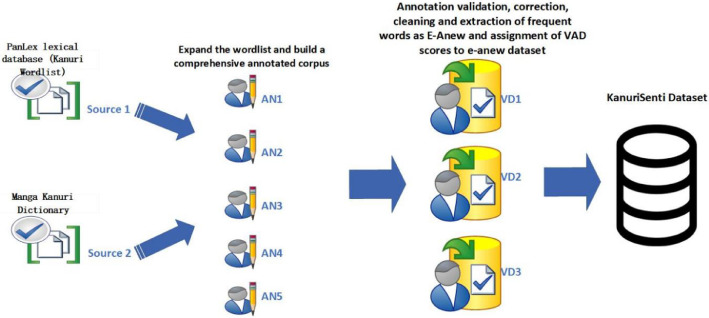 Figure 2
Peer Reviews
No public reviews on file for this paper yet. If you reviewed it on a platform where reviews are public (OpenReview, ICLR, NeurIPS, ICML), you can paste yours below so the community can read it here.
Videos
No videos yet. Explain this paper in a talk, walkthrough, or lecture? Add one.
Taxonomy
TopicsNatural Language Processing Techniques · Language and cultural evolution · Speech and dialogue systems
Specifications TableSubjectComputer SciencesSpecific subject areaSentiment Analysis Dataset for Under-Resourced Languages in Natural Language ProcessingType of dataTable, Raw.Data collectionWe first leveraged the PanLex lexical database and a Manga Kanuri Dictionary to compile an initial Kanuri wordlist as a foundation for our dataset. We then partnered with native Kanuri speakers from Yobe State University, the University of Maiduguri, and surrounding communities to validate and expand these entries, gather short texts, and ultimately build a comprehensive annotated corpus. Thereafter some frequently occurring emotional words were derived and emotional rating was carried out for the valence, arousal and dominance of those words as e-anew data.Data source locationThe data were collected in Yobe State University and University of Maiduguri, in Northeast Nigeria. The wordlist are gotten from:https://vocab.panlex.org/knc-000 [15]A Dictionary of Manga, a Kanuri Language of Eastern Niger and NE Nigeria [14]Nigeria: Yobe State University Damaturu, University of Maiduguri.Data accessibilityRepository name: KanuriSenti DatasetData identification number: 10.17632/pcfvh7r6nd.1Direct URL to data: https://data.mendeley.com/datasets/pcfvh7r6nd/1Related research articleNone
Value of the Data
1
- •This dataset addresses a critical research gap by offering a much-needed resource for sentiment analysis in under-resourced Kanuri language. By providing a carefully curated sentiment analysis corpus, it enables deeper research and technological advancements for the language overlooked in NLP research.
- •Derived from real-world expressions, the dataset serves as a robust benchmark for researchers looking to test and refine multilingual or low-resource language modeling techniques.
- •By capturing culturally and contextually nuanced sentiments, it enables more accurate model training and evaluation, while the involvement of native Kanuri speakers ensures authenticity and fosters community-driven data validation.
- •Beyond sentiment analysis, the dataset can be repurposed for diverse NLP tasks such as part-of-speech tagging, morphology, and machine translation, thereby broadening opportunities for comprehensive Kanuri language NLP research.
Background
2
Natural Language Processing (NLP) is a field of artificial intelligence that enables machines to understand and interpret human language [[1], [2], [3]]. A key application of NLP is sentiment analysis, which extracts opinions and emotions from text [4]. However, NLP faces significant challenges in low-resource languages [5], such as Kanuri, spoken primarily in Nigeria, Niger, Chad, and Cameroon [6].
Unlike high-resource languages with abundant NLP resources [5], Kanuri lacks essential corpora, annotated datasets, and tools required for developing sentiment analysis models [5]. This made it difficult for Sentiment Analysis and other NLP researches in Kanuri.
Despite several studies that have developed sentiment analysis datasets for other low-resource languages such as Bangla [7], Sesotho [8], Hausa, Igbo, Nigerian Pidgin, and Yoruba [9], the Kanuri remains largely overlooked.
To address the critical lack of structured linguistic resources for Kanuri Language, we compiled a sentiment-annotated dataset that directly responds to this gap. The absence of such resources has long hindered the development of technological applications for Kanuri. This paper presents the first publicly available sentiment analysis lexicon- based and E-anew dataset for the Kanuri language, aiming to bridge this research gap. The dataset is openly accessible via the Mendeley Data repository [10]. The dataset prioritizes native speaker input to ensure lexical and contextual fidelity.
Data Description
3
The dataset comprises of two Excel (.xlsx) files, each represented in tabular format with detailed descriptions. The first file named “KanuriSentiUpdatedDateset.xlsx” presents the first Lexicon-based dataset comprising of 10,356 records with three columns namely Kanuri, English translation and Polarity(which contains either positive, negative or neutral). This is suited for classification tasks, such as training a model (e.g. logistic regression or transformer) to assign one of the three sentiment labels to Kanuri text.
The second file named “E-Anew_Dataset.xlsx” is an e-anew dataset comprising of 65 commonly used words for sentiments in Kanuri with their English translation and score for the Valence, Arousal and Dominance. These scores are average from three different annotators/assessors of the words for the VAD, their individual scores and how the average came to be is also attached in the third file named “E-anew_with_annotators.xlsx” in the repository. This VAD dataset is suited for regression tasks, enabling models to predict fine-grained emotion intensity along each dimension (e.g. via linear regression or neural networks) (Table 1).Table 1. Overview of the Lexicon-based dataset.Table 1:S/NPolarityNumber of Entries1Positive28862Neutral44993Negative2971TOTAL10,356
It is worthy of note that the datasets are provided in Excel (.xlsx) format, for those who prefer working with “.csv”, the files can be easily converted using Microsoft Excel, Python (via Pandas), LibreOffice, or Google Sheets. We recommend using UTF-8 encoding when saving the files to preserve Kanuri characters (Table 2).Table 2A portion of the Lexicon-based dataset.Table 2:S/NKanuri TextPolarityEnglish Meaning1suro ajiyen shiro ngəlawoPositivebest in class2rokkonzən cida diwodə kəjiPositivea pleasure to work with you3wande tadaro wande rinəmiNeutraldo not be afraid of a child4awo dai an diya yak sina do tawatti kiyeNegativei am not sure what it is that makes me estranged5sai kafinta karunzo bannato lai ziyaNegativethe carpenter got angry and left
To ensure the reliability of the annotations, Cohen’s Kappa in equation 1—a statistical measure commonly used to evaluate inter-annotator agreement—was employed. Cohen’s Kappa quantifies the extent to which the observed agreement among annotators surpasses chance-level expectations [11]. Given the inherent subjectivity in emotional ratings, calculating Cohen’s Kappa validated the consistency and objectivity of annotators' judgments across the Valence, Arousal, and Dominance dimensions, thus confirming the credibility and quality of the annotated data (Table 3).
Table 3A portion of the E-anew datasetTable 3:S/NKanuriEnglish TranslationValenceArousalDominance1rawoo wa dunomaExciting0.90.90.72rawoohopeful0.80.60.53watunoodisgusting−0.90.80.64silwaivulnerable−0.70.60.55karuzaaGrief−0.90.80.4
Also, pi1 and pi2 represent the proportions (or probabilities) that annotator 1 and annotator 2, respectively, assign a particular category i.
Applying this formula on the e-anew dataset, it can be clarly seen in Table 4 that the Cohen’s Kappa scores indicate moderate to substantial agreement among annotators across Valence, Arousal, and Dominance dimensions, confirming the reliability and consistency of the sentiment annotations in the KanuriSenti dataset. Specifically, the average Kappa values were 0.57 for Valence, 0.44 for Arousal, and 0.61 for Dominance, reflecting the highest agreement in Dominance and the lowest in Arousal. These results affirm that the dataset is dependable for sentiment analysis tasks, especially in evaluating affective dimensions in low-resource language contexts.Table 4. Inter-annotator agreement measured by Cohen’s Kappa across valence, arousal, and dominance.Table 4:Emotional DimensionAnnotator 1 vs 2Annotator 1 vs 3Annotator 2 vs 3Average KappaValence0.5071090.5695360.6320750.569574Arousal0.4669220.4334690.4247790.441723Dominance0.5645930.6299810.6303320.608302
Also, we checked the Lexical richness in the dataset using the Type-Token Ratio (TTR) formula given by [12] below:
As seen in Table 5, the range of the lexical richness is mostly ≈0.35 which indicates the dataset is healthy and typical for general-purpose sentiment datasets. It indicates our dataset has a reasonably diverse vocabulary, suitable for robust sentiment analysis as suggested by [13].Table 5. Lexical richness of polarity.Table 5:S/NPolarityKanuri_Text1NegativeTotal_Words8464Unique_Words2901Lexical_Richness0.34272NeutralTotal_Words11388Unique_Words4023Lexical_Richness0.35333PositiveTotal_Words7878Unique_Words2717Lexical_Richness0.3449
In preparing KanuriSenti for release, we applied the following data‐cleaning steps to every entry:
- I.Lowercasing: All Kanuri and English text were converted to lowercase to reduce sparsity during feature extraction.
- II.Manual spelling correction: A panel of three native Kanuri speakers reviewed the corpus and standardized frequent orthographic variants (for example, “karuzâ” was corrected to “karuzaa”).
- III.Token filtering: Entries longer than three words or containing any non-alphabetic characters were removed to ensure consistency of granularity and content.
- IV.Missing-value handling: Any record lacking either its translation or its sentiment/polarity or VAD annotation was excluded from the final dataset.
These steps guarantee that KanuriSenti is both high-quality and immediately suitable for downstream NLP tasks.
As illustrated by the donut chart in Fig. 1, our dataset exhibits a mild class imbalance: neutral examples comprise 43.4 % of the corpus, while positive and negative account for 27.9 % and 28.7 %, respectively. Although both polarities are nearly equally represented, the predominance of neutral instances suggests that downstream classifiers should employ stratified sampling or apply class‐weighting (or oversampling/undersampling) strategies to mitigate potential bias during training.Fig. 1. Polarity distribution in the lexicon dataset.Fig 1:
Simple baseline
3.1
We employed both a rule‐based lexicon method and a supervised statistical baseline to ensure immediate, zero‐code usability while establishing a clear performance benchmark for future usage and enhancements.
Rule‐based usage example
3.2
Here, we illustrate our lexicon lookups on three Kanuri entries in Table 6, where for each entry, we extract its polarity label and VAD scores, then compute:
- •Polarity classification by taking the lexicon’s polarity value. For example, the first entry “karu kəji” the lexicon value gives positive, so the entry is classified as positive.
- •Emotion regression by averaging its VAD scores. For example, the entry “karu kəji”: ≈0.67 . Table 6. Rule‐based usage example.Table 6:IDKanuriEnglishPolarityValenceArousalDominance1karu kəjiHappyPositive0.900.600.502karuzaSadNegative–0.800.600.403grataAngryNegative–0.900.900.80
Statistical baseline classifier
3.3
We also provide a reproducible supervised baseline Using TF–IDF features and a logistic-regression model (80/20 stratified split), our classifier achieves Accuracy 0.6704 and Macro-F1 0.6575. Complete implementation details, hyperparameters, and evaluation scripts are available in our GitHub repository .
This simple dual‐baseline approach balances ease of use with rigorous benchmarking, laying a robust foundation for all future Kanuri sentiment analysis research.
Experimental Design, Materials and Methods
4
After leveraging the PanLex lexical database [15] and Manga Kanuri dictionary [14] to compile an initial Kanuri wordlist as a foundation for our dataset, we then partnered with native Kanuri speakers from Yobe State University, the University of Maiduguri, and surrounding communities to validate and expand these entries, gather short texts, and ultimately build a comprehensive annotated corpus. Throughout this process, we prioritized native speaker input to ensure lexical and contextual fidelity. Translations and annotations were done by these bilingual Kanuri speakers referred to as AN1, AN2,AN3,AN4 and AN5 in Fig. 1.
Another set of annotators referred to as validators (VD1, VD2 and VD3) are then trained to clearly understand the psychological dimensions they evaluate, which include Valence (how pleasant or unpleasant a word is), Arousal (the intensity or level of emotional activation elicited by the word), and Dominance (the degree of control or power associated with the emotional response). They utilize the Self-Assessment Manikin (SAM) as their measurement instrument, a pictorial scale designed to assist in objectively assessing these emotional dimensions (Fig. 2).Fig. 2. Dataset curation process.Fig 2:
During annotation, the validators follow a structured process wherein frequently occurring words from lexicon-based curated datasets presented to them via Google Sheets were compiled during the validation phase. They evaluate their immediate emotional responses to each word and rate each psychological dimension separately giving their respective scores to the words.
Limitations
A key limitation of the E-ANEW dataset is its limited coverage of affective vocabulary, which may constrain its ability to generalize across diverse emotional expressions.
Ethics Statement
We have read and follow the ethical requirements for publication in Data in Brief and confirm that the current work does not involve human subjects, animal experiments, or any data collected from social media platforms. Furthermore, the data obtained from the two sources—PanLex and the Kanuri Manga Dictionary—are publicly available and not subject to any restrictions or licensing requirements for copying, editing, or reuse.
CRediT Author Statement
Bashir Maina Saleh: Conceptualization, Data curation, Writing - original draft; Saurabh Bilgaiyan: Supervision and Reviewing; Santwana Sagnika: Supervision, Writing - review, and Validation.
The reference list from the paper itself. Each links out to its DOI / PubMed record.
- 1Mejova Y.Sentiment analysis: an overview. University of Iowa Comput. Sci. Dep.52009134
- 2Chowdhary K.Chowdhary K.R.Natural language processing Fund. Artif. Intell.2020603649
- 3Zhou M.Duan N.Liu S.Shum H.Y.Progress in neural NLP: modeling, learning, and reasoning Engineering 632020275290
- 4Wankhade M.Rao A.C.S.Kulkarni C.A survey on sentiment analysis methods, applications, and challenges Artif. Intell. Rev.557202257315780
- 5Mabokela K.R.Celik T.Raborife M.Multilingual sentiment analysis for under-resourced languages: a systematic review of the landscape IEEE Access 1120221599616020
- 6T. Britannica, Editors of Encyclopaedia (2025). Kanuri. Encyclopedia Britannica. https://www.britannica.com/topic/Kanuri.
- 7Hasan M.Ghani M.R.Hasan K.M.A.Aspect based sentiment analysis datasets for Bangla text Data Br.57202411110710.1016/j.dib.2024.111107 Available at:[Accessed 03 March 2025]PMC 1161729939640395 · doi ↗ · pubmed ↗
- 8Mokhosi R.Shivachi C.-S.Sethobane M.A Sesotho news headlines dataset for sentiment analysis Data Br.54202411037110.1016/j.dib.2024.110371 Available at:[Accessed 03 March 2025]PMC 1100019538590621 · doi ↗ · pubmed ↗