Perception of healthcare professionals about the knowledge of people living with HIV regarding clinical trials for HIV-related cancers
Jessica Hernández-Marrero, Tanialy Rivera-Santiago, Mariela Bournigal-Feliciano, Vivian Colón-López, Ana I. Velázquez, Jorge Salmerón, Joel M. Palefsky, Ana P. Ortiz, Marievelisse Soto-Salgado

TL;DR
Healthcare professionals believe people with HIV have limited knowledge about cancer clinical trials, which may affect their participation.
Contribution
The study reveals healthcare professionals' perceptions of knowledge gaps among people living with HIV regarding clinical trials for HIV-related cancers.
Findings
Most healthcare professionals believe PLWH have limited knowledge about HIV-related cancers and clinical trials.
Fear of the unknown and stigma are perceived barriers to participation in clinical trials.
Training activities are suggested to improve awareness and participation among PLWH.
Abstract
Advances in HIV treatments have prolonged the lifespan of people living with HIV (PLWH), thereby increasing the risk of chronic conditions such as HIV-related cancers. Clinical trials (CT) play an important role in advancing cancer care in PLWH. However, their underrepresentation in CT underscores the need for involvement of healthcare professionals in CT referrals. This study aims to describe healthcare professionals’ perception of PLWH understanding of CT for HIV-related cancers. We analyzed survey data from a training activity provided to healthcare professionals (n = 82) from HIV-specialized clinics and other healthcare organizations in Puerto Rico to assess healthcare professionals’ perception of PLWH knowledge regarding CT for HIV-related cancers. Most participants were allied healthcare professionals (39.0%) or social services professionals (43.9%), with 70.8% having 1–15 years…
Genes, proteins, chemicals, diseases, species, mutations and cell lines named across the full text — each resolved to its canonical identifier and authoritative record.
Click any figure to enlarge with its caption.
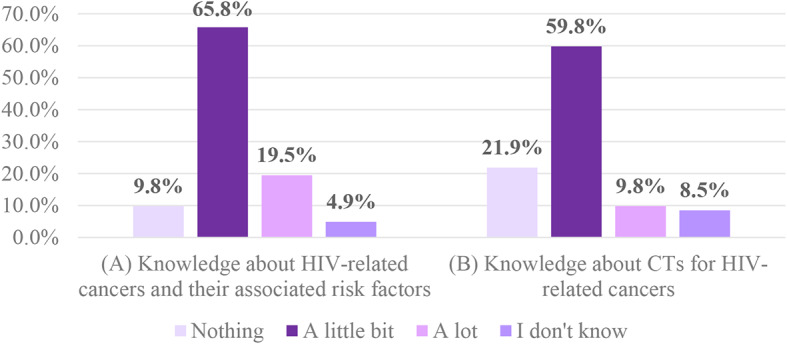 Figure 1
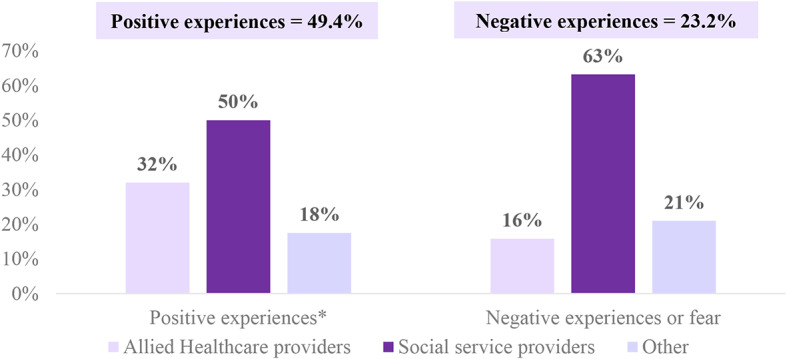 Figure 2
- —National Cancer Institute of the National Institutes of Health
- —The Hispanic Alliance for Clinical and Translational Research
Peer Reviews
No public reviews on file for this paper yet. If you reviewed it on a platform where reviews are public (OpenReview, ICLR, NeurIPS, ICML), you can paste yours below so the community can read it here.
Videos
No videos yet. Explain this paper in a talk, walkthrough, or lecture? Add one.
Taxonomy
TopicsViral-associated cancers and disorders · HIV/AIDS Research and Interventions · Polyomavirus and related diseases
Background
Advances in HIV treatments have prolonged the lifespan of people living with HIV (PLWH) [1], thereby increasing their risk of developing chronic conditions such as HIV-related cancers [2]. These related cancers are categorized into two groups [1], AIDS-defining cancers, including non-Hodgkin lymphoma, Kaposi’s sarcoma, and cervical cancer, and [2] non-AIDS-defining cancers, such as lung, anal, Hodgkin lymphoma, oropharyngeal, liver, vulvar and penile cancer [2]. The incidence of these malignancies is higher in PLWH compared to HIV-negative individuals, particularly in Latin America and the Caribbean, where risk factors of developing cancers such as anal, penile and cervical are more prevalent [3–5]. Several factors contribute to the increased cancer incidence in PLWH, including HIV-induced immune dysfunction, impairment of cells infected by the virus, co-infection with other viruses (e.g., HBV and HCV), smoking and aging. Additionally, PLWH face an elevated risk of incidental cancers such as colorectal, breast, and prostate cancer [2].
Despite accrual challenges, clinical trials (CTs) have contributed with scientific evidence improving the quality of life and survival and developing novel treatments for cancer and HIV [6]. However, the participation of Hispanics living with HIV in CTs overall remains limited. Only 1% of Hispanics of the general population participate in CTs in the US [7]. This is also observed in trials for HIV-related cancer CTs among PLWH [8]. The underrepresentation of PLWH in CTs underscores how important it is that healthcare professionals refer this population to CTs [9, 10] and their influence in the patient’s awareness and perception of CTs. Moreover, the perception of healthcare providers about the knowledge of PLWH of CTs for HIV-related cancers can provide valuable insight into their awareness, recognizing that CTs plays an important role in advancing cancer care in PLWH. For example, the Project ACCRUAL highlights the importance of disseminating information about HIV-related cancers and CTs to increase organizational and community awareness [12]. Furthermore, the trust-based relationships between healthcare providers and PLWH may be a key factor in improving CTs participation. This study aims to describe the perception of healthcare professionals regarding PLWH’s understanding and participation in CTs for HIV-related cancers. Gaining insight into PLWH’s knowledge about CTs will allow researchers and healthcare providers to deliver accurate information, address misconceptions, and overcome potential barriers to their participation [11].
Methods
We analyzed survey data from a training activity for healthcare providers from non-profit, community-based and HIV specialized clinics in Puerto Rico (PR) held in January 2022. This activity aimed to provide capacity building for healthcare professionals in CTs, HPV-related cancer risk among PLWH, and patient navigation services and roles. The activity was designed to case managers, social workers, professional counselors, health educators, lay health workers, and nurses who routinely coordinated clinical care for PLWH and were familiar with their needs.
The survey was an adaptation and Spanish translation from the Project Accrue survey [12]. In this activity, 82 healthcare professionals completed the survey, consisting of 13 questions that explored their perception about the knowledge, participation, and barriers and facilitators for HIV-related cancer CTs among PLWH. Descriptive statistics were used to analyze the data using STATA, a statistical software for data visualization and analysis.
Results
Demographic information
The demographic information of study participants is presented in Table 1. The mean age of the participants was 45 ± 12.2 years, and the majority were female (72.0%). Most respondents worked at community-based organizations (79.3%), followed by the Immunology Clinics of the Puerto Rico Department of Health (11.0%) and research or academic institutions (6.1%). Participant’s roles included case manager, care technician or patient navigator (36.6%), health educator (14.6%), clinical coordinator or supervisor (12.2%), psychologist or counselor (11.0%), social worker (9.8%); nurse (8.5%), health promoter or community outreach (6.1%) and epidemiology technician (1.2%). The training activity did not include physicians, as it focused on healthcare professionals who provide non-medical, day-to-day patient care. The mean time caring for PLWH was 11.0 ± 14.6 years and the majority reported that they had not previously received training about CTs before (79.3%).
Table 1. Sociodemographic characteristics of the study population (n = 82)Characteristic n (%) Age (years) Mean (± SD)45.0 (± 12.2)-- Sex at birth Male2025.3 Female5974.7 Role of the participant in their clinic Allied-Healthcare*3239.0 Social Services3643.9 Other1417.1 Profession Nurse1417.1 Psychologist89.8 Social worker1315.9 Professional counselor67.3 Health educator1417.1 Other2733.0 Mean (± SD) of time caring for PLWH 11.0 ± 14.6-- PLWH currently participating in CTs
(Best knowledge of healthcare providers) None2025.0 1–41215.0 5–10 people89.9 >10 people1113.6 Unknown3037.0*Physicians are not represented
Perception of knowledge about HIV-related cancers CTs
More than half of the healthcare professionals indicated that, to their knowledge, the PLWH of their community knew very little about HIV-related cancers and their associated risk factors (65.8%), or about CTs focused on HIV-related cancers (59.8%) (Fig. 1). When we asked about CTs participation, 37.0% of the respondents indicated that they did not know if the individuals to whom provide services had participated in CTs in the last 2 years, 24.7% indicated that none had participated, and 14.8% indicated that only 1–4 people had participated in CTs (Data not shown).
Fig. 1. Healthcare providers’ perception of PLWH knowledge about (A) HIV-related cancers and their risks and (B) HIV-related cancer CTs (n = 82)
More than half (59.8%) reported that they had never heard anyone share or express fears about CTs (Data not shown). Moreover, 49.4% of the participants reported that they have heard people sharing positive comments or experiences about participating in CTs (Fig. 2). The healthcare providers’ perceived facilitators and barriers for PLWH to join CTs for HIV-related cancers is presented in Fig. 2. Most participants indicated that the principal facilitators for participating in CTs include knowing that PLWH have a greater risk of developing HIV-related cancers (21.4%), receiving free treatment or incentive for their time (18.2%), that the CTs are conducted in an organization that provides services to PLWH (13.6%), received a recommendation by a doctor (10.3%), and want better cancer treatment (9.9%) (Table 2). The principal barriers to participating in CTs, according to the healthcare providers, include are lack of knowledge about CTs benefits or CTs in general (21.4%), fear of the unknown (18.2%), stigma related to being in a CT for HIV-related cancers (13.6%), distance from home to the trial center or lack of transportation (10.3%) and feeling like guinea pigs (9.9%) (Table 2).
Fig. 2. Healthcare providers’ perception of PWH experiences with CTs (n = 82). *1 missing
Table 2. Healthcare providers’ perceived facilitators and barriers for PLWH to join CTs for HIV-related cancersFacilitators%Barriers%Knowing that PLWH have a greater risk of developing HIV-related cancers21.4%Lack of knowledge about CTs benefits or CTs in general21.4%Receiving free treatment or incentive for their time18.2%Fear of unknown18.2%That the CTs are conducted in an organization that provides services to PLWH13.6%Stigma related to being in a trial for HIV-related cancers13.6%Recommended by doctor10.3%Distance from home to trial center or lack of transportation10.3%Want better cancer treatment9.9%Feeling like guinea pigs9.9%Referral from other person who participate in CTs4.1%Thinking they are not eligible4.1%Other22.6%Other22.6%
The participants were asked about what partnerships they thought could help raise awareness and encourage participation on HIV-related cancers CTs. Most participants answered that these include hearing information from the doctors and scientists who run the trials (93.9%), that a health professional gives them information about the topic (88.9%), hearing information about CTs from someone who has participated in a trial (78.1%), having written information such as brochures (73.4%), and having written information they can take home to discuss with friends and family (64.6%) (Data not shown).
The majority of the healthcare providers who answered the survey didn’t know where to find information about CTs of HIV-related cancers for their patients (64.6%) or information about CTs of HIV-related cancers that could benefit their patients (63.0%). When we asked about what information, in their experience, their patients will need to help them consider joining a CTs for HIV-related cancers, the three most commonly reported suggestions included information about HIV-related cancers (73.2%), benefits of the CT (directly to the patient) (70.7%), and safety information about CTs (65.8%). Lastly, they reported that the principal needs of their organization to create partnerships to raise awareness about HIV-related cancers and CTs include offering training to staff (74.4%), providing informational materials such as pamphlets (61.0%), and educational sessions for patients (59.8%) (Data not shown).
Discussion
Clinical knowledge about HIV, cancer, as well as effective and secure treatments for PLWH has primarily resulted from research efforts. These advances have contributed to an aging population facing other chronic conditions like cancer. Thus, the participation of underrepresented minorities and PLWH in CTs is crucial, requiring their engagement and the support of their healthcare providers. The objective of this study was to describe the perception of healthcare professionals regarding PLWH’s understanding and participation of CTs for HIV-related cancers. The results can highlight the barriers for this population to participate in CTs based on the perception of the healthcare professionals.
According to healthcare professionals, the involvement of PLWH in HIV-related CTs can be affected by limited knowledge or awareness about the benefits of their participation in CTs. Similar to the Project Accrue [12], the majority of PLWH, in the opinion of healthcare providers, knew little or nothing about HIV-related cancers and their risk factors, or CTs for HIV-related cancers. This lack of knowledge about CTs could be challenging for cancer-related CTs accrual [8, 12]. Thus it is important to explore the facilitators and barriers to participation in CTs.
The facilitators for PLWH to join HIV-related cancer CTs in PR differed from those reported by Project ACCRUE, where the informants were members of the community advisory board and directors of organizations serving PLWH [12]. In PR, the main facilitators reported by the healthcare professionals were, knowing the risk of HIV-related cancers, CTs conducted at organizations serving PLWH, and that they would receive free treatment. In Project ACCRUE [12], the main facilitators for PLWH to join HIV-related cancer CT were safety information about CTs, information specific to cancer among PLWH/AIDS, and the benefits of the trial. A high level of trust in healthcare professionals was important for strong participation in CTs according to previous studies performed in PR with PLWH and women by Ortiz et al., [13] and Rivera-Díaz et al., [14] respectively. To increase awareness and determining participation in CTs among PLWH thrusting relationships with scientists, and healthcare professionals [15], hearing from individuals who have participated in CTs or written information where important. Whereas in the ACCRUE study [12], hearing from someone who participates in CTs was considered extremely helpful to increase awareness about CTs. These aspects should be considered when promoting and recruiting PLWH to cancer-related CTs.
The principal barriers when considering CTs participation reported by the key informants in the ACCRUE [12] study were similar to those mentioned by participants in PR, i.e., lack of knowledge about CTs in general, fear of the unknown, and distance to the trial site. Additionally, the stigma related to being in a CT for HIV-related cancers and feeling like guinea pigs were identified as barriers for HIV-related cancer CT participation in PR, as reported by the healthcare providers. Through the years stigma and distrust negatively affected the engagement of PLWH in their clinical management and research [16, 17], and this remains a challenge for healthcare providers and researchers.
Unfortunately, most of the healthcare providers who participated in PR didn’t know where to find information about CTs of HIV-related cancers for their patients, differing from the participants from North Carolina [12] who knew that they could find this information at medical centers, hospitals or the internet. This could represent a limitation for the participation of Puerto Rican PLWH in CTs that need further evaluation. It is important to educate healthcare professionals about where they can find information about CTs for HIV-related cancers that they can provide this information to their patients. Moreover, our participants reported that the principal needs of their organizations to raise awareness about HIV-related cancers and CTs are offering training to staff and providing informative materials and educational sessions for their community.
The limitations of this study include its small sample size and the lack of generalizability to the population of healthcare providers that care for PLWH in PR due to its convenience (non-probabilistic) sampling. Nonetheless, to our knowledge, this study was the first to describe healthcare providers’ perception of PLWH about the knowledge and participation of Puerto Rican PLWH about CTs for HIV-related cancers. Given the high burden of cancer and HIV in PR and the low participation of Hispanics in cancer-related CTs including Puerto Ricans, recognizing this information is crucial for advancing care in PLWH in PR. Further research should identify targeted interventions to increase knowledge of PLWH about CTs and their participation in CTs for HIV-related cancers.
Conclusions
Participation of PLWH in HIV-related cancers CTs is critical. Building trustful relationships with healthcare professionals plays an important role in introducing the concept of CTs and facilitating the participation of PLWH in CTs [18]. Training activities for both patients and healthcare providers are needed to increase awareness and knowledge to improve the participation of PLWH in CTs. Increasing the knowledge and awareness of cancer-related CTs among healthcare professionals can be an effective strategy to enhance the participation of PLWH and to develop trusting relationships among patients and researchers.
Electronic supplementary material
Below is the link to the electronic supplementary material.
Supplementary Material 1
Supplementary Material 2
The reference list from the paper itself. Each links out to its DOI / PubMed record.
- 1Cruz G, Ramos-Cartagena JM, Torres-Russe JL, et al. Barriers and facilitators to anal cancer screening among people living with HIV in Puerto Rico. BMC Public Health. 2023;23(1). 10.1186/s 12889-023-16847-6.10.1186/s 12889-023-16847-6PMC 1055959837803344 · doi ↗ · pubmed ↗
- 2van Paassen P, Dijkstra M, Peay HL, et al. Perceptions of HIV cure and willingness to participate in HIV cure-related trials among people enrolled in the Netherlands cohort study on acute HIV infection. J Virus Erad. 2022;8(2). 10.1016/j.jve.2022.100072.10.1016/j.jve.2022.100072 PMC 923434535769632 · doi ↗ · pubmed ↗
- 3Madiba S, Ralebona E, Lowane M. Perceived stigma as a contextual barrier to early uptake of HIV testing, treatment initiation, and disclosure; the case of patients admitted with AIDS-related illness in a rural hospital in South Africa. Healthc (Switzerland). 2021;9(8). 10.3390/healthcare 9080962.10.3390/healthcare 9080962 PMC 839502634442099 · doi ↗ · pubmed ↗
- 4Baer AR, Michaels M, Good MJ, Schapira L. Engaging referring physicians in the clinical trial process. J Oncol Pract. 2012;8(1). 10.1200/JOP.2011.000476.10.1200/JOP.2011.000476 PMC 326632522548019 · doi ↗ · pubmed ↗