
TL;DR
This study explains how kiwifruit changes color as it ripens, involving specific genes and proteins.
Contribution
The study identifies a regulatory cascade involving NAC transcription factors and Mg-dechelatases in kiwifruit degreening.
Findings
Degreening in kiwifruit involves NAC transcription factors AcNAC2 and AcNAC3.
Mg-dechelatases AcSGR1 and AcSGR2 are part of the regulatory cascade for color change.
Chlorophyll degradation coincides with anthocyanin and carotenoid accumulation during ripening.
Abstract
Front cover image: Color change in kiwifruit occurs during fruit ripening and is usually triggered by the degradation of green chlorophyll concomitant with the accumulation of pigments, such as red anthocyanins and yellow carotenoids. The study reveals that degreening in kiwifruit occurs via a regulatory cascade involving the NAC transcription factors AcNAC2 and AcNAC3 and the Mg‐dechelatases AcSGR1 and AcSGR2.
Genes, proteins, chemicals, diseases, species, mutations and cell lines named across the full text — each resolved to its canonical identifier and authoritative record.
Click any figure to enlarge with its caption.
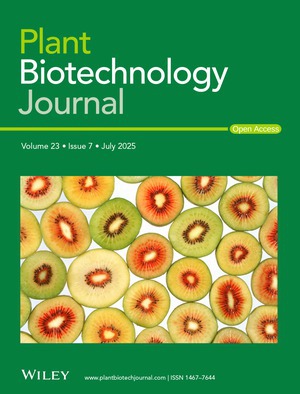 Figure 1
Peer Reviews
No public reviews on file for this paper yet. If you reviewed it on a platform where reviews are public (OpenReview, ICLR, NeurIPS, ICML), you can paste yours below so the community can read it here.
Videos
No videos yet. Explain this paper in a talk, walkthrough, or lecture? Add one.
Taxonomy
TopicsPlant Gene Expression Analysis · Postharvest Quality and Shelf Life Management · Berry genetics and cultivation research