Novel application of multi-loop traction device and threaded clip in gastric endoscopic submucosal dissection
Hossam El-Din Shaaban, Keisaku Yamada, Masahiro Tajika, Tsutomu Tanaka, Nobuhito Ito, Akihiro Takagi, Yasumasa Niwa

Abstract
Genes, proteins, chemicals, diseases, species, mutations and cell lines named across the full text — each resolved to its canonical identifier and authoritative record.
Click any figure to enlarge with its caption.
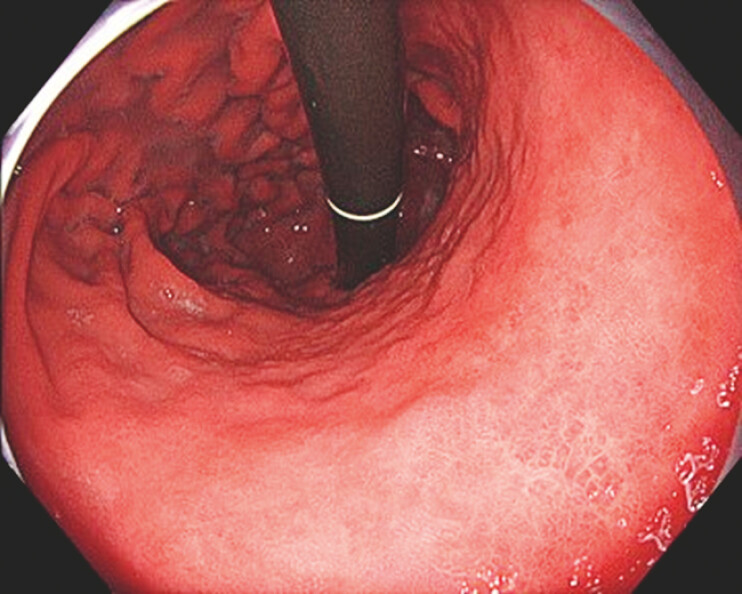 Fig. 1
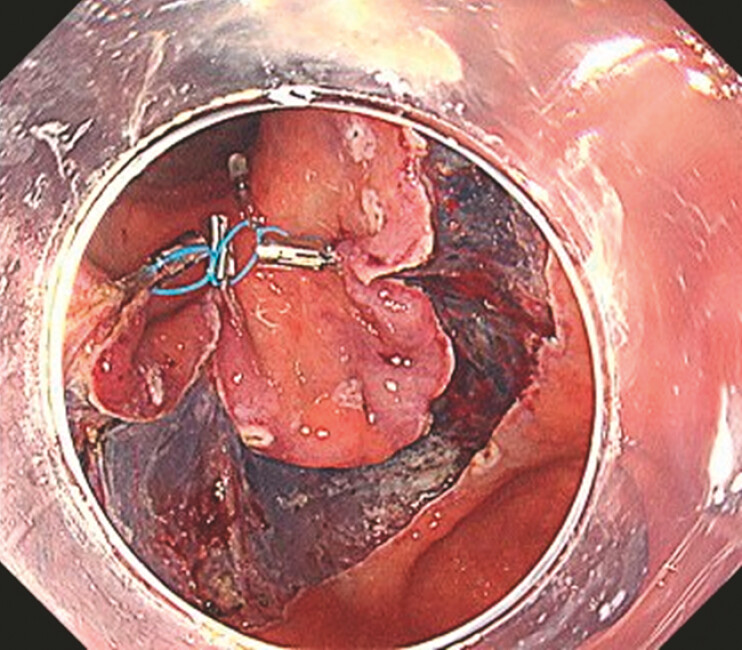 Fig. 2
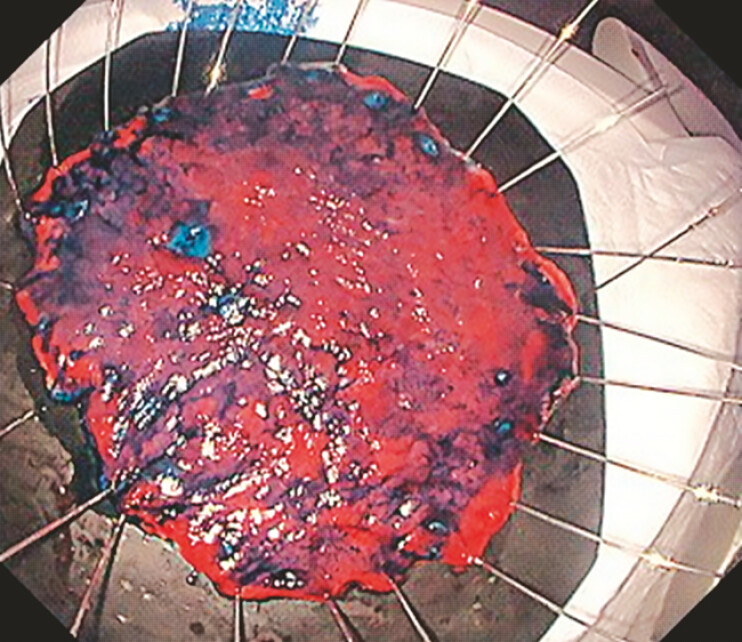 Fig. 3
Peer Reviews
No public reviews on file for this paper yet. If you reviewed it on a platform where reviews are public (OpenReview, ICLR, NeurIPS, ICML), you can paste yours below so the community can read it here.
Videos
No videos yet. Explain this paper in a talk, walkthrough, or lecture? Add one.
Taxonomy
TopicsGastric Cancer Management and Outcomes · Gastrointestinal Tumor Research and Treatment · Metastasis and carcinoma case studies
Traction-assisted endoscopic submucosal dissection (ESD) employing a dental floss clip has demonstrated usefulness in gastric ESD 1 . However, it provides insufficient traction for large lesions when a single traction point is used. We developed a novel traction technique using a Multi-Loop Traction Device (MLTD; Boston Scientific Co. Ltd., Tokyo, Japan) that enables traction on three points with a single traction. We named this the “anchor traction method” 2 . Here we report application of this technique on a large lesion by combining MLTD and a threaded clip to achieve effective traction at three points.
A 68-year-old male presented with a 55-mm IIc lesion on the lesser curvature of the gastric body ( Fig. 1 ). He then underwent ESD ( Video 1 ).
The lesion was a 55-mm 0-IIc lesion on the lesser curvature of the gastric body.
Novel application of MLTD and a threaded clip in gastric ESD.Video 1
A full circumferential incision was made and the middle loop of the MLTD was grasped with a reopenable clip (SureClip; MicroTech, Nanjing, China) and attached to the anal side of the lesion. Two additional loops of MLTD were then attached to the lesion, employing the “anchor traction method”. The scope was removed and a clip with thread was attached, then the scope was reinserted. The clip was then attached to the middle loop of the MLTD. The thread was pulled to obtain good traction ( Fig. 2 ). Traction on multiple points enabled safe ESD using the IT knife 2. Histopathology result was 0-IIc, 55×30mm, tub2 > por1, pT1b (SM, 900 µm), INFa, LY0, V0, UL0, pHM0, pVM0 ( Fig. 3 ), and the patient underwent additional surgery later.
The combination of MLTD with a threaded clip can provide effective traction.
The histopathology result was 0-IIc, 55 × 30 mm, tub2 > por1, pT1b (SM, 900 µm), INFa, LY0, V0, UL0, pHM0, pVM0.
Although there are already reports of traction devices allowing traction in multiple locations 3 4 , when treating lesions such as these in retroflex position, the traction device may interfere with the scope, causing traction to be removed. Therefore, the combination of MLTD with a threaded clip can provide effective traction in gastric ESD.
The reference list from the paper itself. Each links out to its DOI / PubMed record.
- 1Yoshida M Takizawa K Suzuki S Conventional versus traction-assisted endoscopic submucosal dissection for gastric neoplasms: a multicenter, randomized controlled trial (with video)Gastrointest Endosc 2018871231124029233673 10.1016/j.gie.2017.11.031 · doi ↗ · pubmed ↗
- 2Yamada K Tajika M Tanaka TA novel traction method using a multi-loop traction device in colorectal endoscopic submucosal dissection: Anchor traction method Endoscopy 202456 E 780E 78110.1055/a-2408-978739299280 PMC 11412764 · doi ↗ · pubmed ↗
- 3Grimaldi J Masgnaux L-J Lafeuille P Endoscopic submucosal dissection with adaptive traction strategy: first prospective multicenter study (with video)Gastrointest Endosc 202410051752338458261 10.1016/j.gie.2024.02.032 · doi ↗ · pubmed ↗
- 4Okamura T Honda T Ikeda T Development of a novel multipoint traction device for gastric and colorectal endoscopic submucosal dissection and evaluation of its efficacy and safety Surg Endosc 2024384704471138926237 10.1007/s 00464-024-10987-5 · doi ↗ · pubmed ↗