Screening for anxiety and depression among patients with cardiovascular diseases at a private tertiary care hospital in Karachi, Pakistan
Faryal Ghafor, Salma Rattani, Rozmin Jiwani, Zahra Tharani, Kashmira Nanji, Ahmed Sarki

TL;DR
This study found that a significant portion of cardiovascular disease patients in Karachi, Pakistan, experience anxiety and depression, highlighting the need for psychological screening in cardiac care.
Contribution
The study provides new insights into the prevalence of anxiety and depression among cardiovascular disease patients in a Pakistani tertiary care setting.
Findings
28.6% of cardiovascular disease patients showed symptoms of anxiety and depression.
Symptoms were more common among single participants and females (p=0.025).
Abstract
Approximately 17.3 million individuals across the globe lose their lives to cardiovascular diseases with most of these cases occurring in low-to-middle-income countries. The incidence of cardiovascular disease in Pakistan is 918 cases per 100,000 individuals. Depression frequently impacts the health, expenses, and prognosis of patients with cardiovascular disease. This study aimed to screen anxiety and depression among patients with cardiovascular diseases. A quantitative descriptive cross-sectional study was conducted at a tertiary care hospital in Karachi, Pakistan. Participants were patients with cardiac disorders and were receiving care in the inpatient unit or in the ambulatory clinic. The study included 234 participants. Symptoms of anxiety and depression were screened in 28.6 percent participants and was significantly higher among single participants. Moreover, the presence of…
Genes, proteins, chemicals, diseases, species, mutations and cell lines named across the full text — each resolved to its canonical identifier and authoritative record.
Click any figure to enlarge with its caption.
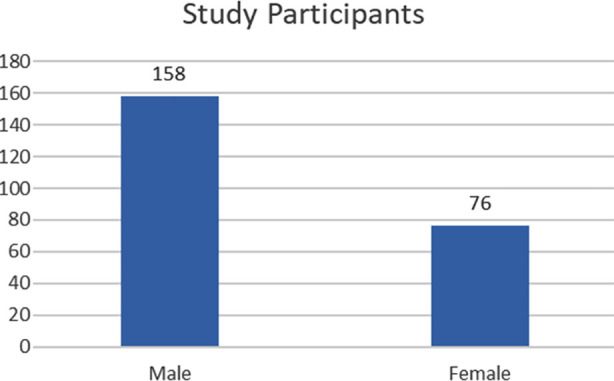 Fig.1
Fig.1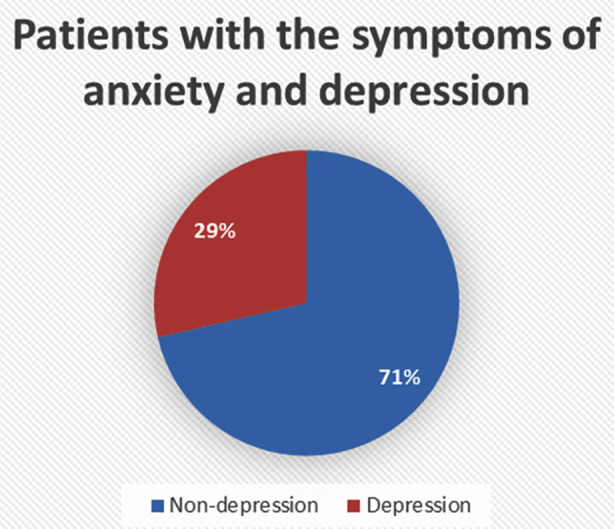 Fig.2
Fig.2| Variables | N | % | Median | Mean | Std. Deviation |
|---|---|---|---|---|---|
| AKUADS Score (0-75) Anxiety and Depression | ___ | ___ | 14 | 15.82 | 9.579 |
| Non-Anxiety and Depression | 167 | 71.4 | ___ | ___ | ___ |
| Gender | n | Mean Rank | Sum of Ranks | Mann Whitney | p-value | |
|---|---|---|---|---|---|---|
| AKUADS | Male | 158 | 112.14 | 17718.00 | 5157 | 0.026 |
| Female | 76 | 128.64 | 9777.00 | |||
| Total | 234 | |||||
| Variable | Categories | f (%) | Depression | Non-Depression | P-value |
|---|---|---|---|---|---|
| Gender | Male | 158(67.5) | 38(56.7%) | 120(71.9%) | .025 |
| Female | 76(32.5) | 29(43.3%) | 47(28.1%) | ||
| Age | Below 40 years | 13(5.6) | 6(9%) | 7(4.20%) | |
| 40 to 50 years | 27(11.5) | 9(13.40%) | 18(10.80%) | ||
| 50 to 60 years | 57(24.4) | 11(16.40%) | 46(27.50%) | ||
| 60 to 70 years | 80(34.2) | 17(25.40%) | 63(37.70%) | ||
| 70 years and above | 57(24.4) | 24(35.80%) | 33(19.80%) | ||
| Diagnosis | IHD | 171(73.1) | 53(79.1%) | 118(70.7%) | .188 |
| Post-Surgery | 63(26.9) | 14(20.9%) | 49(29.3%) | ||
| Co-Morbids | Both DM, HTN | 100(42.7) | 32(47.8%) | 68(40.7%) | .411 |
| DM | 38(16.2) | 7(10.4%) | 31(18.6%) | ||
| HTN | 66(28.2) | 18(26.9%) | 48(28.7%) | ||
| None | 30(12.8) | 10(14.9%) | 20(12.0%) | ||
| Residence | Punjab | 6(2.6) | 4(6%) | 2(1.2%) | .146 |
| Sindh | 197(84.2) | 53(79.1%) | 144(86.2%) | ||
| Balochistan | 15(6.4) | 6(9%) | 9(5.4%) | ||
| KPK | 8(3.4) | 1(1.5%) | 7(4.2%) | ||
| Others | 8(3.4) | 3(4.5%) | 5(3%) | ||
| Education | Primary | 36(15.4) | 19(28.4%) | 17(10.2%) | .002 |
| Middle | 15(6.4) | 7(10.4%) | 8(4.8%) | ||
| Matric | 39(16.7) | 11(16.4%) | 28(16.8%) | ||
| Intermediate | 33(14.1) | 10(14.9%) | 23(13.8%) | ||
| Bachelors | 0.351 | 3.955 | 0.022 | ||
| Masters | 41(17.5) | 8(11.9%) | 33(19.8%) | ||
| Marital Status | Married | 213(91) | 60(89.6%) | 153(91.6%) | .801 |
| Single | 21(9) | 7(10.4%) | 14(8.4%) |
| Variable | Categories | f (%) | OR | Lower CI | Upper CI | p-value |
|---|---|---|---|---|---|---|
| Gender | Male ® | 158(67.5) | 0.317 | 0.027 | ||
| Female | 76(32.5) | 1.948 | 1.081 | 3.513 | ||
| Education | Primary | 36(15.4) | 4.610 | 1.675 | 12.687 | 0.004 |
| Middle | 15(6.4) | 3.609 | 1.009 | 12.917 | ||
| Matric | 39(16.7) | 1.621 | 0.572 | 4.588 | ||
| Intermediate | 33(14.1) | 1.793 | 0.614 | 5.236 | ||
| Graduation | 70(29.9) | 0.853 | 0.317 | 2.300 | ||
| Master® | 41(17.5) | 0.242 | ||||
| Marital Status | Married ® | 213(91) | 0.392 | 0.618 | ||
| Single | 21(9) | 1.275 | 0.491 | 3.314 | ||
| Below 40years | 13(5.6) | 1.179 | 0.351 | 3.955 | 0.022 | |
| Age | 40 to 50years | 27(11.5) | 0.687 | 0.264 | 1.791 | |
| >50 to 60years | 57(24.4) | 0.329 | 0.142 | 0.763 | ||
| >60 to 70years | 80(34.2) | 0.371 | 0.175 | 0.768 | ||
| >70years and above ® | 57(24.4) | 0.727 | ||||
| Diagnosis | IHD | 171(73.1) | 1.572 | 0.799 | 3.093 | 0.190 |
| Post-Surgery ® | 63(26.9) | 0.286 | ||||
| Co-Morbids | Both DM and HTN | 100(42.7) | 0.941 | 0.395 | 2.241 | 0.422 |
| DM | 38(16.2) | 0.452 | 0.148 | 1.381 | ||
| HTN | 66(28.2) | 0.750 | 0.295 | 1.906 | ||
| None® | 30(12.8) | 0.500 | ||||
| Residence | Punjab | 6(2.6) | 3.333 | 0.362 | 30.701 | 0.208 |
| Sindh | 197(84.2) | 0.613 | 0.142 | 2.656 | ||
| Balochistan | 15(6.4) | 1.111 | 0.190 | 6.492 | ||
| KPK | 8(3.4) | 0.238 | 0.019 | 3.011 | ||
| Others | 8(3.4) | 0.600 |
| Variable | Category | f (%) | OR | Lower CI | Higher CI | p-value |
|---|---|---|---|---|---|---|
| Education | Primary | 36(15.4) | 4.283 | 1.434 | 12.798 | 0.026 |
| Middle | 15(6.4) | 3.291 | 0.850 | 12.740 | ||
| Matric | 39(16.7) | 1.625 | 0.547 | 4.832 | ||
| Intermediate | 33(14.1) | 1.948 | 0.620 | 6.116 | ||
| Graduation | 70(29.9) | 0.919 | 0.330 | 2.559 | ||
| Master | 41(17.5) | |||||
| Age | Below 40years | 13(5.6) | 1.077 | 0.290 | 3.994 | 0.043 |
| 40 to 50years | 27(11.5) | 0.747 | 0.271 | 2.060 | ||
| >50 to 60years | 57(24.4) | 0.334 | 0.138 | 0.807 | ||
| >60 to 70years | 80(34.2) | 0.376 | 0.169 | 0.835 | ||
| >70years and above | 57(24.4) | |||||
| Gender | Male | 158(67.5) | 0.433 | |||
| Female | 76(32.5) | 1.310 | 0.667 | 2.570 |
Peer Reviews
No public reviews on file for this paper yet. If you reviewed it on a platform where reviews are public (OpenReview, ICLR, NeurIPS, ICML), you can paste yours below so the community can read it here.
Videos
No videos yet. Explain this paper in a talk, walkthrough, or lecture? Add one.
Taxonomy
TopicsCardiac Health and Mental Health
INTRODUCTION
Cardiovascular diseases and depression have a bidirectional relationship.1Depression increases the risk of cardiovascular disease and worsens its outcomes.2 Depression screening should be performed in all adult patients with acute or chronic cardiovascular disease, this may also be helpful for younger individuals in the context of cardiovascular risk assessment.3,4 The American Heart Association (AHA) has advised screening for depression in cardiac patients, as depression and anxiety have been recognized as intimidating and negatively affecting prognosis in cardiac patients.5 People neglect the biomedical aspect of depression and consider it a normal response to stress-inducing scenarios.2 Cardiovascular diseases contribute 22.7% to the proportion of total deaths in Pakistan.6 One episode of depression enhances the risk of myocardial infarction fourfold.7 Depression in patients with cardiovascular disease (CVD) mostly remains undiagnosed. The health care providers show little concern about the psychological aspects of cardiac patients in Pakistan. The prevalence of mental health issues in South Asian countries, like India, Pakistan, and Bangladesh is less researched, and data and statistics results are taken from Western countries.8 This study aimed to screen anxiety and depression among patients with cardiovascular diseases and to explore the association between demographic factors and the symptoms of anxiety and depression.
Study Participants (n=234).Note: This table presented gender distribution of study participants.
Frequency of patients with the symptoms of anxiety and depression
METHODS
This quantitative descriptive cross-sectional study was conducted at a tertiary care hospital in Karachi, Pakistan. Data was collected between March to August 2023. Participants were patients with cardiac disorders and were receiving care in the inpatient unit or in the ambulatory clinic.
Ethical statement:
The study obtained ethical approval (Study No. 2023-8092-24049, dated February 8, 2023) from the ethical review committee of the Aga Khan University a written informed consent was obtained individually from all participants before their involvement in the research.
Sampling:
A non-probability purposive sampling method was used.
Sample size calculation:
The software Open Epi Version three was used to calculate the sample size. With a 95% confidence level and 80% power, the sample size was determined to be 237 participants.
Participants
Participants included 18 years and above male and female patients with cardiac disorders and were receiving care in the inpatient unit or in the ambulatory clinic. Patients with end-stage kidney diseases, liver cirrhosis, organ failure, cognitive impairment, history of drug or alcohol abuse, and those with unstable hemodynamic status were excluded from the study.
Data collection:
Data was collected using two instruments: (1) Sociodemographic Questionnaire: This structured questionnaire captured participants’ demographic characteristics. (2) Aga Khan University Anxiety and Depression Scale (AKUDS): This scale, available in both English and Urdu, assessed depression with 25 items using Likert-scale responses reflecting experiences over the past two weeks. AKUDS has a sensitivity of 66%, a specificity of 79%, a positive predictive value of 83%, and a negative predictive value of 60%.
Statistical analysis:
Descriptive statistics measured the frequency of patients with symptoms of anxiety and depression. The Mann-Whitney U test was used to compare the results between males and females. The Chi-square test assessed the significance of the association between participants’ demographic characteristics and anxiety and depression screening results. Univariate and multivariate logistic regression analyses were used to determine the strength of association between predictor variables and anxiety and depression.
RESULTS
A total of 234 participants were enrolled in the study. Among these158 (67.5%) were males and (76) 32.5% were females. The majority of participants were between >60 to 70 years of age (34.2%). They were from different geographical areas, marital status and qualification. These details are presented in Table-III.
The presence of symptoms of anxiety and depression among the study participants (n=234) was 28.6%. The median score of AKUADS was found to be 14, with a mean score of 15.82, with a standard deviation of 9.579 (Table-I). Female participants demonstrated significantly higher symptoms of anxiety and depression (mean rank = 128.64, p = 0.026) compared to male participants (Table-II).
There were significant associations of gender, age, and education level with the presence of anxiety and depression in patients with cardiovascular diseases. In all, 56.7% of males and 43.3% of females (p=0.025) experienced symptoms of anxiety and depression. Most of the participants who experienced symptoms were from the age group of 70 years and above (35.8%, p= 0.018). Moreover, 28.4% of the participants with primary education had experienced more symptoms as compared to those higher education levels (p=0.002). Other socio-demographic characteristics had insignificant relation (p=< 0.05) with the presence of symptoms (Table-III).
An intricate relationship was found between sociodemographic factors and the presence of symptoms of anxiety and depression. Firstly, concerning gender, females faced a statistically significant (OR = 1.948, p = 0.027) risk of developing symptoms of anxiety and depression. Single participants had an odds ratio of 1.275, as compared to married participants, but the results were insignificant (p=0.618). Participants below 40 years of age were found to be at higher risk of developing symptoms of anxiety and depression (OR:1.791, p:0.022) (Table-IV). However, multivariate logistic regression revealed that study participants with primary education (OR=4.283, p=0.026), and middle education (OR 3.29, p= 0.026) were more inclined to develop symptoms of anxiety and depression and the risk of developing symptoms of anxiety and depression decreased with an increase in education level (Table-V).
DISCUSSION
The current study aimed to screen the patients with cardiovascular diseases for the symptoms of anxiety and depression. The findings indicate a significant association between cardiovascular diseases and anxiety and depression. This study found that symptoms of anxiety and depression is highly prevalent among patients with cardiovascular diseases , aligning with previous research.9–13 Depression prevalence among heart failure patients ranges from 20% to 40%, and in some cases, can be as high as 51.5% in low- and middle-income countries (LMICs).14,15 In these countries due to limited access to resources, socioeconomic status, and systemic discrimination anxiety and depression are more pronounced.16
This study screened the patients with cardiovascular diseases for the symptoms of anxiety and depression. These results were corresponding to the earlier studies. For instance, a study from the Faisalabad Institute of Cardiology in Pakistan reported a 79.5% prevalence of depression among patients with cardiovascular diseases, and a study in Trinidad and Tobago found a 40% prevalence among hospitalized cardiac patients.10,17
The global burden of depression, particularly among women and older adults with cardiovascular diseases, is exacerbated by factors such as financial stress, lack of social support, and chronic physical ailments.18,19 This highlights the critical need for integrated care approaches that address both physical and mental health in patients with cardiovascular diseases. Depression is a major global health issue, affecting 14% of the population and ranking fourth in its contribution to the overall disease burden.20 The prevalence is particularly high in LMICs, which bear over 80% of the global mental health burden.21 Significant regional disparities exist, with higher depression rates among myocardial infarction patients in Asia (45.03%) compared to North America (25.97%) and Europe/UK (23.50%). These differences are driven by socioeconomic, demographic, and cultural factors, underscoring the need for targeted interventions that consider the unique challenges of each region.22
Based on the screening tool the symptoms of anxiety and depressions were higher among the females but initial correlation between female gender and depression became insignificant upon controlling for education and age. This suggests that limited education and younger age, rather than gender itself, may contribute to depression in women. Other studies revealed gender and marital status significantly influence the prevalence and severity of depression among patients with cardiovascular disease.22–24 It is reported that women are more prone to depression due to lower levels of physical activity, which are linked to reduced self-efficacy and self-management capabilities, as well as experiencing cardiovascular diseases later in life, often with more comorbidities.9 However, in the current study no significant difference was found in symptoms of anxiety and depression between married and single individuals.
Limitations:
This study lacks generalizability as it was only in one private hospital and participants were with specific sociodemographic characteristics. Comorbid included two; diabetes and hypertension and other comorbidities such as hypothyroidism, vitamin D deficiencies gut microbiome, reproductive and sexual disorders were not included. These factors could influence the presence and severity of anxiety and depression in patients with cardiovascular disease. These factors should be considered when interpreting the results and highlight the need for further research.
CONCLUSION
This study emphasized the need for screening anxiety and depression in individuals with cardiovascular diseases, revealing a symptom rate of 28.6%, with significant differences based on gender, age, marital status, and educational level. The multidimensional nature of anxiety and depression in cardiovascular patients involves a complex interplay of sociodemographic and clinical factors, consistent with prior research. The study emphasizes the need for regular screening and gender-sensitive therapeutic practices due to the significant impact of anxiety and depression on overall health. Further extensive and longitudinal inquiries are necessary for a thorough understanding of anxiety and depression in this demographic, addressing the noted limitations. The findings highlight the importance of holistic healthcare, considering both physical and psychological well-being, to enhance patient care.
Recommendations
Healthcare practitioners should consider the patients with cardiovascular disease be screened routinely for anxiety and depression. It is recommended that customized therapies be provided based on the individuals’ demographic characteristics and needs. Patient education programs raising awareness about psychological impacts, risk of depression, and accessible support resources are essential. Collaboration is needed between cardiology and psychological consultation for integrated care, advocating for policies and funding to support mental health treatments in cardiovascular care settings.
Authors Contributions:
FG: Conceptualization, data collection, writing - original draft, writing - review and editing, and responsible for overall integrity of the study.
SR: Supervision, conceptualization, methodology, and feedback on manuscript drafts.
RJ: Writing - review and editing, and provision of frequent feedback on manuscript drafts.
KN: Formal analysis, data analysis, and software usage (SPSS).
ZT and AS: Review and provision of feedback on manuscript drafts.
All authors have read and approved the final version to be published.
The reference list from the paper itself. Each links out to its DOI / PubMed record.
- 1Vasileiou S Kapadohos T Kalogianni A Kourea K Magita A Pavlatou N Women's Heart and Depression Perioperative Nurs 202211187101 doi:10.1016/j.tcm.2019.05.001
- 2Krittanawong C Maitra NS Qadeer YK Wang Z Fogg S Storch EA Association of Depression and Cardiovascular Disease Am J Med 2023136988195 doi:10.1016/j.amjmed.2023.04.0363724775110.1016/j.amjmed.2023.04.036 · doi ↗ · pubmed ↗
- 3Goldstein BI Carnethon MR Matthews KA Mc Intyre RS Miller GE Raghuveer G Major depressive disorder and bipolar disorder predispose youth to accelerated atherosclerosis and early cardiovascular disease:A scientific statement from the American Heart Association Circulation 201513210965986 doi:10.1161/CIR.00000000000002292626073610.1161/CIR.0000000000000229 · doi ↗ · pubmed ↗
- 4Siu AL Bibbins-Domingo K Grossman DC Baumann LC Davidson KW Ebell M Screening for depression in adults:US Preventive Services Task Force recommendation statement JAMA 20163154380387 doi:10.1001/jama.2015.183922681321110.1001/jama.2015.18392 · doi ↗ · pubmed ↗
- 5Hasnain M Vieweg WVR Lesnefsky EJ Pandurangi AK Depression screening in patients with coronary heart disease:a critical evaluation of the AHA guidelines J Psychosom Res. Elsevier 2011711612 doi:10.1016/j.jpsychores.2010.10.00910.1016/j.jpsychores.2010.10.00921665006 · doi ↗ · pubmed ↗
- 6Zhao D Epidemiological Features of Cardiovascular Disease in Asia JACC Asia 202111113 doi:10.1016/j.jacasi.2021.04.0073633836510.1016/j.jacasi.2021.04.007PMC 9627928 · doi ↗ · pubmed ↗
- 7Piwonski J Piwonska A Jedrusik P Stokwiszewski J Rutkowski M Bandosz P Depressive symptoms and cardiovascular diseases in the adult Polish population Results of the NATPOL 2011 study. Kardiologia Pol 20197711823 doi:10.5603/KP.a 2018.021310.5603/KP.a 2018.021330406941 · doi ↗ · pubmed ↗
- 8Uphoff EP Newbould L Walker I Ashraf N Chaturvedi S Kandasamy AA systematic review and meta-analysis of the prevalence of common mental disorders in people with non-communicable diseases in Bangladesh, India, and Pakistan J Glob Health 201992020417 doi:10.7189/jogh.09.0204173189303110.7189/jogh.09.020417 PMC 6925965 · doi ↗ · pubmed ↗