Modification of the existing maximum residue level for aclonifen in anise/aniseed
Giulia Bellisai, Giovanni Bernasconi, Luis Carrasco Cabrera, Irene Castellan, Monica del Aguila, Lucien Ferreira, Luna Greco, Samira Jarrah, Renata Leuschner, Andrea Mioč, Stefanie Nave, Hermine Reich, Silvia Ruocco, Alessia Pia Scarlato, Andrea Simonati, Marta Szot

TL;DR
This paper discusses a request to modify the maximum residue level of the pesticide aclonifen in anise/aniseed, concluding it is safe for consumer health.
Contribution
The paper provides a risk assessment supporting the modification of aclonifen residue levels in anise/aniseed based on new data.
Findings
Adequate analytical methods are available to enforce the residue limit of aclonifen at 0.01 mg/kg.
Short-term and long-term intake of aclonifen residues is unlikely to pose a risk to consumer health.
Abstract
In accordance with Article 6 of Regulation (EC) No 396/2005, the applicant Landesanstalt für Landwirtschaft und Gartenbau submitted a request to the competent national authority in Germany to modify the existing maximum residue level (MRL) for the active substance aclonifen in anise/aniseed. The data submitted in support of the request were found to be sufficient to derive an MRL proposal for the crop of interest. Adequate analytical methods for enforcement are available to control the residues of aclonifen in the plant matrix under consideration at the validated limit of quantification (LOQ) of 0.01 mg/kg. Based on the risk assessment results, EFSA concluded that the short‐term and long‐term intake of residues resulting from the use of aclonifen according to the reported agricultural practice is unlikely to present a risk to consumer health.
Genes, proteins, chemicals, diseases, species, mutations and cell lines named across the full text — each resolved to its canonical identifier and authoritative record.
Click any figure to enlarge with its caption.
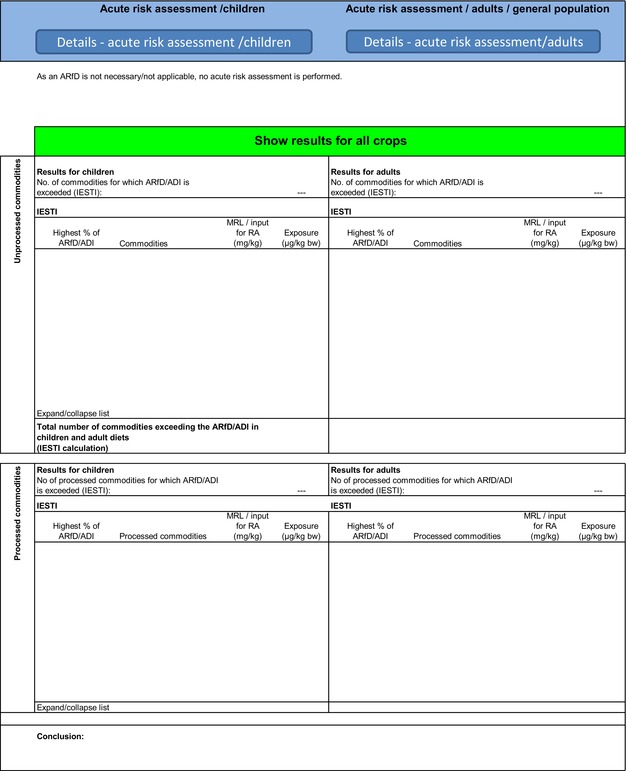 Figure 1
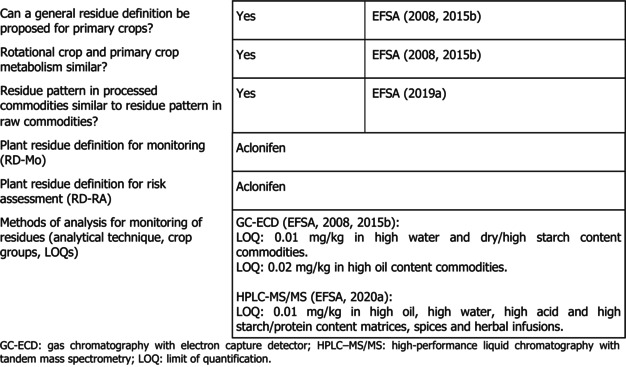 Figure 2
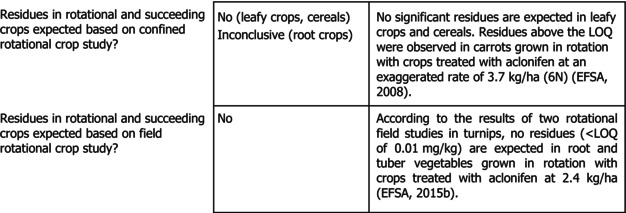 Figure 3
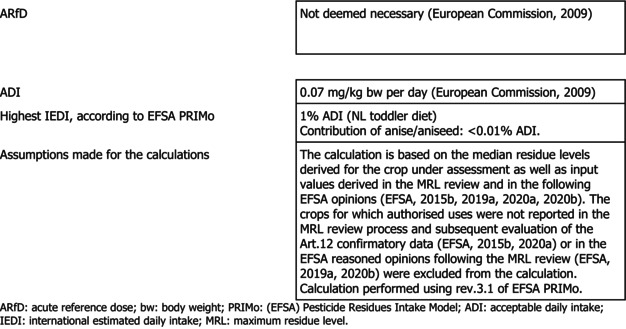 Figure 4
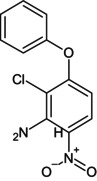 Figure 5
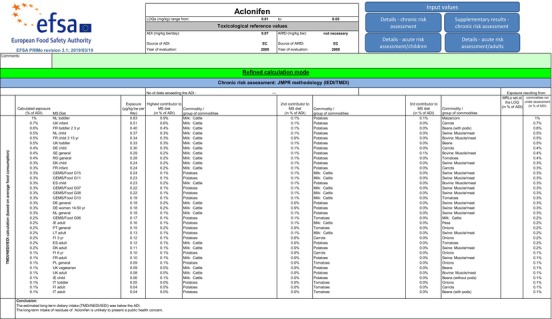 Figure 6
Peer Reviews
No public reviews on file for this paper yet. If you reviewed it on a platform where reviews are public (OpenReview, ICLR, NeurIPS, ICML), you can paste yours below so the community can read it here.
Videos
No videos yet. Explain this paper in a talk, walkthrough, or lecture? Add one.
Taxonomy
TopicsAgricultural safety and regulations · Pesticide Residue Analysis and Safety · Pharmaceutical studies and practices
SUMMARY
In accordance with Article 6 of Regulation (EC) No 396/2005, Landesanstalt für Landwirtschaft und Gartenbau Sachsen‐Anhalt submitted an application to the competent national authority in Germany (evaluating Member State, EMS) to modify the existing maximum residue level (MRL) for the active substance aclonifen in anise/aniseed.
The EMS drafted the evaluation report in accordance with Article 8 of Regulation (EC) No 396/2005, which was submitted to the European Commission and to the European Food Safety Authority (EFSA) on 7 March 2025. To accommodate for the intended use of aclonifen, the EMS proposed to raise the existing MRL from the limit of quantification (LOQ) of 0.01 mg/kg to 0.03 mg/kg by considering a combined dataset of residue trials on anise, fennel and caraway, in line with the approach of a previous application assessed by EFSA in 2020, where most of the trials contained in the current evaluation report were already considered.
On 14 March 2025, the European Commission sent a mandate to EFSA to assess the application and the evaluation report as required by Article 10 of the MRL regulation.
Based on the conclusions derived by EFSA in the framework of Directive 91/414/EEC, the data evaluated under previous MRL assessments and the additional data provided by the EMS in the framework of this application, the following conclusions are derived.
The metabolism of aclonifen following foliar application was investigated in crops belonging to the groups of root crops, cereals/grass and pulses/oilseeds.
Studies investigating the effect of processing on the nature of aclonifen (hydrolysis studies) demonstrated that the active substance is stable.
In rotational crops, the major residue identified was the parent compound.
Based on the metabolic pattern identified in metabolism studies, hydrolysis studies and the toxicological relevance of metabolites, the residue definitions for plant products were proposed as aclonifen for enforcement and risk assessment.
The data gap for analytical methods for enforcement of aclonifen in complex matrices, such as spices, has been previously addressed in the framework of the evaluation of the data submitted to confirm MRLs following the review of existing MRLs. Therefore, sufficiently validated analytical methods based on high‐performance liquid chromatography (HPLC) are available to quantify residues in the crop assessed in this application according to the enforcement residue definition. The methods enable quantification of residues at or above 0.01 mg/kg in the crop assessed (LOQ).
The available residue trials are sufficient to derive an MRL proposal, but it is noted that the MRL value derived by the EMS (0.03 mg/kg) differs from the original applicant proposal (0.04 mg/kg). EFSA agrees with the EMS that the proposed MRL of 0.03 mg/kg is more robust, in line with the previous EFSA opinion and with the ALARA (as low as reasonably achievable) principle.
Specific studies investigating the magnitude of aclonifen residues in processed commodities are not required, as significant residues of aclonifen are not expected in raw agricultural commodities and the total theoretical maximum daily intake (TMDI) is below the trigger value of 10% of the acceptable daily intake (ADI).
The occurrence of aclonifen residues in rotational crops was investigated in the framework of the EU pesticides peer review and the MRL review. Based on the available information on the nature and magnitude of residues, it was concluded that significant residue levels are unlikely to occur in rotational crops, providing that the active substance is used according to the proposed good agricultural practice (GAP).
Residues of aclonifen in commodities of animal origin were not assessed since the crop under consideration in this MRL application is normally not fed to livestock.
The toxicological profile of aclonifen was assessed in the framework of the EU pesticides peer review under Directive 91/414/EEC, and the data were sufficient to derive an ADI of 0.07 mg/kg body weight (bw) per day. An acute reference dose (ARfD) was deemed unnecessary.
The consumer risk assessment was performed with revision 3.1 of the EFSA Pesticide Residues Intake Model (PRIMo). For the calculation of the chronic exposure, EFSA updated the calculation performed in the framework of the MRL review with the relevant supervised trials median residue (STMR) values derived from the residue trials submitted in support of this application and in previous EFSA reasoned opinions following the MRL review. The crops, for which authorised uses were not reported in the MRL review and in the EFSA reasoned opinions following the MRL review, were excluded from the calculation.
No long‐term consumer intake concerns were identified; the calculated long‐term exposure accounted for a maximum of 1% of the ADI (NL toddler). The contribution of residue expected in the commodities assessed in this application to the overall long‐term exposure is insignificant.
EFSA concluded that the proposed use of aclonifen on anise/aniseed will not result in a consumer exposure exceeding the toxicological reference value and therefore is unlikely to pose a risk to consumers' health.
EFSA proposes to amend the existing MRL as reported in the summary table below.
Full details of all end points and the consumer risk assessment can be found in Appendices B, C, D.Codea CommodityExisting EU MRL (mg/kg)Proposed EU MRL (mg/kg)Comment/justification Enforcement residue definition: Aclonifen0810010Anise/aniseed0.01* 0.03The submitted data are sufficient to derive an MRL proposal for the NEU use. Risk for consumers unlikelyAbbreviations: MRL, maximum residue level; NEU, northern Europe. ^a^ Commodity code number according to Annex I of Regulation (EC) No 396/2005.*Indicates that the MRL is set at the limit of analytical quantification (LOQ).
ASSESSMENT
The European Food Safety Authority (EFSA) received an application to modify the existing maximum residue level (MRL) for aclonifen in anise/aniseed. The detailed description of the intended use of aclonifen, which is the basis for the current MRL application, is reported in Appendix A.
Aclonifen is the ISO common name for 2‐chloro‐6‐nitro‐3‐phenoxyaniline (IUPAC). The chemical structures of the active substance and its main metabolites are reported in Appendix E.
Aclonifen was evaluated in the framework of Directive 91/414/EEC,1 with Germany designated as rapporteur Member State (RMS) for the representative use as pre‐emergence herbicide in sunflowers.
The draft assessment report (DAR) prepared by the RMS has been peer reviewed by EFSA (2008). Aclonifen was approved2 for use as a herbicide on 1 August 2009.
The EU MRLs for aclonifen are established in Annexes II of Regulation (EC) No 396/2005.3 The review of existing MRLs according to Article 12 of Regulation (EC) No 396/2005 (MRL review) has been performed (EFSA, 2015b) and the proposed modifications have been implemented in the MRL legislation. After completion of the MRL review, EFSA has issued several reasoned opinions on the modification of MRLs for aclonifen (EFSA, 2019, 2020a, 2020b). The proposals from these reasoned opinions have been considered in previous MRL regulations.4
In accordance with Article 6 of Regulation (EC) No 396/2005, Landesanstalt für Landwirtschaft und Gartenbau submitted an application to the competent national authority in Germany (evaluating Member State, EMS) to modify the existing maximum residue level (MRL) for the active substance aclonifen in anise/aniseed.
The EMS drafted the evaluation report in accordance with Article 8 of Regulation (EC) No 396/2005, which was submitted to the European Commission and to the European Food Safety Authority (EFSA) on 7 March 2025. To accommodate for the intended use of aclonifen, the EMS proposed to raise the existing MRL from the limit of quantification (LOQ) of 0.01 mg/kg to 0.03 mg/kg. This proposal was made by taking into account a combined data set of residue trials (anise, fennel and caraway) to derive a more robust MRL, which is different from the value requested by the applicant (0.04 mg/kg) and that could be derived just based on trials provided on anise (high uncertainty due to small data set).
On 14 March 2025, the European Commission sent a mandate to EFSA to assess the application and the evaluation report as required by Article 10 of the MRL regulation.
EFSA based its assessment on the evaluation report submitted by the EMS (Germany, 2025), the draft assessment report (DAR) and its addendum (Germany, 2006, 2008) prepared under Council Directive 91/414/EEC, the Commission review report on aclonifen (European Commission, 2009, as revised in 2012), the conclusion on the peer review of the pesticide risk assessment of the active substance aclonifen (EFSA, 2008), the reasoned opinion on the MRL review under Article 12 of Regulation (EC) No 396/2005 (EFSA, 2015b) and the assessment of its confirmatory data (EFSA, 2020a) as well as the conclusions from previous EFSA opinions on aclonifen (EFSA, 2019, 2020b).
For this application, the data requirements established in Regulation (EU) No 544/20115 and the guidance documents applicable at the date of submission of the MRL application are applicable (European Commission, 1997a, 1997b, 1997c, 1997d, 1997e, 1997f, 1997g, 2000, 2010a, 2010b, 2023; OECD, 2007). The assessment is performed in accordance with the legal provisions of the Uniform Principles for the Evaluation and the Authorisation of Plant Protection Products adopted by Commission Regulation (EU) No 546/2011.6
A selected list of end points of the studies assessed by EFSA in the framework of this MRL application, including the end points of relevant studies assessed previously, is presented in Appendix B.
The evaluation report submitted by the EMS (Germany, 2025) and the exposure calculations using the EFSA Pesticide Residues Intake Model (PRIMo) are made publicly available as background documents to this reasoned opinion.7
RESIDUES IN PLANTS
1
Nature of residues and methods of analysis in plants
1.1
Nature of residues in primary crops
1.1.1
The metabolism of aclonifen in primary crops belonging to the groups of root crops, cereals/grass and pulses/oilseeds has been investigated in the framework of the EU pesticides peer review and the MRL review (EFSA, 2008, 2015b). No additional studies were submitted in support of the current MRL application.
The available metabolism studies were performed by using only aniline‐^14^C‐labelled aclonifen. Studies with radiolabelling in the phenyl ring were not considered necessary, because metabolites resulting from the cleavage of the ether bond of the phenyl ring (i.e. phenol and hydroquinone) are considered naturally occurring in plants (EFSA, 2008, 2015b). Moreover, cleavage of the ether bond was considered only as a very minor pathway in the plant metabolism of aclonifen. Consequently, the EU pesticides peer review concluded that additional metabolism studies with phenyl‐labelled aclonifen were not required. From the available metabolism studies, performed with aniline‐^14^C‐labelled aclonifen, aclonifen was found to be the main residue and the metabolism was concluded to be the same in all the crop groups that were investigated.
For the intended use, the metabolic behaviour in primary crops is sufficiently addressed.
Nature of residues in rotational crops
1.1.2
Aclonifen is authorised or is proposed to be used on anise/aniseed that can be grown in rotation with other crops. According to the soil degradation studies evaluated in the framework of the peer review, the DT_90_ value of aclonifen ranged from 104 to 649 days (EFSA, 2008). The trigger value of 100 days was exceeded, and therefore, further studies investigating the nature and magnitude of residues in rotational crops were performed. From the available metabolism studies, aclonifen was found to be the main residue and it was concluded that metabolism in primary and rotational crops is similar (EFSA, 2008, 2015b).
For the proposed use assessed in this application, no further information is required.
Nature of residues in processed commodities
1.1.3
The effect of processing on the nature of aclonifen was investigated in the framework of a previous MRL application (EFSA, 2019). It is concluded that aclonifen is hydrolytically stable under standard hydrolysis studies simulating processing conditions representative of pasteurisation, boiling and sterilisation.
Analytical methods for enforcement purposes in plant commodities
1.1.4
Analytical methods for the determination of aclonifen residues in plant commodities were assessed during the EU pesticides peer review and MRL review (EFSA, 2008, 2015b). Sufficiently validated methods to control residues of aclonifen in high water content and dry/high starch content commodities at the limit of quantification (LOQ) of 0.01 mg/kg and in high oil content commodities at the LOQ of 0.02 mg/kg were provided.
However, during the MRL review, EFSA identified a data gap related to ‘an analytical method for enforcement in complex matrices (spices and herbal infusions) or an evaluation report of the available validation data’. Confirmatory data following the MRL review were submitted and evaluated by the EMS and addressed in a previous reasoned opinion by EFSA (EFSA, 2020a). The data gap concerning the analytical method for enforcement in complex matrices (spices and herbal infusions) has been addressed by the submission of validation data for a multi‐residue method for the determination of aclonifen residues in matrices with high oil content (sunflower seed), high water content (tomato fruit), high acid content (orange fruit), high starch/protein content (wheat grain) as well as in powdered caraway seed (a complex matrix representative of spices for which confirmatory data were requested) (EFSA, 2020a). The method, applying a reversed phase HPLC‐MS/MS in positive ion mode, was sufficiently validated at an LOQ of 0.01 mg/kg in all matrices under consideration.
EFSA concludes that sufficiently validated analytical methods are now available for enforcing the proposed MRLs for aclonifen in the crop under consideration.
Storage stability of residues in plants
1.1.5
The storage stability of aclonifen in plants stored under frozen conditions was investigated in the framework of the EU pesticides peer review (EFSA, 2008). Aclonifen is shown to be stable for 24 months in high water content and high oil content commodities and for 12 months in dry/high starch content commodities when stored at −18°C.
Based on the current OECD guidance 506 (OECD, 2007), spices are included among high oil commodities, so the storage stability is adequately demonstrated for the commodities under assessment.
Proposed residue definitions
1.1.6
Based on the metabolic pattern identified in primary and rotational crops metabolism studies, the results of hydrolysis studies, the toxicological relevance of metabolites and/or degradation products and the capabilities of enforcement analytical methods, the following residue definitions were proposed (EFSA, 2008, 2015b):
- Residue definition for risk assessment: aclonifen
- Residue definition for enforcement: aclonifen
The same residue definitions are applicable to all primary crop groups, to rotational crops and processed products.
The residue definition for enforcement set in Regulation (EC) No 396/2005 is identical with the above‐mentioned residue definition.
Magnitude of residues in plants
1.2
Magnitude of residues in primary crops
1.2.1
In support of this MRL application related to the post‐emergence use in anise/aniseed, the applicant provided in total 11 outdoor trials (5 trials on anise, 4 trials on fennel and 2 trials on caraway). Most of these trials were already submitted and assessed in a previous EFSA output (EFSA, 2020b): only one new trial on anise was submitted in the current application. The samples were analysed for the parent compound in line with the residue definitions for enforcement and risk assessment. According to the assessment of the EMS, the analytical methods used were sufficiently validated and fit for purpose (Germany, 2025). However, three of these trials (one each in anise, fennel and caraway) were disregarded by the EMS since the storage stability period was longer than the provided storage stability studies. EFSA agrees with this conclusion from the EMS. The remaining residue trials were adequately covered by storage stability (Germany, 2025).
EFSA noted that two of these trials considered by the EMS for the MRL setting were performed with the last application at a later growth stage (BBCH 39–51 and 39–50) than the one set in the intended GAP (BBCH 12–15). However, since samples of seeds from these trials were collected at preharvest intervals (PHIs) (67 and 96 days) that are in the same range as those from the other trials, where treatment occurred at intended BBCH growth stage, EFSA agrees with the EMS that the slight deviation on the growth stage is acceptable. Hence, EFSA finally agreed to consider these two trials for the MRL setting.
Therefore, in total, eight trials are available in support of the proposed Northern Europe (NEU) GAP. EFSA noted that the trials were performed in the same location in Germany but over different growing seasons for each different crop (anise, fennel and caraway). Generally, trials should be spread over different Member States from both residue areas and seasons. However, in the present case of a minor crop, and considering that eight trials are available, the growing season factor was deemed sufficient to conclude that the studies conducted in the same location were independent and could be counted as separate trials (see also EFSA, 2015a).
In accordance with the EU guidance document on comparability, extrapolation, group tolerances and data requirements for setting MRLs (European Commission, 2023), anise/aniseed belongs to minor crops and a minimum of four trials is required to derive an MRL. In addition, for any commodity representative of the seed spice or fruit spice group, it is possible to derive an MRL by extrapolation for the whole groups (seed spices and fruit spices).
The EMS combined residue data from eight trials: on anise (4), fennel (3) and caraway (1) to derive the MRL proposal for anise/aniseed. The combined residue data set led to a more robust proposal of 0.03 mg/kg (agreed by EMS and EFSA), which is different from the value originally requested by the applicant (0.04 mg/kg), that could be derived just based on the trials provided on anise (high uncertainty due to small dataset).
The results of the residue trials, the related risk assessment input values (highest residue, median residue) and the MRL proposals are summarised in Appendix B.1.2.1.
Magnitude of residues in rotational crops
1.2.2
The rotational crop metabolism studies were assessed in the peer review based on a study where bare soil was treated with aclonifen at 3.7 kg/ha (equivalent to 6N the application rate for the crop under assessment) (EFSA, 2008). Total radioactive residues were below 0.1 mg/kg in spinach (leafy crops) and barley (cereals) at all three rotational intervals. In carrots (root crops), significant residues were measured, ranging from 0.491 mg eq/kg (plant back interval (PBI) 29 days) to 0.035 mg eq/kg (PBI 365 days). Confirmatory data were requested since a data gap was set because of significant residues found in carrots (EFSA, 2008; European Commission, 2009).
Therefore, two rotational crops field trials investigating the magnitude of aclonifen residues in turnips planted 30 and 60 days after application to bare soil of 2.4 kg a.s./ha (equivalent to 4N the application rate for the crop under assessment) were evaluated in the framework of MRL review (EFSA, 2015b). According to the results of both studies, no residues are expected in root and tuber vegetables grown in rotation with crops treated with aclonifen (residues were below the LOQ of 0.01 mg/kg in all samples of leaves and roots analysed).
EFSA concluded that, in rotational crops grown after the use of aclonifen according to the GAPs assessed in the current MRL application, residues above the LOQ are not expected.
Magnitude of residues in processed commodities
1.2.3
Specific processing studies for the crop under assessment are not available. However, considering the low residue levels found in the raw commodities and that the crop under consideration is a very minor contributor to the overall long‐term exposure (< 0.01% of the acceptable daily intake (ADI)), EFSA concluded that there is no need of specific processing studies for the crop under assessment.
Proposed MRLs
1.2.4
The available data are considered sufficient to derive an MRL proposal as well as risk assessment values for the commodity under evaluation. It is noted that the MRL value derived by the EMS (0.03 mg/kg) differs from the applicant proposal (0.04 mg/kg). EFSA agrees with the EMS that the proposed MRL of 0.03 mg/kg is more robust, in line with the previous EFSA opinion (EFSA, 2020b)8 and with the ALARA principle.
In Section 3, EFSA assessed whether residues on this crop resulting from the intended use are likely to pose a consumer health risk.
RESIDUES IN LIVESTOCK
2
Not relevant as anise/aniseed is not used for feed purposes.
CONSUMER RISK ASSESSMENT
3
EFSA performed a dietary risk assessment using revision 3.1 of the EFSA PRIMo (EFSA, 2018, 2019). This exposure assessment model contains food consumption data for different subgroups of the EU population and allows the acute and chronic exposure assessment to be performed in accordance with the internationally agreed methodology for pesticide residues (FAO, 2016).
In the framework of the EU pesticides peer review, an ADI of 0.07 mg/kg body weight (bw) per day was set, while an acute reference dose (ARfD) was not considered necessary (European Commission, 2009).
In the framework of the MRL review, a comprehensive long‐term exposure assessment was performed, taking into account the existing uses approved in the EU (EFSA, 2015b). EFSA updated the calculation with the relevant supervised trials median residue (STMR) values derived from the residue trials submitted in support of this application and in previous EFSA reasoned opinion following the MRL review (EFSA, 2019, 2020a, 2020b). The crops for which authorised uses were not reported in the MRL review process and subsequent evaluation of the Art.12 confirmatory data (EFSA, 2015b, 2020a) or in the EFSA reasoned opinions following the MRL review (EFSA, 2019, 2020b) were excluded from the calculation. The input values used in the exposure calculations are summarised in Appendix D.1.
The estimated long‐term dietary intake is up to 1% of the ADI (NL toddler). The contribution of residues expected in the commodities assessed in this application to the overall long‐term exposure is insignificant as also shown in Appendix B.3.
EFSA concluded that the long‐term intake of residues of aclonifen resulting from the existing uses and the intended uses assessed in this MRL application is unlikely to present a risk to consumer health. Acute exposure calculations were not carried out because an ARfD was not deemed necessary for this active substance (European Commission, 2009).
For further details on the exposure calculations, a screenshot of the Report sheet of the PRIMo is presented in Appendix C.
CONCLUSION AND RECOMMENDATIONS
4
The data submitted in support of this MRL application were found to be sufficient to derive an MRL proposal for anise/aniseed. It is noted that the MRL value derived by the EMS (0.03 mg/kg) differs from the applicant's original proposal (0.04 mg/kg). EFSA agrees with the EMS that the proposed MRL of 0.03 mg/kg is more robust, in line with the previous EFSA opinion (EFSA, 2020b) and with the ALARA principle.
EFSA concluded that the proposed use of aclonifen on anise/aniseed will not result in a consumer exposure exceeding the toxicological reference value and therefore is unlikely to pose a risk to consumers' health.
The MRL recommendations are summarised in Appendix B.4.ABBREVIATIONSADIacceptable daily intakeARapplied radioactivityARfDacute reference dosea.s.active substanceBBCHgrowth stages of mono‐ and dicotyledonous plantsbwbody weightCFconversion factor for enforcement to risk assessment residue definitionDARdraft assessment reportDATdays after treatmentECemulsifiable concentrateECDelectron capture detectorEDIestimated daily intakeEMSevaluating Member Stateeqresidue expressed as a.s. equivalentFAOFood and Agriculture Organization of the United NationsGAPGood Agricultural PracticeGCgas chromatographyGC‐ECDgas chromatography with electron capture detectorGRgranuleHPLChigh‐performance liquid chromatographyHPLC‐MShigh‐performance liquid chromatography with mass spectrometryHPLC‐MS/MShigh‐performance liquid chromatography with tandem mass spectrometryHRhighest residueIEDIinternational estimated daily intakeISOInternational Organisation for StandardisationIUPACInternational Union of Pure and Applied ChemistryJLCliquid chromatographyLOQlimit of quantificationMRLmaximum residue levelMSmass spectrometry detectorMSMember StatesMS/MStandem mass spectrometry detectorMWmolecular weightNEUnorthern EuropeNPDnitrogen/phosphorous detectorOECDOrganisation for Economic Co‐operation and DevelopmentPBIplant back intervalPFprocessing factorPHIpreharvest interval P ow partition coefficient between n‐octanol and waterPRIMo(EFSA) Pesticide Residues Intake ModelRArisk assessmentRACraw agricultural commodityRDresidue definitionRMSrapporteur Member StateSANCODirectorate‐General for Health and ConsumersSCsuspension concentrateSEUsouthern EuropeSGwater‐soluble granuleSLsoluble concentrateSTMRsupervised trials median residueTARtotal applied radioactivityTMDItheoretical maximum daily intakeUVultraviolet (detector)WHOWorld Health OrganizationWPwettable powder
REQUESTOR
European Commission
QUESTION NUMBER
EFSA‐Q‐2025‐00202
COPYRIGHT FOR NON‐EFSA CONTENT
EFSA may include images or other content for which it does not hold copyright. In such cases, EFSA indicates the copyright holder and users should seek permission to reproduce the content from the original source.
The reference list from the paper itself. Each links out to its DOI / PubMed record.
- 1EFSA (European Food Safety Authority) . (2008). Conclusion on the peer review of the pesticide risk assessment of the active substance aclonifen. EFSA Journal, 6(10), RN‐149. 10.2903/j.efsa.2008.149r PMC 1019365937213826 · doi ↗ · pubmed ↗
- 2EFSA (European Food Safety Authority) . (2015 a). Residues trials and MRL calculations. Proposals for a harmonised approach for the selection of the trials and data used for the estimation of MRL, STMR and HR. September 2015, 10 pp. https://ec.europa.eu/food/sites/food/files/plant/docs/pesticides_mrl_guidelines_plant_mrl_calculations_2015_en.pdf
- 3EFSA (European Food Safety Authority) . (2015 b). Review of the existing maximum residue levels for aclonifen according to Article 12 of regulation (EC) No 396/2005. EFSA Journal, 13(11), 4323. 10.2903/j.efsa.2015.4323 · doi ↗
- 4EFSA (European Food Safety Authority) , Brancato, A. , Brocca, D. , Ferreira, L. , Greco, L. , Jarrah, S. , Leuschner, R. , Medina, P. , Miron, I. , Nougadere, A. , Pedersen, R. , Reich, H. , Santos, M. , Stanek, A. , Tarazona, J. , Theobald, A. , & Villamar‐Bouza, L. (2018). Guidance on use of EFSA Pesticide Residue Intake Model (EFSA PRI Mo revision 3). EFSA Journal, 16(1), 5147. 10.2903/j.efsa.2018.5147 PMC 700936132625691 · doi ↗ · pubmed ↗
- 5EFSA (European Food Safety Authority) . (2019). Reasoned Opinion on the modification of the existing maximum residue levels for aclonifen in celeriacs and certain fresh herbs. EFSA Journal, 17(1), 5545. 10.2903/j.efsa.2019.5545 PMC 700930132626090 · doi ↗ · pubmed ↗
- 6EFSA (European Food Safety Authority) , Anastassiadou, M. , Brancato, A. , Carrasco Cabrera, L. , Ferreira, L. , Greco, L. , Jarrah, S. , Kazocina, A. , Leuschner, R. , Magrans, J. O. , Miron, I. , Pedersen, R. , Raczyk, M. , Reich, H. , Ruocco, S. , Sacchi, A. , Santos, M. , Stanek, A. , Tarazona, J. , … Verani, A. (2019). Pesticide Residue Intake Model‐ EFSA PRI Mo revision 3.1. EFSA Supporting Publications, 16(3), EN‐1605. 10.2903/sp.efsa.2019.EN-1605 · doi ↗
- 7EFSA (European Food Safety Authority) , Anastassiadou, M. , Bernasconi, G. , Brancato, A. , Carrasco Cabrera, L. , Greco, L. , Jarrah, S. , Kazocina, A. , Leuschner, R. , Magrans, J. O. , Miron, I. , Nave, S. , Pedersen, R. , Reich, H. , Rojas, A. , Sacchi, A. , Santos, M. , Stanek, A. , Theobald, A. , … Verani, A. (2020 a). Reasoned opinion on the evaluation of confirmatory data following the Article 12 MRL review for aclonifen. EFSA Journal, 18(5), 6102. 10.2903/j.efsa.2020. · doi ↗ · pubmed ↗
- 8EFSA (European Food Safety Authority) , Anastassiadou, M. , Bernasconi, G. , Brancato, A. , Carrasco Cabrera, L. , Ferreira, L. , Greco, L. , Jarrah, S. , Kazocina, A. , Leuschner, R. , Magrans, J. O. , Miron, I. , Nave, S. , Pedersen, R. , Reich, H. , Rojas, A. , Sacchi, A. , Santos, M. , Stanek, A. , … Verani, A. (2020 b). Reasoned Opinion on the modification of the existing maximum residue levels for aclonifen in fennel seed and caraway fruit. EFSA Journal, 18(7), 6219. 10. · doi ↗ · pubmed ↗