Radiation-free extraction of intrahepatic biliary ascariasis in a pregnant patient using peroral cholangioscopy: a case report
Yufan Ma, Yongfeng Yan, Ji Zheng, Qin Zhang

Abstract
Genes, proteins, chemicals, diseases, species, mutations and cell lines named across the full text — each resolved to its canonical identifier and authoritative record.
Click any figure to enlarge with its caption.
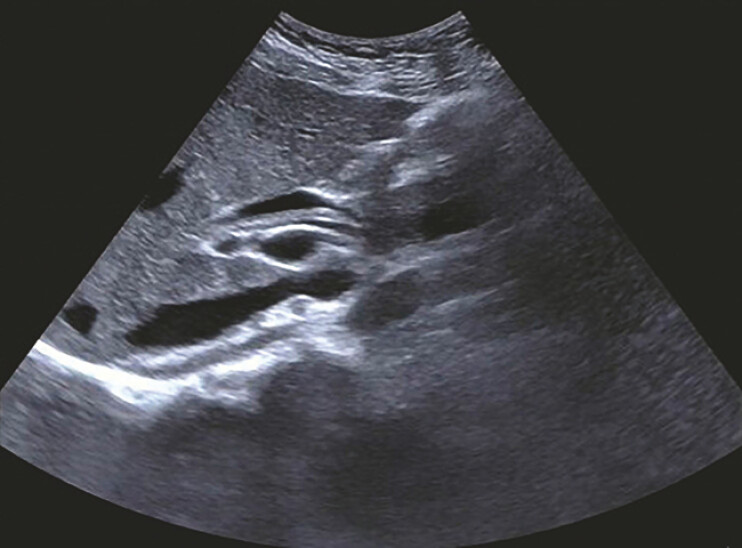 Fig. 1
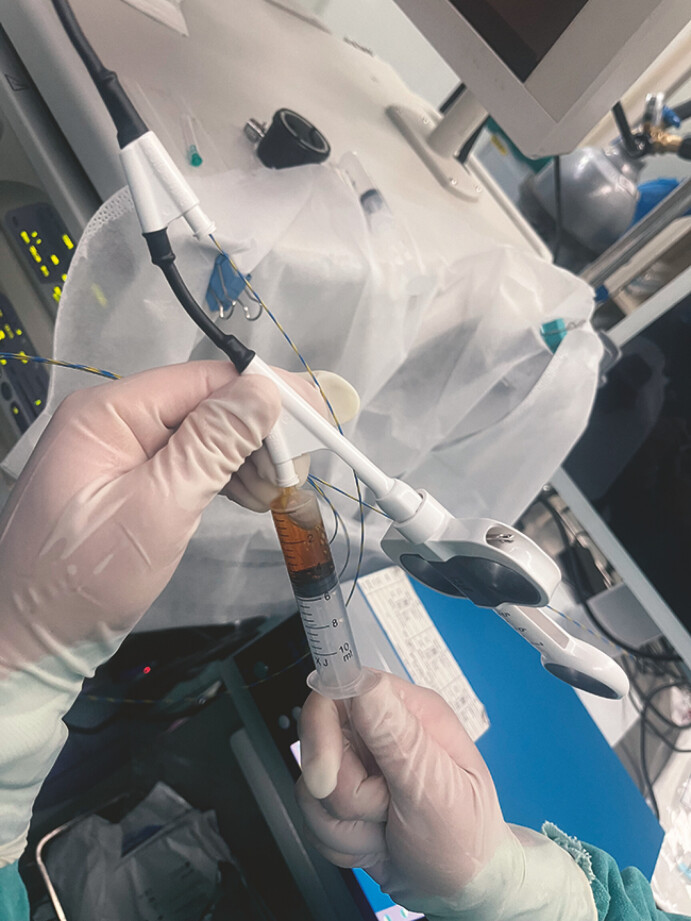 Fig. 2
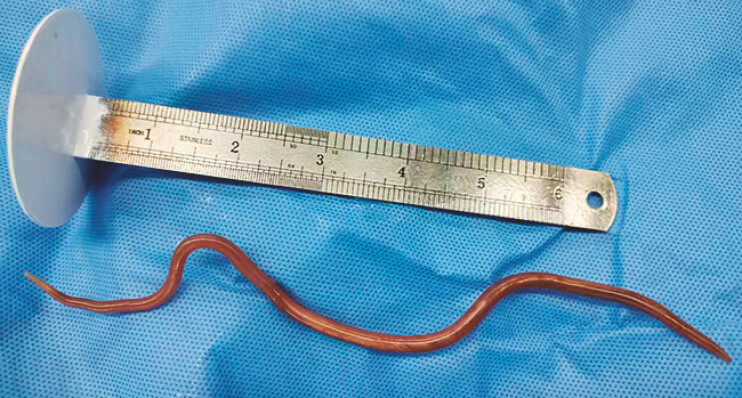 Fig. 3
Peer Reviews
No public reviews on file for this paper yet. If you reviewed it on a platform where reviews are public (OpenReview, ICLR, NeurIPS, ICML), you can paste yours below so the community can read it here.
Videos
No videos yet. Explain this paper in a talk, walkthrough, or lecture? Add one.
Taxonomy
TopicsCongenital Anomalies and Fetal Surgery · Parasitic infections in humans and animals · Liver Disease and Transplantation
A 23-year-old woman at 7 weeks of gestation was admitted with a 2-day history of abdominal pain. Abdominal ultrasonography identified biliary ascariasis ( Fig. 1 ), while gynecological ultrasound confirmed a viable intrauterine early pregnancy. Laboratory findings were unremarkable. In light of the patient’ s desire to continue the pregnancy, a radiation-free endoscopic approach for worm extraction via oral cholangioscopy was planned.
Abdominal color Doppler ultrasonography identified dual parallel linear hyperechoic structures within the biliary tract, exhibiting no acoustic shadowing.
Cannulation was successfully performed using a wire-guided sphincterotome. Aspiration of yellow bile confirmed the guidewire’s entry into the common bile duct ( Fig. 2 ). The sphincterotome was withdrawn smoothly after bowing. Given that the migration of the Ascaris into the bile duct had sufficiently dilated the papilla, sphincterotomy was deemed unnecessary and omitted. The EyeMax (Micro-tech) was advanced into the common bile duct along the guidewire, and the ascaris was successfully extracted ( Video 1 , Fig. 3 ). The patient experienced no postoperative complications.
Following the advancement of the sphincterotome into the lumen over the guidewire, aspiration of yellow bile was achieved, confirming successful cannulation of the bile duct.
Radiation-free extraction of intrahepatic biliary ascariasis via peroral cholangioscopy.Video 1
The externally retrieved Ascaris lumbricoides.
Pregnancy is a well-documented risk factor for biliary ascariasis 1 . While endoscopic retrograde cholangiopancreatography (ERCP) remains a critical therapeutic modality, its associated radiation exposure poses potential risks to the fetus. In this context, oral cholangioscopy offers a safe and efficient alternative for ascaris removal without radiation exposure. Notably, a novel endoscopic retrograde direct cholangioscopy (ERDC) technique has been developed to facilitate visible biliary duct cannulation 2 , further enhancing the feasibility and safety of this approach.
Endoscopy_UCTN_Code_CCL_1AZ_2AI
Endoscopy_UCTN_Code_CCL_1AC_2AG
The reference list from the paper itself. Each links out to its DOI / PubMed record.
- 1Khuroo MS Rather AA Khuroo NS Hepatobiliary and pancreatic ascariasis World J Gastroenterol 2016227507751710.3748/wjg.v 22.i 33.750727672273 PMC 5011666 · doi ↗ · pubmed ↗
- 2Liu WH Huang XY Hu X Initial experience of visualized biliary cannulation during ERCP Endoscopy 2023551037104210.1055/a-2113-895237339664 · doi ↗ · pubmed ↗