[Corrigendum] The mechanism of adenosine-mediated activation of lncRNA MEG3 and its antitumor effects in human hepatoma cells
Li-Xuan Liu, Wei Deng, Xiao-Tao Zhou, Rui-Pei Chen, Meng-Qi Xiang, Yi-Tian Guo, Ze-Jin Pu, Rui Li, Ge-Fei Wang, Ling-Fei Wu

Abstract
Genes, proteins, chemicals, diseases, species, mutations and cell lines named across the full text — each resolved to its canonical identifier and authoritative record.
Click any figure to enlarge with its caption.
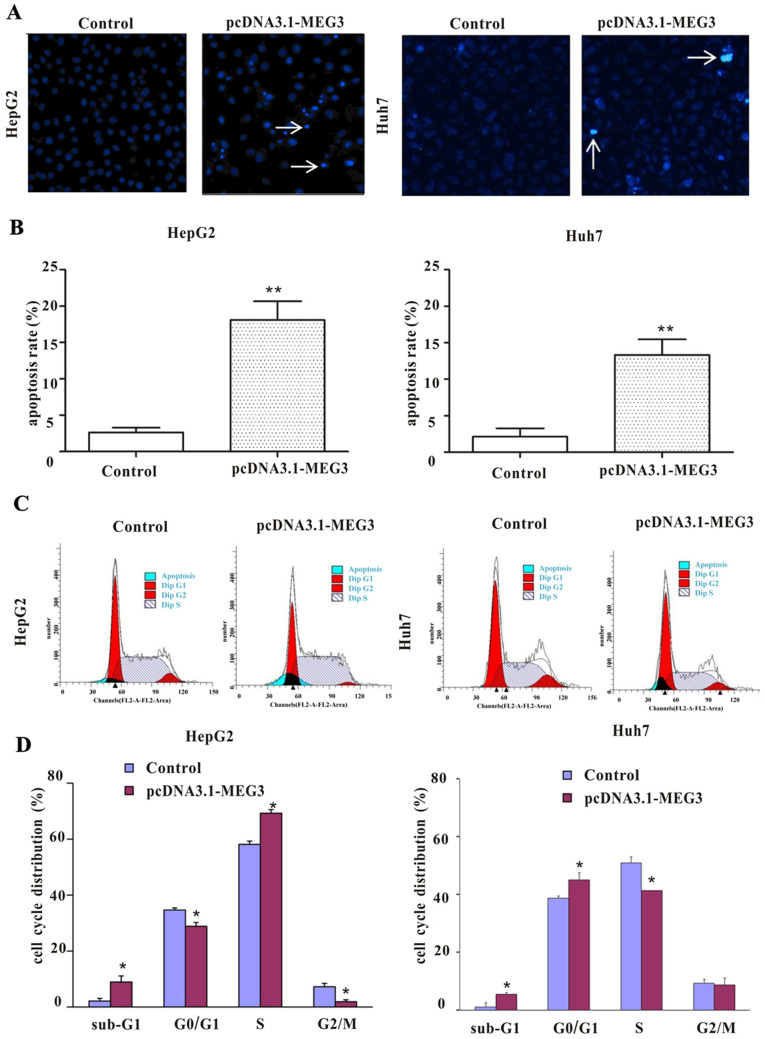 Figure 1
Peer Reviews
No public reviews on file for this paper yet. If you reviewed it on a platform where reviews are public (OpenReview, ICLR, NeurIPS, ICML), you can paste yours below so the community can read it here.
Videos
No videos yet. Explain this paper in a talk, walkthrough, or lecture? Add one.
Taxonomy
TopicsCancer-related molecular mechanisms research · RNA modifications and cancer · RNA and protein synthesis mechanisms
Int J Oncol 48: 421-429, 2016; DOI: 10.3892/ijo.2015.3248
Following the publication of the above article, an interested reader drew to the authors' attention that, for the fluorescence microscopic images shown in Fig. 4A on p. 425, the data shown for the 'Huh7 / pcDNA3.1-MEG3' experiment appeared to repeat some of the data shown in the 'HepG2 / pcDNA3.1-MEG3' experiment, albeit at a different magnification. Upon examining their original data, the authors realized that they had inadvertently assembled the data in this figure incorrectly.
The revised version of Fig. 4, now showing the correct images for the Control and pcDNA3.1-MEG3 experiments for the Huh7 cell line, is shown on the next page. The authors wish to state that these errors did not affect the overall conclusions reported in the study. The authors are grateful to the Editor of International Journal of Oncology for allowing them this opportunity to publish a Corrigendum, and all the authors agree with its publication. Furthermore, the authors apologize to the readership for any inconvenience caused.