The Mechanism Exploration of Traditional Chinese Medicine's “Different Treatments for Same Disease” Concept in Osteoporosis Therapy: A Serum Metabolomics Study
Jingyuan Wen, Xuefeng Li, Zhen Wu, Liu Jiangyuan, Guanyin Wang, Xu Wang, Zhengsheng Bao, Yang Yu, Pinger Wang, Zhenyu Shi, Bing Xu, Yunhuo Cai, Hongting Jin, Jiali Chen

TL;DR
This study explores how three traditional Chinese herbs treat osteoporosis differently by analyzing their effects on rat metabolism.
Contribution
It provides biological evidence supporting the TCM concept of 'different treatments for same disease' through serum metabolomics.
Findings
DG, FL, and NX improved bone strength and mass in postmenopausal osteoporosis rat models.
DG mainly affects lipid metabolism, while FL and NX also influence amino acid and purine metabolisms.
The study shows how different herbs target distinct metabolic pathways to treat the same disease.
Abstract
The “different treatments for same disease” is an important concept of traditional Chinese medicine (TCM) therapy. In TCM, osteoporosis (OP) treatment is aimed at invigorating blood, strengthening spleen, and tonifying kidneys, and their typical herbs are Angelica sinensis (Oliv.) Diels (Danggui, DG), Poria cocos (Schw.) Wolf (Fuling, FL), and Achyranthes bidentata Blume (Niuxi, NX). Nevertheless, molecular mechanisms of these different therapies of OP under the concept of “different treatments for same disease” are still unclear. The objective of this study was to identify the related metabolites and biological processes in these three distinct therapeutic approaches for osteoporosis, by using serum metabolomics analysis. A model of postmenopausal OP (PMOP) was created using bilateral ovariectomized rats and then administered with DG, FL, or NX for 12 weeks. To assess the efficacy of…
Genes, proteins, chemicals, diseases, species, mutations and cell lines named across the full text — each resolved to its canonical identifier and authoritative record.
Click any figure to enlarge with its caption.
 FIGURE 1
 FIGURE 2
 FIGURE 3
 FIGURE 4
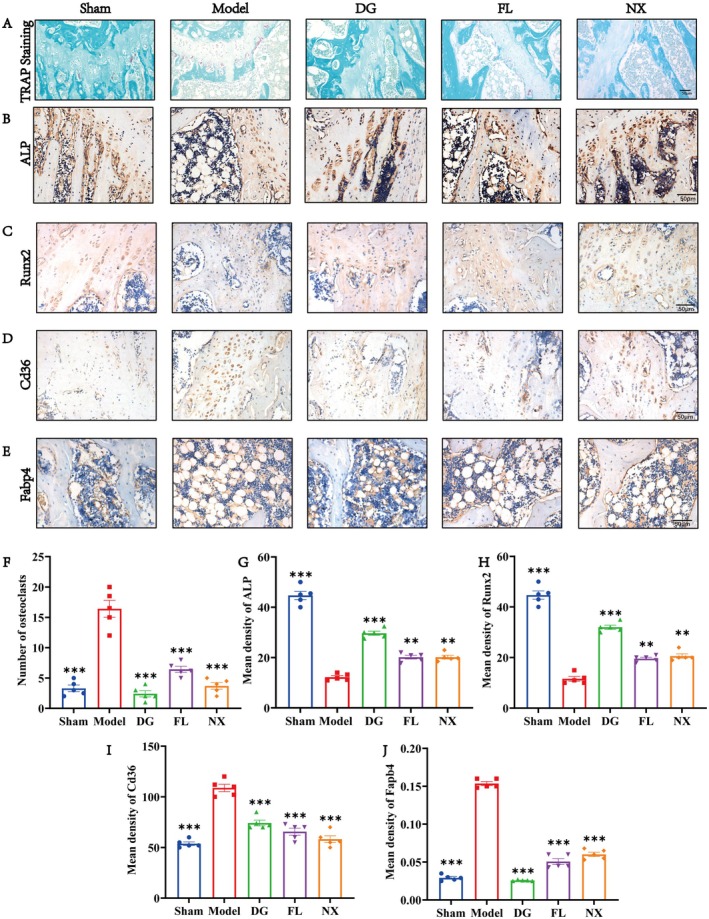 FIGURE 5
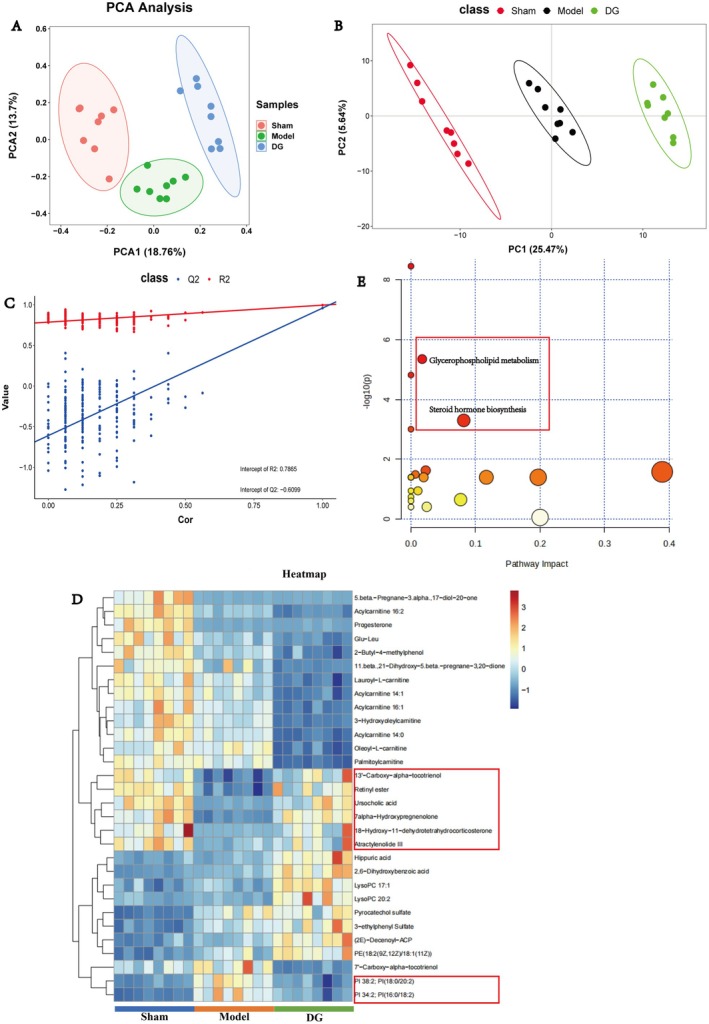 FIGURE 6
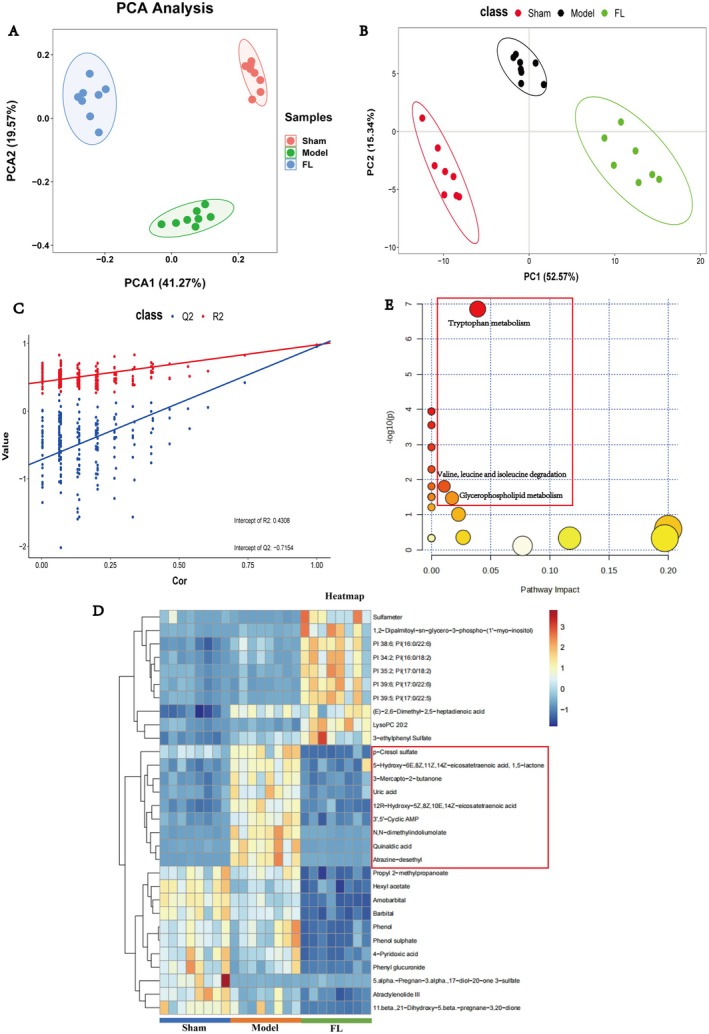 FIGURE 7
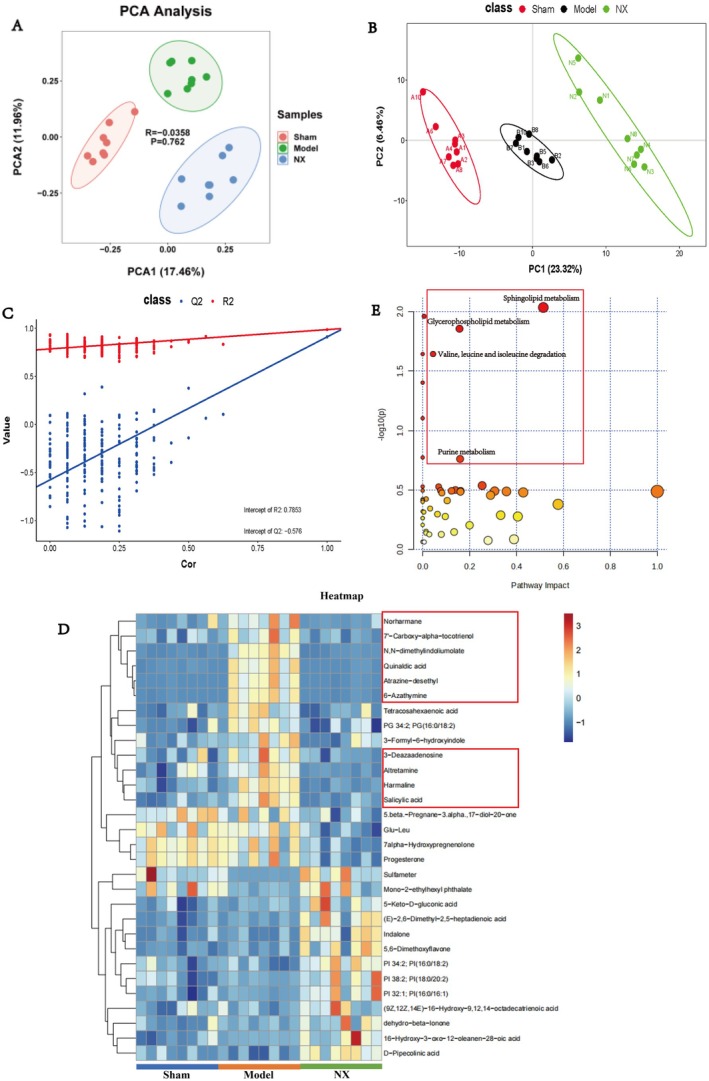 FIGURE 8
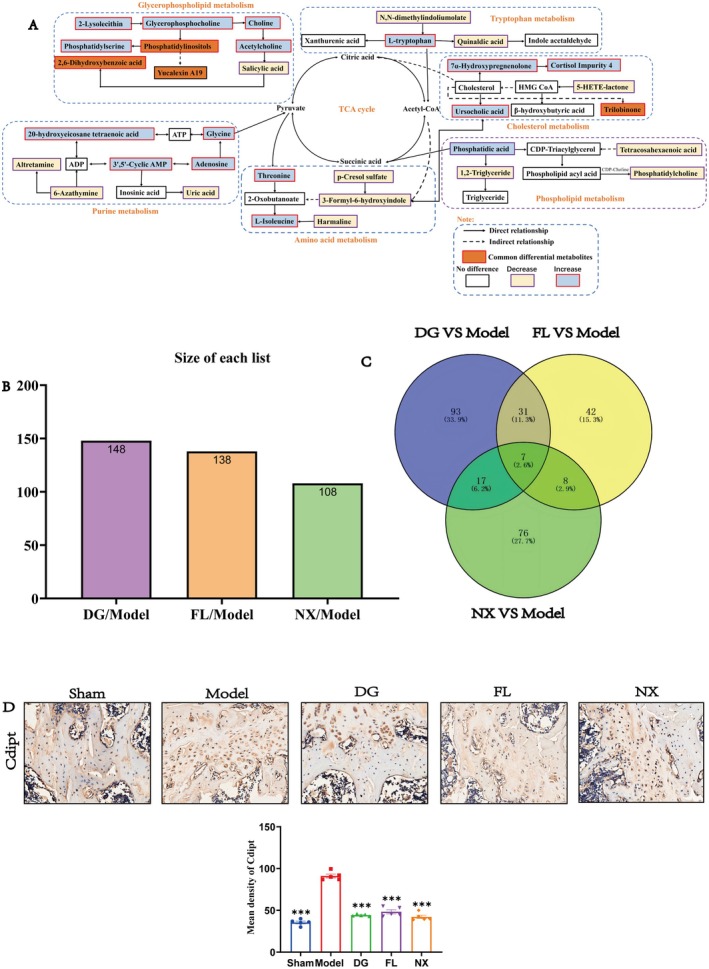 FIGURE 9
| Chinese herb | Full taxonomy name | Abbreviations | Drug concentration (g/mL) | Gavage dose (mL) | Parts used |
|---|---|---|---|---|---|
| DangGui |
| DG | 0.16 | 2 | Root |
| FuLing | Poria cocos (Schw.) Wolf | FL | 0.2 | 2 | Dried mycorrhizae |
| NiuXi |
| NX | 0.16 | 2 | Root |
| Name | MZ | RT | Formula | Superclass | Class | KEGG |
| VIP |
|---|---|---|---|---|---|---|---|---|
| (1R)‐Chrysanthemolactone | 186.16 | 3.62 | C10H16O2 | Organoheterocyclic compounds | Lactones | NA | 0.03 | 1.17 |
| (2E)‐Decenoyl‐ACP | 128.07 | 1.28 | C6H11NO2 | Organic acids and derivatives | Carboxylic acids and derivatives | 0.00 | 1.24 | |
| (3beta, 8beta)‐3‐Hydroxy‐7(11)‐eremophilen‐12,8‐olide | 249.15 | 4.81 | C15H22O3 | Lipids and lipid‐like molecules | Prenol lipids | NA | 0.00 | 2.21 |
| (R)‐3‐Hydroxybutyric acid | 103.04 | 1.06 | C4H8O3 | Organic acids and derivatives | Hydroxy acids and derivatives | 0.00 | 2.13 | |
| (Z)‐9‐Heptadecenoic acid | 267.23 | 7.70 | C17H32O2 | Lipids and lipid‐like molecules | Fatty acyls | 0.00 | 1.33 | |
| delta.‐Nonalactone | 157.12 | 3.59 | C9H16O2 | Organoheterocyclic compounds | Lactones | NA | 0.01 | 1.36 |
| 1,1′‐[1,12‐Dodecanediylbis(oxy)]bisbenzene | 355.26 | 4.35 | C24H34O2 | Benzenoids | Phenol ethers | NA | 0.00 | 3.39 |
| 1,2‐Benzenediol bis(trimethylsilyl) ether | 253.11 | 3.78 | C12H22O2Si2 | Benzenoids | Benzene and substituted derivatives | NA | 0.00 | 1.55 |
| 1,2‐Dilinoleoyl‐sn‐glycero‐3‐phosphocholine | 782.56 | 7.81 | C44H80NO8P | Lipids and lipid‐like molecules s | Glycerophospholipid | NA | 0.03 | 1.06 |
| 1,2‐Dipalmitoyl‐sn‐glycero‐3‐phospho‐(1′‐myo‐inositol) | 809.51 | 7.76 | C41H79O13P | Lipids and lipid‐like molecules s | Glycerophospholipid | NA | 0.02 | 1.35 |
| 11.beta.,21‐Dihydroxy‐5.beta.‐pregnane‐3,20‐dione | 349.23 | 3.63 | C21H32O4 | Lipids and lipid‐like molecules | Sterol lipids | 0.00 | 3.15 | |
| 12R‐Hydroxy‐5Z,8Z,10E,14Z‐eicosatetraenoic acid | 319.23 | 5.68 | C20H32O3 | Lipids and lipid‐like molecules | Fatty acyls | NA | 0.00 | 2.77 |
| 13′‐Carboxy‐alpha‐tocotrienol | 453.30 | 5.82 | C29H42O4 | Lipids and lipid‐like molecules | Prenol lipids | NA | 0.04 | 1.41 |
| 15,16‐DiHODE | 311.22 | 5.17 | C18H32O4 | Lipids and lipid‐like molecules | Fatty acyls | NA | 0.00 | 2.09 |
| 18‐Hydroxy‐11‐dehydrotetrahydrocorticosterone | 363.22 | 4.04 | C21H32O5 | Lipids and lipid‐like molecules | Sterol lipids | NA | 0.00 | 2.59 |
| 1H‐Indole‐4‐carboxaldehyde | 146.06 | 3.48 | C9H7NO | Organoheterocyclic compounds | Indoles and derivative | NA | 0.00 | 1.59 |
| 1‐Hydroxyibuprofen | 223.13 | 3.89 | C13H18O3 | Phenylpropanoids and polyketides | Phenylpropanoic acids | NA | 0.00 | 1.32 |
| 1‐O‐Hexadecyl‐2‐O‐butanoyl‐sn‐glyceryl‐3‐phosphocholine | 552.40 | 7.39 | C28H58NO7P | Lipids and lipid‐like molecules | Glycerophospholipids | NA | 0.00 | 1.45 |
| 2,3‐Diphenylpyrazine | 233.11 | 4.06 | C16H12N2 | Organoheterocyclic compounds | Diazines | NA | 0.02 | 1.08 |
| 2,4‐Octadiene | 111.12 | 3.62 | C8H14 | Hydrocarbons | Unsaturated hydrocarbons | NA | 0.03 | 1.24 |
| 2,6‐Dihydroxybenzoic acid | 153.02 | 3.20 | C7H6O4 | Benzenoids | Benzene and substituted derivatives | NA | 0.00 | 2.88 |
| 2,7,8‐Trimethyl‐2‐(.beta.‐carboxyethyl)‐6‐hydroxychroman | 263.13 | 4.03 | C15H20O4 | NA | NA | NA | 0.00 | 1.41 |
| 24‐Oxo‐1alpha,25‐dihydroxyvitamin D3 | 429.30 | 5.58 | C27H42O4 | Lipids and lipid‐like molecules | Sterol lipids | NA | 0.00 | 2.72 |
| 2‐Butyl‐4‐methylphenol | 163.11 | 4.39 | C11H16O | Benzenoids | Benzene and substituted derivatives | NA | 0.00 | 1.48 |
| 2‐Exo‐hydroxy‐1,8‐cineole | 169.12 | 4.81 | C10H18O2 | Organoheterocyclic compounds | Oxanes | NA | 0.00 | 1.12 |
| 2‐Indolecarboxylic acid | 162.05 | 3.41 | C9H7NO2 | Organoheterocyclic compounds | Indoles and derivatives | NA | 0.00 | 2.14 |
| 2‐Naphthaldehyde | 155.05 | 1.02 | C11H8O | Benzenoids | Naphthalenes | NA | 0.01 | 1.51 |
| 3′,5’‐Cyclic AMP | 330.06 | 2.72 | C10H12N5O6P | Nucleosides, nucleotides, and analogueA | NA | 0.00 | 1.64 | |
| 3,5‐Di‐tert‐butyl‐4‐hydroxybenzoic acid | 251.16 | 3.70 | C15H22O3 | Benzenoids | Benzene and substituted derivatives | NA | 0.00 | 1.03 |
| 3‐Formyl‐6‐hydroxyindole | 160.04 | 3.42 | C9H7NO2 | Organoheterocyclic compounds | Indoles and derivatives | NA | 0.01 | 1.53 |
| 3‐Furancarboxylic acid, tetrahydro‐4‐methylene‐5‐oxo‐2‐propyl‐, (2R,3S)‐rel— | 183.07 | 3.08 | C9H12O4 | NA | NA | NA | 0.00 | 2.22 |
| 3‐Hydroxyoleylcarnitine | 442.35 | 5.15 | C25H47NO5 | Lipids and lipid‐like molecules | Fatty acyls | NA | 0 | 2.82 |
| 3‐Isobutylglutaric acid | 187.10 | 3.15 | C9H16O4 | NA | NA | NA | 0.01 | 1.14 |
| 3‐Methylazelaic acid | 201.11 | 4.01 | C10H18O4 | Lipids and lipid‐like molecules | Fatty acyls | NA | 0.01 | 1.45 |
| 3‐Hydroxyoleylcarnitine | 442.35 | 5.15 | C25H47NO5 | Lipids and lipid‐like molecules | Fatty Acylsacyls | NA | 0 | 2.82 |
| 3‐Isobutylglutaric acid | 187.10 | 3.15 | C9H16O4 | NA | NA | NA | 0.01 | 1.14 |
| 3‐Methylazelaic acid | 201.11 | 4.01 | C10H18O4 | Lipids and lipid‐like molecules | Fatty Acylsacyls | NA | 0.01 | 1.45 |
| 3‐Oxo‐1,4,11(13)‐eudesmatrien‐12‐oic acid | 245.12 | 3.98 | C15H18O3 | Lipids and lipid‐like molecules | Prenol lipids | NA | 0.01 | 1.17 |
| 4‐Pentenyl acetate | 127.08 | 3.10 | C7H12O2 | Organic acids and derivatives | Carboxylic acids and derivatives | NA | 0.00 | 1.79 |
| 5‐(2‐Furanyl)‐3,4‐dihydro‐2H‐pyrrole | 134.06 | 2.93 | C8H9NO | Organoheterocyclic compounds | Heteroaromatic compounds | NA | 0.00 | 2.76 |
| 5‐Hydroxy‐6E,8Z,11Z,14Z‐eicosatetraenoic acid, 1,5‐lactone | 303.23 | 5.68 | C20H30O2 | Lipids and lipid‐like molecules | Fatty acyls | NA | 0.00 | 2.53 |
| 5‐Keto‐D‐gluconic acid | 193.03 | 3.20 | C6H10O7 | Organic acids and derivatives | Hydroxy acids and derivatives | NA | 0.01 | 1.31 |
| 6‐Azathymine | 128.05 | 4.12 | C4H5N3O2 | NA | NA | NA | 0 | 7.92 |
| 7alpha‐Hydroxypregnenolone | 333.24 | 4.48 | C21H32O3 | Lipids and lipid‐like molecules | Sterol Lipidslipids | 0.05 | 1.55 | |
| 7′‐Carboxy‐alpha‐tocotrienol | 345.21 | 4.56 | C21H30O4 | Organoheterocyclic compounds | Benzopyrans | NA | 0.00 | 3.45 |
| Acylcarnitine 10:0 | 316.25 | 3.99 | C17H34NO4 | Lipids and lipid‐like molecules | Fatty Acylsacyls | 0.00 | 1.29 | |
| Acylcarnitine 12:1 | 342.26 | 4.18 | C19H36NO4 | Lipids and lipid‐like molecules | Fatty Acyls | 0.02 | 1.13 | |
| Acylcarnitine 13:0 | 358.29 | 4.57 | C20H40NO4 | Lipids and lipid‐like molecules | Fatty acyls | 0.00 | 1.29 | |
| Acylcarnitine 13:1 | 356.28 | 4.39 | C20H38NO4 | Lipids and lipid‐like molecules | Fatty acyls | 0.02 | 1.30 | |
| Acylcarnitine 14:0 | 372.31 | 5.00 | C21H42NO4 | Lipids and lipid‐like molecules | Fatty acyls | 0 | 1.89 | |
| Acylcarnitine 14:1 | 370.29 | 4.66 | C21H40NO4 | Lipids and lipid‐like molecules | Fatty acyls | 0.00 | 1.53 | |
| Acylcarnitine 16:1 | 398.32 | 5.27 | C23H44NO4 | Lipids and lipid‐like molecules | Fatty acyls | 0.00 | 1.93 | |
| Acylcarnitine 16:2 | 396.31 | 4.84 | C23H42NO4 | Lipids and lipid‐like molecules | Fatty acyls | 0.00 | 1.29 | |
| Acylcarnitine 4:0 | 232.14 | 2.82 | C11H22NO4 | Lipids and lipid‐like molecules | Fatty acyls | 0.00 | 1.70 | |
| Acylcarnitine 8:1 | 286.20 | 3.49 | C15H28NO4 | Lipids and lipid‐like molecules | Fatty acyls | 0.00 | 1.20 | |
| Acylcarnitine 9:1 | 300.21 | 3.67 | C16H30NO4 | Lipids and lipid‐like molecules | Fatty acyls | 0.04 | 1.06 | |
| all‐trans‐Retinoic acid | 301.21 | 5.30 | C20H28O2 | Lipids and lipid‐like molecules | Prenol lipids | 0.00 | 2.77 | |
| Atractylenolide III | 247.13 | 4.01 | C15H20O3 | Lipids and lipid‐like molecules | Prenol lipids | NA | 0.00 | 1.32 |
| Atrazine‐desethyl | 188.07 | 4.12 | C6H10ClN5 | Organoheterocyclic compounds | Triazines | 0 | 7.49 | |
| Butralin | 296.16 | 3.35 | C14H21N3O4 | NA | NA | 0.00 | 1.70 | |
| Cholic acid | 407.28 | 4.36 | C24H40O5 | Lipids and lipid‐like molecules | Steroids and steroid derivatives | 0.00 | 3.12 | |
| cis‐3‐Octenyl propionate | 185.15 | 3.63 | C11H20O2 | Lipids and lipid‐like molecules | Fatty acyls | NA | 0.03 | 1.17 |
| D‐(+)‐Glucosamine | 180.10 | 0.81 | C6H13NO5 | Organic oxygen compounds | Organooxygen compounds | 0.05 | 3.70 | |
| Deoxycholic acid | 391.28 | 5.00 | C24H40O4 | Lipids and lipid‐like molecules | NA | 0.02 | 2.21 | |
| Diethyl suberate | 231.16 | 3.63 | C12H22O4 | NA | NA | NA | 0.03 | 1.20 |
| Dimethylhexa‐1,4‐diene | 111.12 | 4.59 | C8H14 | Hydrocarbons | Unsaturated hydrocarbons | NA | 0.03 | 1.05 |
| DL‐Indole‐3‐lactic acid | 204.07 | 3.20 | C11H11NO3 | Organoheterocyclic compounds | Indoles and derivatives | NA | 0.00 | 1.10 |
| D‐Pipecolinic acid | 130.09 | 1.28 | C6H11NO2 | Organic acids and derivatives | Carboxylic acids and derivatives | NA | 0.01 | 1.04 |
| Equol 7‐O‐glucuronide | 436.16 | 3.22 | C21H22O9 | Phenylpropanoids and polyketides | Isoflavonoids | NA | 0.00 | 1.26 |
| FAHFA 27:4; FAHFA (18:4/9:0) | 431.31 | 5.34 | C27H44O4 | Lipids and lipid‐like molecules | Fatty acyls | NA | 0.01 | 3.77 |
| FAHFA 36:3; FAHFA (18:2/18:1) | 559.47 | 7.47 | C36H64O4 | Lipids and lipid‐like molecules | Fatty acyls | NA | 0.01 | 1.50 |
| FAHFA 40:7; FAHFA (20:4/20:3) | 607.47 | 7.31 | C40H64O4 | Lipids and lipid‐like molecules | Fatty Acyls | NA | 0.00 | 1.17 |
| Galanal A | 317.21 | 5.30 | C20H30O3 | Organic oxygen compounds | Organooxygen compounds | NA | 0.00 | 2.05 |
| Gamma‐Linolenic acid | 277.22 | 6.88 | C18H30O2 | Lipids and lipid‐like molecules | Fatty acyls | 0.02 | 1.05 | |
| Glu‐Leu | 261.15 | 4.02 | C11H20N2O5 | Organic acids and derivatives | Carboxylic acids and derivatives | NA | 0.00 | 1.63 |
| Goshuyic acid | 223.17 | 5.83 | C14H24O2 | Lipids and lipid‐like molecules | Fatty acyls | NA | 0.01 | 1.04 |
| Hexanoyl‐L‐carnitine | 260.18 | 3.29 | C13H25NO4 | Lipids and lipid‐like molecules | Fatty acyls | NA | 0.00 | 1.19 |
| Hippuric acid | 178.05 | 2.94 | C9H9NO3 | Benzenoids | Benzene and substituted derivatives | 0.00 | 2.67 | |
| Hirsutine | 369.22 | 3.83 | C22H28N2O3 | Alkaloids and derivatives | NA | NA | 0.00 | 1.97 |
| Hydrocinnamic acid | 149.06 | 3.86 | C9H10O2 | Phenylpropanoids and polyketides | Phenylpropanoic acids | 0.00 | 1.77 | |
| Imiquimod | 239.13 | 3.89 | C14H16N4 | Organoheterocyclic compounds | Quinolines and derivatives | NA | 0.00 | 1.52 |
| Isobutylangelate | 155.11 | 3.22 | C9H16O2 | Lipids and lipid‐like molecules | Fatty Acyls | NA | 0.02 | 1.30 |
| Isolongifolene, 4,5,9,10‐dehydro— | 199.14 | 3.46 | C15H20 | Hydrocarbons | Polycyclic hydrocarbons | NA | 0.03 | 1.53 |
| Kessyl glycol | 253.18 | 4.31 | C15H26O3 | Organoheterocyclic compounds | Oxepanes | NA | 0.00 | 2.02 |
| L‐3‐Phenyllactic acid | 165.06 | 3.38 | C9H10O3 | Phenylpropanoids and polyketides | Phenylpropanoic acids | 0.01 | 2.65 | |
| Lauroyl‐L‐carnitine | 344.28 | 4.42 | C19H37NO4 | Lipids and lipid‐like molecules | Fatty acyls | NA | 0.00 | 1.20 |
| inoleoylcarnitine | 424.34 | 5.55 | C25H45NO4 | Lipids and lipid‐like molecules | Fatty acyls | NA | 0.03 | 1.96 |
| LsoPC 16:2 | 492.30 | 4.67 | C24H46NO7P | Lipids and lipid‐like molecules | Glycerophospholipids | 0.00 | 1.37 | |
| LysoPC 17:1 | 566.34 | 5.32 | C25H50NO7P | Lipids and lipid‐like molecules | Glycerophospholipids | 0.00 | 1.07 | |
| LysoPC 18:2 | 578.34 | 5.20 | C26H50NO7P | Lipids and lipid‐like molecules | Glycerophospholipids | 0.00 | 1.13 | |
| LysoPC 20:2 | 606.38 | 5.92 | C28H54NO7P | Lipids and lipid‐like molecules | Glycerophospholipids | 0.00 | 2.00 | |
| LysoPC 20:3 | 604.36 | 5.48 | C28H52NO7P | Lipids and lipid‐like molecules | Glycerophospholipids | 0.01 | 2.69 | |
| LysoPC 20:5 | 600.33 | 4.86 | C28H48NO7P | Lipids and lipid‐like molecules | Glycerophospholipids | 0.00 | 1.38 | |
| LysoPC 22:4 | 630.38 | 5.79 | C30H54NO7P | Lipids and lipid‐like molecules | Glycerophospholipids | 0.00 | 1.18 | |
| LysoPC 22:5 | 628.36 | 5.35 | C30H52NO7P | Lipids and lipid‐like molecules | Glycerophospholipids | 0.00 | 1.00 | |
| N,N‐dimethylindoliumolate | 176.07 | 3.46 | C10H11NO2 | Organoheterocyclic compounds | Indoles and derivatives | NA | 0 | 6.08 |
| N‐Desmethylmirtazapine | 252.17 | 3.81 | C16H17N3 | NA | NA | NA | 0.01 | 1.21 |
| Norharman | 169.08 | 3.53 | C11H8N2 | Organoheterocyclic compounds | Indoles and derivatives | 0.00 | 1.29 | |
| Norharmane | 169.07 | 3.10 | C11H8N2 | Organoheterocyclic compounds | Indoles and derivatives | 0.05 | 1.42 | |
| N‐Stearoyltaurine | 390.27 | 5.54 | C20H41NO4S | NA | NA | NA | 0.00 | 1.10 |
| O‐Acetyl‐L‐carnitine | 204.12 | 1.20 | C9H18NO4 | Lipids and lipid‐like molecules | Fatty acyls | 0.01 | 1.03 | |
| Octadecadienoate | 279.23 | 7.47 | C18H32O2 | Lipids and lipid‐like molecules | Fatty acyls | NA | 0.01 | 1.06 |
| Octanoylcarnitine | 288.21 | 3.63 | C15H29NO4 | Lipids and lipid‐like molecules | Fatty acyls | 0.00 | 1.02 | |
| Oleic acid | 281.25 | 8.18 | C18H34O2 | Lipids and lipid‐like molecules | Fatty acyls | 0.00 | 1.08 | |
| Oleoyl‐L‐carnitine | 426.35 | 6.16 | C25H47NO4 | Lipids and lipid‐like molecules | Fatty acyls | NA | 0.00 | 2.21 |
| Palmitelaidic acid | 253.22 | 7.22 | C16H30O2 | Lipids and lipid‐like molecules | Fatty Acyls | NA | 0.00 | 1.51 |
| Palmitoyl sphingomyelin | 703.57 | 7.81 | C39H79N2O6P | NA | NA | NA | 0.01 | 1.32 |
| Palmitoylcarnitine | 400.34 | 5.88 | C23H45NO4 | Lipids and lipid‐like molecules | Fatty Acyls | 0 | 1.80 | |
| PC 34:2; PC (16:0/18:2) | 816.57 | 9.63 | C42H80NO8P | Lipids and lipid‐like molecules | Glycerophospholipids | 0.00 | 1.96 | |
| PC 36:4; PC (16:0/20:4) | 840.57 | 5.68 | C44H80NO8P | Lipids and lipid‐like molecules | Glycerophospholipids | 0.00 | 2.16 | |
| PC 38:4; PC (18:0/20:4) | 868.60 | 9.63 | C46H84NO8P | Lipids and lipid‐like molecules | Glycerophospholipids | 0.00 | 1.10 | |
| PC 38:6; PC (16:0/22:6) | 864.57 | 9.63 | C46H80NO8P | Lipids and lipid‐like molecules | Glycerophospholipids | 0.01 | 1.41 | |
| PC (16:0/16:1 (9Z)) | 732.55 | 9.65 | C40H78NO8P | Lipids and lipid‐like molecules | Glycerophospholipids | 0.00 | 1.72 | |
| PC (18:2 (9Z,12Z)/20:3 (5Z,8Z,11Z)) | 808.58 | 4.09 | C46H82NO8P | Lipids and lipid‐like molecules | Glycerophospholipids | 0.00 | 1.15 | |
| p‐Cresol sulfate | 187.01 | 3.31 | C7H8O4S | Organic acids and derivatives | Organic sulfuric acids and derivatives | NA | 0.00 | 2.84 |
| Pelargonic acid | 157.12 | 4.69 | C9H18O2 | Lipids and lipid‐like molecules | Fatty acyls | 0.04 | 1.24 | |
| Phenol | 93.03 | 3.05 | C6H6O | Benzenoids | Phenols | 0.02 | 1.22 | |
| Phenol sulphate | 172.99 | 3.05 | C6H6O4S | Organic acids and derivatives | Organic sulfuric acids and derivatives | 0.01 | 1.55 | |
| Phenyl glucuronide | 269.07 | 2.75 | C12H14O7 | NA | NA | NA | 0.02 | 1.62 |
| Physoperuvine | 200.13 | 3.58 | C8H15NO | Alkaloids and derivatives | Tropane alkaloids | 0.01 | 1.39 | |
| PI 33:2; PI (15:0/18:2) | 819.50 | 7.44 | C42H77O13P | Lipids and lipid‐like molecules | Glycerophospholipids | 0.00 | 2.12 | |
| PI 34:2; PI (16:0/18:2) | 833.52 | 7.59 | C43H79O13P | Lipids and lipid‐like molecules | Glycerophospholipids | 0.02 | 1.12 | |
| PI 35:2; PI (17:0/18:2) | 847.53 | 7.72 | C44H81O13P | Lipids and lipid‐like molecules | Glycerophospholipids | 0.00 | 2.22 | |
| PI 35:4; PI (15:0/20:4) | 843.50 | 7.40 | C44H77O13P | Lipids and lipid‐like molecules | Glycerophospholipids | 0.00 | 1.74 | |
| PI 36:1; PI (18:0/18:1) | 863.56 | 8.08 | C45H85O13P | Lipids and lipid‐like molecules | Glycerophospholipids | 0.00 | 2.17 | |
| PI 36:2; PI (18:0/18:2) | 861.55 | 7.85 | C45H83O13P | Lipids and lipid‐like molecules | Glycerophospholipids | 0.00 | 1.19 | |
| PI 37:4; PI (17:0/20:4) | 871.53 | 7.69 | C46H81O13P | Lipids and lipid‐like molecules | Glycerophospholipids | 0.04 | 1.50 | |
| PI 38:2; PI (18:0/20:2) | 889.58 | 8.12 | C47H87O13P | Lipids and lipid‐like molecules | Glycerophospholipids | 0.00 | 2.20 | |
| PI 38:5; PI (18:1/20:4) | 883.53 | 7.58 | C47H81O13P | Lipids and lipid‐like molecules | Glycerophospholipids | 0.00 | 1.71 | |
| PI 39:4; PI (19:0/20:4) | 899.56 | 7.93 | C48H85O13P | Lipids and lipid‐like molecules | Glycerophospholipids | 0.03 | 1.59 | |
| PI 39:5; PI (17:0/22:5) | 897.55 | 7.70 | C48H83O13P | Lipids and lipid‐like molecules | Glycerophospholipids | 0.01 | 2.03 | |
| PI 39:6; PI (17:0/22:6) | 895.53 | 7.59 | C48H81O13P | Lipids and lipid‐like molecules | Glycerophospholipids | 0.00 | 2.30 | |
| PI 40:4; PI (18:0/22:4) | 913.58 | 8.00 | C49H87O13P | Lipids and lipid‐like molecules | Glycerophospholipids | 0.01 | 1.92 | |
| PI 40:7; PI (18:1/22:6) | 907.53 | 7.52 | C49H81O13P | Lipids and lipid‐like molecules | Glycerophospholipids | 0.01 | 1.65 | |
| Plasmenyl‐PE 37:4; PE (P‐17:0/20:4) | 736.53 | 8.47 | C42H76NO7P | Lipids and lipid‐like molecules | Glycerophospholipids | 0.02 | 3.20 | |
| Plasmenyl‐PE 40:5; PE (P‐18:0/22:5) | 776.56 | 8.49 | C45H80NO7P | Lipids and lipid‐like molecules | Glycerophospholipids | 0.04 | 1.43 | |
| Plasmenyl‐PE 40:6; PE (P‐18:0/22:6) | 774.54 | 8.49 | C45H78NO7P | Lipids and lipid‐like molecules | Glycerophospholipids | 0.04 | 1.48 | |
| Prenyl caproate | 185.15 | 4.59 | C11H20O2 | Lipids and lipid‐like molecules | Fatty acyls | 0.03 | 1.06 | |
| Quinaldic acid | 174.05 | 3.09 | C10H7NO2 | Organoheterocyclic compounds | Quinolines and derivatives | 0 | 7.35 | |
| Retinyl ester | 301.22 | 5.68 | C20H30O2 | Lipids and lipid‐like molecules | Prenol lipids | 0.00 | 2.75 | |
| Salicylic acid | 137.02 | 3.07 | C7H6O3 | Benzenoids | Benzene and substituted derivatives | 0.00 | 2.15 | |
| Santene hydrate | 139.11 | 4.59 | C9H16O | Lipids and lipid‐like molecules | Prenol lipids | NA | 0.03 | 1.11 |
| Sayanedin | 299.09 | 3.46 | C17H14O5 | Phenylpropanoids and polyketides | Isoflavonoids | 0.02 | 2.10 | |
| Sciadonic acid | 305.25 | 7.93 | C20H34O2 | Lipids and lipid‐like molecules | Fatty acyls | NA | 0.00 | 1.61 |
| Sulfameter | 281.07 | 3.56 | C11H12N4O3S | NA | NA | NA | 0.00 | 3.61 |
| Tamoxifen | 372.23 | 2.94 | C26H29NO | Phenylpropanoids and polyketides | Stilbenes | 0.00 | 2.30 | |
| Taurodeoxycholic acid | 498.29 | 3.88 | C26H45NO6S | Lipids and lipid‐like molecules | Sterol Lipids | 0.02 | 1.90 | |
| Trachelanthine | 302.19 | 3.17 | C15H27NO5 | Organoheterocyclic compounds | Indoles and derivatives | NA | 0.00 | 1.61 |
| Trilobinone | 315.19 | 4.66 | C20H28O3 | Lipids and lipid‐like molecules | Prenol lipids | NA | 0.01 | 1.40 |
| Ursocholic acid | 467.30 | 4.07 | C24H40O5 | Lipids and lipid‐like molecules | Sterol lipids | 0.00 | 2.54 | |
| Yucalexin A19 | 317.21 | 4.99 | C20H30O3 | Lipids and lipid‐like molecules | Prenol lipids | NA | 0.02 | 1.64 |
| Name | MZ | RT | Formula | SuperClass | Class | KEGG |
| VIP |
|---|---|---|---|---|---|---|---|---|
| (1R)‐Chrysanthemolactone | 186.16 | 3.62 | C10H16O2 | Organoheterocyclic compounds | Lactones | NA | 0.03 | 1.17 |
| (2E)‐Decenoyl‐ACP | 128.07 | 1.28 | C6H11NO2 | Organic acids and derivatives | Carboxylic acids and derivatives | 0.00 | 1.24 | |
| (3beta, 8beta)‐3‐Hydroxy‐7(11)‐eremophilen‐12,8‐olide | 249.15 | 4.81 | C15H22O3 | Lipids and lipid‐like molecules | Prenol lipids | NA | 0.00 | 2.21 |
| (R)‐3‐Hydroxybutyric acid | 103.04 | 1.06 | C4H8O3 | Organic acids and derivatives | Hydroxy acids and derivatives | 0.00 | 2.13 | |
| (Z)‐9‐Heptadecenoic acid | 267.23 | 7.70 | C17H32O2 | Lipids and lipid‐like molecules | Fatty Acyls | 0.00 | 1.33 | |
| .delta.‐Nonalactone | 157.12 | 3.59 | C9H16O2 | Organoheterocyclic compounds | Lactones | NA | 0.01 | 1.36 |
| 1,1′‐[1,12‐Dodecanediylbis(oxy)]bisbenzene | 355.26 | 4.35 | C24H34O2 | Benzenoids | Phenol ethers | NA | 0.00 | 3.39 |
| 1,2‐Benzenediol bis(trimethylsilyl) ether | 253.11 | 3.78 | C12H22O2Si2 | Benzenoids | Benzene and substituted derivatives | NA | 0.00 | 1.55 |
| 1,2‐Dilinoleoyl‐sn‐glycero‐3‐phosphocholine | 782.56 | 7.81 | C44H80NO8P | Lipids and lipid‐like molecules | Glycerophospholipids | NA | 0.03 | 1.06 |
| 1,2‐Dipalmitoyl‐sn‐glycero‐3‐phospho‐(1′‐myo‐inositol) | 809.51 | 7.76 | C41H79O13P | Lipids and lipid‐like molecules | Glycerophospholipids | NA | 0.02 | 1.35 |
| 11.beta.,21‐Dihydroxy‐5.beta.‐pregnane‐3,20‐dione | 349.23 | 3.63 | C21H32O4 | Lipids and lipid‐like molecules | Sterol Lipids | 0.00 | 3.15 | |
| 12R‐Hydroxy‐5Z,8Z,10E,14Z‐eicosatetraenoic acid | 319.23 | 5.68 | C20H32O3 | Lipids and lipid‐like molecules | Fatty Acyls | NA | 0.00 | 2.77 |
| 13′‐Carboxy‐alpha‐tocotrienol | 453.30 | 5.82 | C29H42O4 | Lipids and lipid‐like molecules | Prenol lipids | NA | 0.04 | 1.41 |
| 15,16‐DiHODE | 311.22 | 5.17 | C18H32O4 | Lipids and lipid‐like molecules | Fatty Acyls | NA | 0.00 | 2.09 |
| 18‐Hydroxy‐11‐dehydrotetrahydrocorticosterone | 363.22 | 4.04 | C21H32O5 | Lipids and lipid‐like molecules | Sterol Lipids | NA | 0.00 | 2.59 |
| 1H‐Indole‐4‐carboxaldehyde | 146.06 | 3.48 | C9H7NO | Organoheterocyclic compounds | Indoles and derivatives | NA | 0.00 | 1.59 |
| 1‐Hydroxyibuprofen | 223.13 | 3.89 | C13H18O3 | Phenylpropanoids and polyketides | Phenylpropanoic acids | NA | 0.00 | 1.32 |
| 1‐O‐Hexadecyl‐2‐O‐butanoyl‐sn‐glyceryl‐3‐phosphocholine | 552.40 | 7.39 | C28H58NO7P | Lipids and lipid‐like molecules | Glycerophospholipids | NA | 0.00 | 1.45 |
| 2,3‐Diphenylpyrazine | 233.11 | 4.06 | C16H12N2 | Organoheterocyclic compounds | Diazines | NA | 0.02 | 1.08 |
| 2,4‐Octadiene | 111.12 | 3.62 | C8H14 | Hydrocarbons | Unsaturated hydrocarbons | NA | 0.03 | 1.24 |
| 2,6‐Dihydroxybenzoic acid | 153.02 | 3.20 | C7H6O4 | Benzenoids | Benzene and substituted derivatives | NA | 0.00 | 2.88 |
| 2,7,8‐Trimethyl‐2‐(.beta.‐carboxyethyl)‐6‐hydroxychroman | 263.13 | 4.03 | C15H20O4 | NA | NA | NA | 0.00 | 1.41 |
| 24‐Oxo‐1alpha,25‐dihydroxyvitamin D3 | 429.30 | 5.58 | C27H42O4 | Lipids and lipid‐like molecules | Sterol Lipids | NA | 0.00 | 2.72 |
| 2‐Butyl‐4‐methylphenol | 163.11 | 4.39 | C11H16O | Benzenoids | Benzene and substituted derivatives | NA | 0.00 | 1.48 |
| 2‐Exo‐hydroxy‐1,8‐cineole | 169.12 | 4.81 | C10H18O2 | Organoheterocyclic compounds | Oxanes | NA | 0.00 | 1.12 |
| 2‐Indolecarboxylic acid | 162.05 | 3.41 | C9H7NO2 | Organoheterocyclic compounds | Indoles and derivatives | NA | 0.00 | 2.14 |
| 2‐Naphthaldehyde | 155.05 | 1.02 | C11H8O | Benzenoids | Naphthalenes | NA | 0.01 | 1.51 |
| 3′,5′‐Cyclic AMP | 330.06 | 2.72 | C10H12N5O6P | Nucleosides, nucleotides, and analogue A | NA | 0.00 | 1.64 | |
| 3,5‐Di‐tert‐butyl‐4‐hydroxybenzoic acid | 251.16 | 3.70 | C15H22O3 | Benzenoids | Benzene and substituted derivatives | NA | 0.00 | 1.03 |
| 3‐Formyl‐6‐hydroxyindole | 160.04 | 3.42 | C9H7NO2 | Organoheterocyclic compounds | Indoles and derivatives | NA | 0.01 | 1.53 |
| 3‐Furancarboxylic acid, tetrahydro‐4‐methylene‐5‐oxo‐2‐propyl‐, (2R,3S)‐rel— | 183.07 | 3.08 | C9H12O4 | NA | NA | NA | 0.00 | 2.22 |
| 3‐Hydroxyoleylcarnitine | 442.35 | 5.15 | C25H47NO5 | Lipids and lipid‐like molecules | Fatty Acyls | NA | 0 | 2.82 |
| 3‐Isobutylglutaric acid | 187.10 | 3.15 | C9H16O4 | NA | NA | NA | 0.01 | 1.14 |
| 3‐Methylazelaic acid | 201.11 | 4.01 | C10H18O4 | Lipids and lipid‐like molecules | Fatty Acyls | NA | 0.01 | 1.45 |
| 3‐Oxo‐1,4,11(13)‐eudesmatrien‐12‐oic acid | 245.12 | 3.98 | C15H18O3 | Lipids and lipid‐like molecules | Prenol lipids | NA | 0.01 | 1.17 |
| 4‐Pentenyl acetate | 127.08 | 3.10 | C7H12O2 | Organic acids and derivatives | Carboxylic acids and derivatives | NA | 0.00 | 1.79 |
| 5‐(2‐Furanyl)‐3,4‐dihydro‐2H‐pyrrole | 134.06 | 2.93 | C8H9NO | Organoheterocyclic compounds | Heteroaromatic compounds | NA | 0.00 | 2.76 |
| 5‐Hydroxy‐6E,8Z,11Z,14Z‐eicosatetraenoic acid, 1,5‐lactone | 303.23 | 5.68 | C20H30O2 | Lipids and lipid‐like molecules | Fatty Acyls | NA | 0.00 | 2.53 |
| 5‐Keto‐D‐gluconic acid | 193.03 | 3.20 | C6H10O7 | Organic acids and derivatives | Hydroxy acids and derivatives | NA | 0.01 | 1.31 |
| 6‐Azathymine | 128.05 | 4.12 | C4H5N3O2 | NA | NA | NA | 0 | 7.92 |
| 7alpha‐Hydroxypregnenolone | 333.24 | 4.48 | C21H32O3 | Lipids and lipid‐like molecules | Sterol Lipids | 0.05 | 1.55 | |
| 7′‐Carboxy‐alpha‐tocotrienol | 345.21 | 4.56 | C21H30O4 | Organoheterocyclic compounds | Benzopyrans | NA | 0.00 | 3.45 |
| Acylcarnitine 10:0 | 316.25 | 3.99 | C17H34NO4 | Lipids and lipid‐like molecules | Fatty Acyls | 0.00 | 1.29 | |
| Acylcarnitine 12:1 | 342.26 | 4.18 | C19H36NO4 | Lipids and lipid‐like molecules | Fatty Acyls | 0.02 | 1.13 | |
| Acylcarnitine 13:0 | 358.29 | 4.57 | C20H40NO4 | Lipids and lipid‐like molecules | Fatty Acyls | 0.00 | 1.29 | |
| Acylcarnitine 13:1 | 356.28 | 4.39 | C20H38NO4 | Lipids and lipid‐like molecules | Fatty Acyls | 0.02 | 1.30 | |
| Acylcarnitine 14:0 | 372.31 | 5.00 | C21H42NO4 | Lipids and lipid‐like molecules | Fatty Acyls | 0 | 1.89 | |
| Acylcarnitine 14:1 | 370.29 | 4.66 | C21H40NO4 | Lipids and lipid‐like molecules | Fatty Acyls | 0.00 | 1.53 | |
| Acylcarnitine 16:1 | 398.32 | 5.27 | C23H44NO4 | Lipids and lipid‐like molecules | Fatty Acyls | 0.00 | 1.93 | |
| Acylcarnitine 16:2 | 396.31 | 4.84 | C23H42NO4 | Lipids and lipid‐like molecules | Fatty Acyls | 0.00 | 1.29 | |
| Acylcarnitine 4:0 | 232.14 | 2.82 | C11H22NO4 | Lipids and lipid‐like molecules | Fatty Acyls | 0.00 | 1.70 | |
| Acylcarnitine 8:1 | 286.20 | 3.49 | C15H28NO4 | Lipids and lipid‐like molecules | Fatty Acyls | 0.00 | 1.20 | |
| Acylcarnitine 9:1 | 300.21 | 3.67 | C16H30NO4 | Lipids and lipid‐like molecules | Fatty Acyls | 0.04 | 1.06 | |
| all‐trans‐Retinoic acid | 301.21 | 5.30 | C20H28O2 | Lipids and lipid‐like molecules | Prenol lipids | 0.00 | 2.77 | |
| Atractylenolide III | 247.13 | 4.01 | C15H20O3 | Lipids and lipid‐like molecules | Prenol lipids | NA | 0.00 | 1.32 |
| Atrazine‐desethyl | 188.07 | 4.12 | C6H10ClN5 | Organoheterocyclic compounds | Triazines | 0 | 7.49 | |
| Butralin | 296.16 | 3.35 | C14H21N3O4 | NA | NA | 0.00 | 1.70 | |
| Cholic acid | 407.28 | 4.36 | C24H40O5 | Lipids and lipid‐like molecules | Steroids and steroid derivatives | 0.00 | 3.12 | |
| cis‐3‐Octenyl propionate | 185.15 | 3.63 | C11H20O2 | Lipids and lipid‐like molecules | Fatty Acyls | NA | 0.03 | 1.17 |
| D‐(+)‐Glucosamine | 180.10 | 0.81 | C6H13NO5 | Organic oxygen compounds | Organooxygen compounds | 0.05 | 3.70 | |
| Deoxycholic acid | 391.28 | 5.00 | C24H40O4 | Lipids and lipid‐like molecules | NA | 0.02 | 2.21 | |
| Diethyl suberate | 231.16 | 3.63 | C12H22O4 | NA | NA | NA | 0.03 | 1.20 |
| Dimethylhexa‐1,4‐diene | 111.12 | 4.59 | C8H14 | Hydrocarbons | Unsaturated hydrocarbons | NA | 0.03 | 1.05 |
| DL‐Indole‐3‐lactic acid | 204.07 | 3.20 | C11H11NO3 | Organoheterocyclic compounds | Indoles and derivatives | NA | 0.00 | 1.10 |
| D‐Pipecolinic acid | 130.09 | 1.28 | C6H11NO2 | Organic acids and derivatives | Carboxylic acids and derivatives | NA | 0.01 | 1.04 |
| Equol 7‐O‐glucuronide | 436.16 | 3.22 | C21H22O9 | Phenylpropanoids and polyketides | Isoflavonoids | NA | 0.00 | 1.26 |
| FAHFA 27:4; FAHFA (18:4/9:0) | 431.31 | 5.34 | C27H44O4 | Lipids and lipid‐like molecules | Fatty Acyls | NA | 0.01 | 3.77 |
| FAHFA 36:3; FAHFA (18:2/18:1) | 559.47 | 7.47 | C36H64O4 | Lipids and lipid‐like molecules | Fatty Acyls | NA | 0.01 | 1.50 |
| FAHFA 40:7; FAHFA (20:4/20:3) | 607.47 | 7.31 | C40H64O4 | Lipids and lipid‐like molecules | Fatty Acyls | NA | 0.00 | 1.17 |
| Galanal A | 317.21 | 5.30 | C20H30O3 | Organic oxygen compounds | Organooxygen compounds | NA | 0.00 | 2.05 |
| Gamma‐Linolenic acid | 277.22 | 6.88 | C18H30O2 | Lipids and lipid‐like molecules | Fatty Acyls | 0.02 | 1.05 | |
| Glu‐Leu | 261.15 | 4.02 | C11H20N2O5 | Organic acids and derivatives | Carboxylic acids and derivatives | NA | 0.00 | 1.63 |
| Goshuyic acid | 223.17 | 5.83 | C14H24O2 | Lipids and lipid‐like molecules | Fatty Acyls | NA | 0.01 | 1.04 |
| Hexanoyl‐L‐carnitine | 260.18 | 3.29 | C13H25NO4 | Lipids and lipid‐like molecules | Fatty Acyls | NA | 0.00 | 1.19 |
| Hippuric acid | 178.05 | 2.94 | C9H9NO3 | Benzenoids | Benzene and substituted derivatives | 0.00 | 2.67 | |
| Hirsutine | 369.22 | 3.83 | C22H28N2O3 | Alkaloids and derivatives | NA | NA | 0.00 | 1.97 |
| Hydrocinnamic acid | 149.06 | 3.86 | C9H10O2 | Phenylpropanoids and polyketides | Phenylpropanoic acids | 0.00 | 1.77 | |
| Imiquimod | 239.13 | 3.89 | C14H16N4 | Organoheterocyclic compounds | Quinolines and derivatives | NA | 0.00 | 1.52 |
| Isobutylangelate | 155.11 | 3.22 | C9H16O2 | Lipids and lipid‐like molecules | Fatty Acyls | NA | 0.02 | 1.30 |
| Isolongifolene, 4,5,9,10‐dehydro— | 199.14 | 3.46 | C15H20 | Hydrocarbons | Polycyclic hydrocarbons | NA | 0.03 | 1.53 |
| Kessyl glycol | 253.18 | 4.31 | C15H26O3 | Organoheterocyclic compounds | Oxepanes | NA | 0.00 | 2.02 |
| L‐3‐Phenyllactic acid | 165.06 | 3.38 | C9H10O3 | Phenylpropanoids and polyketides | Phenylpropanoic acids | 0.01 | 2.65 | |
| Lauroyl‐L‐carnitine | 344.28 | 4.42 | C19H37NO4 | Lipids and lipid‐like molecules | Fatty Acyls | NA | 0.00 | 1.20 |
| Linoleoylcarnitine | 424.34 | 5.55 | C25H45NO4 | Lipids and lipid‐like molecules | Fatty Acyls | NA | 0.03 | 1.96 |
| LysoPC 16:2 | 492.30 | 4.67 | C24H46NO7P | Lipids and lipid‐like molecules | Glycerophospholipids | 0.00 | 1.37 | |
| LysoPC 17:1 | 566.34 | 5.32 | C25H50NO7P | Lipids and lipid‐like molecules | Glycerophospholipids | 0.00 | 1.07 | |
| LysoPC 18:2 | 578.34 | 5.20 | C26H50NO7P | Lipids and lipid‐like molecules | Glycerophospholipids | 0.00 | 1.13 | |
| LysoPC 20:2 | 606.38 | 5.92 | C28H54NO7P | Lipids and lipid‐like molecules | Glycerophospholipids | 0.00 | 2.00 | |
| LysoPC 20:3 | 604.36 | 5.48 | C28H52NO7P | Lipids and lipid‐like molecules | Glycerophospholipids | 0.01 | 2.69 | |
| LysoPC 20:5 | 600.33 | 4.86 | C28H48NO7P | Lipids and lipid‐like molecules | Glycerophospholipids | 0.00 | 1.38 | |
| LysoPC 22:4 | 630.38 | 5.79 | C30H54NO7P | Lipids and lipid‐like molecules | Glycerophospholipids | 0.00 | 1.18 | |
| LysoPC 22:5 | 628.36 | 5.35 | C30H52NO7P | Lipids and lipid‐like molecules | Glycerophospholipids | 0.00 | 1.00 | |
| N,N‐dimethylindoliumolate | 176.07 | 3.46 | C10H11NO2 | Organoheterocyclic compounds | Indoles and derivatives | NA | 0 | 6.08 |
| N‐Desmethylmirtazapine | 252.17 | 3.81 | C16H17N3 | NA | NA | NA | 0.01 | 1.21 |
| Norharman | 169.08 | 3.53 | C11H8N2 | Organoheterocyclic compounds | Indoles and derivatives | 0.00 | 1.29 | |
| Norharmane | 169.07 | 3.10 | C11H8N2 | Organoheterocyclic compounds | Indoles and derivatives | 0.05 | 1.42 | |
| N‐Stearoyltaurine | 390.27 | 5.54 | C20H41NO4S | NA | NA | NA | 0.00 | 1.10 |
| O‐Acetyl‐L‐carnitine | 204.12 | 1.20 | C9H18NO4 | Lipids and lipid‐like molecules | Fatty Acyls | 0.01 | 1.03 | |
| Octadecadienoate | 279.23 | 7.47 | C18H32O2 | Lipids and lipid‐like molecules | Fatty Acyls | NA | 0.01 | 1.06 |
| Octanoylcarnitine | 288.21 | 3.63 | C15H29NO4 | Lipids and lipid‐like molecules | Fatty Acyls | 0.00 | 1.02 | |
| Oleic acid | 281.25 | 8.18 | C18H34O2 | Lipids and lipid‐like molecules | Fatty Acyls | 0.00 | 1.08 | |
| Oleoyl‐L‐carnitine | 426.35 | 6.16 | C25H47NO4 | Lipids and lipid‐like molecules | Fatty Acyls | NA | 0.00 | 2.21 |
| Palmitelaidic acid | 253.22 | 7.22 | C16H30O2 | Lipids and lipid‐like molecules | Fatty Acyls | NA | 0.00 | 1.51 |
| Palmitoyl sphingomyelin | 703.57 | 7.81 | C39H79N2O6P | NA | NA | NA | 0.01 | 1.32 |
| Palmitoylcarnitine | 400.34 | 5.88 | C23H45NO4 | Lipids and lipid‐like molecules | Fatty Acyls | 0 | 1.80 | |
| PC 34:2; PC (16:0/18:2) | 816.57 | 9.63 | C42H80NO8P | Lipids and lipid‐like molecules | Glycerophospholipids | 0.00 | 1.96 | |
| PC 36:4; PC (16:0/20:4) | 840.57 | 5.68 | C44H80NO8P | Lipids and lipid‐like molecules | Glycerophospholipids | 0.00 | 2.16 | |
| PC 38:4; PC (18:0/20:4) | 868.60 | 9.63 | C46H84NO8P | Lipids and lipid‐like molecules | Glycerophospholipids | 0.00 | 1.10 | |
| PC 38:6; PC (16:0/22:6) | 864.57 | 9.63 | C46H80NO8P | Lipids and lipid‐like molecules | Glycerophospholipids | 0.01 | 1.41 | |
| PC (16:0/16:1 (9Z)) | 732.55 | 9.65 | C40H78NO8P | Lipids and lipid‐like molecules | Glycerophospholipids | 0.00 | 1.72 | |
| PC (18:2 (9Z,12Z)/20:3 (5Z,8Z,11Z)) | 808.58 | 4.09 | C46H82NO8P | Lipids and lipid‐like molecules | Glycerophospholipids | 0.00 | 1.15 | |
| p‐Cresol sulfate | 187.01 | 3.31 | C7H8O4S | Organic acids and derivatives | Organic sulfuric acids and derivatives | NA | 0.00 | 2.84 |
| Pelargonic acid | 157.12 | 4.69 | C9H18O2 | Lipids and lipid‐like molecules | Fatty Acyls | 0.04 | 1.24 | |
| Phenol | 93.03 | 3.05 | C6H6O | Benzenoids | Phenols | 0.02 | 1.22 | |
| Phenol sulphate | 172.99 | 3.05 | C6H6O4S | Organic acids and derivatives | Organic sulfuric acids and derivatives | 0.01 | 1.55 | |
| Phenyl glucuronide | 269.07 | 2.75 | C12H14O7 | NA | NA | NA | 0.02 | 1.62 |
| Physoperuvine | 200.13 | 3.58 | C8H15NO | Alkaloids and derivatives | Tropane alkaloids | 0.01 | 1.39 | |
| PI 33:2; PI (15:0/18:2) | 819.50 | 7.44 | C42H77O13P | Lipids and lipid‐like molecules | Glycerophospholipids | 0.00 | 2.12 | |
| PI 34:2; PI (16:0/18:2) | 833.52 | 7.59 | C43H79O13P | Lipids and lipid‐like molecules | Glycerophospholipids | 0.02 | 1.12 | |
| PI 35:2; PI (17:0/18:2) | 847.53 | 7.72 | C44H81O13P | Lipids and lipid‐like molecules | Glycerophospholipids | 0.00 | 2.22 | |
| PI 35:4; PI (15:0/20:4) | 843.50 | 7.40 | C44H77O13P | Lipids and lipid‐like molecules | Glycerophospholipids | 0.00 | 1.74 | |
| PI 36:1; PI (18:0/18:1) | 863.56 | 8.08 | C45H85O13P | Lipids and lipid‐like molecules | Glycerophospholipids | 0.00 | 2.17 | |
| PI 36:2; PI (18:0/18:2) | 861.55 | 7.85 | C45H83O13P | Lipids and lipid‐like molecules | Glycerophospholipids | 0.00 | 1.19 | |
| PI 37:4; PI (17:0/20:4) | 871.53 | 7.69 | C46H81O13P | Lipids and lipid‐like molecules | Glycerophospholipids | 0.04 | 1.50 | |
| PI 38:2; PI (18:0/20:2) | 889.58 | 8.12 | C47H87O13P | Lipids and lipid‐like molecules | Glycerophospholipids | 0.00 | 2.20 | |
| PI 38:5; PI (18:1/20:4) | 883.53 | 7.58 | C47H81O13P | Lipids and lipid‐like molecules | Glycerophospholipids | 0.00 | 1.71 | |
| PI 39:4; PI (19:0/20:4) | 899.56 | 7.93 | C48H85O13P | Lipids and lipid‐like molecules | Glycerophospholipids | 0.03 | 1.59 | |
| PI 39:5; PI (17:0/22:5) | 897.55 | 7.70 | C48H83O13P | Lipids and lipid‐like molecules | Glycerophospholipids | 0.01 | 2.03 | |
| PI 39:6; PI (17:0/22:6) | 895.53 | 7.59 | C48H81O13P | Lipids and lipid‐like molecules | Glycerophospholipids | 0.00 | 2.30 | |
| PI 40:4; PI (18:0/22:4) | 913.58 | 8.00 | C49H87O13P | Lipids and lipid‐like molecules | Glycerophospholipids | 0.01 | 1.92 | |
| PI 40:7; PI (18:1/22:6) | 907.53 | 7.52 | C49H81O13P | Lipids and lipid‐like molecules | Glycerophospholipids | 0.01 | 1.65 | |
| Plasmenyl‐PE 37:4; PE (P‐17:0/20:4) | 736.53 | 8.47 | C42H76NO7P | Lipids and lipid‐like molecules | Glycerophospholipids | 0.02 | 3.20 | |
| Plasmenyl‐PE 40:5; PE (P‐18:0/22:5) | 776.56 | 8.49 | C45H80NO7P | Lipids and lipid‐like molecules | Glycerophospholipids | 0.04 | 1.43 | |
| Plasmenyl‐PE 40:6; PE (P‐18:0/22:6) | 774.54 | 8.49 | C45H78NO7P | Lipids and lipid‐like molecules | Glycerophospholipids | 0.04 | 1.48 | |
| Prenyl caproate | 185.15 | 4.59 | C11H20O2 | Lipids and lipid‐like molecules | Fatty Acyls | 0.03 | 1.06 | |
| Quinaldic acid | 174.05 | 3.09 | C10H7NO2 | Organoheterocyclic compounds | Quinolines and derivatives | 0 | 7.35 | |
| Retinyl ester | 301.22 | 5.68 | C20H30O2 | Lipids and lipid‐like molecules | Prenol lipids | 0.00 | 2.75 | |
| Salicylic acid | 137.02 | 3.07 | C7H6O3 | Benzenoids | Benzene and substituted derivatives | 0.00 | 2.15 | |
| Santene hydrate | 139.11 | 4.59 | C9H16O | Lipids and lipid‐like molecules | Prenol lipids | NA | 0.03 | 1.11 |
| Sayanedin | 299.09 | 3.46 | C17H14O5 | Phenylpropanoids and polyketides | Isoflavonoids | 0.02 | 2.10 | |
| Sciadonic acid | 305.25 | 7.93 | C20H34O2 | Lipids and lipid‐like molecules | Fatty Acyls | NA | 0.00 | 1.61 |
| Sulfameter | 281.07 | 3.56 | C11H12N4O3S | NA | NA | NA | 0.00 | 3.61 |
| Tamoxifen | 372.23 | 2.94 | C26H29NO | Phenylpropanoids and polyketides | Stilbenes | 0.00 | 2.30 | |
| Taurodeoxycholic acid | 498.29 | 3.88 | C26H45NO6S | Lipids and lipid‐like molecules | Sterol Lipids | 0.02 | 1.90 | |
| Trachelanthine | 302.19 | 3.17 | C15H27NO5 | Organoheterocyclic compounds | Indoles and derivatives | NA | 0.00 | 1.61 |
| Trilobinone | 315.19 | 4.66 | C20H28O3 | Lipids and lipid‐like molecules | Prenol lipids | NA | 0.01 | 1.40 |
| Ursocholic acid | 467.30 | 4.07 | C24H40O5 | Lipids and lipid‐like molecules | Sterol Lipids | 0.00 | 2.54 | |
| Yucalexin A19 | 317.21 | 4.99 | C20H30O3 | Lipids and lipid‐like molecules | Prenol lipids | NA | 0.02 | 1.64 |
| Name | MZ | RT | Formula | SuperClass | Class | KEGG |
| VIP |
|---|---|---|---|---|---|---|---|---|
| D‐Pipecolinic acid | 130.09 | 1.28 | C6H11NO2 | Organic acids and derivatives | Carboxylic acids and derivatives | NA | 0.00 | 1.05 |
| Oleoyl‐L‐carnitine | 426.35 | 6.16 | C25H47NO4 | Lipids and lipid‐like molecules | Fatty Acyls | NA | 0.02 | 1.07 |
| Citronellyl acetate | 216.19 | 3.90 | C12H22O2 | NA | NA | NA | 0.00 | 1.65 |
| Monoethylhexyl phthalic acid | 277.14 | 4.18 | C16H22O4 | NA | NA | NA | 0 | 3.29 |
| Salicylic acid | 137.02 | 3.07 | C7H6O3 | Benzenoids | Benzene and substituted derivatives | 0.00 | 2.39 | |
| Catechol | 109.03 | 2.96 | C6H6O2 | Benzenoids | Phenols | 0.04 | 1.94 | |
| Palmitamide | 256.26 | 7.33 | C16H33NO | Lipids and lipid‐like molecules | Fatty Acyls | NA | 0.01 | 1.13 |
| Quinaldic acid | 174.05 | 3.09 | C10H7NO2 | Organoheterocyclic compounds | Quinolines and derivatives | 0 | 6.54 | |
| Fenchyl acetate | 214.18 | 4.16 | C12H20O2 | Lipids and lipid‐like molecules | Fatty Acyls | NA | 0.01 | 2.17 |
| PI (18:3 (6Z,9Z,12Z)/22:3 (10Z,13Z,16Z)) | 909.55 | 7.74 | C49H83O13P | Lipids and lipid‐like molecules | Glycerophospholipids | 0.00 | 2.95 | |
| 2,6‐Diisopropyl‐3‐methylphenol | 193.16 | 4.38 | C13H20O | Lipids and lipid‐like molecules | Prenol lipids | 0.00 | 1.51 | |
| 5‐Keto‐D‐gluconic acid | 193.03 | 3.20 | C6H10O7 | Organic acids and derivatives | Hydroxy acids and derivatives | NA | 0.01 | 1.44 |
| PI (18:0/22:5 (4Z,7Z,10Z,13Z,16Z)) | 911.56 | 7.82 | C49H85O13P | Lipids and lipid‐like molecules | Glycerophospholipids | 0.00 | 1.68 | |
| Norharmane | 169.07 | 3.10 | C11H8N2 | Organoheterocyclic compounds | Indoles and derivatives | 0.00 | 3.70 | |
| PI (18:0/22:4 (10Z,13Z,16Z,19Z)) | 913.58 | 8.00 | C49H87O13P | Lipids and lipid‐like molecules | Glycerophospholipids | 0.00 | 3.00 | |
| 2,6‐Dihydroxybenzoic acid | 153.02 | 3.20 | C7H6O4 | Benzenoids | Benzene and substituted derivatives | NA | 0.03 | 2.49 |
| Heptanoylcarnitine | 274.20 | 3.39 | C14H28NO4 | Lipids and lipid‐like molecules | Fatty Acyls | 0.00 | 1.37 | |
| Pyrimidine | 81.05 | 9.36 | C4H4N2 | Organoheterocyclic compounds | Diazines | 0.02 | 1.60 | |
| L‐Alloisoleucine | 130.09 | 1.62 | NA | NA | NA | NA | 0.00 | 1.11 |
| PI (16:2 (9Z,12Z)/22:3 (10Z,13Z,16Z)) | 883.53 | 7.58 | C47H81O13P | Lipids and lipid‐like molecules | Glycerophospholipids | 0.00 | 1.29 | |
| Butyric acid | 87.04 | 1.16 | C4H8O2 | Lipids and lipid‐like molecules | Fatty Acyls | 0.00 | 1.18 | |
| 3‐Methyl‐2‐oxovaleric acid | 129.06 | 2.83 | C6H10O3 | Organic acids and derivatives | Keto acids and derivatives | 0.00 | 1.26 | |
| PI 39:4; PI (19:0/20:4) | 899.56 | 7.93 | C48H85O13P | Lipids and lipid‐like molecules | Glycerophospholipids | 0.00 | 2.44 | |
| Spermic acid 2 | 250.18 | 4.38 | C15H23NO2 | NA | NA | NA | 0.00 | 1.61 |
| PI (16:0/20:2 (11Z,14Z)) | 861.55 | 7.85 | C45H83O13P | Lipids and lipid‐like molecules | Glycerophospholipids | 0.00 | 1.93 | |
| 3‐Indoleacrylic acid | 186.06 | 3.77 | C11H9NO2 | Organoheterocyclic compounds | Indoles and derivatives | NA | 0.04 | 1.49 |
| Yucalexin A19 | 317.21 | 4.99 | C20H30O3 | Lipids and lipid‐like molecules | Prenol lipids | NA | 0.00 | 2.76 |
| PI (16:0/16:0) | 809.51 | 7.76 | C41H79O13P | Lipids and lipid‐like molecules | Glycerophospholipids | NA | 0 | 4.58 |
| Vanylglycol | 183.07 | 3.08 | C9H12O4 | NA | NA | NA | 0.00 | 2.00 |
| Tauro‐b‐muricholic acid | 514.28 | 3.67 | C26H45NO7S | Lipids and lipid‐like molecules | Sterol Lipids | NA | 0.01 | 2.12 |
| p‐Cresol sulfate | 187.01 | 3.31 | C7H8O4S | Organic acids and derivatives | Organic sulfuric acids and derivatives | NA | 0.04 | 1.12 |
| 2‐Piperidinone | 100.08 | 2.85 | C5H9NO | Organoheterocyclic compounds | Piperidines | NA | 0.02 | 1.06 |
| 3‐Methylbenzaldehyde | 119.05 | 3.45 | C8H8O | Benzenoids | Benzene and substituted derivatives | 0.01 | 1.03 | |
| Azaspiracid 2 | 871.53 | 7.69 | C46H81O13P | Lipids and lipid‐like molecules | Glycerophospholipids | 0.00 | 2.25 | |
| Etomidate | 267.11 | 0.82 | C11H14N4O4 | Nucleosides, nucleotides, and analogue urine nucleosides | 0.00 | 2.06 | ||
| (2E)‐Decenoyl‐ACP | 128.07 | 1.28 | C6H11NO2 | Organic acids and derivatives | Carboxylic acids and derivatives | 0.00 | 1.48 | |
| PI 36:1; PI (18:0/18:1) | 863.56 | 8.08 | C45H85O13P | Lipids and lipid‐like molecules | Glycerophospholipids | 0 | 3.65 | |
| PI (16:1 (9Z)/18:1 (11Z)) | 833.52 | 7.59 | C43H79O13P | Lipids and lipid‐like molecules | Glycerophospholipids | 0.00 | 1.47 | |
| Sulfametopyrazine | 281.07 | 3.56 | C11H12N4O3S | NA | NA | NA | 0.00 | 5.51 |
| PS (22:6 (4Z,7Z,10Z,13Z,16Z,19Z)/22:6 (4Z,7Z,109, 3.3,16Z,19.) | 188.27 | 9 | C48H81O13P | Lipids and lipid‐like molecules | Glycerophospholipids | 0.00 | 2.56 | |
| Atrazine‐desethyl | 188.07 | 4.12 | C6H10ClN5 | Organoheterocyclic compounds | Triazines | 0 | 6.78 | |
| Pyrocatechol sulfate | 188.99 | 2.96 | C6H6O5S | Organic acids and derivatives | Organic sulfuric acids and derivatives | NA | 0.03 | 2.29 |
| PG (16:0/18:2 (9Z,12Z)) | 745.50 | 7.84 | C40H75O10P | Lipids and lipid‐like molecules | Glycerophospholipids | 0.01 | 1.97 | |
| alpha‐Ionene | 175.15 | 4.38 | C13H18 | Benzenoids | Tetralins | NA | 0.00 | 1.55 |
| 7′‐Carboxy‐alpha‐tocotrienol | 345.21 | 4.56 | C21H30O4 | Organoheterocyclic compounds | Benzopyrans | NA | 0.00 | 2.16 |
| PI 39:5; PI (17:0/22:5) | 897.55 | 7.70 | C48H83O13P | Lipids and lipid‐like molecules | Glycerophospholipids | 0.00 | 2.52 | |
| PI 40:7; PI (18:1/22:6) | 907.53 | 7.52 | C49H81O13P | Lipids and lipid‐like molecules | Glycerophospholipids | 0.01 | 1.58 | |
| Mono‐2‐ethylhexyl phthalate | 277.14 | 4.50 | C16H22O4 | Benzenoids | Benzene and substituted derivatives | 0.02 | 1.05 | |
| Hexanoylglycine | 172.10 | 3.02 | C8H15NO3 | Organic acids and derivatives | Carboxylic acids and derivatives | NA | 0.00 | 1.67 |
| 5‐Hydroxytryptophol | 176.07 | 3.46 | C10H11NO2 | Organoheterocyclic compounds | Indoles and derivatives | NA | 0.00 | 6.32 |
| PI (16:0/18:1 (9Z)) | 835.53 | 7.80 | C43H81O13P | Lipids and lipid‐like molecules | Glycerophospholipids | 0.00 | 1.72 | |
| dehydro‐beta‐Ionone | 191.14 | 7.91 | C13H18O | Lipids and lipid‐like molecules | Prenol lipids | NA | 0.03 | 1.75 |
| PS (18:2 (9Z,12Z)/22:6 (4Z,7Z,10Z,13Z,16Z,19Z)) | 847.53 | 7.72 | C44H81O13P | Lipids and lipid‐like molecules | Glycerophospholipids | 2.97 | ||
| Taurocholate | 516.30 | 3.85 | C12H20O3 | Lipids and lipid‐like molecules | Fatty Acyls | 0.00 | 1.55 | |
| Traumatin | 211.13 | 8.12 | C47H87O13P | Lipids and lipid‐like molecules | Glycerophospholipids | 0.00 | 2.71 | |
| PI (16:0/22:2 (13Z,16Z)) | 889.58 | 3.63 | C21H32O4 | Lipids and lipid‐like molecules | Sterol Lipids | 0.01 | 1.85 | |
| 3b,15b,17a‐Trihydroxy‐pregnenone | 349.23 | 3.46 | C8H8O4S | Organic acids and derivatives | Organic sulfuric acids and derivatives | NA | 0.01 | 1.04 |
| 4‐Vinylphenol sulfate | 199.01 | 4.66 | C20H28O3 | Lipids and lipid‐like molecules | Prenol lipids | NA | 0.02 | 1.58 |
| Trilobinone | 315.19 | 3.58 | C9H14O2 | Lipids and lipid‐like molecules | Fatty Acyls | NA | 0.00 | 1.21 |
| (E)‐2,6‐Dimethyl‐2,5‐heptadienoic acid | 153.09 | 3.10 | C7H12O2 | Organic acids and derivatives | Carboxylic acids and derivatives | NA | 0.00 | 1.26 |
| 4‐Pentenyl acetate | 127.08 | 3.93 | C17H19N3 | Organoheterocyclic compounds | Piperazinoazepines | 0.00 | 1.21 | |
| Mirtazapine | 266.16 | 7.75 | C24H36O2 | Lipids and lipid‐like molecules | Fatty Acyls | NA | 0.00 | 1.43 |
| Tetracosahexaenoic acid | 355.26 | 3.42 | C9H7NO2 | Organoheterocyclic compounds | Indoles and derivatives | NA | 0.02 | 1.69 |
| 3‐Formyl‐6‐hydroxyindole | 160.04 | 5.11 | C21H34O3 | Lipids and lipid‐like molecules | Sterol Lipids | 0.05 | 1.36 | |
| Dihydroceramide | 352.28 | 3.95 | C12H18O3 | Lipids and lipid‐like molecules | Fatty Acyls | 0.00 | 1.65 | |
| Jasmonic acid | 209.12 | 2.92 | C12H12N2O2 | Organoheterocyclic compounds | Indoles and derivatives | NA | 0 | 2.29 |
| L‐1,2,3,4‐Tetrahydro‐beta‐carboline‐3‐carboxylic2a1c d.10 | 180.17 | 3.94 | C12H21N | Organic nitrogen compounds | Organonitrogen compounds | 0.00 | 2.11 | |
| Memantine | 325.17 | 2.98 | C20H21FN2O | Benzenoids | Benzene and substituted derivatives | 0.02 | 2.32 | |
| 5S,6S‐epoxy‐15R‐hydroxy‐ETE | 293.21 | 5.63 | C18H30O3 | Lipids and lipid‐like molecules | Fatty Acyls | NA | 0.03 | 1.07 |
| Citalopram | 807.50 | 4.02 | C11H20N2O5 | Organic acids and derivatives | Carboxylic acids and derivatives | NA | 0.00 | 1.54 |
| (9Z,12Z,14E)‐16‐Hydroxy‐9,12,14‐octadecatrieno26ic1a.i5d | 859.52 | 7.54 | C41H77O13P | Lipids and lipid‐like molecules | Glycerophospholipids | 0.00 | 2.16 | |
| PI 36:3; PI(18:1/18:2) | 464.30 | 7.55 | C45H81O13P | Lipids and lipid‐like molecules | Glycerophospholipids | 0.00 | 1.01 | |
| Glu‐Leu | 175.03 | 2.84 | C10H6O3 | Phenylpropanoids and polyketides | Isocoumarins and derivatives | NA | 0.05 | 1.11 |
| PI (16:0/16:1 (9Z)) | 315.23 | 4.48 | C21H30O2 | Lipids and lipid‐like molecules | Sterol Lipids | 0.01 | 1.83 | |
| PI 36:3; PI (18:1/18:2) | 356.28 | 4.39 | C20H38NO4 | Lipids and lipid‐like molecules | Fatty Acyls | 0.04 | 1.12 | |
| 1‐Oxo‐1H‐2‐benzopyran‐3‐carboxaldehyde | 266.15 | 4.38 | C13H19N3O3 | NA | NA | NA | 0.00 | 1.64 |
| Progesterone | 210.11 | 3.08 | C13H11N3 | Organoheterocyclic compounds | Quinolines and derivatives | 0.04 | 1.51 | |
| 14,15‐DiHETrE | 897.58 | 7.89 | C49H86O12S | Lipids and lipid‐like molecules | Glycerolipids | 0.01 | 1.08 | |
| Lysyl‐Proline | 209.15 | 4.51 | C9H18N6 | Organic nitrogen compounds | Organonitrogen compounds | NA | 0 | 3.94 |
| Proflavine | 109.10 | 3.52 | C8H12 | Hydrocarbons | Unsaturated hydrocarbons | NA | 0.01 | 1.25 |
| SQDG 40:4; SQDG (18:0/22:4) | 215.12 | 3.24 | C13H14N2O | Alkaloids and derivatives | Harmala alkaloids | 0.00 | 2.40 | |
| Altretamine | 469.33 | 5.83 | C30H46O4 | Lipids and lipid‐like molecules | Prenol lipids | NA | 0.00 | 4.35 |
| (Z)‐1,3‐Octadiene | 128.03 | 3.19 | C5H7NO3 | Organic acids and derivatives | Carboxylic acids and derivatives | 0.00 | 1.17 | |
| Harmaline | 253.05 | 3.78 | C15H10O4 | Phenylpropanoids and polyketides | Flavonoids | 0.03 | 4.00 | |
| 16‐Hydroxy‐3‐oxo‐12‐oleanen‐28‐oic acid | 256.22 | 4.91 | C15H26O2 | Lipids and lipid‐like molecules | Prenol lipids | NA | 0.00 | 2.02 |
| Pyroglutamic acid | 821.51 | 7.67 | C42H79O13P | Lipids and lipid‐like molecules | Glycerophospholipids | 0.00 | 2.71 | |
| Chrysin | 200.16 | 3.95 | C11H18O2 | Organic acids and derivatives | NA | NA | 0.00 | 1.12 |
| 1,6,9‐Farnesatriene‐3,11‐diol | 256.22 | 4.91 | C15H26O2 | Lipids and lipid‐like molecules | Prenol lipids | NA | 0.00 | 1.11 |
| Lactosylceramide (d18:1/12:0) | 242.18 | 3.95 | C9H10O3 | NA | NA | NA | 0 | 1.16 |
| PS (16:1 (9Z)/22:6 (4Z,7Z,10Z,13Z,16Z,19Z)) | 184.09 | 0.76 | C10H14ClN | NA | NA | NA | 0.03 | 1.07 |
| 11‐nitro‐1‐undecene | 161.13 | 4.15 | C12H16 | Lipids and lipid‐like molecules | Prenol lipids | NA | 0.05 | 1.17 |
| Malonyl‐Carnitin | 242.18 | 3.95 | C13H25NO3 | Organic acids and derivatives | Carboxylic acids and derivatives | NA | 0 | 2.21 |
| 1‐(1‐Methylethenyl)‐4‐(1‐methylethyl)benzene | 843.50 | 7.40 | C44H77O13P | Lipids and lipid‐like molecules | Glycerophospholipids | 0.00 | 1.53 | |
| N‐Undecanoylglycine | 269.13 | 3.56 | C11H16N4O4 | Organic acids and derivatives | Carboxylic acids and derivatives | NA | 0.02 | 1.16 |
| Azaspiracid 3 | 231.12 | 2.99 | C11H13F3N2 | Organoheterocyclic compounds | NA | NA | 0.00 | 1.44 |
| Dexrazoxane | 830.49 | 7.42 | C46H74NO10P | Lipids and lipid‐like molecules | Glycerophospholipids | 0.00 | 1.82 | |
| Goyaglycoside h | 175.05 | 2.60 | C9H6N2O2 | Organoheterocyclic compounds | Quinolines and derivatives | NA | 0.03 | 1.12 |
| N1‐Methyl‐2‐pyridone‐5‐carboxamide | 211.17 | 4.38 | C13H22O2 | Lipids and lipid‐like molecules | Fatty Acyls | NA | 0.00 | 1.56 |
| Methyl (2E,6Z)‐dodecadienoate | 283.09 | 3.57 | C17H14O4 | Phenylpropanoids and polyketides | Flavonoids | NA | 0.02 | 1.07 |
| 5,6‐Dimethoxyflavone | 187.04 | 0.80 | C11H8O3 | Benzenoids | Naphthalenes | NA | 0.01 | 2.00 |
| Isoplumbagin | 186.11 | 3.10 | C9H17NO3 | Organic acids and derivatives | Carboxylic acids and derivatives | NA | 0.01 | 1.50 |
| N‐Heptanoylglycine | 333.24 | 4.48 | C21H32O3 | Lipids and lipid‐like molecules | Sterol Lipids | 0.00 | 1.74 | |
| 7alpha‐Hydroxypregnenolone | 819.50 | 7.44 | C42H77O13P | Lipids and lipid‐like molecules | Glycerophospholipids | 0.00 | 1.84 | |
| Tacrolimus | 128.05 | 4.12 | C4H5N3O2 | NA | NA | NA | 0 | 7.30 |
| 6‐Azathymine | 436.16 | 3.22 | C21H22O9 | Phenylpropanoids and polyketides | Isoflavonoids | NA | 0.00 | 1.61 |
| Equol 7‐O‐glucuronide | 228.19 | 4.38 | C13H22O2 | Lipids and lipid‐like molecules | Fatty Acyls | NA | 0.00 | 1.59 |
| Propyl 2,4‐decadienoate | 277.14 | 3.92 | C16H20O4 | Benzenoids | Indanes | NA | 0.00 | 2.35 |
| Acetylpterosin C | 299.09 | 3.46 | C17H14O5 | Phenylpropanoids and polyketides | Isoflavonoids | 0.00 | 2.34 | |
| Sayanedin | 227.13 | 3.59 | C12H18O4 | NA | NA | 0.01 | 1.23 |
| DG vs. model | ||||||||
|---|---|---|---|---|---|---|---|---|
| Name | MZ | RT | Formula | SuperClass | Class | KEGG | p | VIP |
| Lauroyl‐L‐carnitine | 344.28 | 4.42 | C19H37NO4 | Lipids and lipid‐like molecules | Fatty Acyls | NA | 0 | 1.2 |
| Deoxycholic acid | 391.28 | 5 | C24H40O4 | Lipids and lipid‐like molecules | NA | 0.02 | 2.21 | |
| D‐Pipecolinic acid | 130.09 | 1.28 | C6H11NO2 | Organic acids and derivatives | Carboxylic acids and derivatives | NA | 0.01 | 1.04 |
| Hexanoyl‐L‐carnitine | 260.18 | 3.29 | C13H25NO4 | Lipids and lipid‐like molecules | Fatty Acyls | NA | 0 | 1.19 |
| O‐Acetyl‐L‐carnitine | 204.12 | 1.2 | C9H18NO4 | Lipids and lipid‐like molecules | Fatty Acyls | 0.01 | 1.03 | |
| Octanoylcarnitine | 288.21 | 3.63 | C15H29NO4 | Lipids and lipid‐like molecules | Fatty Acyls | 0 | 1.02 | |
| Cholic acid | 407.28 | 4.36 | C24H40O5 | Lipids and lipid‐like molecules | Steroids and steroid derivatives | 0 | 3.12 | |
| Oleoyl‐L‐carnitine | 426.35 | 6.16 | C25H47NO4 | Lipids and lipid‐like molecules | Fatty Acyls | NA | 0 | 2.21 |
| Salicylic acid | 137.02 | 3.07 | C7H6O3 | Benzenoids | Benzene and substituted derivatives | 0 | 2.15 | |
| 1‐O‐Hexadecyl‐2‐O‐butanoyl‐sn‐glyceryl‐3‐phosphocholine | 552.4 | 7.39 | C28H58NO7P | Lipids and lipid‐like molecules | Glycerophospholipids | NA | 0 | 1.45 |
| 12R‐Hydroxy‐5Z,8Z,10E,14Z‐eicosatetraenoic acid | 319.23 | 5.68 | C20H32O3 | Lipids and lipid‐like molecules | Fatty Acyls | NA | 0 | 2.77 |
| Quinaldic acid | 174.05 | 3.09 | C10H7NO2 | Organoheterocyclic compounds | Quinolines and derivatives | 0 | 7.35 | |
| 3‐Hydroxyoleylcarnitine | 442.35 | 5.15 | C25H47NO5 | Lipids and lipid‐like molecules | Fatty Acyls | NA | 0 | 2.82 |
| 3,5‐Di‐tert‐butyl‐4‐hydroxybenzoic acid | 251.16 | 3.7 | C15H22O3 | Benzenoids | Benzene and substituted derivatives | NA | 0 | 1.03 |
| Linoleoylcarnitine | 424.34 | 5.55 | C25H45NO4 | Lipids and lipid‐like molecules | Fatty Acyls | NA | 0.03 | 1.96 |
| Acylcarnitine 16:1 | 398.32 | 5.27 | C23H44NO4 | Lipids and lipid‐like molecules | Fatty Acyls | 0 | 1.93 | |
| Palmitoylcarnitine | 400.34 | 5.88 | C23H45NO4 | Lipids and lipid‐like molecules | Fatty Acyls | 0 | 1.8 | |
| 1H‐Indole‐4‐carboxaldehyde | 146.06 | 3.48 | C9H7NO | Organoheterocyclic compounds | Indoles and derivatives | NA | 0 | 1.59 |
| Acylcarnitine 16:2 | 396.31 | 4.84 | C23H42NO4 | Lipids and lipid‐like molecules | Fatty Acyls | 0 | 1.29 | |
| 5‐Keto‐D‐gluconic acid | 193.03 | 3.2 | C6H10O7 | Organic acids and derivatives | Hydroxy acids and derivatives | NA | 0.01 | 1.31 |
| Norharmane | 169.07 | 3.1 | C11H8N2 | Organoheterocyclic compounds | Indoles and derivatives | 0.05 | 1.42 | |
| Hippuric acid | 178.05 | 2.94 | C9H9NO3 | Benzenoids | Benzene and substituted derivatives | 0 | 2.67 | |
| PI 40:4; PI (18:0/22:4) | 913.58 | 8 | C49H87O13P | Lipids and lipid‐like molecules | Glycerophospholipids | 0.01 | 1.92 | |
| LysoPC 18:2 | 578.34 | 5.2 | C26H50NO7P | Lipids and lipid‐like molecules | Glycerophospholipids | 0 | 1.13 | |
| 2,6‐Dihydroxybenzoic acid | 153.02 | 3.2 | C7H6O4 | Benzenoids | Benzene and substituted derivatives | NA | 0 | 2.88 |
| Acylcarnitine 14:0 | 372.31 | 5 | C21H42NO4 | Lipids and lipid‐like molecules | Fatty Acyls | 0 | 1.89 | |
| Gamma‐Linolenic acid | 277.22 | 6.88 | C18H30O2 | Lipids and lipid‐like molecules | Fatty Acyls | 0.02 | 1.05 | |
| DL‐Indole‐3‐lactic acid | 204.07 | 3.2 | C11H11NO3 | Organoheterocyclic compounds | Indoles and derivatives | NA | 0 | 1.1 |
| Pelargonic acid | 157.12 | 4.69 | C9H18O2 | Lipids and lipid‐like molecules | Fatty Acyls | 0.04 | 1.24 | |
| Octadecadienoate | 279.23 | 7.47 | C18H32O2 | Lipids and lipid‐like molecules | Fatty Acyls | NA | 0.01 | 1.06 |
| Acylcarnitine 14:1 | 370.29 | 4.66 | C21H40NO4 | Lipids and lipid‐like molecules | Fatty Acyls | 0 | 1.53 | |
| LysoPC 17:1 | 566.34 | 5.32 | C25H50NO7P | Lipids and lipid‐like molecules | Glycerophospholipids | 0 | 1.07 | |
| (R)‐3‐Hydroxybutyric acid | 103.04 | 1.06 | C4H8O3 | Organic acids and derivatives | Hydroxy acids and derivatives | 0 | 2.13 | |
| 5‐Hydroxy‐6E,8Z,11Z,14Z‐eicosatetraenoic acid, 1,5‐lactone | 303.23 | 5.68 | C20H30O2 | Lipids and lipid‐like molecules | Fatty Acyls | NA | 0 | 2.53 |
| Acylcarnitine 10:0 | 316.25 | 3.99 | C17H34NO4 | Lipids and lipid‐like molecules | Fatty Acyls | 0 | 1.29 | |
| Sciadonic acid | 305.25 | 7.93 | C20H34O2 | Lipids and lipid‐like molecules | Fatty Acyls | NA | 0 | 1.61 |
| Goshuyic acid | 223.17 | 5.83 | C14H24O2 | Lipids and lipid‐like molecules | Fatty Acyls | NA | 0.01 | 1.04 |
| PI 38:5; PI (18:1/20:4) | 883.53 | 7.58 | C47H81O13P | Lipids and lipid‐like molecules | Glycerophospholipids | 0 | 1.71 | |
| N‐Stearoyltaurine | 390.27 | 5.54 | C20H41NO4S | NA | NA | NA | 0 | 1.1 |
| LysoPC 20:3 | 604.36 | 5.48 | C28H52NO7P | Lipids and lipid‐like molecules | Glycerophospholipids | 0.01 | 2.69 | |
| Phenyl glucuronide | 269.07 | 2.75 | C12H14O7 | NA | NA | NA | 0.02 | 1.62 |
| Acylcarnitine 8:1 | 286.2 | 3.49 | C15H28NO4 | Lipids and lipid‐like molecules | Fatty Acyls | 0 | 1.2 | |
| PI 39:4; PI (19:0/20:4) | 899.56 | 7.93 | C48H85O13P | Lipids and lipid‐like molecules | Glycerophospholipids | 0.03 | 1.59 | |
| Palmitelaidic acid | 253.22 | 7.22 | C16H30O2 | Lipids and lipid‐like molecules | Fatty Acyls | NA | 0 | 1.51 |
| Phenol | 93.03 | 3.05 | C6H6O | Benzenoids | Phenols | 0.02 | 1.22 | |
| Phenol sulphate | 172.99 | 3.05 | C6H6O4S | Organic acids and derivatives | Organic sulfuric acids and derivatives | 0.01 | 1.55 | |
| PI 36:2; PI (18:0/18:2) | 861.55 | 7.85 | C45H83O13P | Lipids and lipid‐like molecules | Glycerophospholipids | 0 | 1.19 | |
| Acylcarnitine 12:1 | 342.26 | 4.18 | C19H36NO4 | Lipids and lipid‐like molecules | Fatty Acyls | 0.02 | 1.13 | |
| Taurodeoxycholic acid | 498.29 | 3.88 | C26H45NO6S | Lipids and lipid‐like molecules | Sterol Lipids | 0.02 | 1.9 | |
| Yucalexin A19 | 317.21 | 4.99 | C20H30O3 | Lipids and lipid‐like molecules | Prenol lipids | NA | 0.02 | 1.64 |
| 1,2‐Dipalmitoyl‐sn‐glycero‐3‐phospho‐(1′‐myo‐inositol) | 809.51 | 7.76 | C41H79O13P | Lipids and lipid‐like molecules | Glycerophospholipids | NA | 0.02 | 1.35 |
| 3‐Furancarboxylic acid, tetrahydro‐4‐methylene‐5‐oxo‐2‐propyl‐, (2R,3S)‐rel— | 183.07 | 3.08 | C9H12O4 | NA | NA | NA | 0 | 2.22 |
| FAHFA 36:3; FAHFA (18:2/18:1) | 559.47 | 7.47 | C36H64O4 | Lipids and lipid‐like molecules | Fatty Acyls | NA | 0.01 | 1.5 |
| p‐Cresol sulfate | 187.01 | 3.31 | C7H8O4S | Organic acids and derivatives | Organic sulfuric acids and derivatives | NA | 0 | 2.84 |
| Oleic acid | 281.25 | 8.18 | C18H34O2 | Lipids and lipid‐like molecules | Fatty Acyls | 0 | 1.08 | |
| Acylcarnitine 4:0 | 232.14 | 2.82 | C11H22NO4 | Lipids and lipid‐like molecules | Fatty Acyls | 0 | 1.7 | |
| (Z)‐9‐Heptadecenoic acid | 267.23 | 7.7 | C17H32O2 | Lipids and lipid‐like molecules | Fatty Acyls | 0 | 1.33 | |
| PC 38:4; PC (18:0/20:4) | 868.6 | 9.63 | C46H84NO8P | Lipids and lipid‐like molecules | Glycerophospholipids | 0 | 1.1 | |
| Atractylenolide III | 247.13 | 4.01 | C15H20O3 | Lipids and lipid‐like molecules | Prenol lipids | NA | 0 | 1.32 |
| PC 38:6; PC (16:0/22:6) | 864.57 | 9.63 | C46H80NO8P | Lipids and lipid‐like molecules | Glycerophospholipids | 0.01 | 1.41 | |
| Hydrocinnamic acid | 149.06 | 3.86 | C9H10O2 | Phenylpropanoids and polyketides | Phenylpropanoic acids | 0 | 1.77 | |
| PI 37:4; PI (17:0/20:4) | 871.53 | 7.69 | C46H81O13P | Lipids and lipid‐like molecules | Glycerophospholipids | 0.04 | 1.5 | |
| Kessyl glycol | 253.18 | 4.31 | C15H26O3 | Organoheterocyclic compounds | Oxepanes | NA | 0 | 2.02 |
| (3beta, 8beta)‐3‐Hydroxy‐7(11)‐eremophilen‐12,8‐olide | 249.15 | 4.81 | C15H22O3 | Lipids and lipid‐like molecules | Prenol lipids | NA | 0 | 2.21 |
| Acylcarnitine 9:1 | 300.21 | 3.67 | C16H30NO4 | Lipids and lipid‐like molecules | Fatty Acyls | 0.04 | 1.06 | |
| (2E)‐Decenoyl‐ACP | 128.07 | 1.28 | C6H11NO2 | Organic acids and derivatives | Carboxylic acids and derivatives | 0 | 1.24 | |
| LysoPC 22:4 | 630.38 | 5.79 | C30H54NO7P | Lipids and lipid‐like molecules | Glycerophospholipids | 0 | 1.18 | |
| PI 36:1; PI (18:0/18:1) | 863.56 | 8.08 | C45H85O13P | Lipids and lipid‐like molecules | Glycerophospholipids | 0 | 2.17 | |
| PI 34:2; PI (16:0/18:2) | 833.52 | 7.59 | C43H79O13P | Lipids and lipid‐like molecules | Glycerophospholipids | 0.02 | 1.12 | |
| Plasmenyl‐PE 40:6; PE (P‐18:0/22:6) | 774.54 | 8.49 | C45H78NO7P | Lipids and lipid‐like molecules | Glycerophospholipids | 0.04 | 1.48 | |
| Sulfameter | 281.07 | 3.56 | C11H12N4O3S | NA | NA | NA | 0 | 3.61 |
| PI 39:6; PI (17:0/22:6) | 895.53 | 7.59 | C48H81O13P | Lipids and lipid‐like molecules | Glycerophospholipids | 0 | 2.3 | |
| Atrazine‐desethyl | 188.07 | 4.12 | C6H10ClN5 | Organoheterocyclic compounds | Triazines | 0 | 7.49 | |
| LysoPC 20:2 | 606.38 | 5.92 | C28H54NO7P | Lipids and lipid‐like molecules | Glycerophospholipids | 0 | 2 | |
| 2‐Indolecarboxylic acid | 162.05 | 3.41 | C9H7NO2 | Organoheterocyclic compounds | Indoles and derivatives | NA | 0 | 2.14 |
| Norharman | 169.08 | 3.53 | C11H8N2 | Organoheterocyclic compounds | Indoles and derivatives | 0 | 1.29 | |
| Plasmenyl‐PE 37:4; PE (P‐17:0/20:4) | 736.53 | 8.47 | C42H76NO7P | Lipids and lipid‐like molecules | Glycerophospholipids | 0.02 | 3.2 | |
| 7′‐Carboxy‐alpha‐tocotrienol | 345.21 | 4.56 | C21H30O4 | Organoheterocyclic compounds | Benzopyrans | NA | 0 | 3.45 |
| PI 39:5; PI (17:0/22:5) | 897.55 | 7.7 | C48H83O13P | Lipids and lipid‐like molecules | Glycerophospholipids | 0.01 | 2.03 | |
| PI 40:7; PI (18:1/22:6) | 907.53 | 7.52 | C49H81O13P | Lipids and lipid‐like molecules | Glycerophospholipids | 0.01 | 1.65 | |
| Galanal A | 317.21 | 5.3 | C20H30O3 | Organic oxygen compounds | Organooxygen compounds | NA | 0 | 2.05 |
| Ursocholic acid | 467.3 | 4.07 | C24H40O5 | Lipids and lipid‐like molecules | Sterol Lipids | 0 | 2.54 | |
| LysoPC 22:5 | 628.36 | 5.35 | C30H52NO7P | Lipids and lipid‐like molecules | Glycerophospholipids | 0 | 1 | |
| 2‐Exo‐hydroxy‐1,8‐cineole | 169.12 | 4.81 | C10H18O2 | Organoheterocyclic compounds | Oxanes | NA | 0 | 1.12 |
| N,N‐dimethylindoliumolate | 176.07 | 3.46 | C10H11NO2 | Organoheterocyclic compounds | Indoles and derivatives | NA | 0 | 6.08 |
| Palmitoyl sphingomyelin | 703.57 | 7.81 | C39H79N2O6P | NA | NA | NA | 0.01 | 1.32 |
| all‐trans‐Retinoic acid | 301.21 | 5.3 | C20H28O2 | Lipids and lipid‐like molecules | Prenol lipids | 0 | 2.77 | |
| PI 35:2; PI (17:0/18:2) | 847.53 | 7.72 | C44H81O13P | Lipids and lipid‐like molecules | Glycerophospholipids | 0 | 2.22 | |
| Retinyl ester | 301.22 | 5.68 | C20H30O2 | Lipids and lipid‐like molecules | Prenol lipids | 0 | 2.75 | |
| PI 38:2; PI (18:0/20:2) | 889.58 | 8.12 | C47H87O13P | Lipids and lipid‐like molecules | Glycerophospholipids | 0 | 2.2 | |
| LysoPC 16:2 | 492.3 | 4.67 | C24H46NO7P | Lipids and lipid‐like molecules | Glycerophospholipids | 0 | 1.37 | |
| LysoPC 20:5 | 600.33 | 4.86 | C28H48NO7P | Lipids and lipid‐like molecules | Glycerophospholipids | 0 | 1.38 | |
| 11.beta.,21‐Dihydroxy‐5.beta.‐pregnane‐3,20‐dione | 349.23 | 3.63 | C21H32O4 | Lipids and lipid‐like molecules | Sterol Lipids | 0 | 3.15 | |
| 2,7,8‐Trimethyl‐2‐(.beta.‐carboxyethyl)‐6‐hydroxychroman | 263.13 | 4.03 | C15H20O4 | NA | NA | NA | 0 | 1.41 |
| Trilobinone | 315.19 | 4.66 | C20H28O3 | Lipids and lipid‐like molecules | Prenol lipids | NA | 0.01 | 1.4 |
| PC 34:2; PC (16:0/18:2) | 816.57 | 9.63 | C42H80NO8P | Lipids and lipid‐like molecules | Glycerophospholipids | 0 | 1.96 | |
| .delta.‐Nonalactone | 157.12 | 3.59 | C9H16O2 | Organoheterocyclic compounds | Lactones | NA | 0.01 | 1.36 |
| 4‐Pentenyl acetate | 127.08 | 3.1 | C7H12O2 | Organic acids and derivatives | Carboxylic acids and derivatives | NA | 0 | 1.79 |
| 13′‐Carboxy‐alpha‐tocotrienol | 453.3 | 5.82 | C29H42O4 | Lipids and lipid‐like molecules | Prenol lipids | NA | 0.04 | 1.41 |
| 24‐Oxo‐1alpha,25‐dihydroxyvitamin D3 | 429.3 | 5.58 | C27H42O4 | Lipids and lipid‐like molecules | Sterol Lipids | NA | 0 | 2.72 |
| 3‐Formyl‐6‐hydroxyindole | 160.04 | 3.42 | C9H7NO2 | Organoheterocyclic compounds | Indoles and derivatives | NA | 0.01 | 1.53 |
| Isolongifolene, 4,5,9,10‐dehydro— | 199.14 | 3.46 | C15H20 | Hydrocarbons | Polycyclic hydrocarbons | NA | 0.03 | 1.53 |
| 3‐Oxo‐1,4,11 (13)‐eudesmatrien‐12‐oic acid | 245.12 | 3.98 | C15H18O3 | Lipids and lipid‐like molecules | Prenol lipids | NA | 0.01 | 1.17 |
| 15,16‐DiHODE | 311.22 | 5.17 | C18H32O4 | Lipids and lipid‐like molecules | Fatty Acyls | NA | 0 | 2.09 |
| FAHFA 40:7; FAHFA (20:4/20:3) | 607.47 | 7.31 | C40H64O4 | Lipids and lipid‐like molecules | Fatty Acyls | NA | 0 | 1.17 |
| Glu‐Leu | 261.15 | 4.02 | C11H20N2O5 | Organic acids and derivatives | Carboxylic acids and derivatives | NA | 0 | 1.63 |
| 3‐Isobutylglutaric acid | 187.1 | 3.15 | C9H16O4 | NA | NA | NA | 0.01 | 1.14 |
| Acylcarnitine 13:1 | 356.28 | 4.39 | C20H38NO4 | Lipids and lipid‐like molecules | Fatty Acyls | 0.02 | 1.3 | |
| 2‐Butyl‐4‐methylphenol | 163.11 | 4.39 | C11H16O | Benzenoids | Benzene and substituted derivatives | NA | 0 | 1.48 |
| Isobutyl angelate | 155.11 | 3.22 | C9H16O2 | Lipids and lipid‐like molecules | Fatty Acyls | NA | 0.02 | 1.3 |
| PC 36:4; PC (16:0/20:4) | 840.57 | 5.68 | C44H80NO8P | Lipids and lipid‐like molecules | Glycerophospholipids | 0 | 2.16 | |
| Plasmenyl‐PE 40:5; PE (P‐18:0/22:5) | 776.56 | 8.49 | C45H80NO7P | Lipids and lipid‐like molecules | Glycerophospholipids | 0.04 | 1.43 | |
| 2‐Naphthaldehyde | 155.05 | 1.02 | C11H8O | Benzenoids | Naphthalenes | NA | 0.01 | 1.51 |
| Santene hydrate | 139.11 | 4.59 | C9H16O | Lipids and lipid‐like molecules | Prenol lipids | NA | 0.03 | 1.11 |
| 18‐Hydroxy‐11‐dehydrotetrahydrocorticosterone | 363.22 | 4.04 | C21H32O5 | Lipids and lipid‐like molecules | Sterol Lipids | NA | 0 | 2.59 |
| Acylcarnitine 13:0 | 358.29 | 4.57 | C20H40NO4 | Lipids and lipid‐like molecules | Fatty Acyls | 0 | 1.29 | |
| D‐(+)‐Glucosamine | 180.1 | 0.81 | C6H13NO5 | Organic oxygen compounds | Organooxygen compounds | 0.05 | 3.7 | |
| 2,3‐Diphenylpyrazine | 233.11 | 4.06 | C16H12N2 | Organoheterocyclic compounds | Diazines | NA | 0.02 | 1.08 |
| PC (18:2 (9Z,12Z)/20:3 (5Z,8Z,11Z)) | 808.58 | 4.09 | C46H82NO8P | Lipids and lipid‐like molecules | Glycerophospholipids | 0 | 1.15 | |
| Diethyl suberate | 231.16 | 3.63 | C12H22O4 | NA | NA | NA | 0.03 | 1.2 |
| Imiquimod | 239.13 | 3.89 | C14H16N4 | Organoheterocyclic compounds | Quinolines and derivatives | NA | 0 | 1.52 |
| 1,1′‐[1,12‐Dodecanediylbis(oxy)]bisbenzene | 355.26 | 4.35 | C24H34O2 | Benzenoids | Phenol ethers | NA | 0 | 3.39 |
| 1‐Hydroxyibuprofen | 223.13 | 3.89 | C13H18O3 | Phenylpropanoids and polyketides | Phenylpropanoic acids | NA | 0 | 1.32 |
| Tamoxifen | 372.23 | 2.94 | C26H29NO | Phenylpropanoids and polyketides | Stilbenes | 0 | 2.3 | |
| PC (16:0/16:1 (9Z)) | 732.55 | 9.65 | C40H78NO8P | Lipids and lipid‐like molecules | Glycerophospholipids | 0 | 1.72 | |
| 1,2‐Benzenediol bis (trimethylsilyl) ether | 253.11 | 3.78 | C12H22O2Si2 | Benzenoids | Benzene and substituted derivatives | NA | 0 | 1.55 |
| PI 35:4; PI (15:0/20:4) | 843.5 | 7.4 | C44H77O13P | Lipids and lipid‐like molecules | Glycerophospholipids | 0 | 1.74 | |
| Trachelanthine | 302.19 | 3.17 | C15H27NO5 | Organoheterocyclic compounds | Indoles and derivatives | NA | 0 | 1.61 |
| 1,2‐Dilinoleoyl‐sn‐glycero‐3‐phosphocholine | 782.56 | 7.81 | C44H80NO8P | Lipids and lipid‐like molecules | Glycerophospholipids | NA | 0.03 | 1.06 |
| 2,4‐Octadiene | 111.12 | 3.62 | C8H14 | Hydrocarbons | Unsaturated hydrocarbons | NA | 0.03 | 1.24 |
| Hirsutine | 369.22 | 3.83 | C22H28N2O3 | Alkaloids and derivatives | NA | NA | 0 | 1.97 |
| Prenyl caproate | 185.15 | 4.59 | C11H20O2 | Lipids and lipid‐like molecules | Fatty Acyls | 0.03 | 1.06 | |
| (1R)‐Chrysanthemolactone | 186.16 | 3.62 | C10H16O2 | Organoheterocyclic compounds | Lactones | NA | 0.03 | 1.17 |
| Physoperuvine | 200.13 | 3.58 | C8H15NO | Alkaloids and derivatives | Tropane alkaloids | 0.01 | 1.39 | |
| 7alpha‐Hydroxypregnenolone | 333.24 | 4.48 | C21H32O3 | Lipids and lipid‐like molecules | Sterol Lipids | 0.05 | 1.55 | |
| N‐Desmethylmirtazapine | 252.17 | 3.81 | C16H17N3 | NA | NA | NA | 0.01 | 1.21 |
| PI 33:2; PI (15:0/18:2) | 819.5 | 7.44 | C42H77O13P | Lipids and lipid‐like molecules | Glycerophospholipids | 0 | 2.12 | |
| L‐3‐Phenyllactic acid | 165.06 | 3.38 | C9H10O3 | Phenylpropanoids and polyketides | Phenylpropanoic acids | 0.01 | 2.65 | |
| 6‐Azathymine | 128.05 | 4.12 | C4H5N3O2 | NA | NA | NA | 0 | 7.92 |
| 5‐(2‐Furanyl)‐3,4‐dihydro‐2H‐pyrrole | 134.06 | 2.93 | C8H9NO | Organoheterocyclic compounds | Heteroaromatic compounds | NA | 0 | 2.76 |
| Equol 7‐O‐glucuronide | 436.16 | 3.22 | C21H22O9 | Phenylpropanoids and polyketides | Isoflavonoids | NA | 0 | 1.26 |
| 3′,5′‐Cyclic AMP | 330.06 | 2.72 | C10H12N5O6P | Nucleosides, nucleotides, and analogues | NA | NA | 0 | 1.64 |
| Dimethylhexa‐1,4‐diene | 111.12 | 4.59 | C8H14 | Hydrocarbons | Unsaturated hydrocarbons | NA | 0.03 | 1.05 |
| cis‐3‐Octenyl propionate | 185.15 | 3.63 | C11H20O2 | Lipids and lipid‐like molecules | Fatty Acyls | NA | 0.03 | 1.17 |
| 3‐Methylazelaic acid | 201.11 | 4.01 | C10H18O4 | Lipids and lipid‐like molecules | Fatty Acyls | NA | 0.01 | 1.45 |
| Sayanedin | 299.09 | 3.46 | C17H14O5 | Phenylpropanoids and polyketides | Isoflavonoids | 0.02 | 2.1 | |
| FAHFA 27:4; FAHFA (18:4/9:0) | 431.31 | 5.34 | C27H44O4 | Lipids and lipid‐like molecules | Fatty Acyls | NA | 0.01 | 3.77 |
| Butralin | 296.16 | 3.35 | C14H21N3O4 | NA | NA | 0 | 1.7 | |
- —Affiliated Hospital Special General Research Project
- —Science and Technology Innovation Activity Plan for College Students in Zhejiang Province
- —The Traditional Chinese Medical Administration of Zhejiang Province
- —Natural Science Foundation of Zhejiang Province10.13039/501100004731
- —National Natural Science Foundation of China10.13039/501100001809
Peer Reviews
No public reviews on file for this paper yet. If you reviewed it on a platform where reviews are public (OpenReview, ICLR, NeurIPS, ICML), you can paste yours below so the community can read it here.
Videos
No videos yet. Explain this paper in a talk, walkthrough, or lecture? Add one.
Taxonomy
TopicsMetabolomics and Mass Spectrometry Studies · Traditional Chinese Medicine Studies · Traditional Chinese Medicine Analysis
Introduction
1
Postmenopausal osteoporosis (PMOP), caused by oestrogen withdrawal in women following menopause, is the most prevalent osteoporosis. It is a systemic bone metabolic disease, resulting from an imbalance between osteogenic and osteoblastic homeostasis. PMOP is characterised by decreased bone mineral density, destruction of bone microstructure, and an increased risk of fragility fractures [1]. It is estimated that approximately half of all postmenopausal women worldwide are affected by osteoporosis, with a prevalence of fractures in patients with osteoporosis as high as 40% [2, 3]. Since the current clinical medicines lack safety and efficacy in treating PMOP, there is an urgent need to develop novel treatment strategies for PMOP.
Traditional Chinese medicine (TCM) is well known for its long history, good efficacy, and low side effects [4]. As an important part of the theory of TCM, “different treatments for same disease” has guiding significance for the treatment of various diseases [5, 6, 7]. Under the guidance of this concept, the primary objective of osteoporosis treatment is to invigorate blood, strengthen spleen, and tonify kidney [3, 8, 9, 10]. In the TCM theory, the kidney is a viscera which stores vital essence and is responsible for the activities of bones [11, 12]. A TCM classic states that in older people and post‐menopausal women, the kidney is insufficient [13, 14], so strengthening kidney alleviate related symptoms, including osteoporosis [15, 16]. Additionally, in TCM, the spleen controls transportation and transformation, so spleen deficiency can impact blood circulation and absorption of nutrients, resulting in blood stasis, which in turn affect bone health [17]. Previous studies conducted with ovariectomized (OVX) animals have also demonstrated that tonifying kidney, strengthening spleen, and invigorating blood drugs have the effect of increasing bone density [15, 18, 19, 20].
According to ancient books, the Pharmacopoeia of the People's Republic of China, and relevant modern research literatures [18], Angelica sinensis (Oliv.) Diels (Danggui, DG), Poria cocos (Schw.) Wolf (Fuling, FL), and * Achyranthes bidentata Blume* (Niuxi, NX) were selected as representative herbals for invigorating blood, strengthening spleen, and tonifying kidney treatments, respectively. It is recorded in the classic Chinese medicine books that DG has the effect of nourishing and invigorating blood and has been used for invigorating blood circulation in China for more than 2000 years [21]. Meanwhile, modern medical researches have also confirmed the remarkable effect of DG on blood circulation and treatment of anaemia as well as osteoporosis [22, 23, 24]. In TCM, the spleen prefers dryness to dampness [25]. FL is a dampness‐clearing drug in TCM, which works by removing abnormal accumulation of liquid water in the body and body cavities, so FL can reduce the burden on the spleen and restore its normal function [26, 27]. The kidney tonifying effects of NX are widely recognised in TCM clinical practice [28]. Modern pharmacological studies have also shown that it possesses kidney‐protective and anti‐osteoporosis activities [29, 30, 31]. Although the feasibility of these ifferent treatments for osteoporosis has been confirmed [10], the underlying mechanisms remain elusive.
Herbal medicine treats diseases effectively, with multiple components, multiple targets, and multiple pathways as its typical features [32]. At present, the main challenge of TCM development is how to clarify the theories of TCM from the perspective of modern science. Metabolomics, like genomics and proteomics, is a new subject that has arisen in recent years. Metabolomics, as on the basis of the mass spectrometry and advanced analytical approaches, provide high‐throughput qualitative and quantitative information of metabolites in the body, with the objective of revealing pathological and physiological states at the holistic level [33]. Thus, metabolomics analysis is an important tool in the field of TCM research. Wang et al. [34, 35] elucidated the mechanism of action of herbs with different properties on hyperthyroidism and hypothyroidism using metabolomics and network pharmacology target prediction. Li et al. [36] demonstrated that puerarin treats osteoporosis by modulating the metabolism of phospholipids and the biosynthesis of unsaturated fatty acids through a combination of animal experiments and serum metabolomics analysis. The above studies suggest that metabolomics analysis is highly compatible with TCM research and is an important tool for us to explore the “different treatments for same disease” theory of TCM in PMOP treatment.
The PMOP model rats were treated with DG, FL, and NX. The results of gross pathology evaluation, micro‐computed tomography (micro‐CT) scan, biomechanical test, and histopathologic examination showed that DG, FL, and NX were effective in the treatment of osteoporosis. Furthermore, metabolomics analysis showed that DG was mainly related to lipid metabolism and FL was primarily related to lipid and amino acid metabolisms. NX is related to lipid, amino acid, and purine metabolisms. Altogether, under “different treatments for same disease” theory, invigorating blood, strengthening spleen and tonifying kidney possess the common mechanisms, while specific biological functions may also exist between them.
Materials and Methods
2
Animals
2.1
Forty 10‐week‐old female Sprague–Dawley rats (weighing approximately 230–250 g) were purchased from the Experimental Animal Center of Zhejiang University of Traditional Chinese Medicine (Hangzhou, China). All rats were placed in a 12 h/12 h light/dark cycle at a temperature of 20°C ± 3°C and a relative humidity of 60% ± 10%. Animals had free access to food and sterile water. The experimental procedures were conducted in accordance with the Guide for the Care and Use of Laboratory Animals (NIH Publication No. 80–23, revised 1978) and approved by the Animal Care and Use Committee of Zhejiang University of Traditional Chinese Medicine (LZ12H27001). After 1 week of acclimatisation, the animals were randomly divided into the sham operation group, model group, DG group, FL group, and NX group. Except for the sham operation group, the other four groups underwent bilateral ovariectomy.
The Construction of OVX Rats
2.2
All in all, SD rats were anaesthetised by intraperitoneal injection of zoletyl (40 mg/kg). The rats were placed in a prone position. The surgical area was disinfected before the operation. An incision of about 1 cm was made 1.5 cm above the ilium and 2 cm next to the spine. The fat tissue was gently grasped with curved tweezers and slowly pulled out to reveal the ovaries and fallopian tubes. Next, after ligation of the fallopian tubes, the ovaries were removed. The fat tissue was then pushed back into the abdominal cavity, and skin tissue was sutured. Penicillin was used for 3 days after the operation to prevent infection. Drug administration was started on the second postoperative day. The DG, FL, and NX groups were given the corresponding drugs by gavage, 5 mL/day. The same volume of saline was given to the sham operation and model groups. Gavage was continued for 12 weeks (Figure 1).
OVX rat modelling and drug intervention flow chart.
Preparation of Chinese Medicine Liquid
2.3
Soak the herbs in 10 times the volume of pure water for 1 h, then heat them to boiling point over high heat, then continue heating over low heat for 1 h, and filter out the dregs. Add 10 times the volume of purified water to the dregs and decoct again according to the above method. The filtrate obtained from the two decoctions was thoroughly mixed, and then the filtrate was evaporated and concentrated under reduced pressure. The concentrated liquid was then stored at −20°C for future use. All the herbs were purchased from the preparation laboratory of Zhejiang University of TCM. Detailed information of the herbs is shown in Table 1.
Chemicals, Reagents, and Instruments
2.4
Methanol (A‐456‐4, USA), acetonitrile (955‐4, USA), and formic acid (A17‐50, USA) were purchased from Fischer Corporation (USA). DG, FL, and NX were kindly provided by Peking Tongrentang Company Limited (Beijing, China). All voucher specimens were kept at Zhejiang University of Traditional Chinese Medicine. The reagents used in the experiments included Alcian Blue 8G (A5268‐25G), Orange G (1963‐15‐8), haematoxylin (G1100), and eosin (G1100). Experimental apparatus included Micro‐Computed Tomography (Skyscan 1176, Bruker Micro‐CT N.V, Kontich, Belgium), Automatic Dewatering Machine (Leica TP1020, Leica Biosystems, Buffalo Grove, USA), UltiMate 3000 UPLC system (Thermo Fisher Scientific, Bremen, Germany), and Triple TOF 6600 (SCIEX, Framingham, MA, USA).
Collection of Weight and Rectal Temperature Data
2.5
The weights and rectal temperatures of the rats were measured and recorded at fixed time points every 2 weeks, and the changes in the weights and rectal temperatures of the rats in each group were observed. The 24‐h urination of each rat was collected separately through the metabolic cage 2 days before sampling. The detailed process is shown in Figure 1.
Collection and Preparation of Samples
2.6
The rats were anaesthetised by inhalation of isopentane gas, and when the rats were unconscious, approximately 10 mL of blood was withdrawn from the heart with a syringe and allowed to stand for 1 h at room temperature, centrifuged at 4500 rpm for 10 min, and the supernatant was collected and stored at −80°C for subsequent analysis. The rats were euthanised, and the right and left femurs were removed and immersed in 4% paraformaldehyde for 5 days for fixation. Histology and micro‐CT were then performed. The right and left tibiae were removed for biomechanical testing. In addition, liver and kidney tissues were fixed in 4% paraformaldehyde for 4–8 h and then dehydrated and embedded for further experiments.
BMD and Micro‐CT Analysis
2.7
Structural changes in bone volume and trabeculae of the distal femur were analysed using micro‐computed tomography to determine their skeletal characteristics. Bone mineral density (BMD, g/cm^3^) was obtained by contour volume of interest (VOI) images, and skeletal morphological characteristics included bone volume to total volume ratio (BV/TV, %), trabecular number (Tb.N, 1/mm), trabecular structural modelling index (SMI), and trabecular separation (Tb.Sp, μm).
Haematoxylin–Eosin Staining
2.8
Morphological and structural changes of liver and kidney tissues were detected by haematoxylin–eosin (H&E) staining. Liver and kidney tissue samples were collected and fixed with 4% paraformaldehyde for 6–8 h. After dehydration (Leica TP1020, Leica Biosystems, Buffalo Grove, USA), the tissues were embedded in paraffin. Tissue sections of 3 μm thickness were cut from the paraffin blocks using a standard slicer (Leica biosystems, Buffalo Grove, USA), then flattened and heat‐fixed on cationic slides and stained for H&E. In short, the sections were deparaffined with xylene I, xylene II, and xylene III for 10 min each, then soaked in 100%, 100%, 95%, 85%, and 75% alcohol for 5 min in turn, and finally rinsed with pure water three times. The section was stained with haematoxylin for 3–5 min to make the nucleus blue. The slices were treated with 1% hydrochloric acid alcohol for 3–5 s and then rinsed with pure water. The slices were incubated in 0.5% ammonia solution for 20 s. After rinsing, the sections were placed in eosin staining solution for 1–2 min to stain the cytoplasm red. The stained sections were dehydrated in 75%, 85%, 95%, 100% and 100% alcohol for 3 min. Then they were transparent with xylene I, xylene II, and xylene III for 5 min each. H&E staining is completed by dropping neutral gum onto the slice, covering the cover glass to avoid bubbles and allowing it to dry naturally. Five sections per sample were selected for observation under a 400× light microscope and photographed.
Alisin Blue Haematoxylin/Orange G (ABH) and Tartrate‐Resistant Acid Phosphatase (TRAP) Staining
2.9
Femoral samples were fixed in 4% paraformaldehyde for 5 days, decalcified by immersion in 14% EDTA solution for 3 months, and then dehydrated and paraffin‐embedded. The samples were cut into 3 μm thick tissue sections for Alisin Blue Haematoxylin/Orange G (ABH) staining using a standard microtome. Briefly, sections were deparaffinised, washed three times in PBS, immersed in 1% hydrochloric acid alcohol for 30 s, and then immersed in Alisin Blue dye for 1 h. The samples were immersed in 1% hydrochloric alcohol for 5 s, washed in purified water, immersed in 0.5% ammonia for 15 s, washed again, immersed in 95% alcohol for 1 min, immersed in Orange G dye for 90 s, washed, and dried at 37°C. The samples were then removed from the microscope and observed under a microscope. Finally, the changes in bone microstructure were observed under a microscope and photographed.
Prepare the TRAP staining working solution according to the instructions of the kit. Drop the prepared staining solution onto the sample to ensure that the sample is completely covered. Then place the slide in a wet box and incubate it at 37°C for 60 min. After the staining is completed, gently rinse the sample with distilled water to remove the excess staining solution. Subsequently, immerse the sample in the methyl green counterstaining solution for counterstaining for 3 min. After the counterstaining is finished, rinse the sample again with distilled water to remove the excess counterstaining solution. Dehydrate and clarify the sections, seal them with neutral resin, let them air dry, and then observe them under a microscope.
Immunohistochemistry Staining
2.10
Alkaline phosphatase (ALP, Arigo, ARG57422, 1:200) in rat femur samples was detected by immunohistochemistry. Runt‐associated transcription factor 2 (Runx2, Abcam, ab236639, 1:200), fatty acid–binding protein 4 (Fabp4, Abcam, ab92501, 1:200), and leukocyte differentiation antigen 36 (Cd36, Huabio, ET1701‐24, 1:200) expression levels were assessed. Sections were deparaffinised in xylene (3 × 10 min) and hydrated through a graded ethanol series (100%, 100%, 95%, 85%, 75%; 5 min each), followed by distilled water rinsing. Antigen retrieval was achieved by immersing the sections in 10 mM sodium citrate buffer (pH 6.0) at 65°C for 4 h. Endogenous peroxidase activity was blocked with 3% H_2_O_2_ (25°C, 10 min), followed by three 3‐min PBS washes. Non‐specific binding was inhibited with 10% normal goat serum (37°C, 30 min). After being washed three times with PBS, primary antibodies were applied and incubated at 4°C overnight. Species‐matched secondary antibodies were subsequently added and incubated at 37°C for 30 min. Colour development was performed using DAB chromogen (Dako) under microscopic monitoring. Nuclear counterstaining was carried out with haematoxylin for enhanced morphological visualisation. Finally, sections were dehydrated through an ascending ethanol gradient (75%–100%), cleared in xylene (3 × 5 min), and mounted with neutral gum under cover slips. Observe and record the results under a microscope.
UPLC‐Q‐TOF/MS Analysis
2.11
The collected samples were thawed on ice, and metabolites were extracted with 50% methanol buffer. Briefly, 20 μL of sample was extracted with 120 μL of pre‐cooled 50% methanol, vortexed for 1 min, and incubated at room temperature for 10 min; the extracts were stored overnight at −20°C and centrifuged at 4000 g for 20 min before transferring the supernatant to a new 96‐well plate. Samples were stored at −80°C prior to LC–MS analysis, and 10 μL of each extract was taken to prepare a mixed QC sample. Finally, 2 μL of the supernatant from each sample was injected into the UPLC‐Q‐TOF/MS system for metabolomics analysis.
All samples were collected by the LC–MS system according to the instrument instructions. First, all chromatographic separations were performed on an UltiMate 3000 UPLC system. The reversed‐phase separation was performed on an ACQUITY UPLC T3 column (100 × 2.1 mm, 1.8 μm, Waters, Milford, USA). The column chamber was maintained at 40°C with the addition of 5 mM ammonium acetate and 5 mM acetic acid and solvent B (acetonitrile). The low flow rate was 0.3 mL/min, and the mobile phase was solvent A. The gradient elution conditions were set as follows: 00.8 min, 2% B; 0.82.8 min, 2%70% B; 2.85.6 min, 70%90% B; 5.66.4 min, 90%100% B; 6.48.0 min, 100% B; 8.0~8.1 min, 100%2% B; 8.110 min, 2%B.
Metabolites eluting from the column were detected using a high‐resolution tandem mass spectrometer, Triple TOF 6600, with the Q‐TOF operating in positive and negative ion modes. The curtain gas was set to 30 PSI, ion source gas 1 was set to 60 PSI, ion source gas 2 was set to 60 PSI, and the interface heater was set to 500°C. Q‐TOF was used to detect metabolites eluting from the column. For positive ion mode, the ion spray float voltage was set to 5000 V. For negative ion mode, the ion spray float voltage was set to −4500 V. Mass spectrometry data were acquired in IDA mode with TOF masses ranging from 60 to 1200 Da. Survey scans were acquired within 150 ms and up to 12 scans were collected if the threshold of 100 counts per second (counts/s) was exceeded with a 1+ charge. Up to 12 product ion scans were collected if the threshold of 100 counts per second (counts/s) was exceeded and the 1+ charge state was present. Dynamic exclusion was set to 4 s. Mass accuracy was calibrated every 20 samples during acquisition.
Data Processing and Metabolic Profiling
2.12
Peak picking, peak grouping, retention time correction, secondary peak grouping, and isotope and adduct labeling were performed on the acquired mass spectrometry data using XCMS software. LC–MS raw data files were converted to mzXML format and then processed using the XCMS, CAMERA, and metaX toolboxes implemented in the R software. Ions were identified by combining retention time (RT) and m/z data. The intensity of each peak was recorded, and a three‐dimensional matrix was generated containing any specified peak index (retention time‐m/z pair), sample name (observation) and ion intensity information (variable). The metabolites were annotated using the online KEGG, HMDB database, and the exact molecular mass data (m/z) of the samples were matched to the data in the database. If the mass difference between the observed and database values is less than 10 ppm, the metabolite will be annotated, and the molecular formula of the metabolite will be further identified and verified by isotopic distribution measurements. We also used the in‐house database to validate metabolite identifications. Statistical analysis of the data was mainly done by R software (version 4.0); the raw intensity values of the proteins were median normalised, cluster heatmaps were drawn by the R package pheatmap, PCA analysis, and analysis of significantly different proteins were done by the R package metaX, PLS‐DA analysis was done by the R package ropls, and the VIP values of each variable were calculated, and correlations were done by the Pearson's Poll of R package cor. The correlation analysis was performed by the Pearson correlation coefficient of R package cor, and the final significantly different metabolites were screened out by the t‐test with the three conditions of p‐value < 0.05, the multiplicity of difference > 1.2, and the VIP calculated by PLSDA analysis satisfied at the same time. Differential enrichment analysis of the KEGG pathway was performed on the basis of the hypergeometric test, and the functional entries with p‐value < 0.05 from the statistical test were the functional entries significantly enriched for differential proteins.
Statistical Analysis
2.13
All data were analysed with SPSS 26.0 software (IBM; New York, NY, USA). Statistical significance was assessed by one‐way analysis of variance (ANOVA) and compared with the control of each experiment (p < 0.05).
Results
3
Therapeutic Effects of DG, FL, and NX on Weight, Rectal Temperature, and 24‐h Urination Volume in Model Rats
3.1
Weight, rectal temperature, and 24‐h urine volume of rats in each group were analysed, and the results are shown in Figure 2. We found that compared with the sham group, the weight of rats in the model group was significantly increased. After DG treatment, the speed of weight gain in model rats slowed down (Figure 2A). However, there were no significant changes in weight in the FL and NX groups when compared with the model group (Figure 2A). Compared with the sham group, rectal temperature of rats in the model group decreased continuously during the first 2 weeks after OVX modelling, but became stable during the following weeks (Figure 2B). After 8 weeks of administration, rectal temperature in the NX group was significantly higher than that in model rats, and after 6 weeks of administration, rectal temperature in the FL group and DG group was significantly higher than that in model rats (Figure 2B). The 24‐h urination of rats was quantified, and the results showed that compared with the sham group, the 24‐h urination volume of rats in the model group was significantly increased, while DG, FL, and NX treatments inhibited this abnormal change (Figure 2C).
*Trends of body weight (A), rectal temperature (B), and 24‐h urine output (C) of rats in each group. *p < 0.05, **p < 0.01 and **p<0.001 for comparison with model group.
In addition, histopathological changes of liver and kidney tissues were observed (Figure S1). Compared with the sham group, except for the slight increase of hepatocyte adipocytes in the model group, the morphology and tissue structure of liver and kidney tissue in the other groups were normal, and no pathological changes were observed (Figure S1A,B).
Changes in Bone Microstructure and Biomechanical Parameters in OVX Rats Following Three Distinct Herbal Therapies
3.2
The distal femur of OVX rats was analysed for bone microstructure using micro‐CT. The 2D and 3D structural drawings demonstrated that the amount of bone in the medullary cavity was significantly reduced following modelling (Figure 3A,B). Specifically, compared with the sham group, BMD, BV/TV, and Tb.N of the distal femur of rats in the model group were significantly decreased, while Tb.Sp was significantly increased (Figure 3C–F). Compared with the model group, BMD, BV/TV, and Tb.N of the distal femur in the DG, FL, and NX groups were significantly increased, while Tb.Sp was significantly decreased (Figure 3C–F). In addition, the trabecular microstructure was also analysed, and the results showed that SMI in the model group was significantly higher than that in the sham group. After three distinct herbs administrations, SMI was significantly reduced (Figure 3G).
*Changes in the bone structure in OVX rats. (A, B) Representative micro‐CT images. Quantification of microstructural parameters including BV/TV (C), Tb.Sp (D), BMD (E), Tb.N (F), and SMI (G). Biomechanical parameters including maximum deformation (H) and maximum bending load (I). *p < 0.05, **p < 0.01 and **p < 0.001, ns indicates that the difference is not statistically significant. Scale bar = 100 μm.
Additionally, a three‐point bending test was conducted to assess the pertinent biomechanical parameters of the bone. The results demonstrated that the maximum bending load and maximum flexion displacement of the tibia were significantly lower in the model group compared to the sham group (Figure 3H,I). Following the administrations of DG, FL, and NX, the maximum bending load and maximum flexion displacement were significantly elevated (Figure 3H,I). In summary, the three drugs delay the bone loss and improve the mechanical properties of bone in model rats.
Three Distinct Herb Treatments Delayed Bone Loss and Fat Accumulation in OVX Rats
3.3
To verify the efficacy of the three herbs against PMOP, we examined the femur samples of OVX rats histologically by ABH staining. Compared with the sham operation group, the trabecular bone density in the distal femoral medullary cavity of the model group was significantly reduced, the trabecular structure was disorganised (Figure 4A,B), and a large number of fat vacuoles were formed in the trabecular space (Figure 4A–C). These data suggest a severe imbalance between osteogenesis and adipogenesis in the model group of rats. Compared with the model group, the DG, FL, and NX groups showed a significant increase in bone trabecular area and a significant decrease in the number of fat vacuoles in the medullary cavity (Figure 4A–C).
*Three herbs treatments prevented bone loss in OVX rats. (A) ABH staining of distal femur. (B) Bone trabecular area (%). (C) Number of lipid droplets. Black **p < 0.01 and **p < 0.001, ns indicates not significant difference. Scale bar = 50 μm.
To further verify the effects of the three drugs on osteogenesis, osteoclastogenesis, and fat formation, we performed immunohistochemistry and TRAP staining. The results showed that compared with the sham operation group, the number of osteoclasts in the model group was significantly increased, and after DG, FL, and NX treatment, the osteoclasts waswere significantly decreased (Figure 5A,F). Immunohistochemical results showed that compared with the sham group, the expression levels of bone indexes ALP and Runx2 in the model were significantly decreased, but their expressions were significantly increased after treatment with DG, FL, and NX (Figure 5B,C,G,H). In terms of lipid formation, Fabp4 and Cd36 in the model group were significantly higher than those in the sham group. However, DG, FL, and NX treatments down‐regulated the expression levels of Fabp4 and Cd36 (Figure 5D,E,I,J). Thus, the DG, FL, and NX may suppress OVX‐induced imbalance between adipogenesis, osteoclastogenesis, and osteogenesis.
*Expression levels of osteogenesis, osteoclastogensis and lipogenesis related proteins in OVX rats after DG, FL, and NX treatment. (A–E) Representative TRAP staining and immunohistochemical images as well as quantification of TRAP, ALP, Runx2, Fabp4, and Cd36. *p < 0.05, **p < 0.01, **p < 0.001. Scale bar = 50 μm.
Analysis of Serum Differential Metabolites in DG‐Treated OVX Rats
3.4
PCA clearly showed differences in metabolic profiles between the DG, model and sham rat groups (Figure 6A), indicating that DG treatment induces systemic metabolic changes in OVX rats. To determine the accuracy of this result, PLS‐DA, a supervised discriminative method, was conducted, which can filter out non‐essential variables and significantly improve the accuracy of classification. The results of PLS‐DA showed the significant within‐group clustering among the DG, sham and model groups (Figure 6B,C). In addition, all differential metabolites between these three groups, identified by PLS‐DA analysis in accordance with a predefined criterion (VIP > 1; p < 0.05), are shown in Table 2. Furthermore, the top 30 differential metabolites were selected for cluster heat map analysis (Figure 6D). Among them, we found 6 differential metabolites that were decreased following modelling while creased after DG treatment, namely, 13′‐carboxyl‐alpha‐tocotrienol, retinol ester, urcholic acid, 7‐alpha‐hydroxypregnenolone, 18‐hydroxy‐11‐dehydrotetrahydrocorticosterone, and aletholactone III. Besides, two differential metabolites that were up‐regulated following modelling while down‐regulated after DG treatment, namely, PI 38:2; PI (18:0/20:2) and PI 34:2; PI (16:0/18:2). We found that these metabolites were mainly related to glycerolipid metabolism, prenol lipid metabolism, and steroid metabolism.
Metabolomic analysis of DG treatment, model, and sham groups. (A) PCA analysis of DG; (B, C) PLS‐DA of DG; (D) heat map and cluster analysis of differential metabolites. (E) Functional enrichment analysis of differential metabolites.
TABLE 2: All the differential metabolites screened among Sham, Model, and DG groups (VIP > 1; p < 0.05).
In addition, we annotated all the differential metabolites in Table 2 on the basis of the KEGG database and performed pathway analysis for these metabolites by using metabolite analysts. It was found that the most prominent metabolic pathways were glycerophospholipid metabolism and steroid hormone biosynthesis (Figure 6E). In conclusion, these results suggest that DG may treat osteoporosis by affecting lipid metabolism in OVX rats.
Analysis of Serum Differential Metabolites in FL‐Treated OVX Rats
3.5
The results of the PCA and PLS‐DA analyses demonstrated significant within‐group clustering between the FL, sham, and model groups, indicating notable differences in metabolites between these three groups (Figure 7A–C). All differential metabolites, identified by PLS‐DA analysis, are presented in Table 3. Furthermore, the top 30 significant differential metabolites between the sham, model, and FL groups were shown in a clustered heatmap (Figure 7D). Among them, we found nine differential metabolites that were up‐regulated following modelling while down‐regulated after FL treatment, namely p‐cresol sulfate, 5‐hydroxy‐6E,8Z,11Z,14Z‐eicosatetraenoic acid, 1,5‐lactone, 3‐mercapto‐2‐butanone, uric acid, 12R‐hydroxy‐5Z,8Z,10E,14‐Zeicosatetraenoic acid, 3′,5′‐cyclic AMP, N,N‐dimethylindoliumolate, quinaldic acid, and atrazine‐desethyl. These nine metabolites are mainly related to amino acid metabolism and lipid metabolism. Pathway impact analysis of all differential metabolites in Table 3 showed that the most significant metabolic pathways were tryptophan metabolism, degradation of valine, leucine, and isoleucine, and glycerophospholipid metabolism (Figure 7E). Taken together, these results suggest that FL may treat osteoporosis by affecting lipid and amino acid metabolisms in OVX rats.
Metabolomic analysis of FL treatment, model, and sham groups. (A) PCA analysis of FL; (B, C) PLS‐DA of FL; (D) heat map and cluster analysis of differential metabolites. (E) Functional enrichment analysis of FL differential metabolites.
TABLE 3: All the differential metabolites screened among Sham, Model and FL groups (VIP > 1; p < 0.05).
Analysis of Serum Differential Metabolites in NX‐Treated OVX Rats
3.6
The PCA and PLS‐DA results demonstrated significant within‐group clustering among the NX, sham, and model groups, indicating notable between‐group differences in the metabolites in these three groups (Figure 8A–C). The key potential biomarkers identified in the PLS‐DA analysis are presented in Table 4. Furthermore, the top 30 significant differential metabolites in the sham, model, and NX groups were presented in the clustered heatmap (Figure 8D). Among them, we found 10 differential metabolites that were up‐regulated following modelling while down‐regulated after NX treatment, namely, Norharmane, 7′‐carboxy‐alpha‐tocotrienol, N,N‐dimethylindoliumolate, quinaldic acid, atrazine‐desethyl, 6‐azathymine, 3‐deazaadenosine, altretamine, harmaline, and salicylic acid. These metabolites were primarily associated with lipid, amino acid, and sterol metabolism. Pathway impact analysis revealed that the most crucial metabolic pathways for the differential metabolites between the NX, sham, and model groups were sphingolipid, glycerophospholipid, valine, leucine, and isoleucine degradation, and purine metabolism (Figure 8E).
Metabolomic analysis of NX treatment, model and sham groups. (A) PCA analysis of NX; (B, C) PLS‐DA of NX; (D) heat map and cluster analysis of differential metabolites. (E) Functional enrichment analysis of NX differential metabolites.
TABLE 4: All the differential metabolites screened among Sham, Model and NX groups (VIP > 1; p < 0.05).
Potential Common Differential Metabolites and Differential Metabolic Pathways of PMOP in DG, FL and NX Treated OVX Rats
3.7
In this study, we separately compared the model group with the sham, DG, FL, and NX groups, to identify their differential metabolites (Table 5). Among them, there were 148 differential metabolites in DG, 138 differential metabolites in FL, and 108 differential metabolites in NX (Figure 9B). On the basis of the metabolic pathways identified in this study, we constructed perturbed metabolic networks which exhibited the relationship between the perturbed metabolic pathways, metabolites, and key target proteins. As shown in Figure 9A, DG, FL, and NX treatments were related to glycerophospholipid metabolism, phospholipid metabolism, tryptophan metabolism, purine metabolism, and amino acid metabolism. Furthermore, Venn analysis was performed to identify common differential metabolites, namely, 2,6‐Dihydroxybenzoic acid, PI 39:5; PI (17:0/22:5), PI 40:7; PI (18:1/22:6), Yucalexin A19, Trilobinone, PI 39:4; PI (19:0/20:4), PI 36:1; PI (18:0/18:1) (Figure 9C). We found that most of these are related to glycerophospholipid and sphingolipid metabolism (Figure 9A), so we speculate that DG, FL, and NX may all treat PMOP by affecting the lipid metabolism pathway.
*The common differential metabolites of DG, FL, and NX treatments were identified by Venn analysis (A‐B). (C) Metabolic networks of DG, FL, and NX on the basis of network analysis of hit targets and altered biomarkers to influence osteoporosis models. (D) Expression of phosphatidyl inositol synthase in OVX rats after DG, FL, and NX treatment. **p < 0.001. Scale bar = 50 μm.
To verify the regulation of these three herbs on glycerophospholipid metabolism, we performed immunohistochemical staining to evaluate the expression level of Cdipt (phosphatidylinositol synthetase), a rate‐limiting enzyme in glycerophospholipid biosynthesis. The result showed that the Cdipt expression in the model group was up‐regulated compared with the sham group, while after DG, FL, and NX treatments, its expression was significantly down‐regulated (Figure 9D).
Discussion
4
In this study, our serum metabolomics analysis showed that DG mainly affected pregnenolone lipid metabolism, steroid lipid metabolism, and glycerophospholipid metabolism. Several key active ingredients in DG have been reported to regulate glycerophospholipid and cholesterol metabolism as well as lipid deposition [37, 38, 39]. In addition, we found that FL mainly affected glycerophospholipid metabolism, tryptophan, valine, leucine, and isoleucine degradation. In high‐fat diet‐fed mice, FL could significantly suppress lipid metabolism disorders by controlling the metabolisms of glycerophospholipids, unsaturated fatty acids, amino acids, choline, bile acids, tryptophan, and sphingolipids [40]. Furthermore, we detected that NX mainly affected sphingolipid metabolism, valine, leucine, isoleucine degradation, glycerophospholipid metabolism, and purine metabolism. Other studies also reported that the osteoprotective effect of the polysaccharide components of NX was related to the regulation of amino acid metabolism [41]. After 8 weeks of NX treatment in type 2 diabetes models, total cholesterol, triglycerides, low‐density lipoprotein cholesterol, and high‐density lipoprotein cholesterol levels in blood were improved significantly [42]. In summary, our data suggest that DG, FL, and NX are all related to lipid metabolism, which plays a pivotal role in the pathogenesis of osteoporosis [43].
Abnormal lipid metabolism can lead to impaired vascular endothelial function, induce atherosclerosis, and affect blood circulation [36, 44]. Thus, maintaining lipid metabolism homeostasis can invigorate blood, improve bone marrow microcirculation, and promote nutrient transport and metabolic waste removal in bone tissue [45, 46]. In TCM, the spleen governs transportation and transformation [17]. Spleen transforms food into nutrients, which are the sources of blood. Nutrient absorption also depends on the transporter function of the spleen [17]. Lipid metabolism disorder is often related to insulin resistance and dysregulation of gut microbiota, so it hinders nutrient absorption and affects spleen function [47, 48]. Other reported spleen‐strengthening drugs have shown the significant function of regulating lipid metabolism homeostasis [49, 50]. The kidney is also responsible for the functions and activities of bones and marrow [11, 12], and strengthening kidney alleviate osteoporosis [15, 16]. Lipid metabolism disorder and lipid peroxidation are the main causes of kidney dysfunction [51, 52]. The Chinese medicine for tonifying the kidney has shown the functions of anti‐oxidation and lipid metabolism regulation [53]. Therefore, in the treatment of osteoporosis, DG, FL, and NX may affect blood vessel function, oxidative stress, and nutrient absorption by regulating lipid metabolism, and finally play the role of invigorating blood, strengthening the spleen, and tonifying thekidneys.
Distinct lipid metabolic pathways lead to osteoporosis in different biological processes [54, 55, 56]. Phospholipid metabolism is an important part of lipid metabolism and can be divided into glycerophospholipid and sphingolipid metabolisms. In our serum metabolomics results, seven common differential metabolites between DG, FL, and NX groups were identified. They were 2,6‐dihydroxybenzoic acid, PI 39:5; PI (17:0/22:5), PI 40:7; PI (18:1/22:6), yucalexin A19, trilobinone, PI 39:4; PI (19:0/20:4), PI 36:1; PI (18: 0/18:1), most of which are associated with glycerophospholipid and sphingolipid metabolisms. In terms of bone metabolism, glycerophospholipid metabolism regulates the differentiation of bone marrow stromal cells (BMSC) into osteoblasts and maintains bone homeostasis [57]. Sphingolipid metabolism is not only involved in skeletal development, mineralization, and bone mass regulation, but also regulates the maturation and migration of osteoclast precursors [58, 59]. Therefore, DG, FL, and NX may affect the differentiation of osteoblasts and osteoclasts by regulating lipid metabolism, ultimately maintaining bone homeostasis and alleviating PMOP.
In this study, compared with the sham group, rats in the model group showed a significant increase in body weight and 24‐h urine output, while there was a decrease in rectal temperature, which were mutually consistent with the characteristics of kidney deficiency syndrome described in the Nei Jing [60]. According to the TCM theory, kidney deficiency is one of the most common etiologies of OP [61, 62]. In this study, gross pathology evaluation indicated that these three drugs relieved the symptoms of kidney deficiency. Our micro‐CT and mechanical experiments demonstrated that all three drugs could delay bone loss, improve bone mechanical properties, and enhance bone resistance to external impact in model rats. The above results suggest that the three drugs for osteoporosis may have a relieving effect on the symptoms of kidney deficiency.
Our data showed that FL and NX were closely related to amino acid metabolism. Tryptophan is an essential amino acid in the human body. It has been shown that upregulation of tryptophan metabolism leads to increased resorption by osteoclasts, which results in substantial bone loss, as well as affecting osteogenic differentiation of BMSC [63, 64, 65]. Ling et al. [65] found that serum leucine and valine levels were correlated with intestinal flora and negatively correlated with the prevalence of osteoporosis. In addition, Amy Jennings et al. showed that leucine intake was closely related to the increase of BMD of the spine and femur [66]. In this study, we found significantly decreased levels of valine and leucine in the OVX group compared with the normal group through serum metabolomics analysis, which was similar to the results of previous studies. Therefore, our findings suggest that the anti‐osteoporosis efficacy of FL and NX may be partially on the basis of their impact on intestinal flora and osteogenic differentiation of BMSC.
In our results, NX treatment also affected purine metabolism in OVX rats. Purines, which constitute the genetic material and energy unit (ATP) of living organisms, are an important class of metabolites. Generally, as the age increases, the ability to replicate genetic material, the efficiency of genetic information transfer, and ATP synthesis decline. Slower turnover of genetic material is detrimental to bone remodelling, and decreased synthesis of energy material reduces bone strength [67]. Disturbances in purine metabolism have been observed in the development of osteoporosis [68]. These evidences fully confirm that purine metabolism plays an important role in bone remodelling. Therefore, NX may also maintain osteoblastic homeostasis through purine metabolism, thereby preventing bone loss.
However, in the present study, we detected 47 metabolites between the model and sham group. These metabolites were slightly different from other previous studies. In the study of Li et al. [36], 30 metabolic differences were detected, and the changes of metabolites were mainly related to fatty acids, amino acids, choline, arachidonic acid, and taurine. This is somewhat different from our results. In our metabolic profile analysis, the samples were tightly clustered in the scatterplot of PCA scores of the QC samples, and the Pearson's correlation analysis plots of the QC samples showed good reproducibility, suggesting that the acquisition methodology and our data were stable and reliable (Figure S2). Therefore, the difference between the results of our study and those of previous studies may be related to the variant experimental conditions. Firstly, SD rats came from different companies. Li et al. bought SD rats from Changsheng Company, while we bought from Slack Company; secondly, the modelling time is different. Li et al. constructed tha OVX rat model for 14 weeks, while we built the rat model for 12 weeks. Finally, there is a difference in the type of instrument used for UPLC/Q‐TOF‐MS. Li et al. used Xevo G2‐XS Q‐TOF, while we used Triple TOF 6600. These variant experimental conditions may be responsible for differences in findings between our and the previous study. In addition, our research on the “different treatments for same disease” theory only at the level of differential metabolites in rat PMOP models. Thus, we will expand the sample size and collect more complete clinical samples for further verification in our future study.
Conclusion
5
The results of this study showed that DG, FL, and NX had significant efficacy in ameliorating bone loss in PMOP rat models, by regulating lipid metabolism, most of which were related to glycerophospholipids and sphingolipids. Meanwhile, FL also affected the metabolism of amino acids, and NX also influenced the metabolisms of amino acids and purine. In summary, our findings provide the biological evidence for the TCM principle of “different treatments for same disease.”
Author Contributions
Jingyuan Wen: data curation (equal), methodology (equal), software (equal), validation (equal), visualization (equal), writing – original draft (equal). Xuefeng Li: software (equal), supervision (equal), validation (equal), visualization (equal). Zhen Wu: methodology (equal), software (equal), supervision (equal), validation (equal), visualization (equal). Liu Jiangyuan: validation (equal), writing – review and editing (equal). Guanyin Wang: data curation (equal), formal analysis (equal), methodology (equal), software (equal), validation (equal), visualization (equal). Xu Wang: software (equal), validation (equal), visualization (equal). Zhengsheng Bao: methodology (equal), software (equal), validation (equal), visualization (equal). Yang Yu: validation (equal), visualization (equal). Pinger Wang: software (equal), validation (equal), visualization (equal). Zhenyu Shi: formal analysis (equal), methodology (equal), software (equal). Bing Xu: software (equal), validation (equal). Yunhuo Cai: supervision (equal), visualization (equal). Hongting Jin: resources (equal), software (equal), supervision (equal), validation (equal), visualization (equal), writing – review and editing (equal). Jiali Chen: supervision (equal), validation (equal), visualization (equal), writing – review and editing (equal).
Conflicts of Interest
The authors declare no conflicts of interest.
Supporting information
Figure S1 H&E staining results of liver and kidney. (A) Histopathological changes in liver tissue; (B) histopathological changes in renal tissue. Figure S2 Pearson’s correlation coefficient analysis of the abundance of QC samples after quality control.
The reference list from the paper itself. Each links out to its DOI / PubMed record.
- 1I. Gorai , “Bone and Calcium Research Update 2015. Therapy of Osteoporosis—Now and Future Consideration of Long‐Term Therapy,” Clinical Calcium 25, no. 1 (2015): 105–113.25530528 · pubmed ↗
- 2J. Li , X. Chen , L. Lu , and X. Yu , “The Relationship Between Bone Marrow Adipose Tissue and Bone Metabolism in Postmenopausal Osteoporosis,” Cytokine & Growth Factor Reviews 52 (2020): 88–98.32081538 10.1016/j.cytogfr.2020.02.003 · doi ↗ · pubmed ↗
- 3T. D. Rachner , S. Khosla , and L. C. Hofbauer , “Osteoporosis: Now and the Future,” Lancet (London, England) 377, no. 9773 (2011): 1276–1287.21450337 10.1016/S 0140-6736(10)62349-5PMC 3555696 · doi ↗ · pubmed ↗
- 4Y. Feng , Z. Wu , X. Zhou , Z. Zhou , and W. Fan , “Knowledge Discovery in Traditional Chinese Medicine: State of the Art and Perspectives,” Artificial Intelligence in Medicine 38, no. 3 (2006): 219–236.16930966 10.1016/j.artmed.2006.07.005 · doi ↗ · pubmed ↗
- 5W. J. Wang , “Pay More Attention to ‘Analogous Syndrome Complex in the Same Disease and Treating the Same Disease With Analogous Methods’,” Journal of Chinese Integrative Medicine 6, no. 5 (2008): 441–445.18471403 10.3736/jcim 20080501 · doi ↗ · pubmed ↗
- 6X. Zhai , X. Wang , L. Wang , L. Xiu , W. Wang , and X. Pang , “Treating Different Diseases With the Same Method‐A Traditional Chinese Medicine Concept Analyzed for Its Biological Basis,” Frontiers in Pharmacology 11 (2020): 946.32670064 10.3389/fphar.2020.00946 PMC 7332878 · doi ↗ · pubmed ↗
- 7J. Chen , C. Ye , Z. Yang , et al., “Study on the Effect of Macrophages on Vascular Endothelium in Mice With Different TCM Syndromes of Dyslipidemia and Its Biological Basis Based on RNA‐Seq Technology,” Frontiers in Pharmacology 12 (2021): 665635.34512320 10.3389/fphar.2021.665635 PMC 8427158 · doi ↗ · pubmed ↗
- 8M. Li , W. Wang , P. Wang , K. Yang , H. Sun , and X. Wang , “The Pharmacological Effects of Morroniside and Loganin Isolated From Liuweidihuang Wan, on MC 3T 3‐E 1 Cells,” Molecules (Basel, Switzerland) 15, no. 10 (2010): 7403–7414.20966881 10.3390/molecules 15107403 PMC 6259177 · doi ↗ · pubmed ↗