Follicle architecture and innervation of functionally distinct rat vibrissae
Ben Gerhardt, Tobias Rodde, Jette Alfken, Jakob Reichmann, Tim Salditt, Michael Brecht

TL;DR
This study uses advanced imaging to explore how the structure of rat whisker follicles relates to their sensory functions.
Contribution
The paper introduces high-resolution synchrotron X-ray imaging to analyze follicle architecture and afferent innervation in functionally distinct rat vibrissae.
Findings
The ringwulst and club-like afferents form a non-scalable sensory module with consistent dimensions across vibrissae.
Longer vibrissae have more club-like afferents, possibly for sensing small deflections.
Trident vibrissae have few, polarized afferents, suggesting a role in sensing forward motion.
Abstract
The vibrissa follicle is a complex mechanotransducer with intricate accessory structures such as vibrissa, ring sinus and ringwulst as well as rich innervation by diverse afferent types. Establishing how afferent types and accessory structures operate together to derive specific kinds of sensory information has been challenging, because we often lack precise information on afferent types, accessory structures and vibrissa function. Here we address this challenge by synchrotron X-ray imaging of vibrissa follicles of rat vibrissae with distinct function. Specifically, we characterize accessory structures and trace myelinated axons of the all-purpose-sensing C2-, an object-sensing micro-, the wind-sensing supraorbital- and the ground-sensing trident-vibrissa. We find that while vibrissa length and follicle size differ widely across these vibrissae, the ringwulst and the associated…
Genes, proteins, chemicals, diseases, species, mutations and cell lines named across the full text — each resolved to its canonical identifier and authoritative record.
Click any figure to enlarge with its caption.
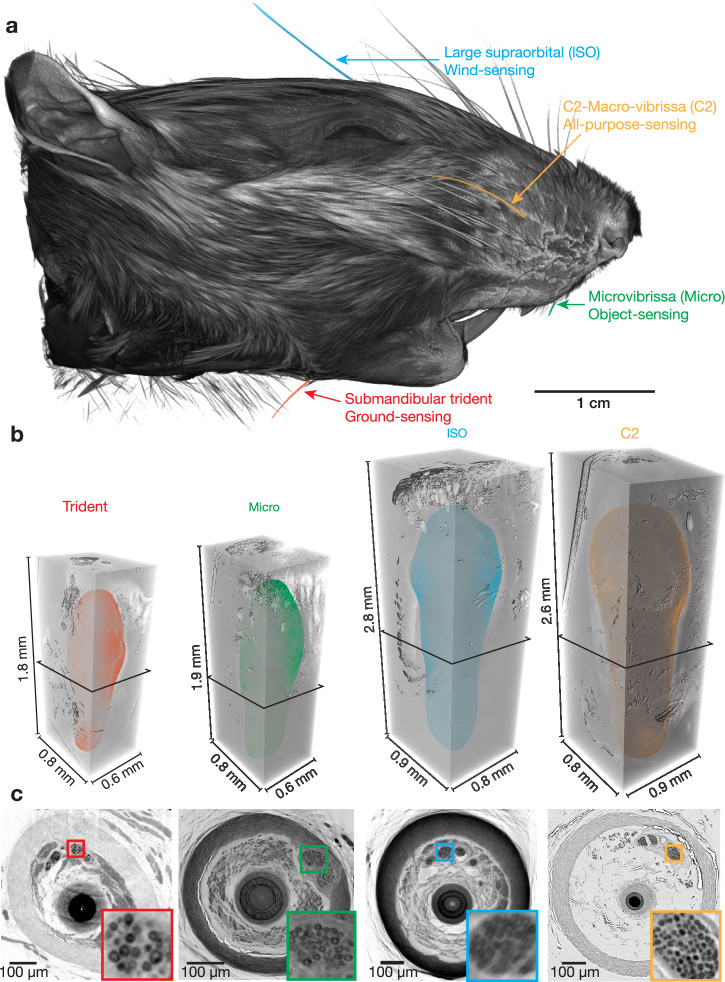 Figure 1
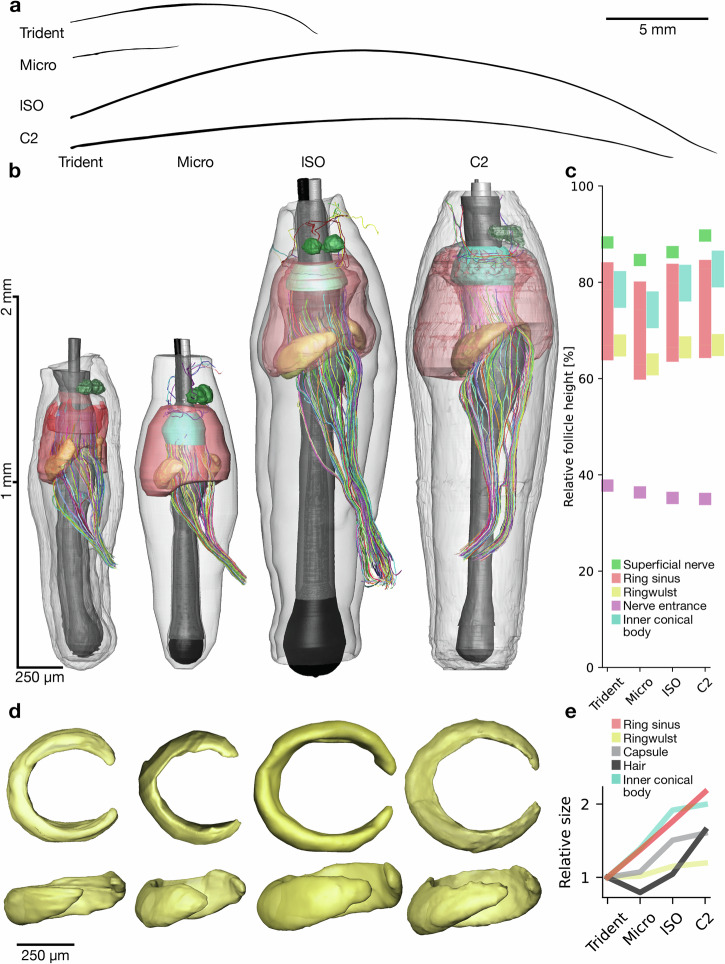 Figure 2
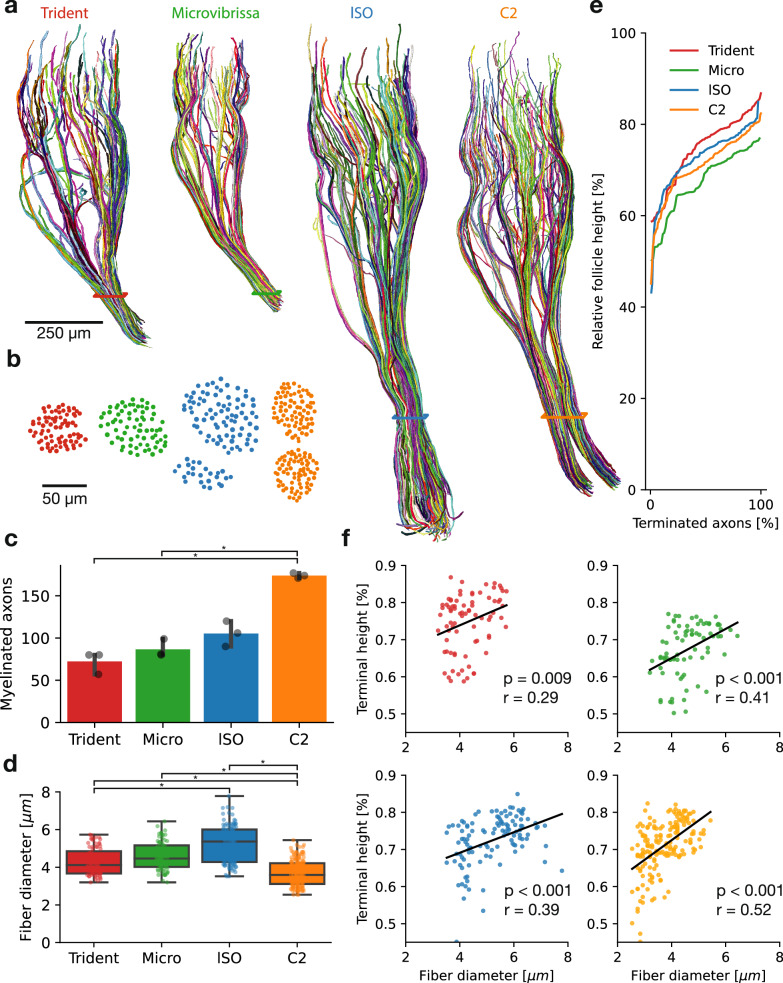 Figure 3
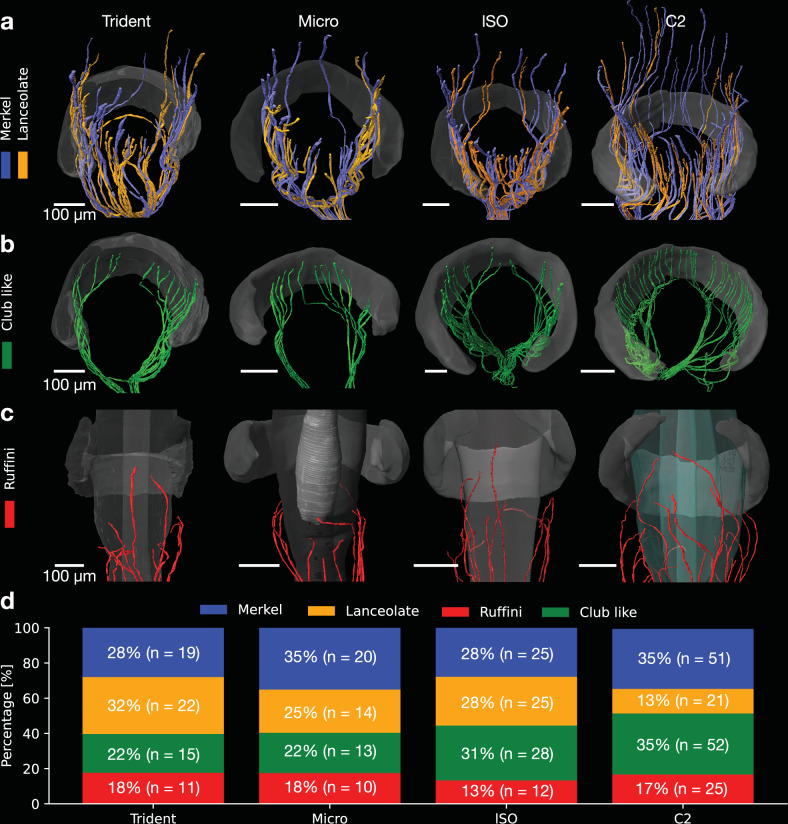 Figure 4
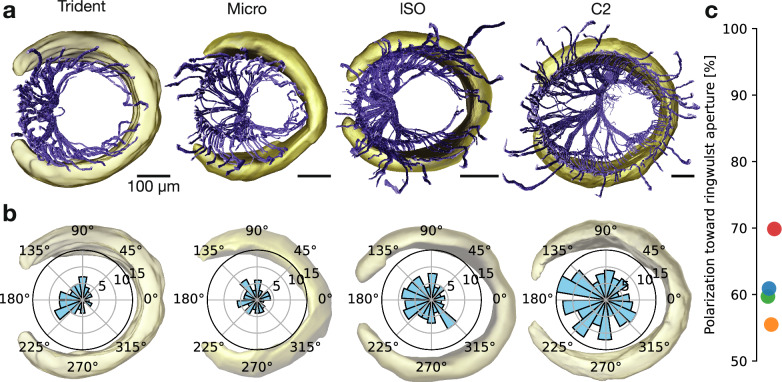 Figure 5
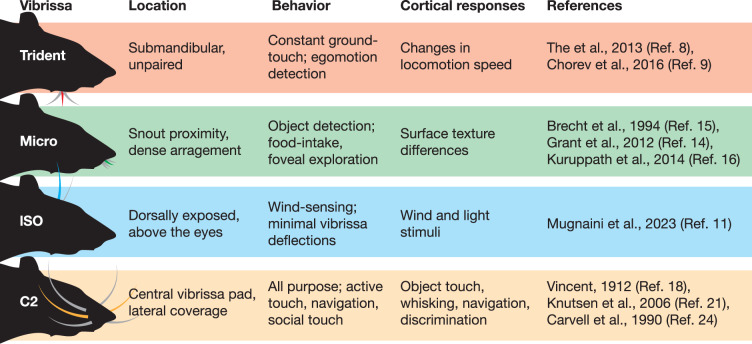 Figure 6
Peer Reviews
No public reviews on file for this paper yet. If you reviewed it on a platform where reviews are public (OpenReview, ICLR, NeurIPS, ICML), you can paste yours below so the community can read it here.
Videos
No videos yet. Explain this paper in a talk, walkthrough, or lecture? Add one.
Taxonomy
TopicsCellular Mechanics and Interactions · Advanced Fluorescence Microscopy Techniques · Force Microscopy Techniques and Applications