mRNA ratios of AR to ESR1 and PGR distinguish breast cancer subtypes based on public datasets and experimental models
Diego Prieto, Milena Rondón-Lagos, Paola Cruz-Tapias, Andrés Rincón-Riveros, Wilson Rubiano, Jairo De la Peña, Elizabeth Vargas, Victoria E. Villegas, Nelson Rangel

TL;DR
This study shows that the ratio of androgen receptor to estrogen and progesterone receptor mRNA levels can help identify more aggressive breast cancer subtypes.
Contribution
The study introduces AR/ESR1 and AR/PGR mRNA ratios as potential biomarkers for distinguishing aggressive breast cancer subtypes.
Findings
Higher AR/ESR1 and AR/PGR ratios were linked to Luminal B and HER2-enriched breast cancer subtypes.
Positive AR/ESR1 and AR/PGR ratios were observed in ER-negative cell lines and patient tumors.
These ratios may indicate more aggressive breast cancer with worse prognosis.
Abstract
The role of the androgen receptor (AR) in breast cancer (BC) remains incompletely understood. Here, we conducted a meta-analysis of large-scale microarray transcriptomic datasets to evaluate whether the mRNA expression levels of the androgen receptor gene, relative to those of the estrogen receptor gene (AR/ESR1 ratio) and the progesterone receptor gene (AR/PGR ratio), can help differentiate BC tumor subtypes. Additionally, we used qRT-PCR assays to assess the mRNA levels of the AR/ESR1 and AR/PGR ratios in four cell lines representative of different BC subtypes (MCF7, BT474, MDA-MB453, and MDA-MB231), as well as in breast tissue from a small group of patients (11 cases) stratified by estrogen receptor (ER) status. Our results showed that higher AR gene expression relative to ESR1 and PGR (≥ 2.0 and ≥ 1.54, respectively) were associated with BC patients classified under the Luminal B…
Genes, proteins, chemicals, diseases, species, mutations and cell lines named across the full text — each resolved to its canonical identifier and authoritative record.
Click any figure to enlarge with its caption.
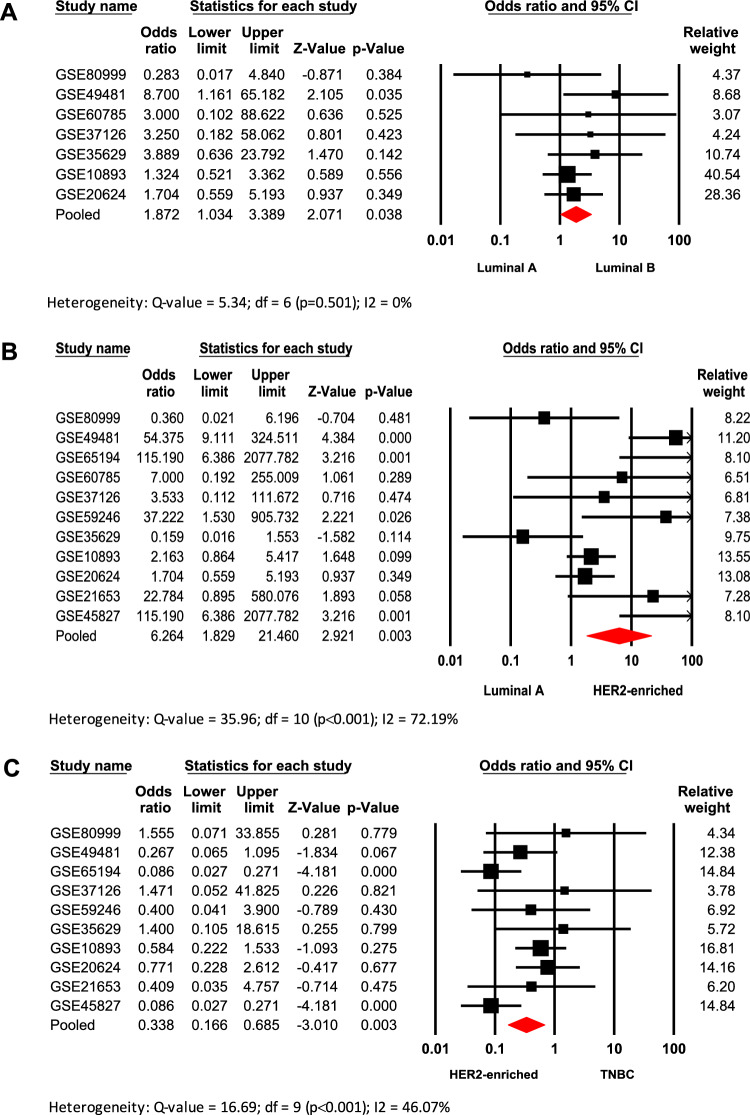 Figure 1
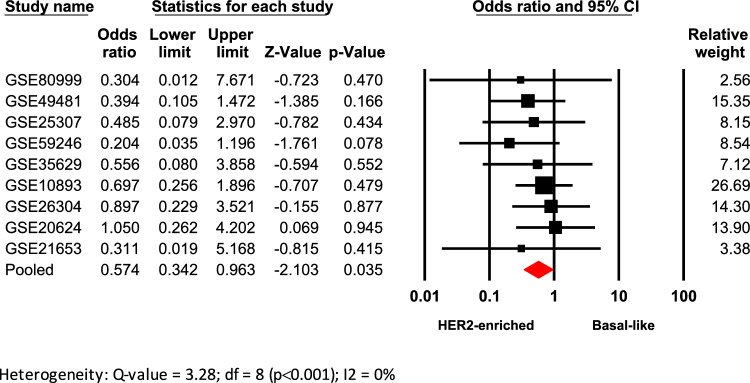 Figure 2
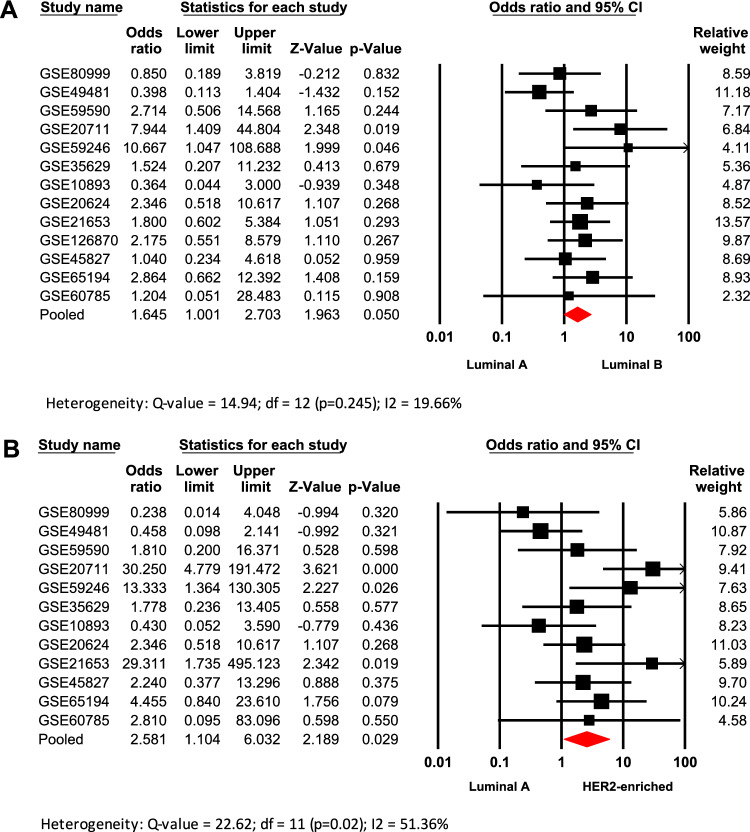 Figure 3
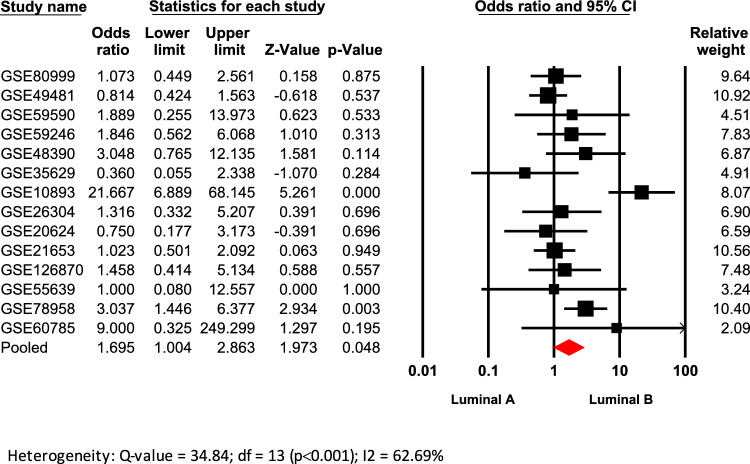 Figure 4
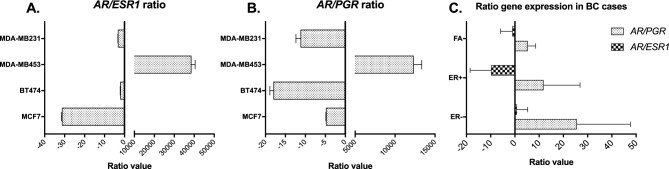 Figure 5
Peer Reviews
No public reviews on file for this paper yet. If you reviewed it on a platform where reviews are public (OpenReview, ICLR, NeurIPS, ICML), you can paste yours below so the community can read it here.
Videos
No videos yet. Explain this paper in a talk, walkthrough, or lecture? Add one.
Taxonomy
TopicsBreast Cancer Treatment Studies · Gene expression and cancer classification · Estrogen and related hormone effects