Assessing the Environmental Impacts of Microfluidic Devices for Glucose Detection
Kristie J. Tjokro, Valerio Barbarossa, Stefano Cucurachi, Alina Rwei, Justin Lian

TL;DR
This study compares the environmental impacts of different microfluidic devices for glucose detection at various production scales.
Contribution
The study provides a cradle-to-grave life-cycle assessment of three glucose-detection devices at both lab and commercial scales.
Findings
At lab-scale, the paper device had the lowest environmental impact, while the PLA device had the highest.
At commercial-scale, the PLA device performed best when using injection molding, while PDMS performed worst.
Material and energy use were the main contributors to environmental impact, with minimal impact from the use phase.
Abstract
Healthcare must balance safety, efficiency, and effectiveness with affordability and accessibility. Microfluidic devices offer low-cost, portable solutions for point-of-care testing, miniaturizing lab functions on chips through microchannels for quick diagnostics, retaining resolution and sensitivity with minimal reagent use. However, their environmental sustainability is uncertain, with concerns about production scale-up, risks from disposability, and the impact of alternative raw materials or manufacturing techniques compared to traditional soft lithography based on polydimethylsiloxane (PDMS). We conducted a cradle-to-grave life-cycle assessment (LCA) of three glucose-detection devices, a PDMS device via soft lithography, a paper device via wax stamping, and a polylactic acid (PLA) device via 3D printing, for both laboratory-scale and commercial-scale production. For lab-scale…
Genes, proteins, chemicals, diseases, species, mutations and cell lines named across the full text — each resolved to its canonical identifier and authoritative record.
Click any figure to enlarge with its caption.
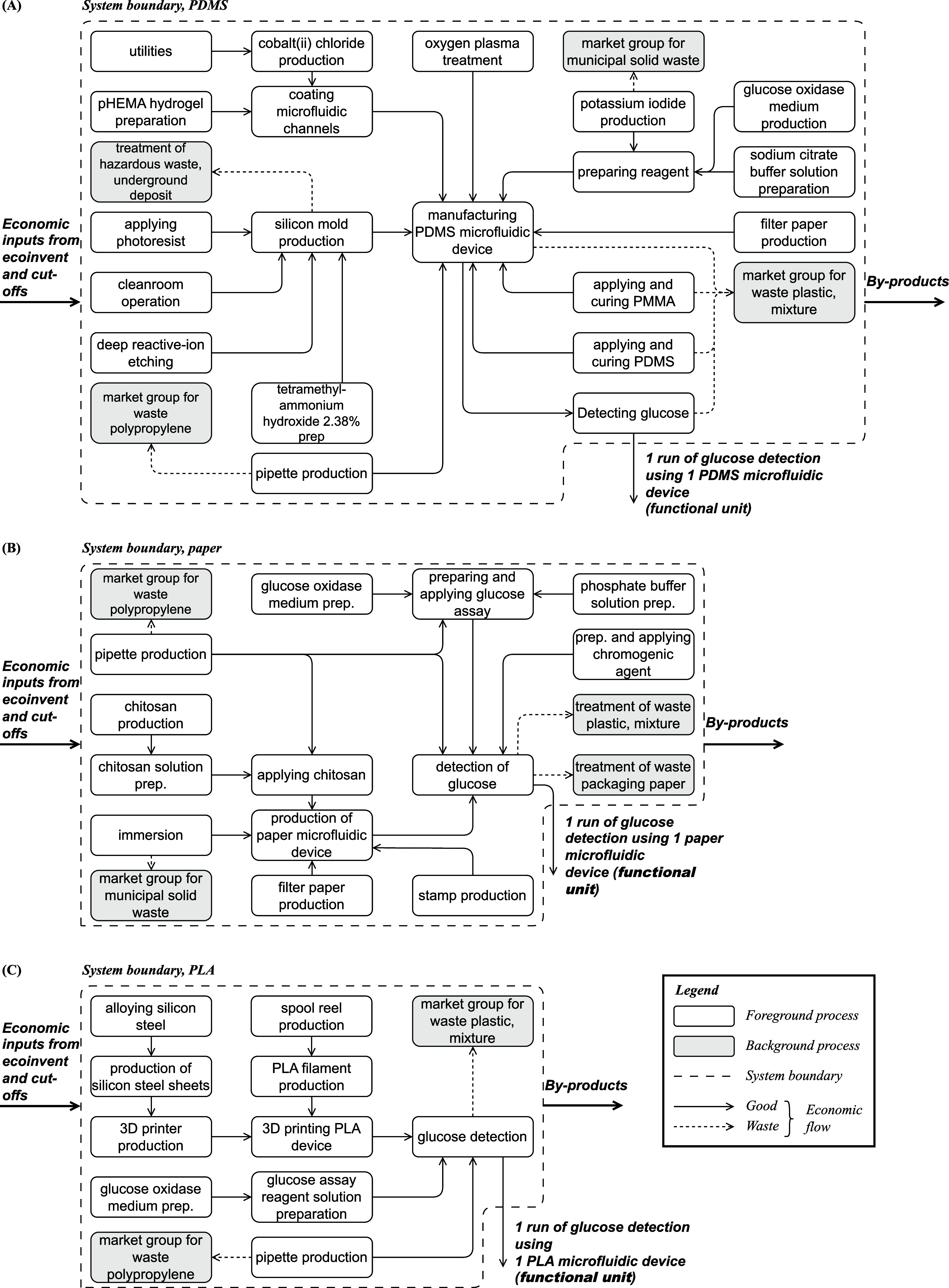 Figure 1
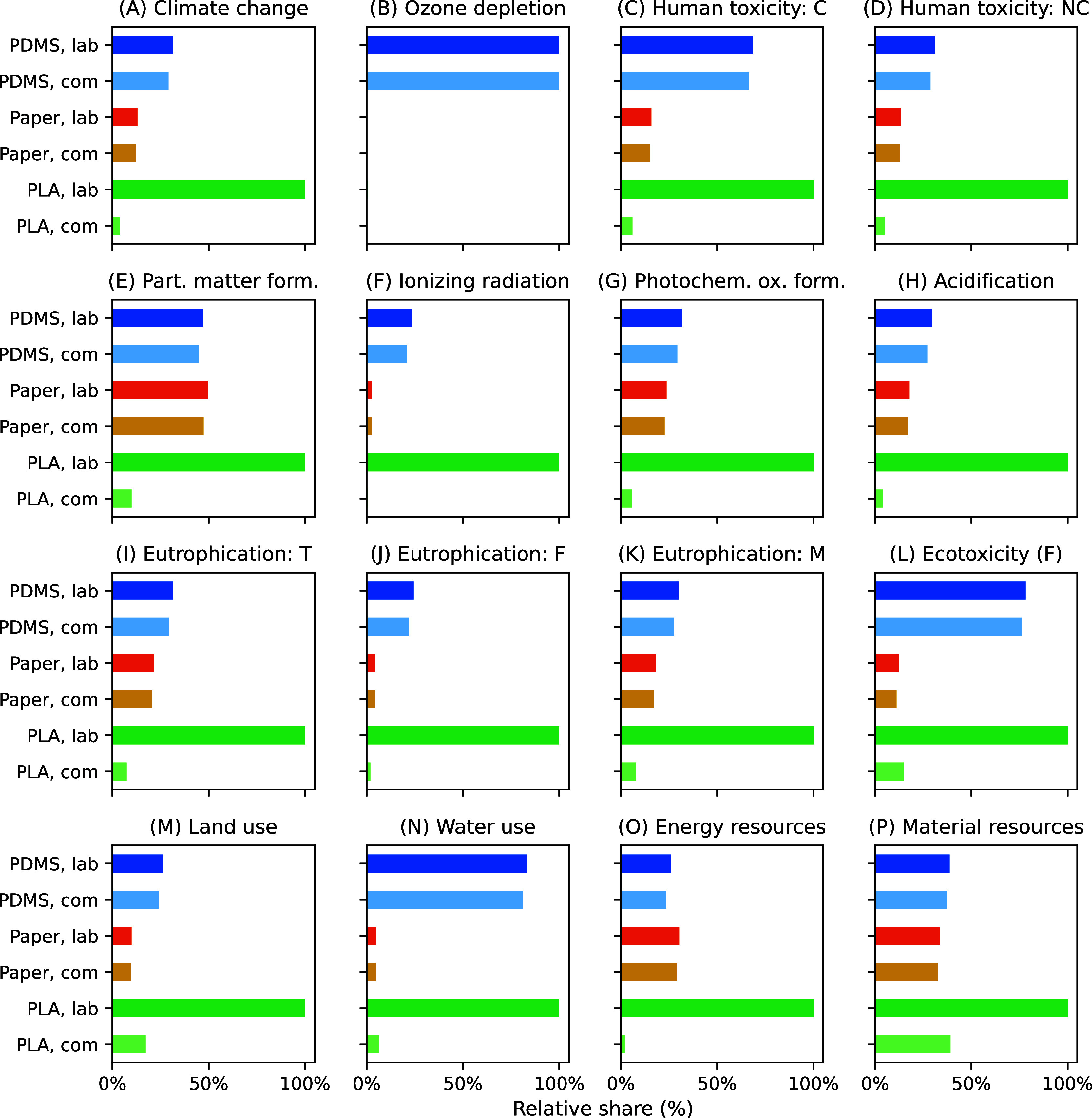 Figure 2
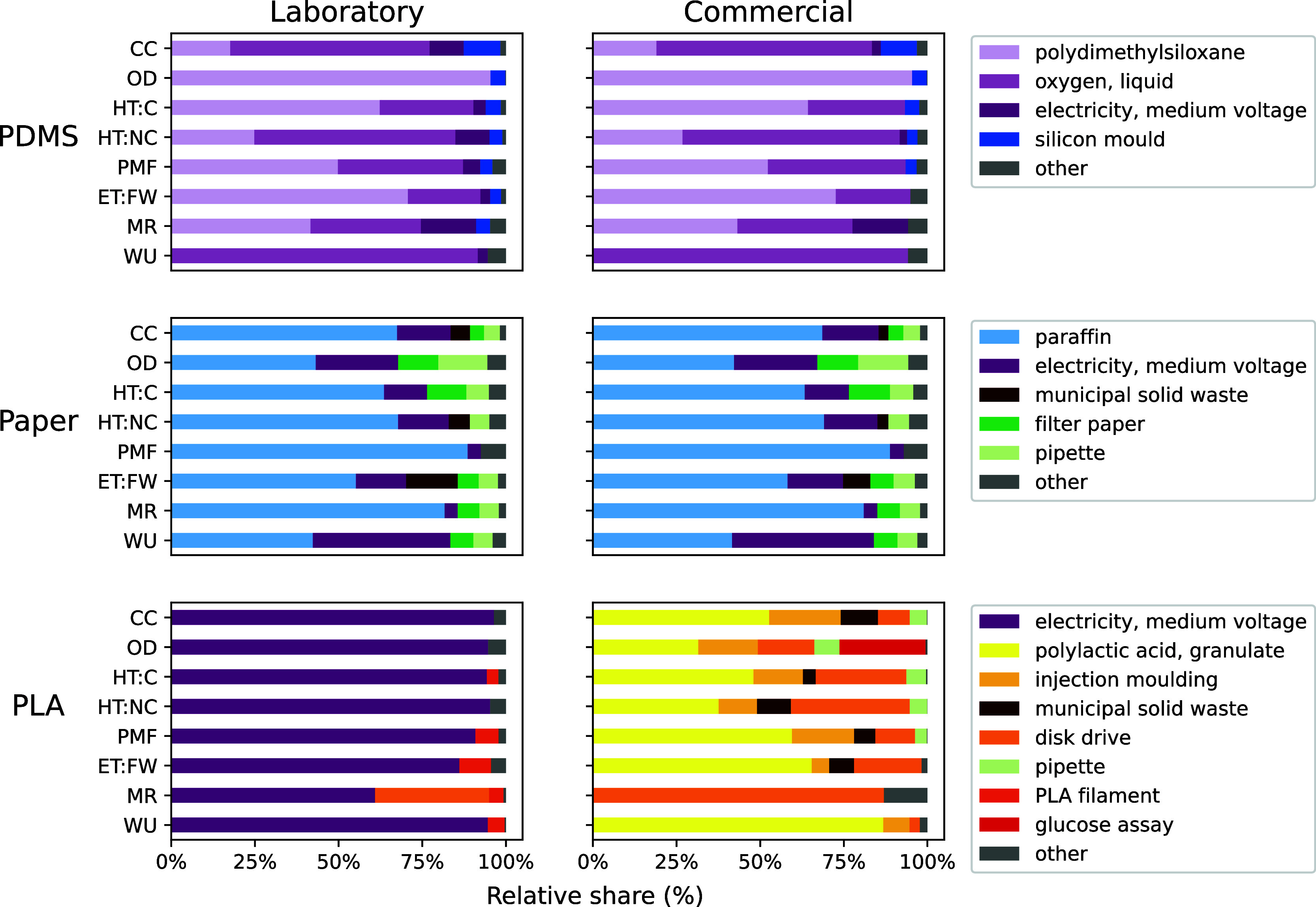 Figure 3
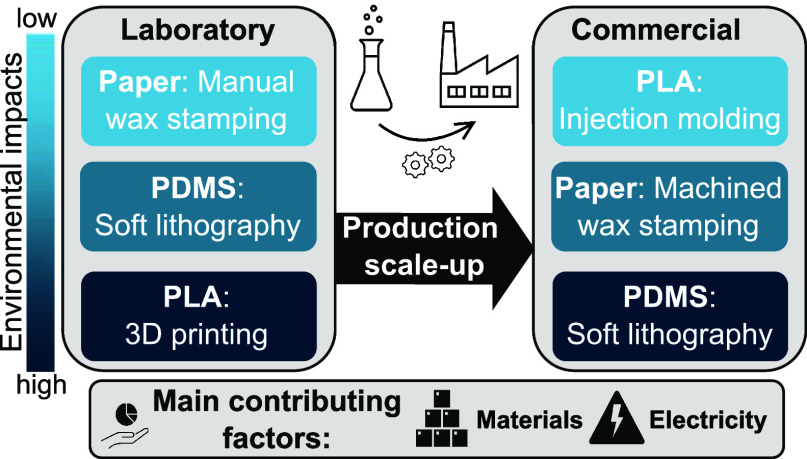 Figure 4
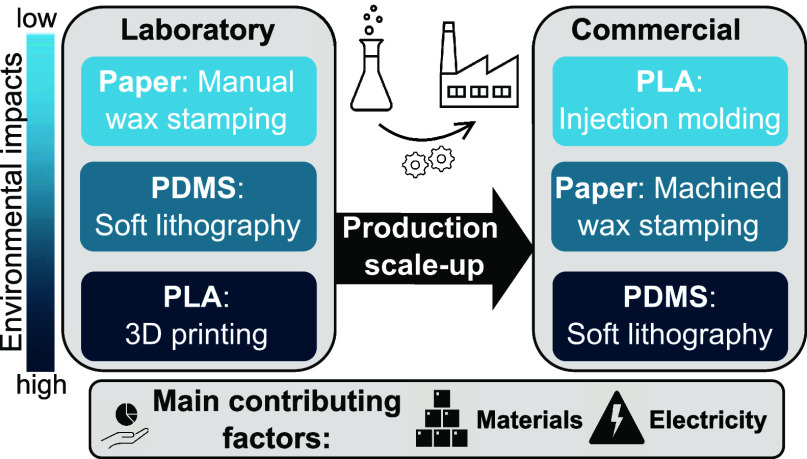 Figure 5
Peer Reviews
No public reviews on file for this paper yet. If you reviewed it on a platform where reviews are public (OpenReview, ICLR, NeurIPS, ICML), you can paste yours below so the community can read it here.
Videos
No videos yet. Explain this paper in a talk, walkthrough, or lecture? Add one.
Taxonomy
Topics3D Printing in Biomedical Research · Biosensors and Analytical Detection · Microfluidic and Capillary Electrophoresis Applications