Receptor-Mediated and Hydrolytic Denitrosylation of Dinitrosyl Iron Complexes to Yield Amorphous Fe x O y and Its Photoinduced Transformation into Crystalline Fe@Fe x O y Nanoparticles
Wun-Yan Wu, Yu-Shen Lin, Linda Iffland, Ulf-Peter Apfel, Tsai-Te Lu, Wen-Feng Liaw

TL;DR
This study shows how dinitrosyl iron complexes can be transformed into amorphous and then crystalline iron oxide nanoparticles through chemical and light-induced processes.
Contribution
The paper introduces a novel dual mechanism for denitrosylation and the photoinduced transformation of iron complexes into structured nanoparticles.
Findings
Denitrosylation of amp-DNIC occurs via receptor-mediated transfer and hydrolysis, releasing ·NO, N2O, and nitrite.
Hydrolysis of amp-DNIC produces amorphous Fe x O y particles (amp-1) which transform into crystalline Fe@Fe x O y nanoparticles (amp-2) under light.
Characterization techniques confirmed the structural and compositional changes during the transformation process.
Abstract
In this study, denitrosylation of amine-bound {Fe(NO)2}10 [(2-A)Fe(NO)2] (amp-DNIC) was explored to occur through (a) receptor-mediated transfer of ·NO/[NO]− to [Mn(TPP)(Cl)] and (b) a hydrolytic process leading to the liberation of ·NO together with N2O. In the presence of the bifunctional ·NO/[NO]−-receptor [Mn(TPP)(Cl)] (TPP = 5,10,15,20-tetraphenyl-21H,23H-porphine), amp-DNIC acts as a dual ·NO/[NO]− delivery reagent for the conversion of [Mn(TPP)(Cl)] into [Mn(TPP)(NO)] and [Mn(TPP)(NO)2]. Alternatively, incubation of amp-DNIC in an acetonitrile solution containing 5% deaerated water resulted in its hydrolytic transformation into amorphous Fe x O y particles (amp-1) accompanied by the release of ·NO (∼75%), N2O (∼10%), and nitrite (∼6%). Upon irradiation of amp-DNIC in the presence of the photosensitizer Eosin Y and the sacrificial reductant TEA, the formation of…
Genes, proteins, chemicals, diseases, species, mutations and cell lines named across the full text — each resolved to its canonical identifier and authoritative record.
Click any figure to enlarge with its caption.
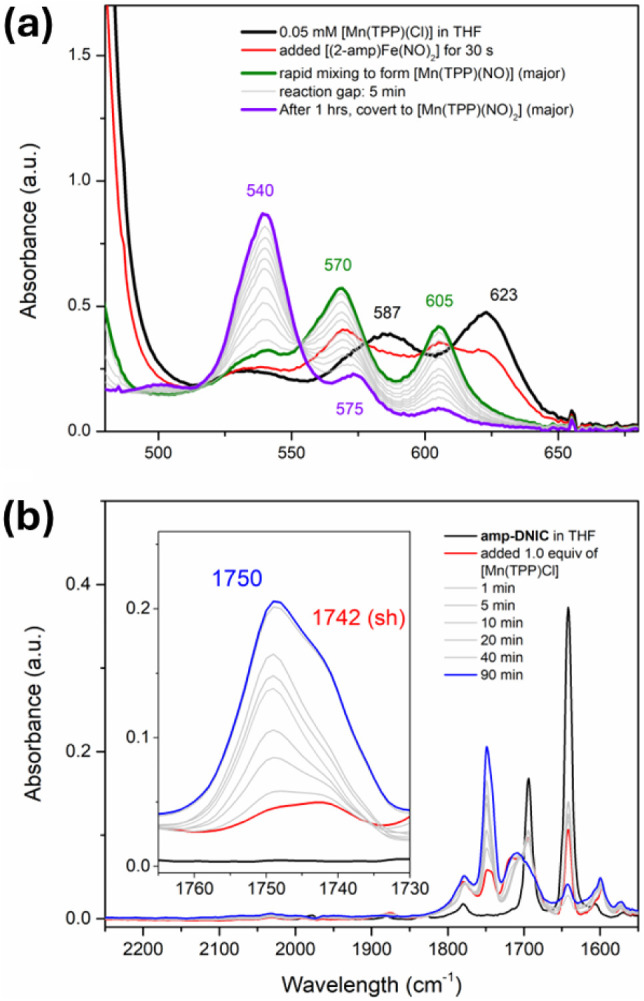 Figure 1
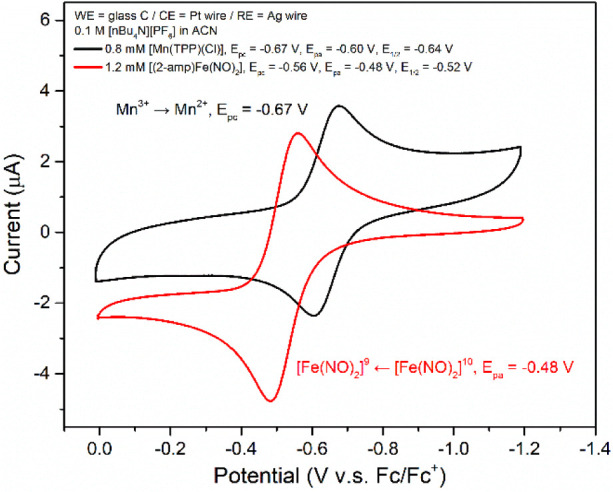 Figure 2
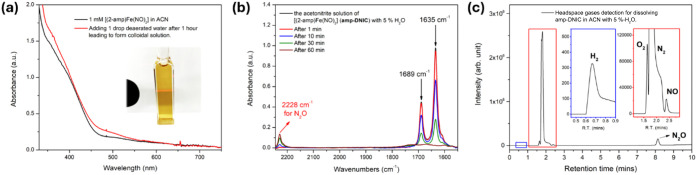 Figure 3
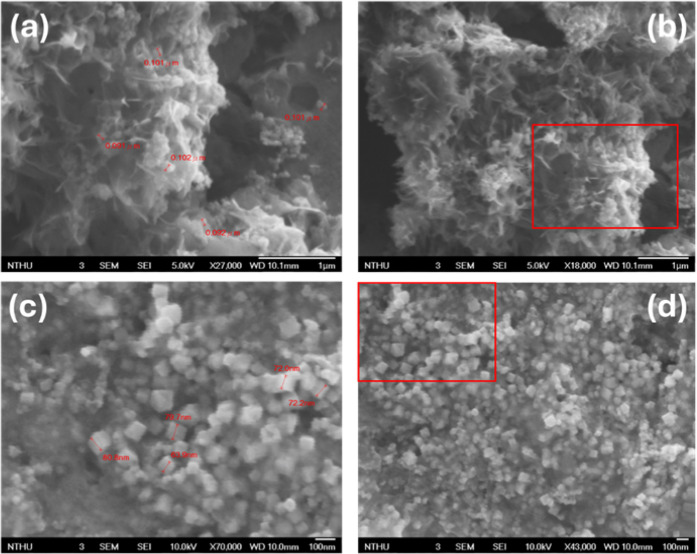 Figure 4
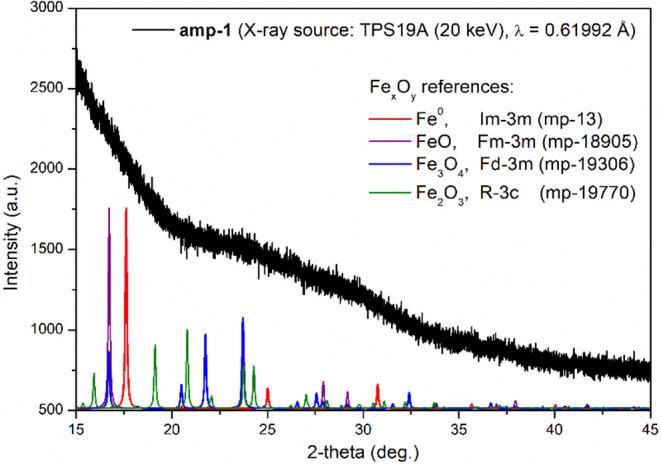 Figure 5
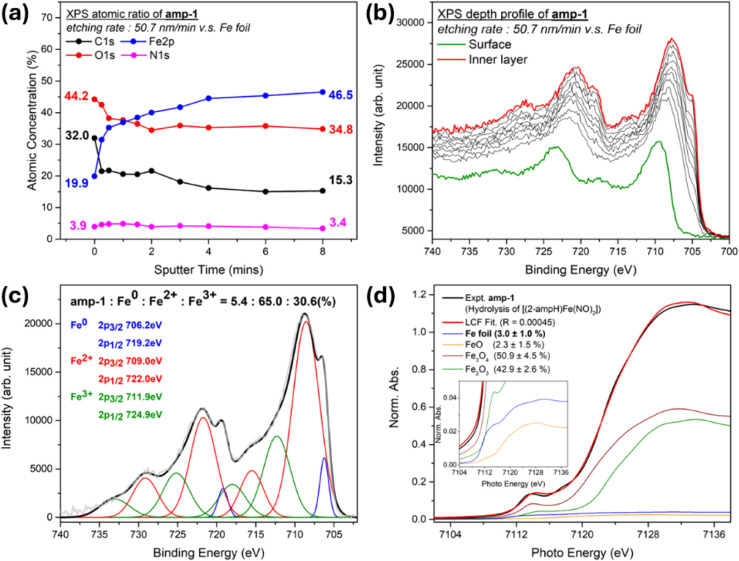 Figure 6
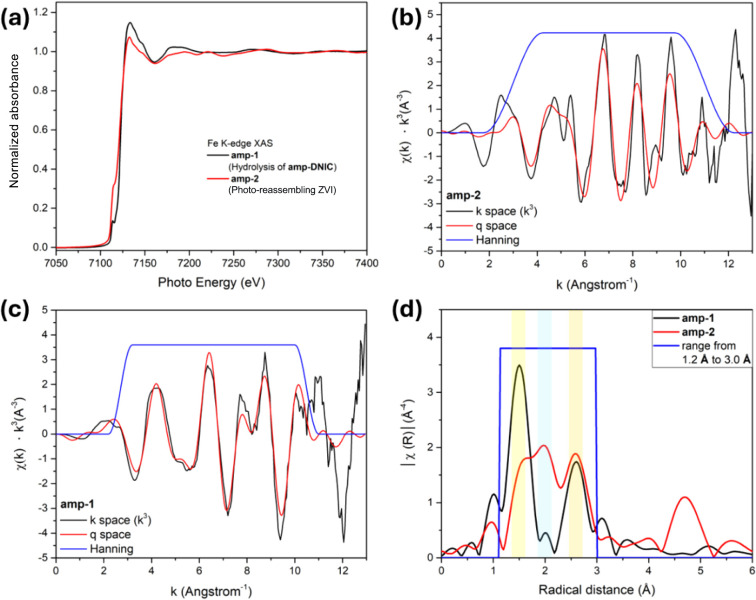 Figure 7
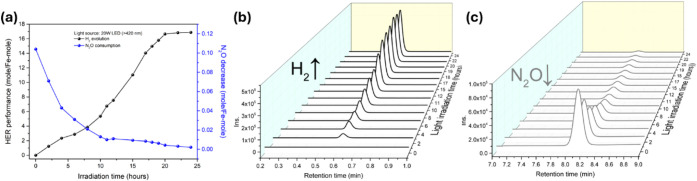 Figure 8
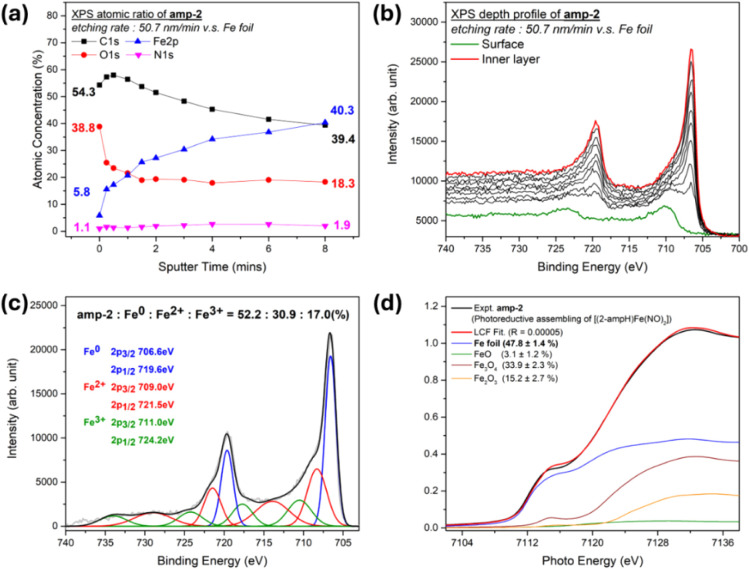 Figure 9
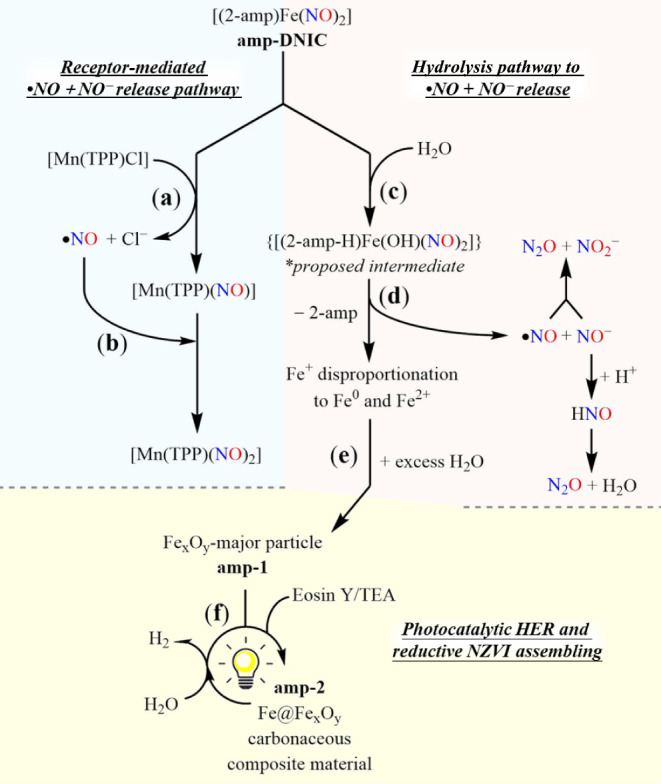 Figure 10
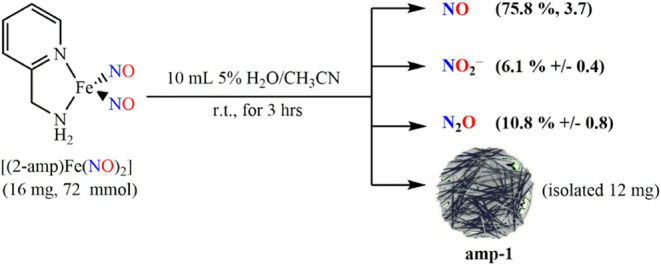 Figure 11
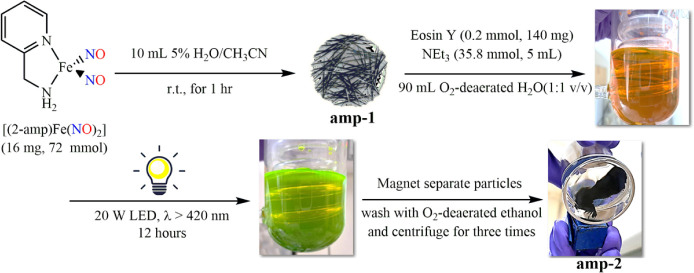 Figure 12
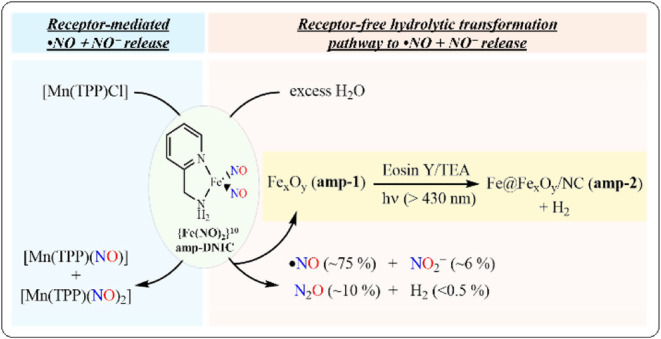 Figure 13
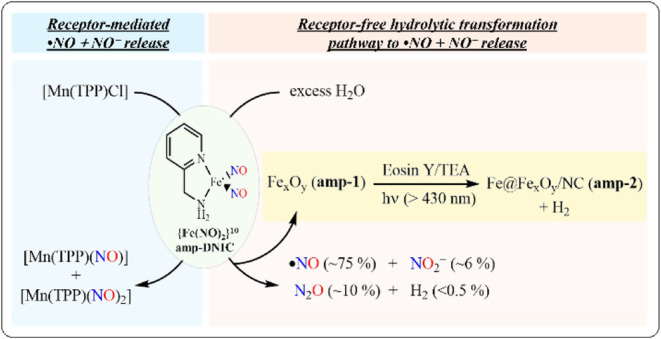 Figure 14
Peer Reviews
No public reviews on file for this paper yet. If you reviewed it on a platform where reviews are public (OpenReview, ICLR, NeurIPS, ICML), you can paste yours below so the community can read it here.
Videos
No videos yet. Explain this paper in a talk, walkthrough, or lecture? Add one.
Taxonomy
TopicsCatalytic Processes in Materials Science · Nanomaterials for catalytic reactions · Advanced Photocatalysis Techniques