Transcranial direct current stimulation over motor cortex improves pain in end stage renal disease a randomized controlled trial
Eduarda Fonseca Mendes, Edson Silva-Filho, Joanna Brito Holanda, M. G. L. Matias, Tatiana Camila Lima, Sara Costa, Artur Quintiliano, Kevin Pacheco-Barrios, Felipe Fregni, Rodrigo Pegado

TL;DR
Transcranial direct current stimulation over the motor cortex reduced pain and improved mobility in patients with end-stage renal disease undergoing hemodialysis.
Contribution
This study demonstrates tDCS as a promising non-invasive intervention for pain and mobility improvement in ESRD patients.
Findings
tDCS significantly reduced pain levels (VAS) compared to sham treatment.
tDCS improved functional performance, particularly in TUG tests.
No significant effects on fatigue or other functional tests were observed.
Abstract
Improving pain management and physical function remains a significant challenge for patients affected by end-stage renal disease (ESRD) undergoing hemodialysis. Non-pharmacological interventions, such as transcranial direct current stimulation (tDCS), have gained attention for their potential to alleviate pain and improve functional outcomes. This study explored the effects of tDCS on pain, fatigue, and functional performance in patients affected by ESRD undergoing hemodialysis and experiencing chronic pain. Thirty-four participants were randomized to receive either active or sham tDCS, with 15 sessions administered over five weeks. Anodal tDCS over C3 with an intensity of 2 mA was administered in 15 sessions, 3 times per week. Visual Analogue Scale for pain (VAS), fatigue, functional performance (sit-to-stand test, stationary walk, timed up and go test (TUG), elbow flexion test, and…
Genes, proteins, chemicals, diseases, species, mutations and cell lines named across the full text — each resolved to its canonical identifier and authoritative record.
Click any figure to enlarge with its caption.
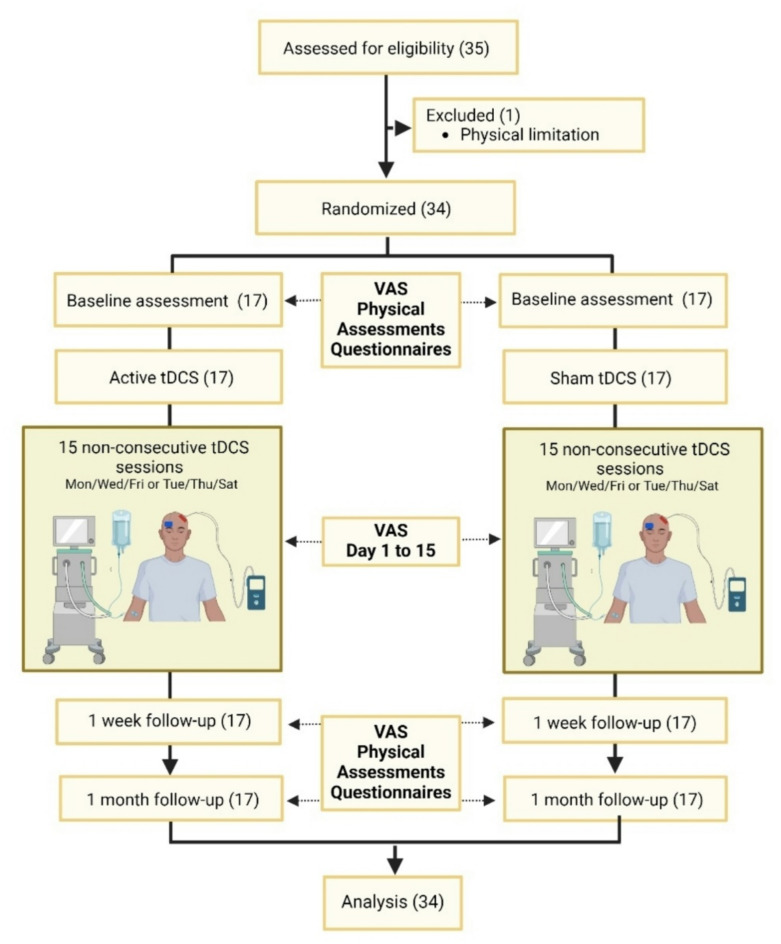 Figure 1
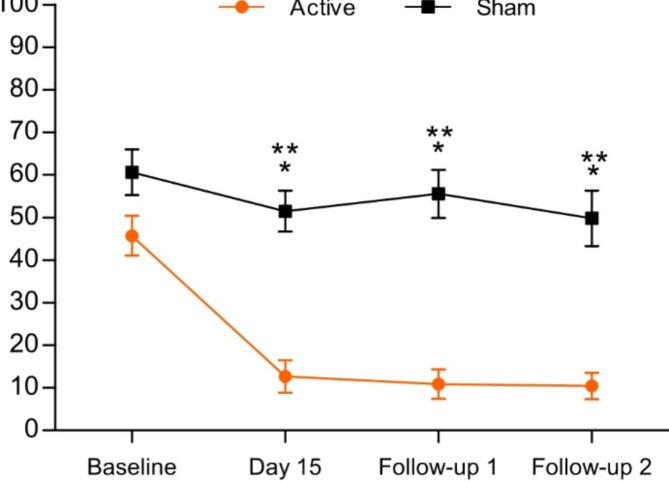 Figure 2
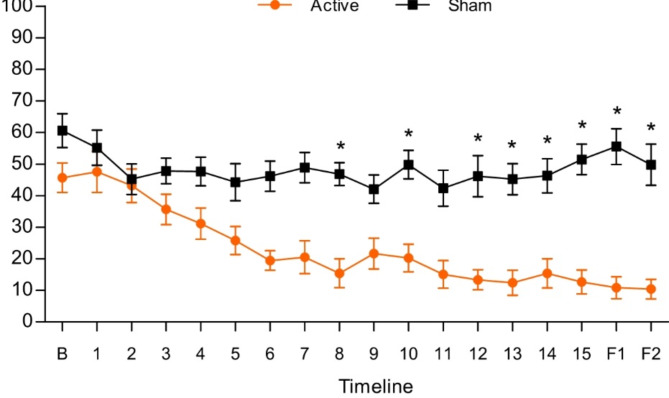 Figure 3
Peer Reviews
No public reviews on file for this paper yet. If you reviewed it on a platform where reviews are public (OpenReview, ICLR, NeurIPS, ICML), you can paste yours below so the community can read it here.
Videos
No videos yet. Explain this paper in a talk, walkthrough, or lecture? Add one.
Taxonomy
TopicsTranscranial Magnetic Stimulation Studies · Muscle activation and electromyography studies · Pain Management and Treatment