Generating combinatorial diversity via engineered V(D)J-like recombination in Saccharomyces cerevisiae
Andrew P. Cazier, Jaewoo Son, Sreenivas Yellayi, Lizmarie S. Chavez, Caden Young, Olivia M. Irvin, Hannah Abraham, Saachi Dalvi, John Blazeck

TL;DR
Researchers engineered yeast to perform V(D)J recombination, enabling the creation of antibody diversity and combinatorial genetic variation in a non-vertebrate organism.
Contribution
The first demonstration of V(D)J recombination in yeast, enabling combinatorial diversity generation from preexisting DNA fragments.
Findings
Yeast expressing RAG1 and RAG2 can form coding joints through homology-assisted recombination.
Recombination rates were increased over 7000-fold, reaching up to 1% after four days.
The system can generate multiple unique proteins or antibody fragments from nonfunctional gene fragments.
Abstract
V(D)J recombination is integral to the development of antibody diversity and proceeds through a complex DNA cleavage and repair process mediated by several proteins, including recombination-activating genes 1 and 2, RAG1 and RAG2. V(D)J recombination occurs in all jawed vertebrates but is absent from evolutionarily distant relatives, including the yeast Saccharomyces cerevisiae. As yeast grow quickly and are a platform for antibody display, engineering yeast to undergo V(D)J recombination could expand their applicability for studying antibody development. Therefore, in this work we incorporate RAG1 and RAG2 into yeast and characterize the resulting recombination ability using a split antibiotic resistance assay, demonstrating successful homology-assisted formation of coding joints. By pursuing a variety of strategies, we increase the rate of homology-assisted recombination by over…
Genes, proteins, chemicals, diseases, species, mutations and cell lines named across the full text — each resolved to its canonical identifier and authoritative record.
Click any figure to enlarge with its caption.
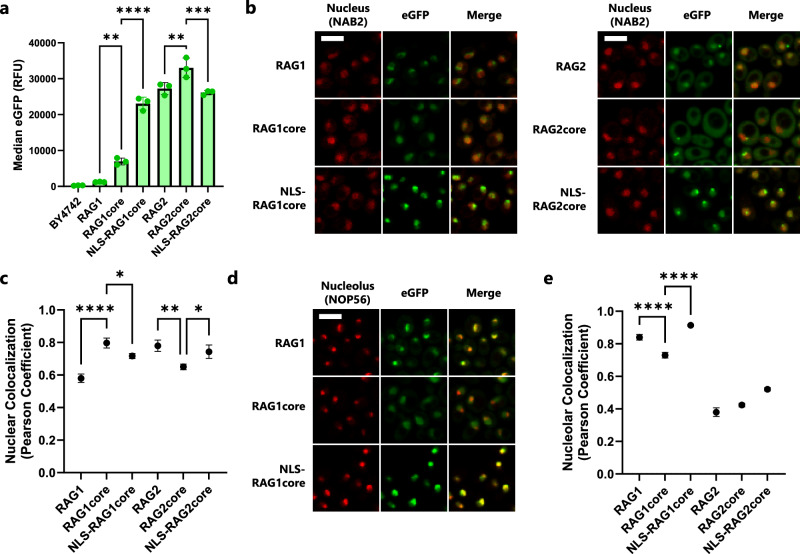 Figure 1
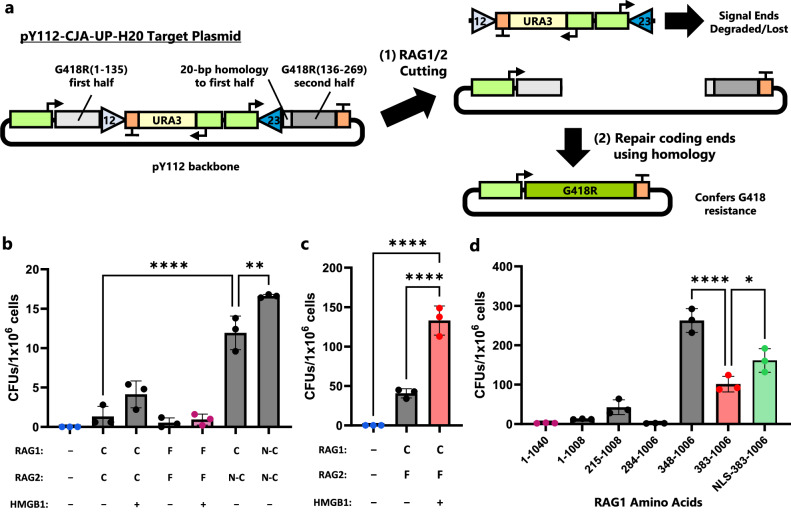 Figure 2
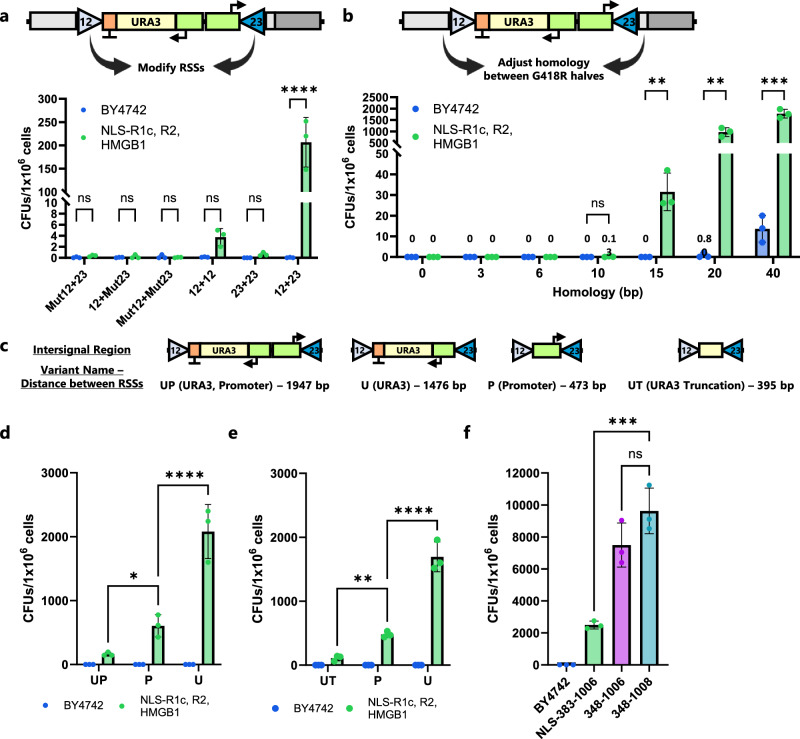 Figure 3
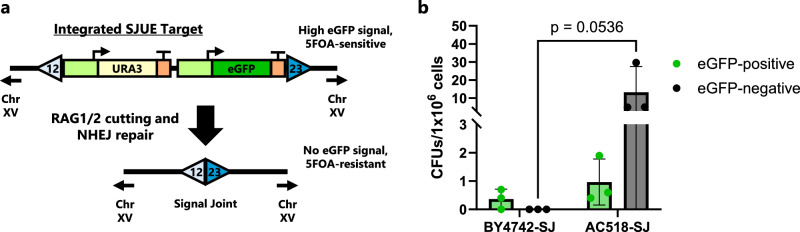 Figure 4
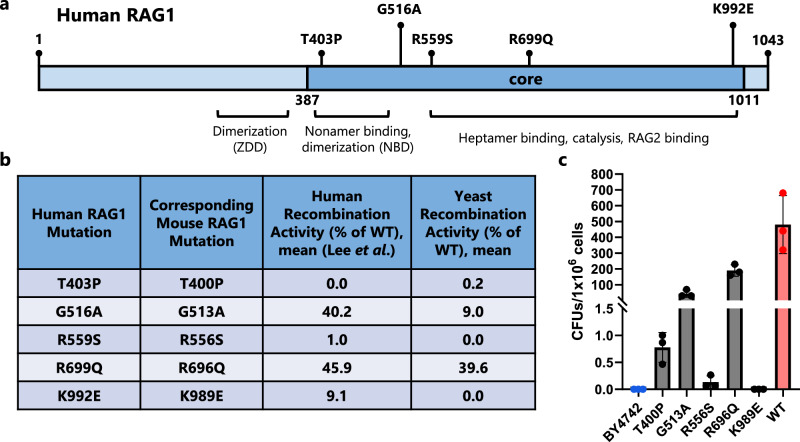 Figure 5
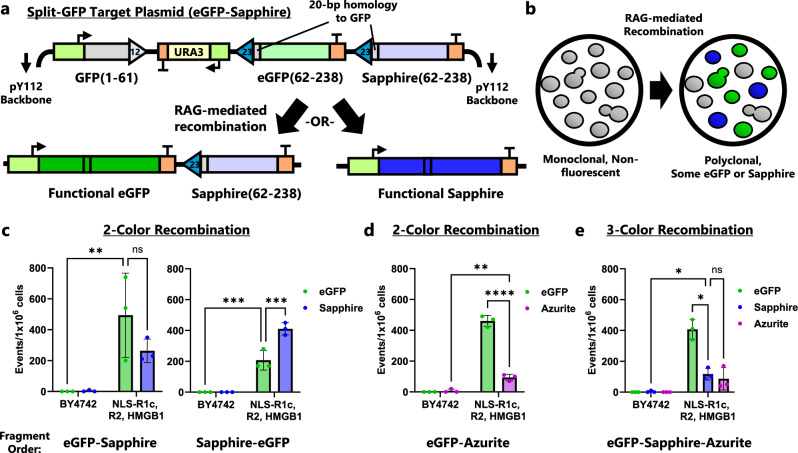 Figure 6
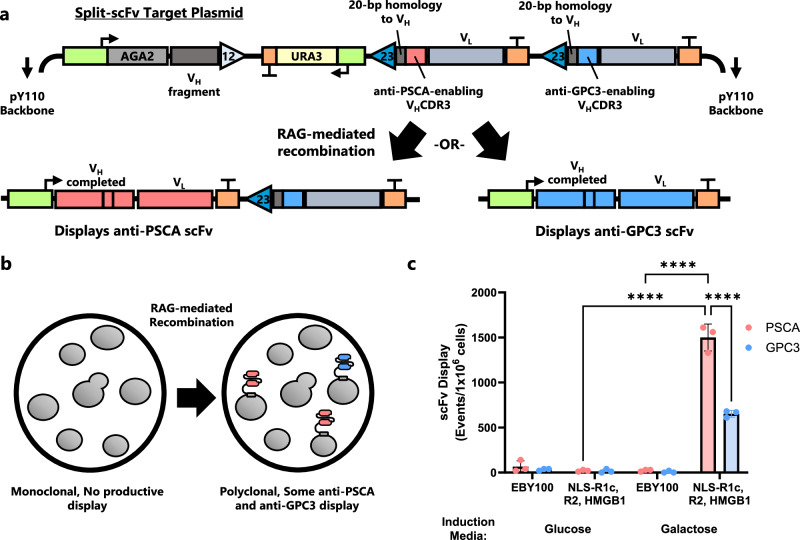 Figure 7
Peer Reviews
No public reviews on file for this paper yet. If you reviewed it on a platform where reviews are public (OpenReview, ICLR, NeurIPS, ICML), you can paste yours below so the community can read it here.
Videos
No videos yet. Explain this paper in a talk, walkthrough, or lecture? Add one.
Taxonomy
TopicsFungal and yeast genetics research · T-cell and B-cell Immunology · Monoclonal and Polyclonal Antibodies Research