PGC-1 alpha overexpression in the skeletal muscle results in a metabolically active microbiome which is independent of redox signaling
Erika Koltai, Soroosh Mozaffaritabar, Lei Zhou, Attila Kolonics, Atsuko Koike, Kumpei Tanisawa, Jonguk Park, Ferenc Torma, Zsolt Radak

TL;DR
This study shows that overexpressing PGC-1 alpha in skeletal muscle changes the gut microbiome in ways that are not linked to redox signaling.
Contribution
The study reveals a novel link between mitochondrial activity and the microbiome that operates independently of redox signaling.
Findings
PGC-1α overexpression increases basal levels in skeletal muscle and colon.
Microbial composition shifts in PGC-1α overexpressing mice, possibly to handle increased metabolism.
Exercise training differently affects the microbiome in PGC-1α overexpressing and wild-type mice.
Abstract
In this study, we investigated the potential relationship between the mitochondrial network and the microbiome using wild-type and skeletal muscle-specific PGC-1α (Pparg coactivator 1 alpha) overexpressing mice, both with and without exercise training. Basal PGC-1α levels were significantly higher in the skeletal muscle (J Physiol Biochem 80:329–335, 2024. 10.1007/s13105-024-01006-1) and, notably, in the colon, which is anatomically proximal to the microbiome. However, no significant changes were observed in cell signaling or mitochondria-related proteins within the colon. On the other hand, mitochondrial H₂O₂ production in the colon decreased in the PGC-1α overexpressing group. The relative abundance of several bacterial taxa differed between wild-type and PGC-1α overexpressing groups at baseline condition, indicating a shift in the microbiome milieu probably to cope with the increased…
Genes, proteins, chemicals, diseases, species, mutations and cell lines named across the full text — each resolved to its canonical identifier and authoritative record.
Click any figure to enlarge with its caption.
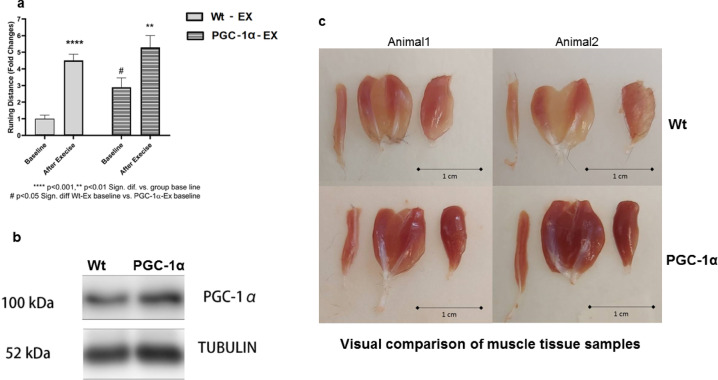 Figure 1
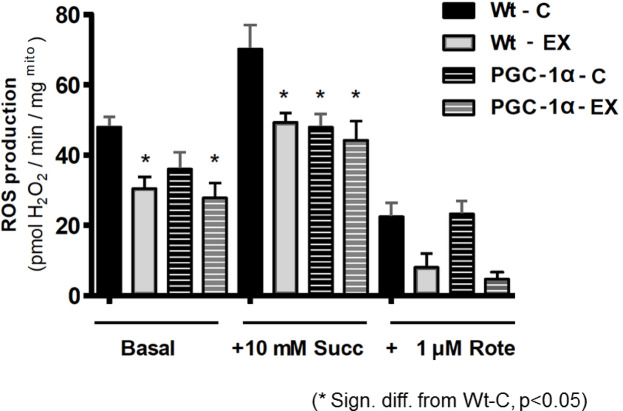 Figure 2
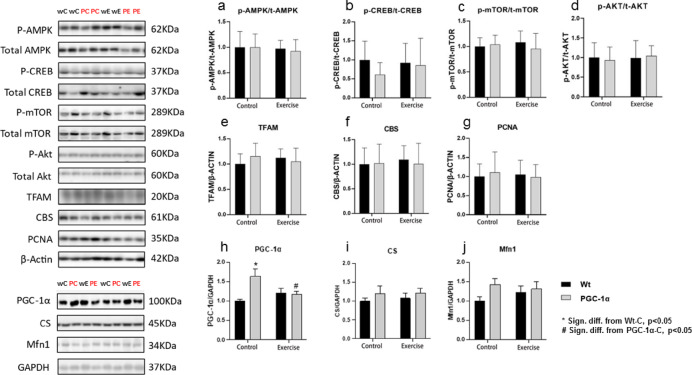 Figure 3
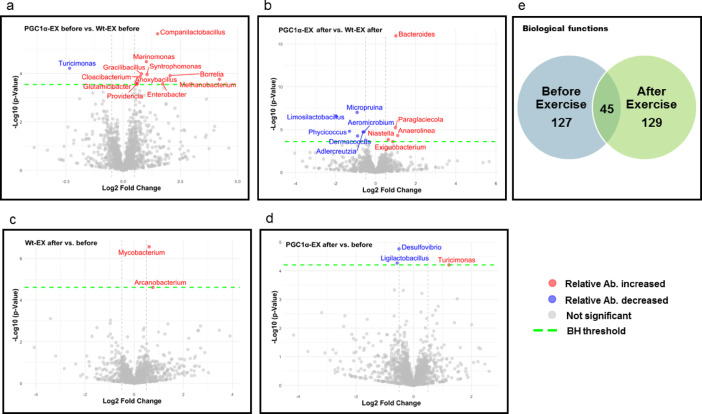 Figure 4
Peer Reviews
No public reviews on file for this paper yet. If you reviewed it on a platform where reviews are public (OpenReview, ICLR, NeurIPS, ICML), you can paste yours below so the community can read it here.
Videos
No videos yet. Explain this paper in a talk, walkthrough, or lecture? Add one.
Taxonomy
TopicsAdipose Tissue and Metabolism · Mitochondrial Function and Pathology · Diet and metabolism studies