Spontaneous voltage and persistent electric current from rectification of electronic noise in cuprate/manganite heterostructures
Mathias Soulier, Shamashis Sengupta, Yurii G. Pashkevich, Roxana Capu, Ryan Thompson, Jarji Khmaladze, Miguel Monteverde, Louis Dumoulin, Dominik Munzar, Christian Bernhard, Subhrangsu Sarkar

TL;DR
Researchers discovered that certain layered materials can generate a spontaneous voltage and persistent current from environmental electromagnetic noise, useful for energy harvesting and memory devices.
Contribution
The study introduces a novel mechanism for non-reciprocal transport in cuprate/manganite heterostructures via rectification of electronic noise.
Findings
YBCO/NCSMO multilayers generate spontaneous voltages of tens of millivolts from electromagnetic fluctuations.
The voltage arises from a ratchet-type potential due to competing magnetic and electronic orders in NCSMO layers.
These structures are effective for energy harvesting and tunable memory devices across various temperatures and magnetic fields.
Abstract
Non-reciprocal transport in solids under time-reversal symmetry is of great current interest. Here we show that YBa2Cu3O7(YBCO)/Nd0.65(Ca0.7Sr0.3)0.35MnO3(NCSMO) multilayers are promising candidates. By rectifying environmental electromagnetic fluctuations, they generate a spontaneous voltage of tens of millivolts, that can drive a persistent current across external circuits. The underlying ratchet-type potential presumably originates from the complex domain state of the NCSMO layers which host several nearly degenerate magnetic, electronic and polar orders. Particularly important appears to be the competition between a charge/orbital ordered majority phase with polar moments and a nonpolar ferromagnetic minority phase. A central role is also played by the adjacent YBCO layers that are too thin (≤10 nm) to fully screen the electric fields emanating from the NCSMO layers. These…
Genes, proteins, chemicals, diseases, species, mutations and cell lines named across the full text — each resolved to its canonical identifier and authoritative record.
Click any figure to enlarge with its caption.
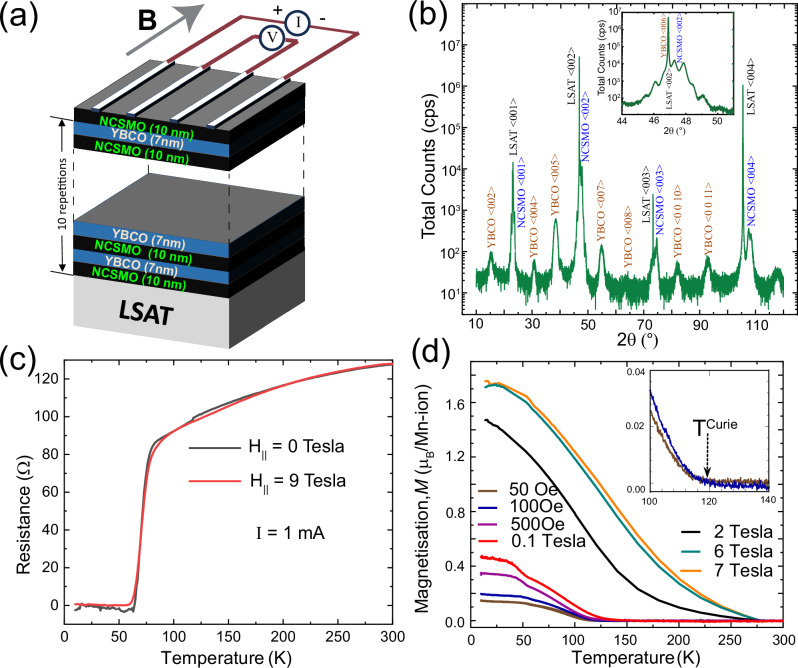 Figure 1
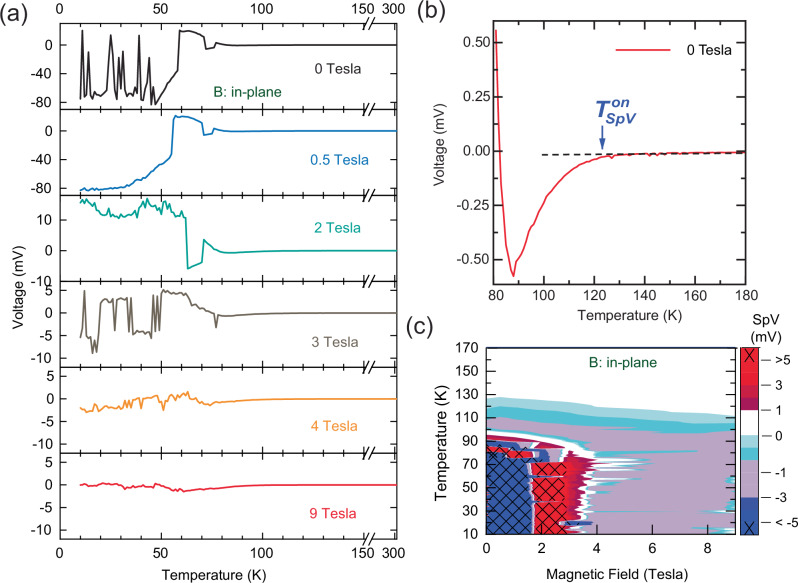 Figure 2
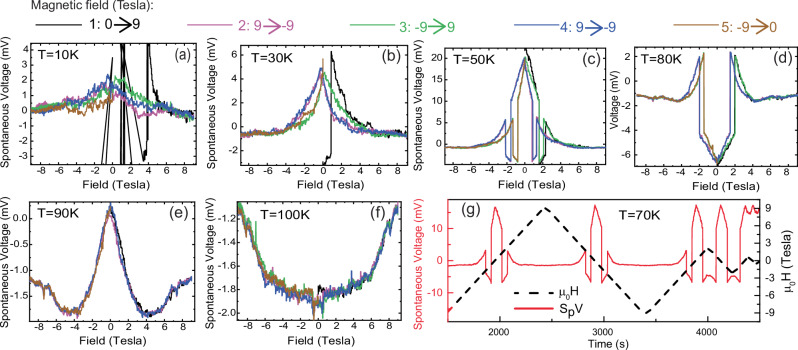 Figure 3
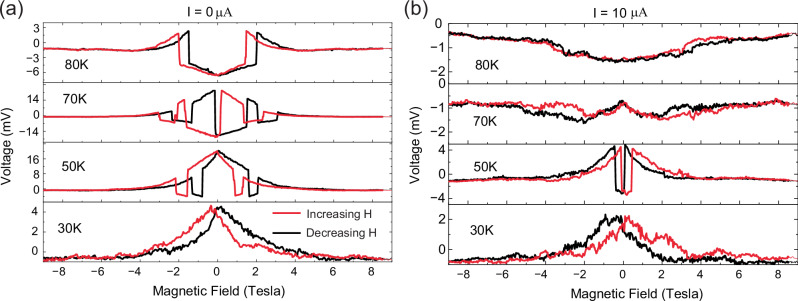 Figure 4
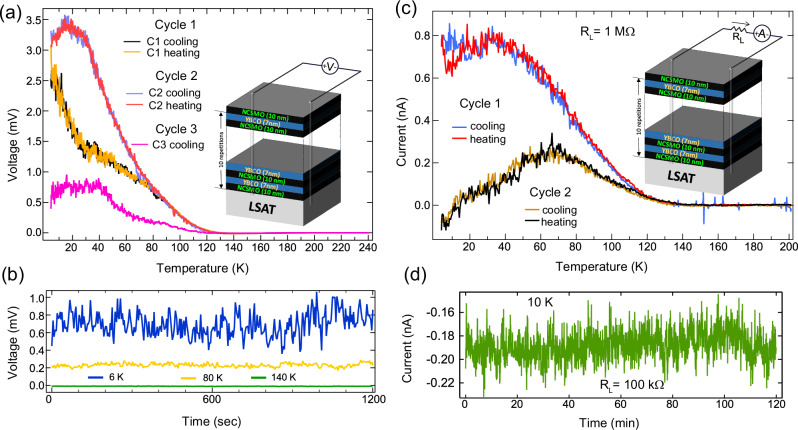 Figure 5
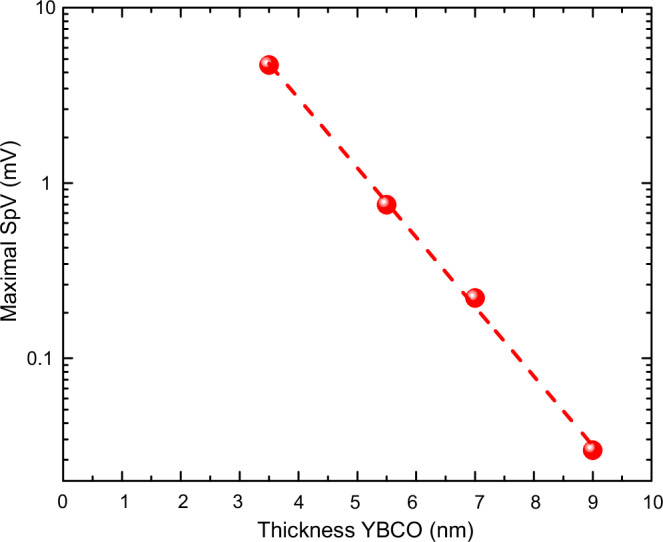 Figure 6
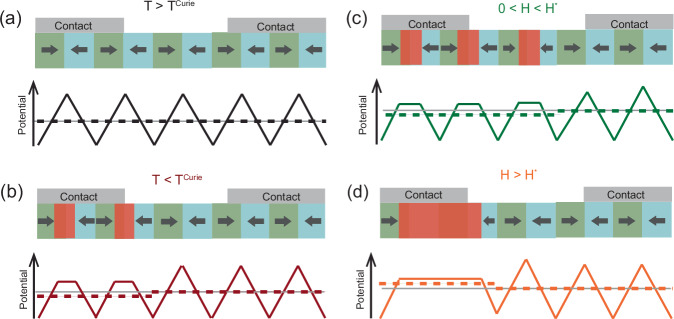 Figure 7
Peer Reviews
No public reviews on file for this paper yet. If you reviewed it on a platform where reviews are public (OpenReview, ICLR, NeurIPS, ICML), you can paste yours below so the community can read it here.
Videos
No videos yet. Explain this paper in a talk, walkthrough, or lecture? Add one.
Taxonomy
TopicsMagnetic and transport properties of perovskites and related materials · Advanced Condensed Matter Physics · Multiferroics and related materials