Analysis of molecular and cellular bases of honey bee mushroom body development
Shuichi Kamata, Takeo Kubo, Hiroki Kohno

TL;DR
This study explores how different types of brain cells in honey bees develop during their pupal stage and identifies key genes involved in this process.
Contribution
The study reveals the molecular and cellular mechanisms underlying honey bee mushroom body development and highlights differences from Drosophila.
Findings
lKCs, mKCs, and sKCs are produced sequentially during different pupal stages.
Genes like SoxNeuro, optix, and asense show expression patterns similar to Drosophila, while odd-paired is expressed in immature KCs in honey bees.
RNA-sequencing and in situ hybridization identified genes upregulated in proliferating and non-proliferating MB cells.
Abstract
In the honey bee, mushroom bodies (MBs), a higher-order center of the insect brain, comprise three class I Kenyon cell (KC) subtypes (lKC, mKC, and sKC) with distinct somata sizes and locations and gene expression profiles. While these KC subtypes have been suggested to function in different behavioral regulations, the molecular and cellular basis of their development remains obscure. Here, we showed that lKCs, mKCs, and sKCs are produced in that order at different pupal stages by labeling proliferating MB cells with 5-ethynil-2’-deoxyuridine at various pupal stages. RNA-sequencing analysis of FACS-sorted pupal MB cells identified genes that were upregulated in proliferating and non-proliferating MB cells, respectively. Furthermore, in situ hybridization of some of these genes labeled the proliferating cells or immature KCs in the MBs at pupal stages producing each subtype. We found…
Genes, proteins, chemicals, diseases, species, mutations and cell lines named across the full text — each resolved to its canonical identifier and authoritative record.
Click any figure to enlarge with its caption.
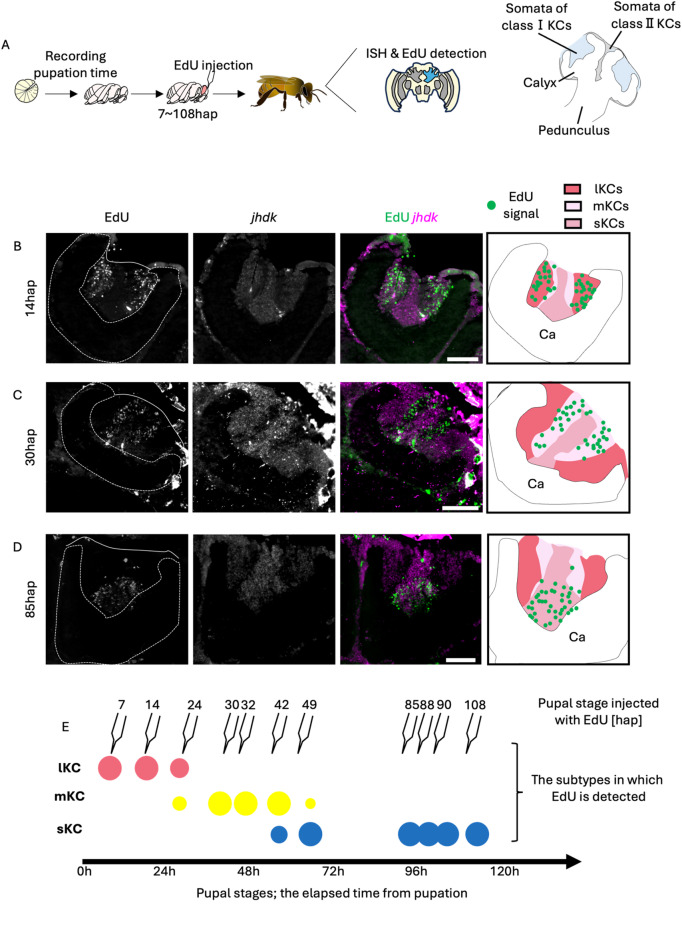 Figure 1
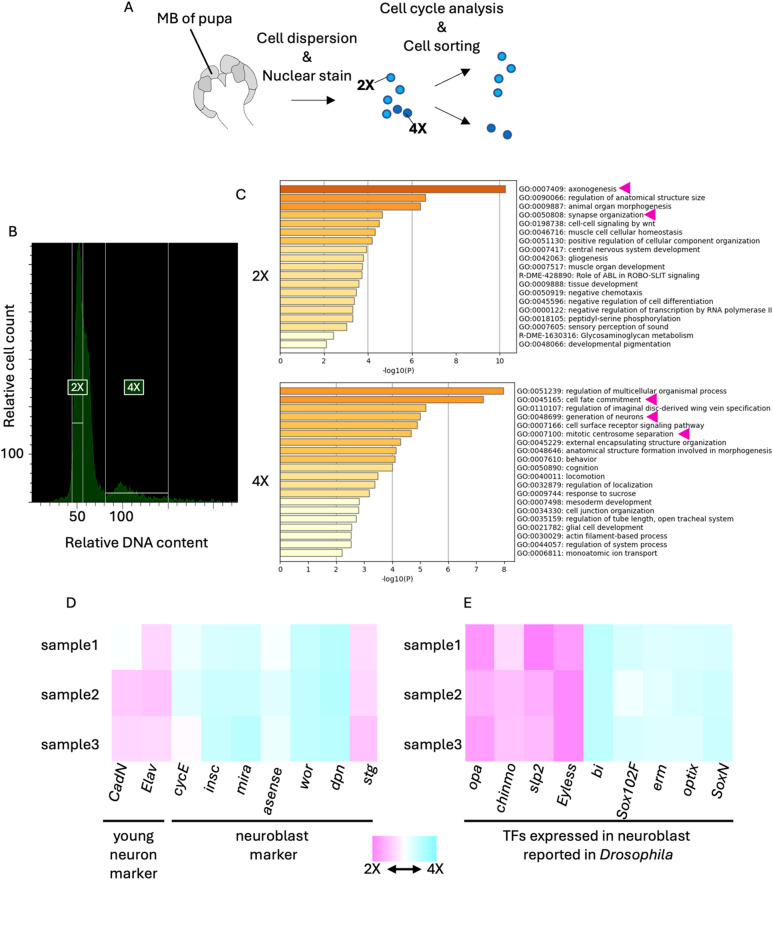 Figure 2
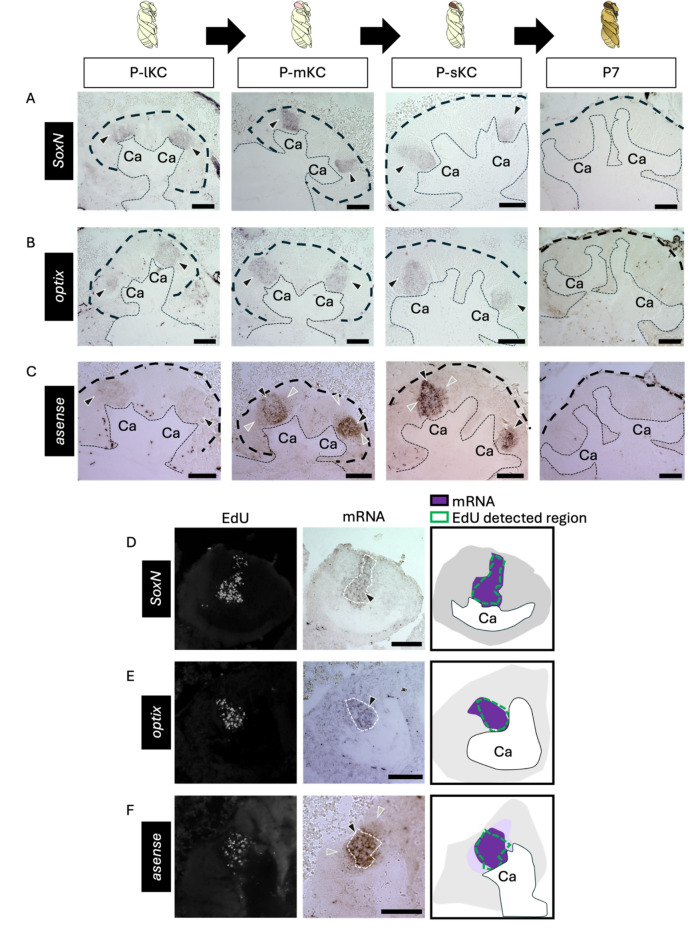 Figure 3
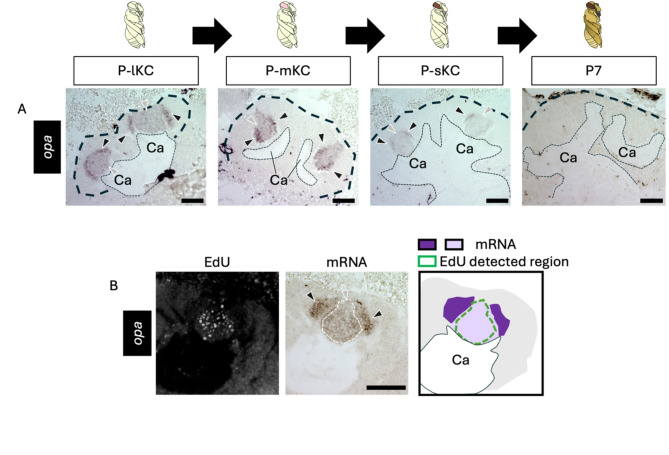 Figure 4
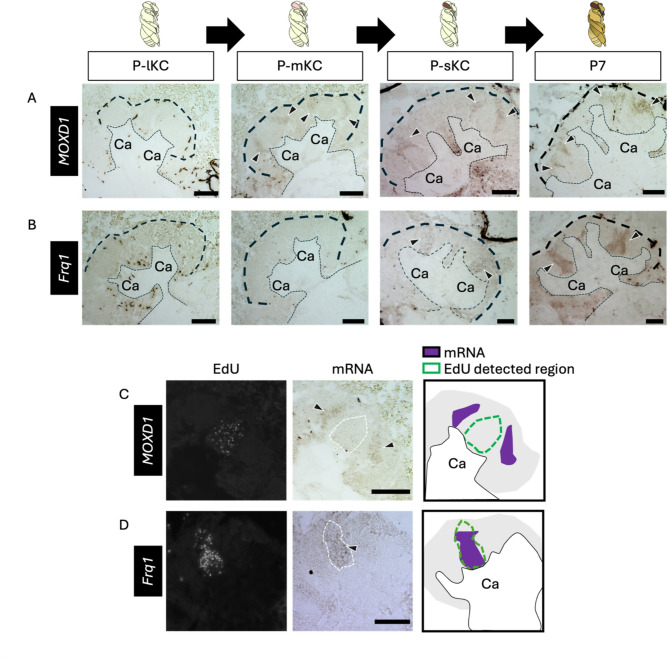 Figure 5
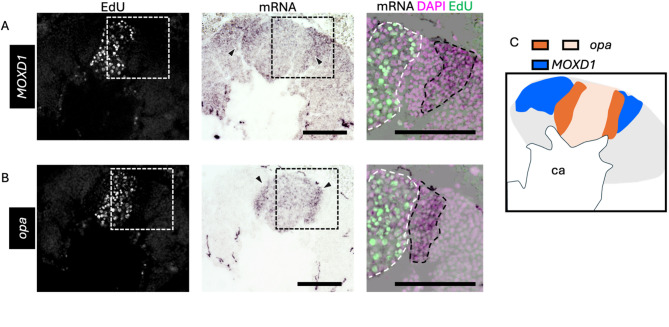 Figure 6
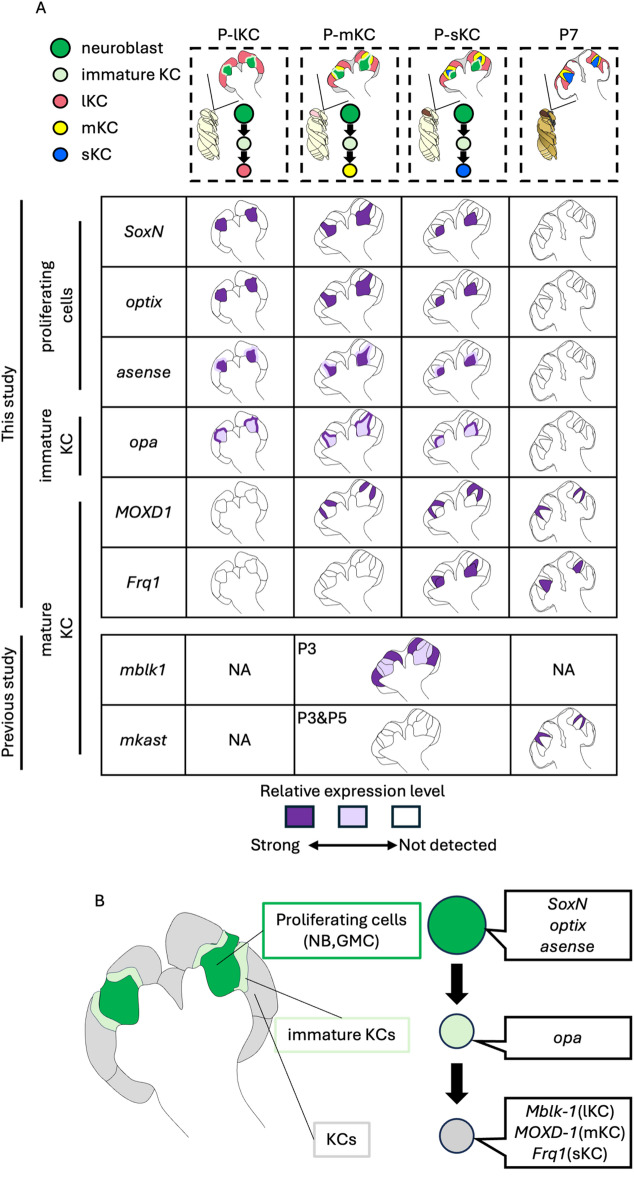 Figure 7
Peer Reviews
No public reviews on file for this paper yet. If you reviewed it on a platform where reviews are public (OpenReview, ICLR, NeurIPS, ICML), you can paste yours below so the community can read it here.
Videos
No videos yet. Explain this paper in a talk, walkthrough, or lecture? Add one.
Taxonomy
TopicsNeurobiology and Insect Physiology Research · Insect and Arachnid Ecology and Behavior · Insect and Pesticide Research