Analysis of monomer ratios in a dimethacrylate mixture using positron annihilation spectroscopy
Katarína Cifraničová, Ondrej Šauša, Oľga Rosskopfová, Michaela Sedničková, Helena Švajdlenková

TL;DR
This study uses positron annihilation spectroscopy to analyze how different ratios of D3MA and UDMA monomers affect the properties of photopolymer materials used in dentistry.
Contribution
The paper introduces a novel method to correlate local free volume, density, and chemical bonding in dimethacrylate mixtures for optimized photopolymer applications.
Findings
The ideal 1:1 monomer ratio (2M) showed optimal free volume and density for dental photopolymers.
Positron annihilation spectroscopy effectively measured local free volume changes with varying monomer ratios.
Correlations between free volume, density, and chemical bonding were established for different monomer mixtures.
Abstract
Dimethacrylate based samples suitable for photopolymerization are usually used in mixtures with different ratios. In the case of the monomers D3MA and UDMA, the ideal monomer ratio of 1:1 was reported in the literature and designed as 2 M. Dimethacrylate-based photopolymers are highly cross-linked polymer networks, indispensable in applications requiring rapid polymerization processes, such as light-curable materials for dental applications. Different ratios of the starting monomers D3MA and UDMA in a mixture with the addition of a 0.1 mol% photoinitiator was used in near-UV light photopolymerization. The lifetime of the ortho-positronium was monitored by PALS and the local free volume were determined. NIR was used to follow the double bond transformation in the dimethacrylates region. Bulk density was determined using Archimedes’ law. The phase transitions and the glass transition…
Genes, proteins, chemicals, diseases, species, mutations and cell lines named across the full text — each resolved to its canonical identifier and authoritative record.
Click any figure to enlarge with its caption.
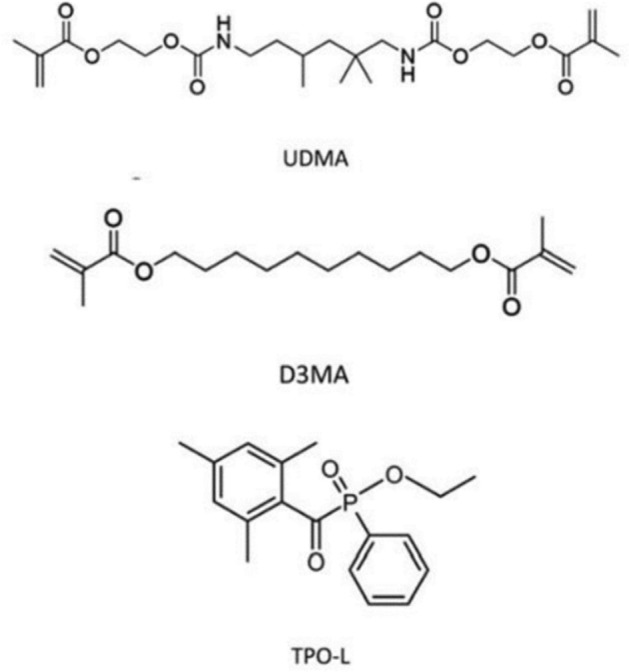 Figure 1
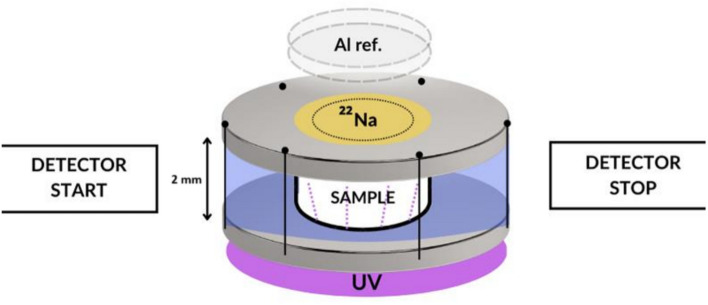 Figure 2
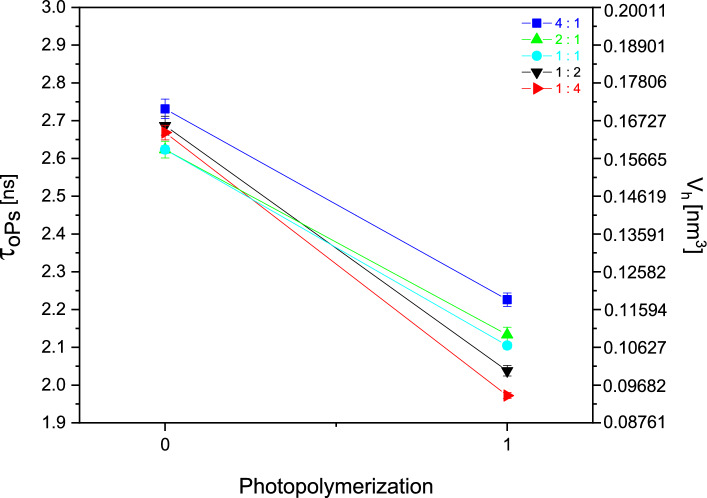 Figure 3
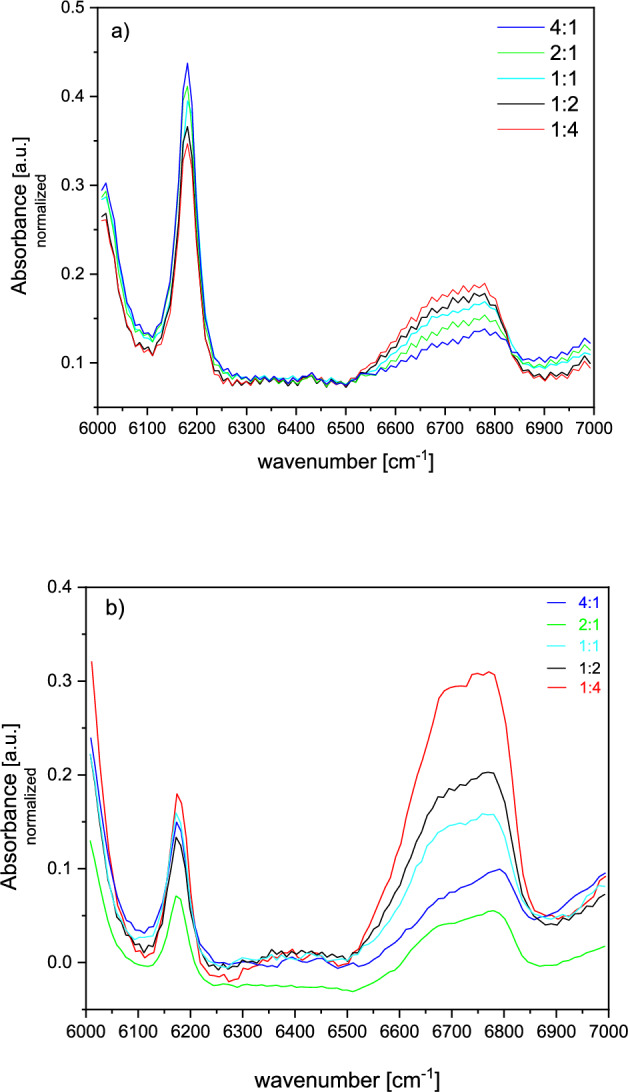 Figure 4
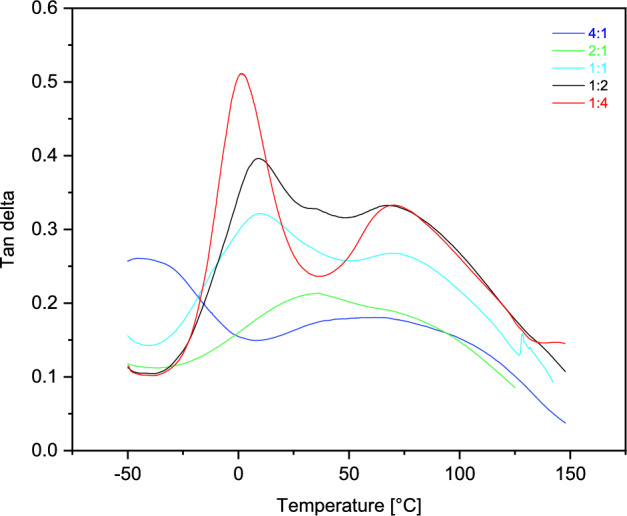 Figure 5
Peer Reviews
No public reviews on file for this paper yet. If you reviewed it on a platform where reviews are public (OpenReview, ICLR, NeurIPS, ICML), you can paste yours below so the community can read it here.
Videos
No videos yet. Explain this paper in a talk, walkthrough, or lecture? Add one.
Taxonomy
TopicsMuon and positron interactions and applications · Synthesis and characterization of novel inorganic/organometallic compounds · Chemical Synthesis and Characterization