Optimization of heat inactivation protocols for Orientia and Rickettsia species
Artharee Rungrojn, Mohammad Yazid Abdad, Sandhya Dhawan, Jantana Wongsantichon, Stuart D. Blacksell

TL;DR
This study finds the minimum heat treatment needed to safely inactivate four bacterial species used in research and transportation.
Contribution
The study identifies specific heat inactivation protocols for Orientia and Rickettsia species.
Findings
56°C for 5 minutes is the minimum required to inactivate all four bacterial species.
Orientia tsutsugamushi shows a higher reduction factor at 56°C compared to other species.
Incubation time and log10 reduction factor are inversely correlated for some species but not all.
Abstract
Heat treatment, or thermal disinfection, is one of the simplest and most widely used methods for microbial inactivation. Proper heat inactivation protocols are essential to ensure the safe transportation and handling of infectious materials, particularly for organisms in risk group 3, such as Rickettsia and Orientia. In this study, we examined the inactivation of four bacterial species—Orientia tsutsugamushi, Rickettsia typhi, Rickettsia conorii, and Rickettsia honei—at temperatures of 56 °C, 80 °C, and 90 °C for durations of 5, 15, 30, and 60 min. Observations were made at 0, 1, 3, 7, 10, and 14 days post-infection (dpi) to assess bacterial infectivity by monitoring bacterial DNA copies in newly infected cells. Our results indicate that 56 °C for 5 min was the minimum temperature and time required to inactivate O. tsutsugamushi, R. typhi, R. conorii, and R. honei. O. tsutsugamushi…
Genes, proteins, chemicals, diseases, species, mutations and cell lines named across the full text — each resolved to its canonical identifier and authoritative record.
Click any figure to enlarge with its caption.
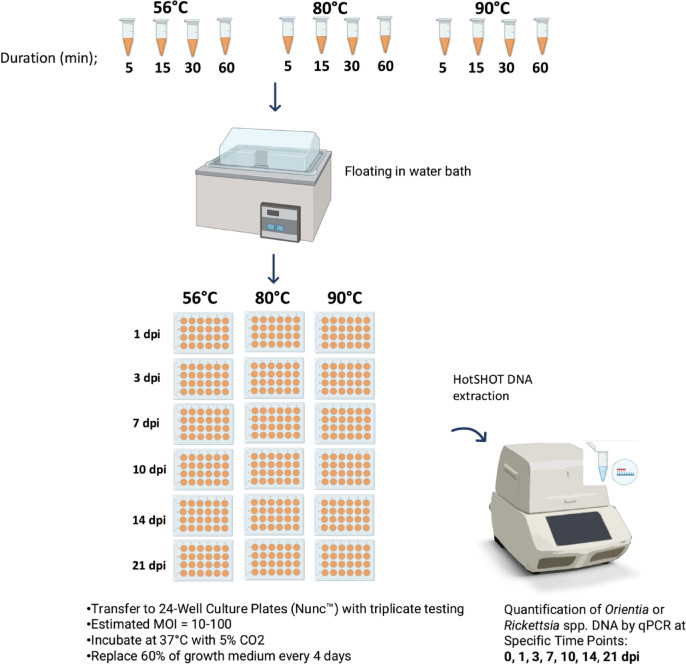 Figure 1
 Figure 2
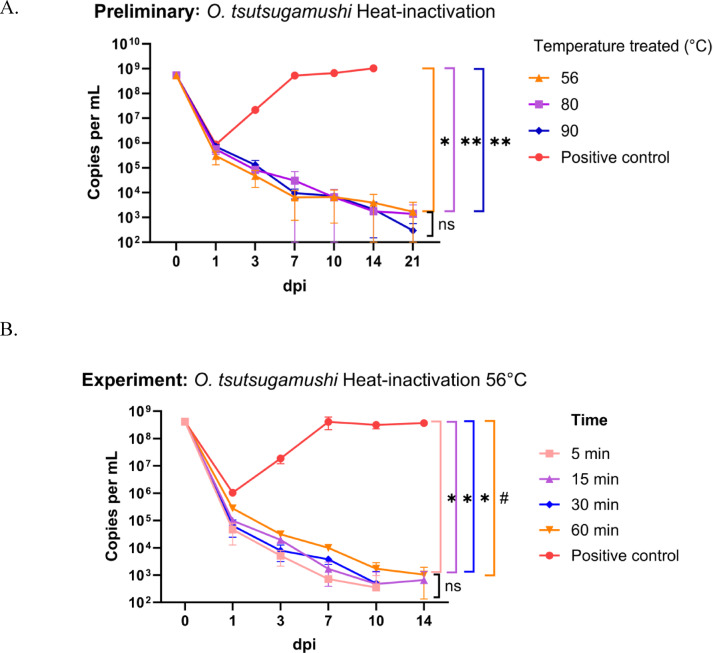 Figure 3
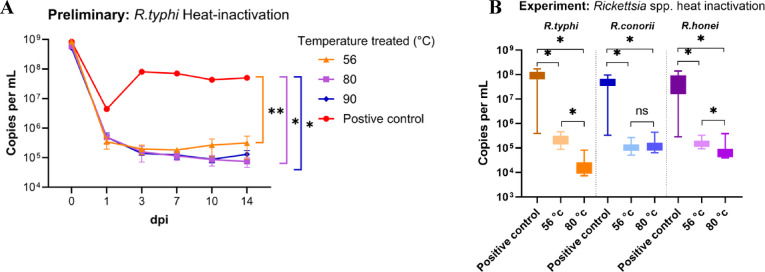 Figure 4
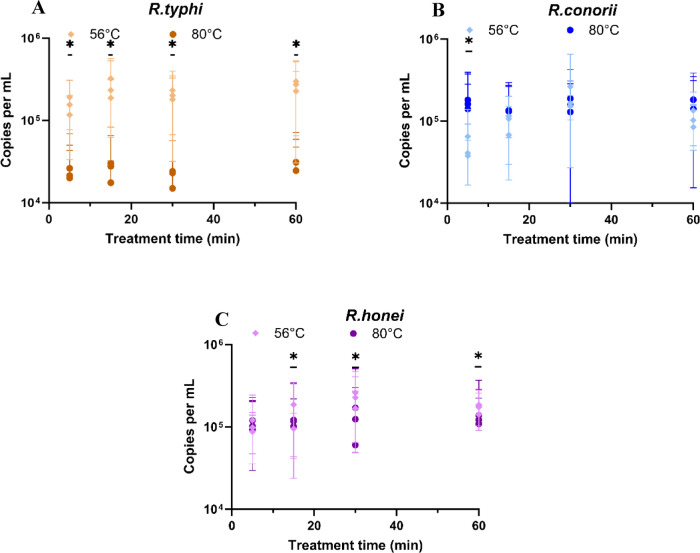 Figure 5
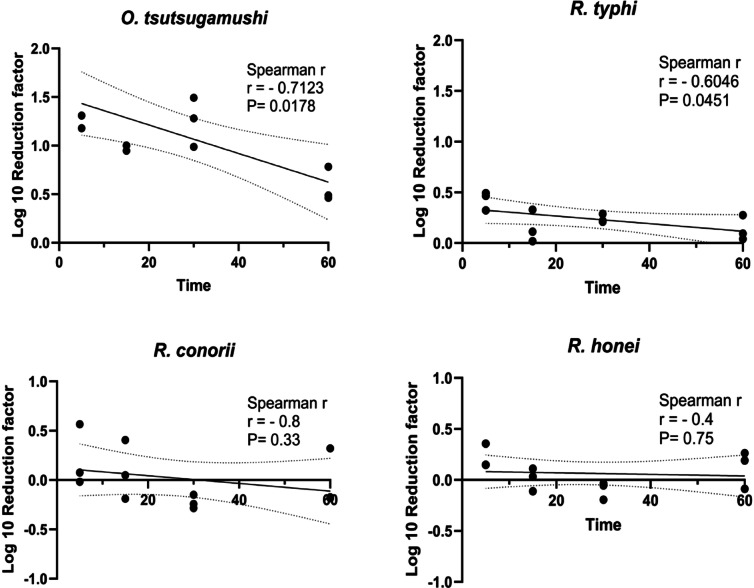 Figure 6
Peer Reviews
No public reviews on file for this paper yet. If you reviewed it on a platform where reviews are public (OpenReview, ICLR, NeurIPS, ICML), you can paste yours below so the community can read it here.
Videos
No videos yet. Explain this paper in a talk, walkthrough, or lecture? Add one.
Taxonomy
TopicsYersinia bacterium, plague, ectoparasites research · Vector-borne infectious diseases · Bacillus and Francisella bacterial research