Personalized prediction model generated with machine learning for kidney function one year after living kidney donation
Rikako Oki, Toshihio Hirai, Kazuhiro Iwadoh, Yu Kijima, Hiroyuki Hashimoto, Yasunori Nishimura, Taro Banno, Kohei Unagami, Kazuya Omoto, Tomokazu Shimizu, Junichi Hoshino, Toshio Takagi, Hideki Ishida, Toshihito Hirai

TL;DR
A machine learning model predicts kidney function after living donation, offering better accuracy than traditional methods.
Contribution
A novel machine learning model for predicting post-donation kidney function using preoperative clinical data.
Findings
The ML model achieved a median absolute error of 0.079 mg/dL in predicting serum creatinine levels.
The model outperformed conventional methods with higher R2 and lower error metrics.
Preoperative creatinine and remnant kidney volume were key predictive variables.
Abstract
Living kidney donors typically experience approximately a 30% reduction in kidney function after donation, although the degree of reduction varies among individuals. This study aimed to develop a machine learning (ML) model to predict serum creatinine (Cre) levels at one year post-donation using preoperative clinical data, including kidney-, fat-, and muscle-volumetry values from computed tomography. A total of 204 living kidney donors were included. Symbolic regression via genetic programming was employed to create an ML-based Cre prediction model using preoperative clinical variables. Validation was conducted using a 7:3 training-to-test data split. The ML model demonstrated a median absolute error of 0.079 mg/dL for predicting Cre. In the validation cohort, it outperformed conventional methods (which assume post-donation eGFR to be 70% of the preoperative value) with higher R2 (0.58…
Genes, proteins, chemicals, diseases, species, mutations and cell lines named across the full text — each resolved to its canonical identifier and authoritative record.
Click any figure to enlarge with its caption.
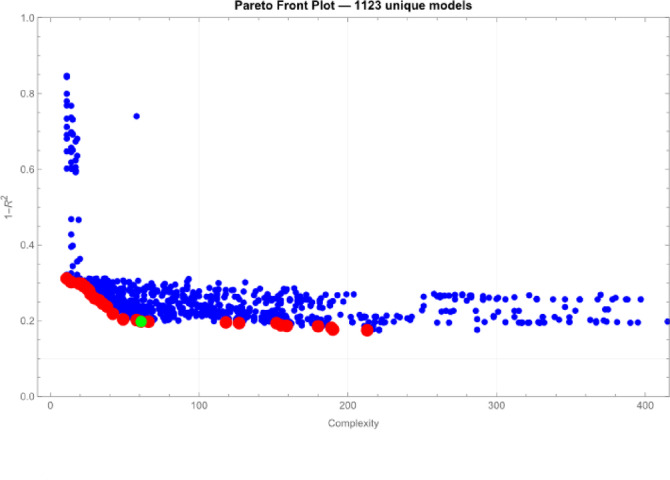 Figure 1
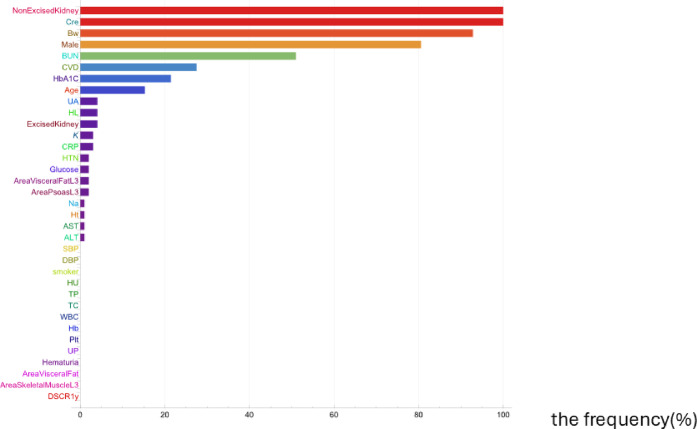 Figure 2
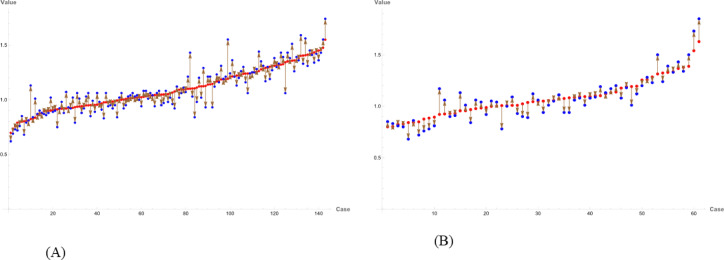 Figure 3
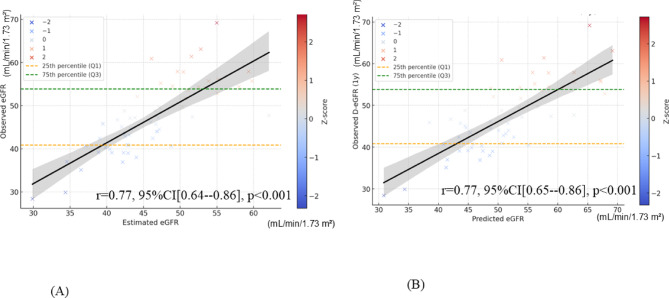 Figure 4
Peer Reviews
No public reviews on file for this paper yet. If you reviewed it on a platform where reviews are public (OpenReview, ICLR, NeurIPS, ICML), you can paste yours below so the community can read it here.
Videos
No videos yet. Explain this paper in a talk, walkthrough, or lecture? Add one.
Taxonomy
TopicsOrgan Donation and Transplantation · Renal and Vascular Pathologies · Chronic Kidney Disease and Diabetes