Revealing spatiotemporal variations in areas potentially linked to COVID-19 spread using fine-grained population data
Nobumasa Ishida, Masashi Toyoda, Kazutoshi Umemoto, Koji Zettsu

TL;DR
This study uses detailed population data to understand how and where COVID-19 spreads in cities, helping improve public health strategies.
Contribution
The study introduces a method to identify fine-grained areas and times linked to potential COVID-19 spread using spatiotemporal population data.
Findings
Highly-correlated areas with potential for COVID-19 spread were identified in Tokyo at a fine-grained level.
These areas shifted within cities and between urban and suburban regions during different pandemic waves.
Population dynamics and points of interest were used to characterize potential areas of concern.
Abstract
The COVID-19 pandemic has highlighted the need to better understand the dynamics of disease spread in cities in order to develop efficient and effective epidemiological strategies. In this study, we utilise fine-grained spatiotemporal population data obtained from mobile devices to identify areas and time of day that may contribute to COVID-19 spread, and investigate how they change throughout different waves of the pandemic. To evaluate the potential risk to city residents, we analyse the correlation between the effective reproduction number and population dynamics at locations regularly visited by these residents. Our case study of Tokyo identifies highly-correlated areas at a fine-grained level, revealing shifts in these areas within cities and across urban and suburban regions as the pandemic progresses. We also explore the characteristics of the potential areas of concern through…
Genes, proteins, chemicals, diseases, species, mutations and cell lines named across the full text — each resolved to its canonical identifier and authoritative record.
Click any figure to enlarge with its caption.
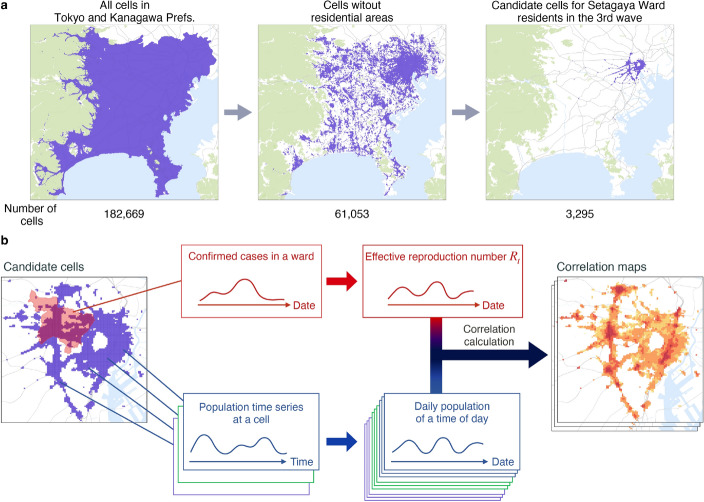 Figure 1
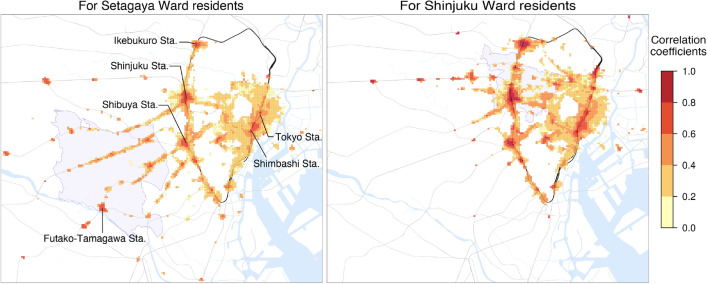 Figure 2
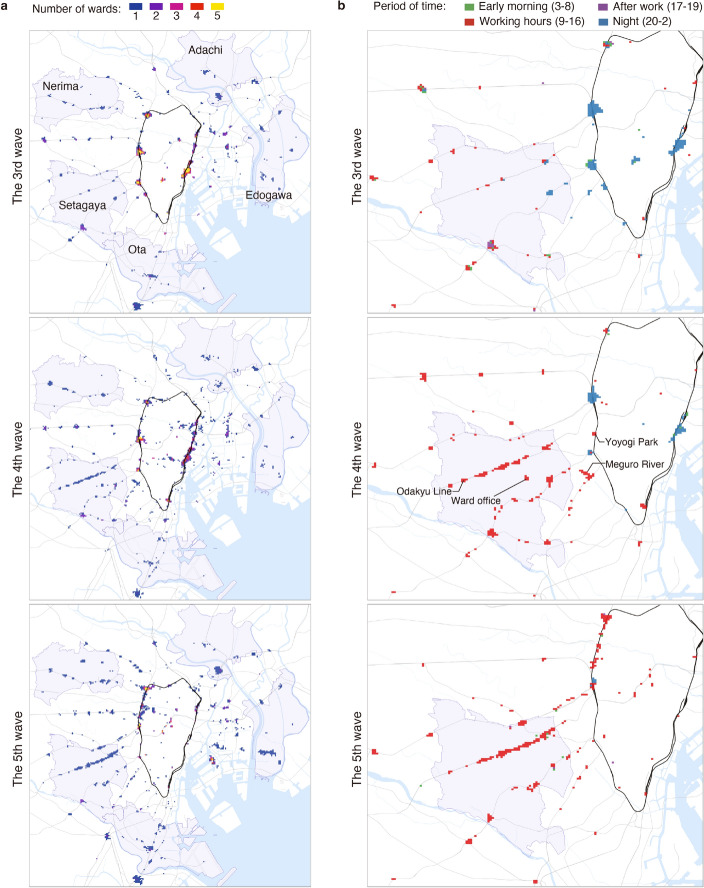 Figure 3
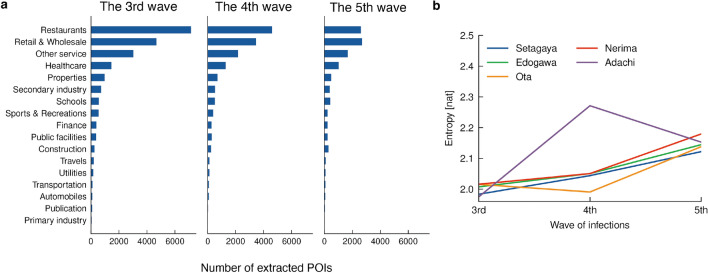 Figure 4
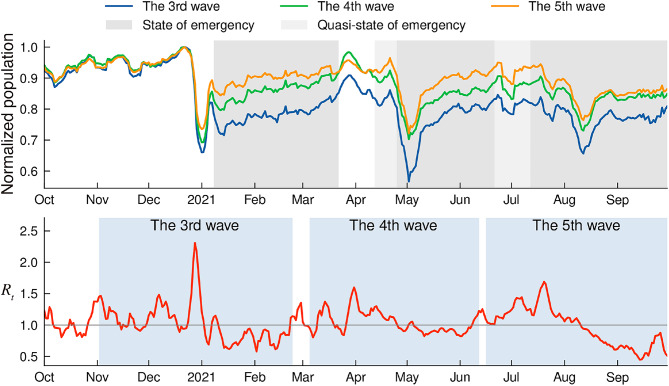 Figure 5
Peer Reviews
No public reviews on file for this paper yet. If you reviewed it on a platform where reviews are public (OpenReview, ICLR, NeurIPS, ICML), you can paste yours below so the community can read it here.
Videos
No videos yet. Explain this paper in a talk, walkthrough, or lecture? Add one.
Taxonomy
TopicsCOVID-19 epidemiological studies · Data-Driven Disease Surveillance · Human Mobility and Location-Based Analysis