Genotype–Phenotype Correlations, Treatment, and Prognosis of Children With Early‐Onset (Neonatal) Marfan Syndrome
Eva C. van der Leest, Annelies E. van der Hulst, Gerard Pals, Lidiia Zhytnik, Lillian Lai, Caroline Jacquemart, Lindsay Mills, Michiel Houben, Petr Jira, Bert L. Lunshof, Jessica Warnink‐Kavelaars, Vivian de Waard, Leonie A. Menke

TL;DR
This study examines the genetic and clinical factors affecting survival in children with early-onset Marfan syndrome, a rare and severe condition marked by heart valve issues.
Contribution
The study identifies genetic variants and surgical timing as key factors influencing survival in early-onset Marfan syndrome.
Findings
Survival is better in individuals with single amino acid substitutions or small deletions compared to those with large deletions.
Cardiovascular surgery at an older age (13 months) is associated with better survival than surgery at younger ages (2 months).
Most deaths occur before 5 months of age, highlighting the critical early period for intervention.
Abstract
Early‐onset Marfan syndrome (eoMFS) is a severe and rare form of Marfan syndrome characterized by severe atrioventricular valve insufficiency developing before or shortly after birth. It is unclear which factors (interventions and/or genotype) influence survival. Forty‐one individuals with eoMFS with a fibrillin‐1 gene (FBN1) variant in exon 24–32 (CRCh37) were included. At the last follow‐up, 14/41 (34%) were alive (8 months‐18 years) and 27/41 (66%) were deceased. Median age of death was 1 month and 88% of the deaths occurred before 5 months of age. More individuals alive past the age of 16 months versus those who were deceased before that age had undergone cardiovascular surgery at an older age (13 months, range 3–72, vs. 2 months, range 2–2, p = 0.03). Survival was better in those with single amino acid substitutions/small in‐frame deletions than in those with large in‐frame…
Genes, proteins, chemicals, diseases, species, mutations and cell lines named across the full text — each resolved to its canonical identifier and authoritative record.
Click any figure to enlarge with its caption.
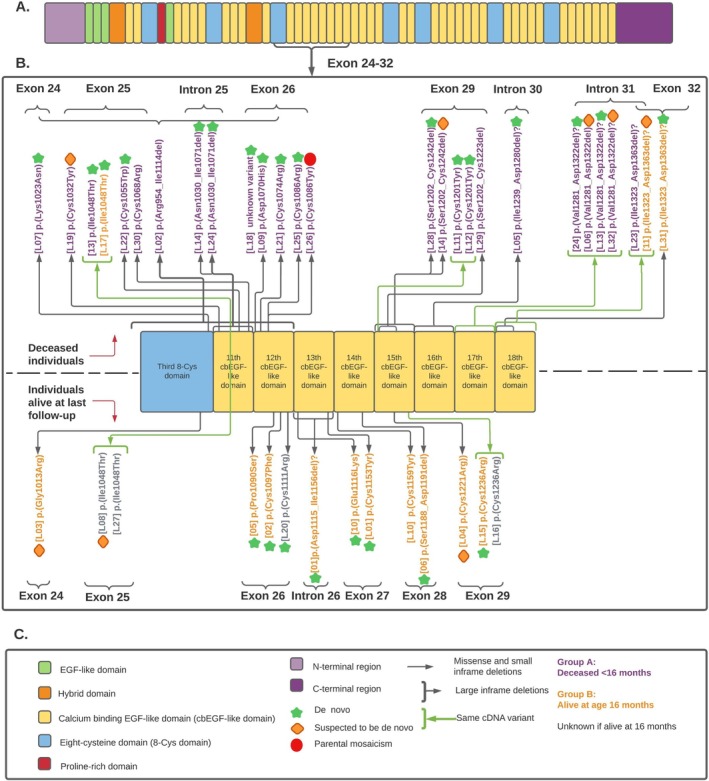 Figure 1
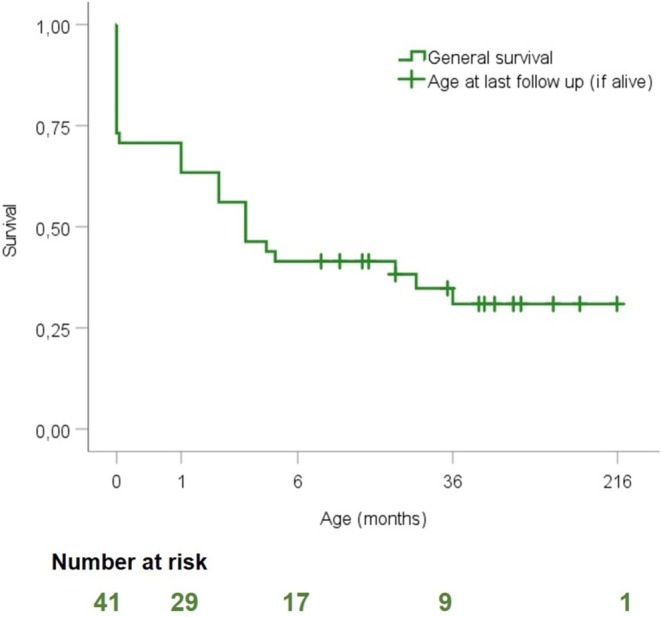 Figure 2
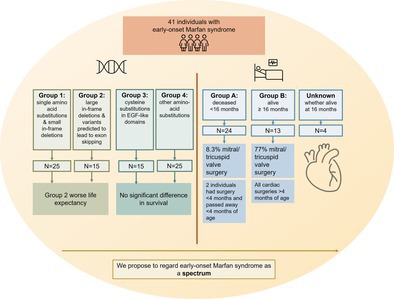 Figure 3
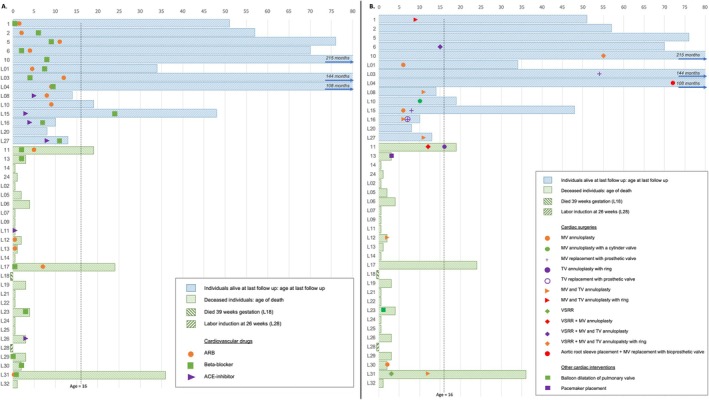 Figure 4
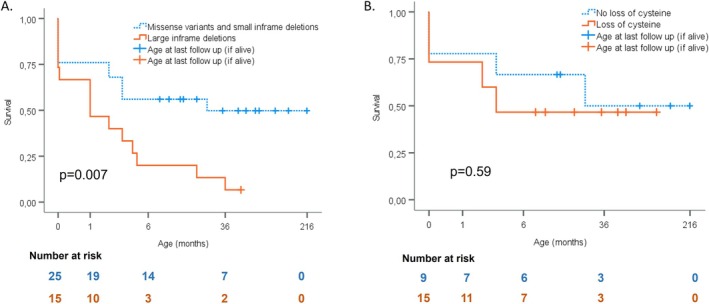 Figure 5
Peer Reviews
No public reviews on file for this paper yet. If you reviewed it on a platform where reviews are public (OpenReview, ICLR, NeurIPS, ICML), you can paste yours below so the community can read it here.
Videos
No videos yet. Explain this paper in a talk, walkthrough, or lecture? Add one.
Taxonomy
TopicsConnective tissue disorders research · Cardiac Valve Diseases and Treatments · Aortic Disease and Treatment Approaches