Brain glutamate and gamma-aminobutyric acid levels across COVID-19 lockdowns in patients with recurrent major depressive disorder and healthy individuals
Valentin Popper, Benjamin Spurny-Dworak, Jakob Unterholzner, Murray Reed, Theresa Wechsler, Alexander Kautzky, Peter Stöhrmann, Manfred Klöbl, Andreas Mühlberger, Richard Frey, Dan Rujescu, Rupert Lanzenberger, Thomas Vanicek

TL;DR
This study examined brain glutamate and GABA levels in people with depression and healthy individuals during lockdowns, finding no significant changes in neurotransmitter levels or depressive symptoms.
Contribution
The study provides longitudinal insights into the effects of pandemic-related lockdowns on brain chemistry and depression symptoms.
Findings
Lockdowns did not significantly alter brain GABA or glutamate levels in either group.
Depressive symptom severity remained stable across lockdowns.
Patients with rMDD reported insufficient social support, indicating vulnerability to isolation.
Abstract
The coronavirus disease 2019 (COVID-19) led to substantial social restriction measures. Social isolation has been demonstrated to promote psychiatric symptoms and to dysregulate gamma-aminobutyric acid (GABA) and glutamate levels. The aim of this investigation was to observe brain GABA and glutamate concentrations and depressive symptom severity in association to lockdowns in patients with recurrent major depression disorder (rMDD) and healthy individuals (HI). In this longitudinal study, 18 patients with rMDD (11 female: 37.0 ± 10.0years) and 28 HI (16 female, 28.1 ± 5.0years) underwent three magnetic resonance spectroscopy imaging (MRSI) measurements over multiple lockdowns. Ratios of GABA+ (GABA + macromolecules) and glutamate + glutamine (Glx) to total creatinine (tCr) as well as GABA+/Glx ratios were calculated for subcortical regions and the insula. Depressive symptom severity and…
Genes, proteins, chemicals, diseases, species, mutations and cell lines named across the full text — each resolved to its canonical identifier and authoritative record.
Click any figure to enlarge with its caption.
 Figure 1
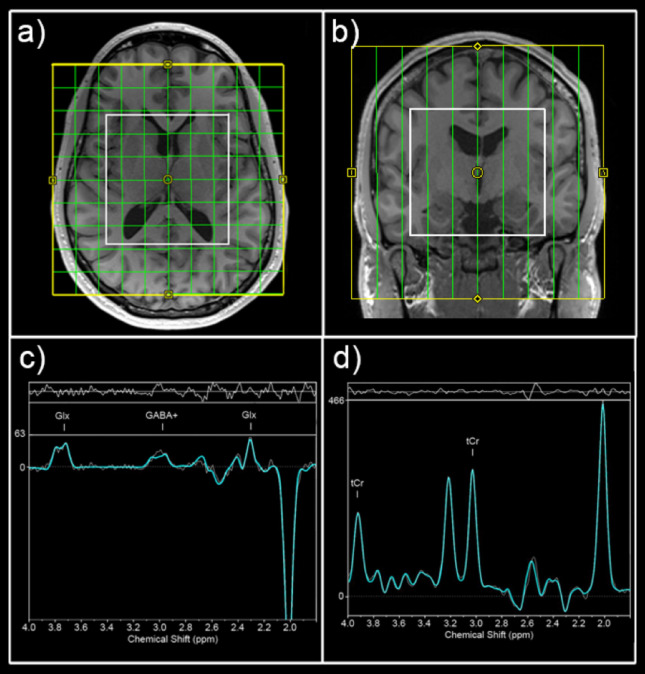 Figure 2
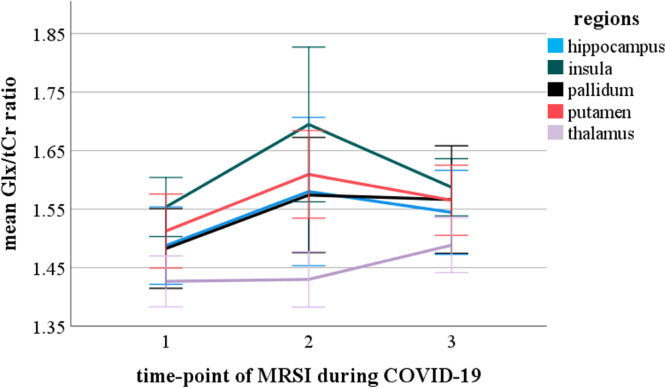 Figure 3
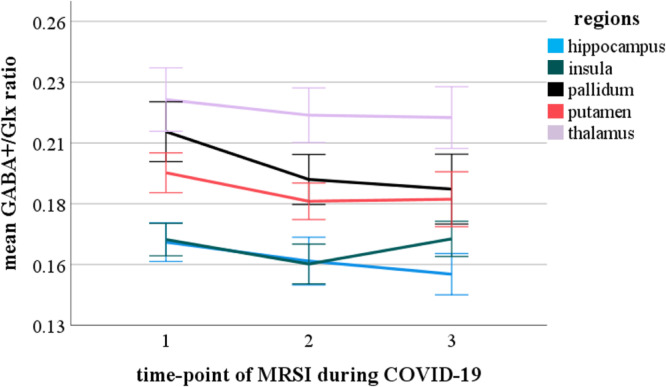 Figure 4
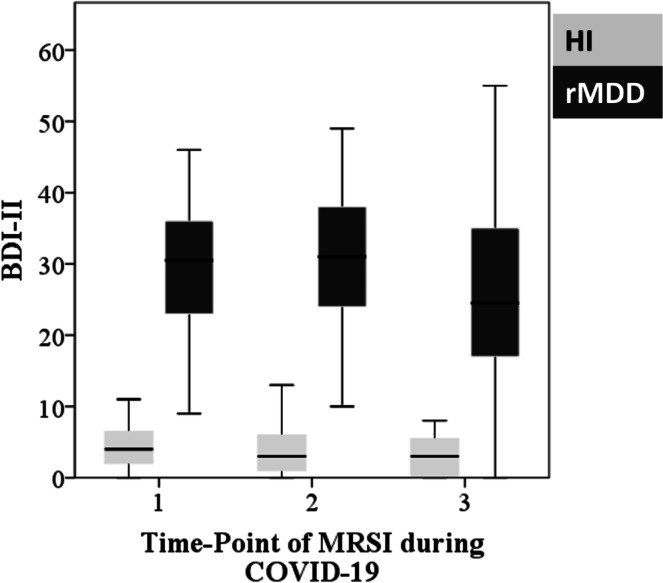 Figure 5
Peer Reviews
No public reviews on file for this paper yet. If you reviewed it on a platform where reviews are public (OpenReview, ICLR, NeurIPS, ICML), you can paste yours below so the community can read it here.
Videos
No videos yet. Explain this paper in a talk, walkthrough, or lecture? Add one.
Taxonomy
TopicsTryptophan and brain disorders · COVID-19 and Mental Health · Long-Term Effects of COVID-19