WNK2 variants associated with familial osteoarthritis alter the chondrocyte response to hyperosmotic stress
Shivakumar R Veerabhadraiah, Derek J Matheson, Matthew Honeggar, Collin Aslor, Antonio C Zelada, Chris Stubben, Gregory J Stoddard, Nikolas H Kazmers, David J Grunwald, Michael J Jurynec

TL;DR
This study finds that WNK2 gene variants linked to familial osteoarthritis affect how chondrocytes respond to osmotic stress, contributing to joint disease.
Contribution
Novel WNK2 coding variants associated with familial osteoarthritis are identified, showing their role in altered chondrocyte response to hyperosmotic stress.
Findings
WNK2 variants are associated with familial erosive hand and foot osteoarthritis.
Elevated WNK2 expression in chondrocytes under hyperosmotic stress promotes an OA-associated transcriptional response.
WNK2 expression is significantly increased in end-stage osteoarthritic joints in humans and mice.
Abstract
Chondrocytes of the synovial joint sense and respond to changes in osmolarity to maintain joint homeostasis. We hypothesised that an abnormal response to osmotic stress is a contributing factor to loss of joint homeostasis and the development of osteoarthritis (OA). Our goal was to identify whether genetic variants affecting the response to osmotic stress were associated with susceptibility to OA. Genomic analysis of independent families with dominant inheritance of OA revealed novel WNK2 coding variants that segregated with occurrence of OA. WNK2 expression was examined by immunohistochemistry on normal and osteoarthritic tissue isolated from humans and mice. Wild type (WT) and variant WNK2 functions were analysed by overexpression effects in immortalised and primary human chondrocytes; loss-of-function effects were analysed in WNK2 mutant cells. Transcriptomic analyses were used to…
Genes, proteins, chemicals, diseases, species, mutations and cell lines named across the full text — each resolved to its canonical identifier and authoritative record.
Click any figure to enlarge with its caption.
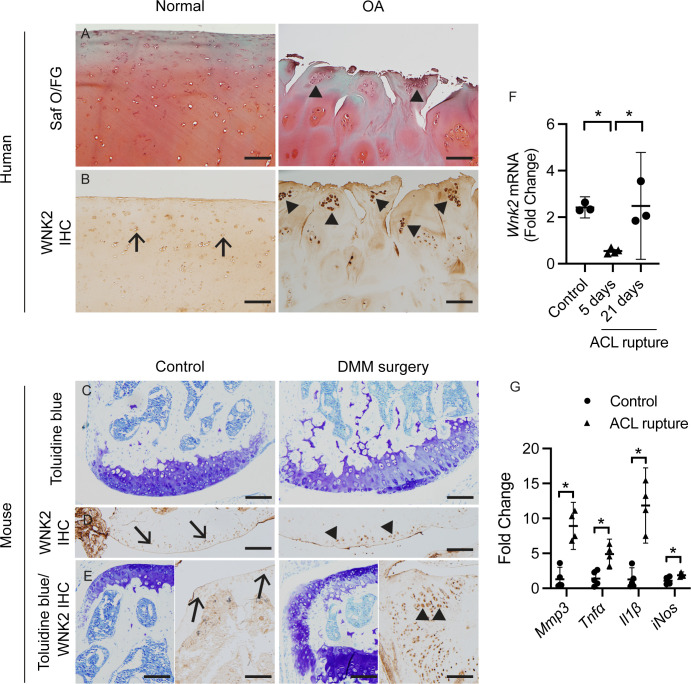 Figure 1
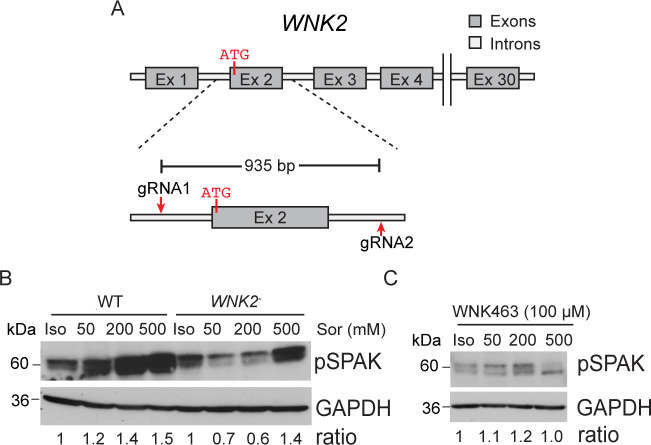 Figure 2
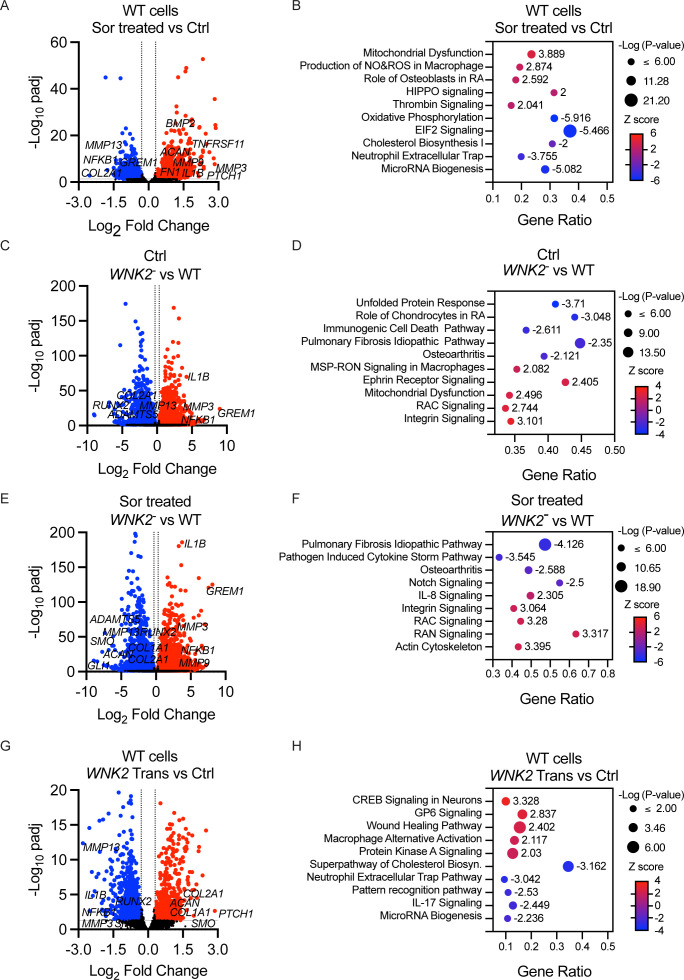 Figure 3
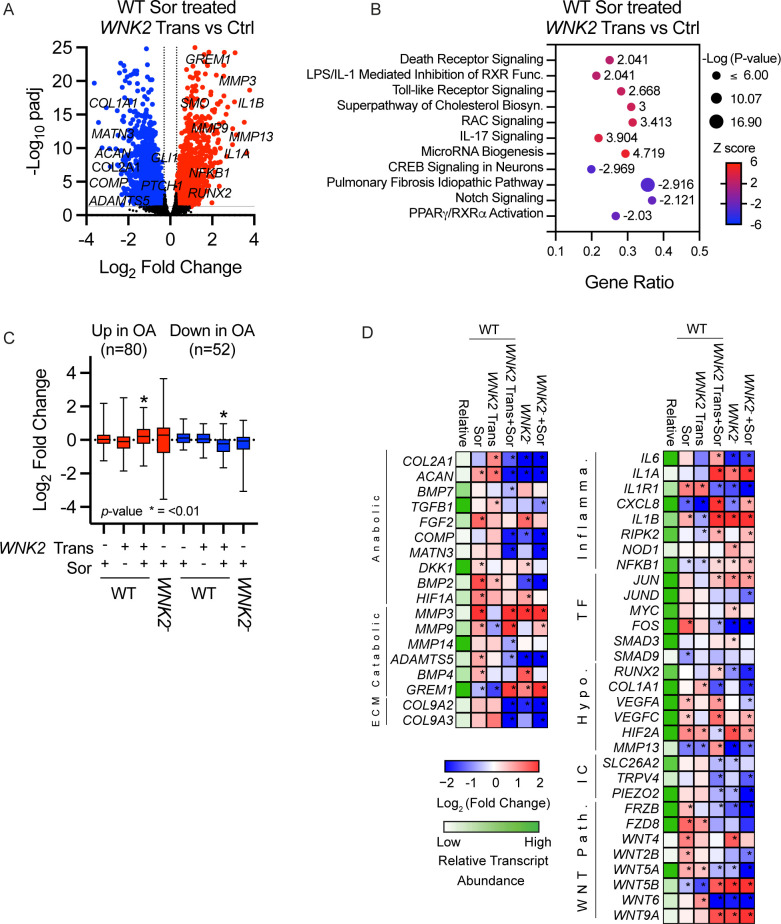 Figure 4
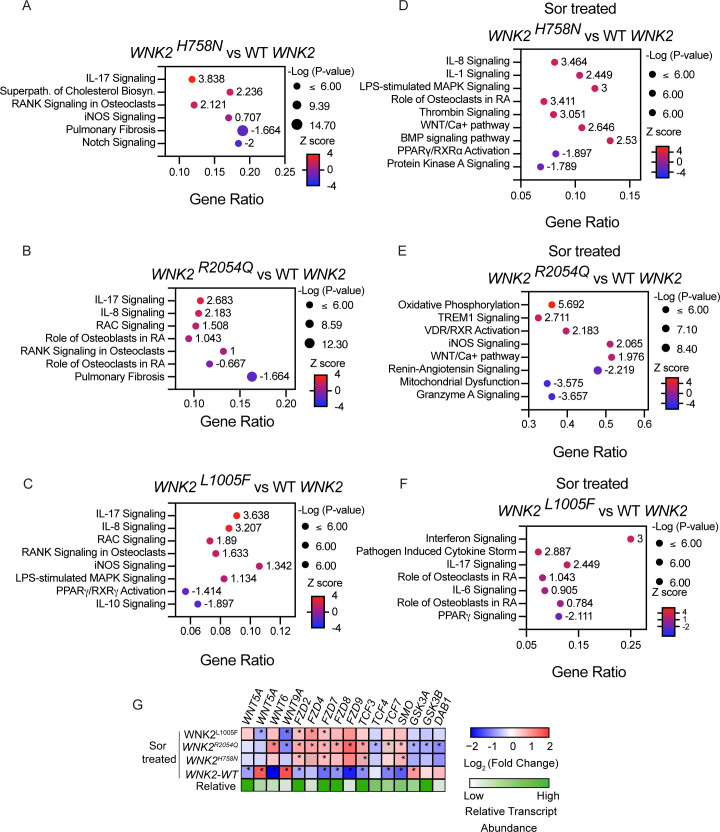 Figure 5
Peer Reviews
No public reviews on file for this paper yet. If you reviewed it on a platform where reviews are public (OpenReview, ICLR, NeurIPS, ICML), you can paste yours below so the community can read it here.
Videos
No videos yet. Explain this paper in a talk, walkthrough, or lecture? Add one.
Taxonomy
TopicsOsteoarthritis Treatment and Mechanisms