Short-term effects of pet acquisition and loss on well-being in an unbiased sample during the COVID-19 pandemic
Judit Mokos, Eniko Kubinyi, Dorottya J. Ujfalussy, Ivaylo B. Iotchev, Borbála Paksi, Zsolt Demetrovics, Róbert Urbán, Ádám Miklósi

TL;DR
A study in Hungary found that getting a pet during the pandemic initially boosted cheerfulness, but the benefits faded quickly and were later linked to declines in well-being, especially with dogs.
Contribution
The study used a representative sample, avoiding pet enthusiast bias, to show that pet acquisition's well-being effects are short-lived and context-dependent.
Findings
Pet acquisition initially increased cheerfulness but the effect lasted only 1–4 months.
Over 6 months, pet acquisition was linked to declines in calmness, activity, and life satisfaction, especially with dogs.
Losing a pet had no significant effect on well-being, and neither mental nor physical well-being predicted future pet acquisition.
Abstract
Research on the impact of pet ownership on well-being has produced mixed results, often influenced by a focus on pet enthusiasts. To address this bias, we conducted a longitudinal study in Hungary using a stratified random sample based on gender, age, education, and settlement type. Unlike previous studies, our participants were not particularly devoted to pets and were not necessarily the primary caretakers, offering a more balanced perspective on how pet acquisition affects well-being. Among the 2783 respondents who participated three times in data collection, 65 acquired a pet, and 75 lost a pet during the COVID-19 pandemic. Pet acquisition initially increased cheerfulness, but this effect was short-lived, lasting only 1–4 months. Over a longer period (up to 6 months), pet acquisition—particularly dog acquisition—was linked to declines in calmness, activity, cheerfulness, and life…
Genes, proteins, chemicals, diseases, species, mutations and cell lines named across the full text — each resolved to its canonical identifier and authoritative record.
Click any figure to enlarge with its caption.
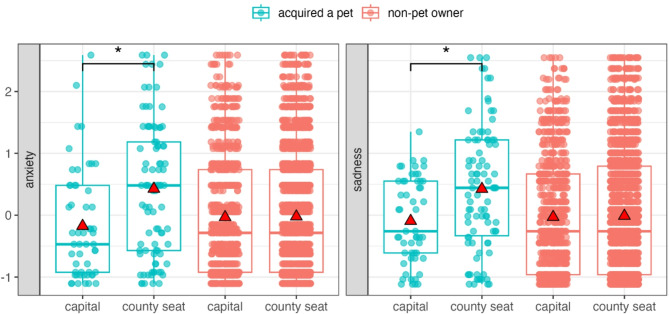 Figure 1
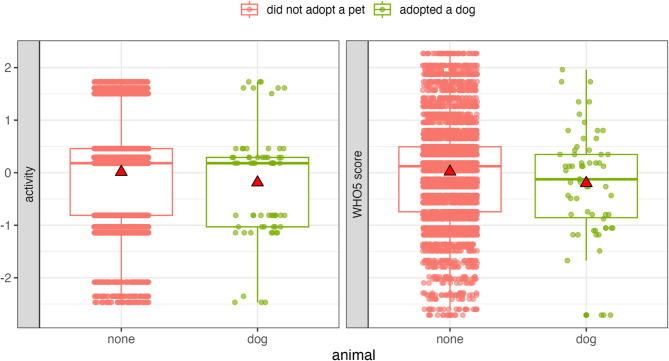 Figure 2
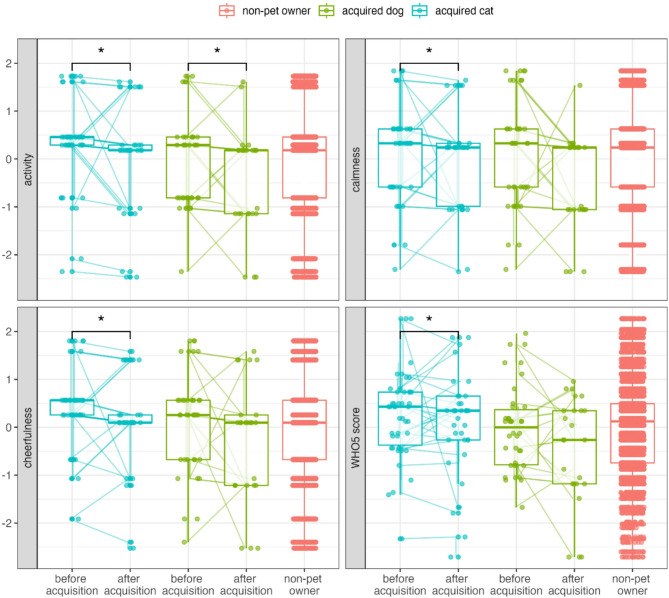 Figure 3
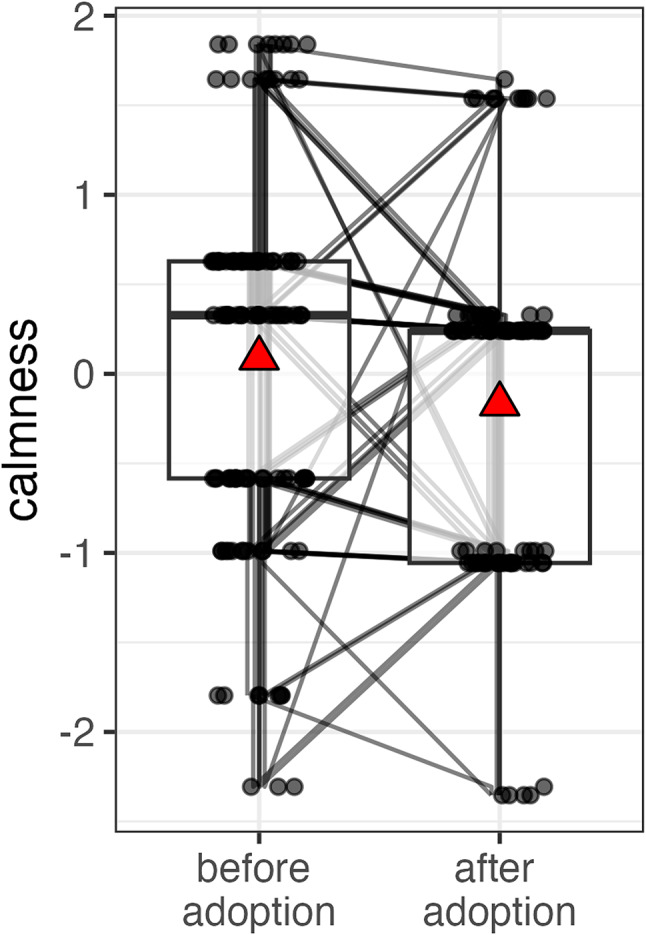 Figure 4
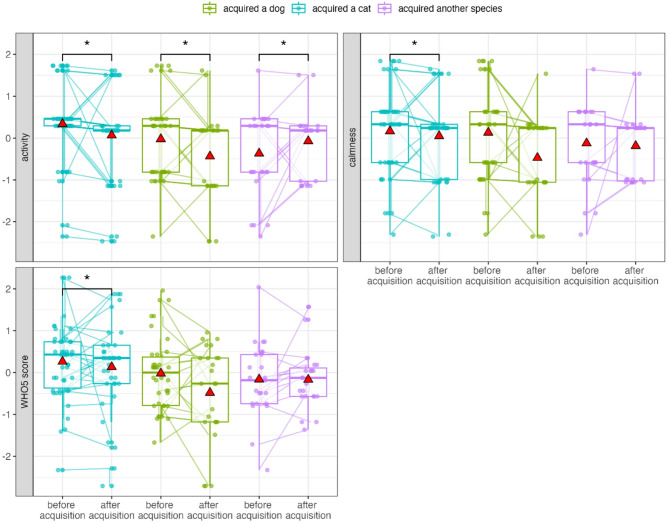 Figure 5
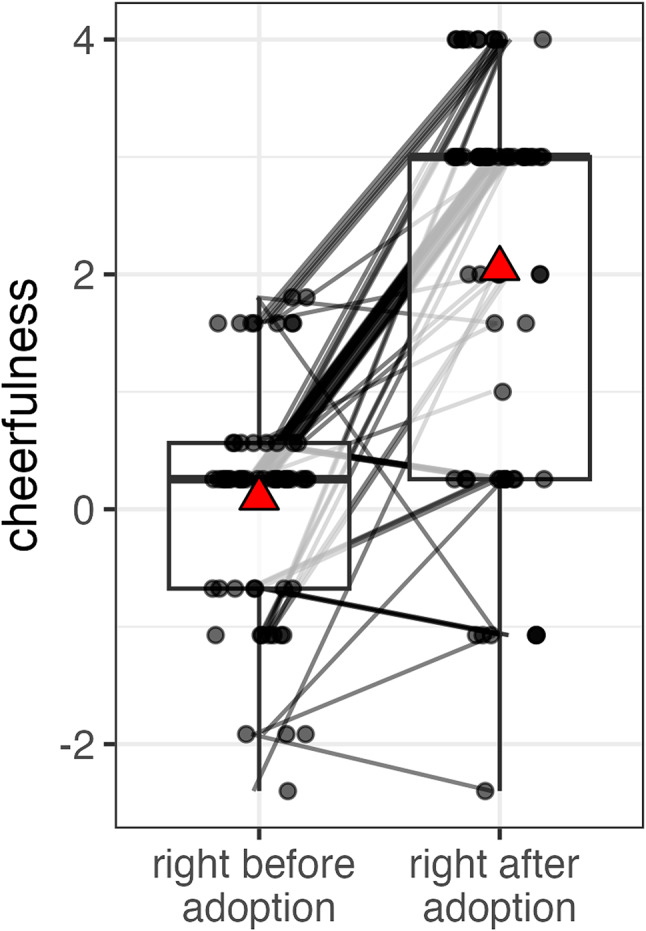 Figure 6
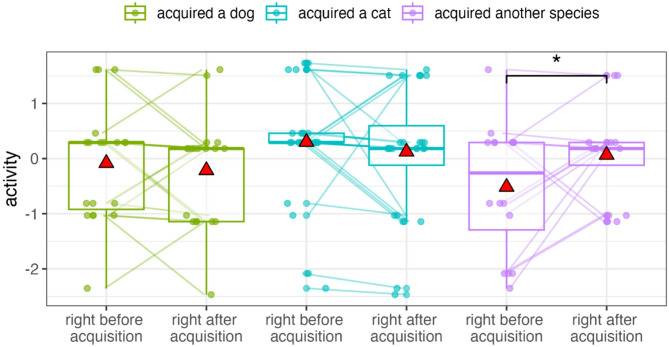 Figure 7
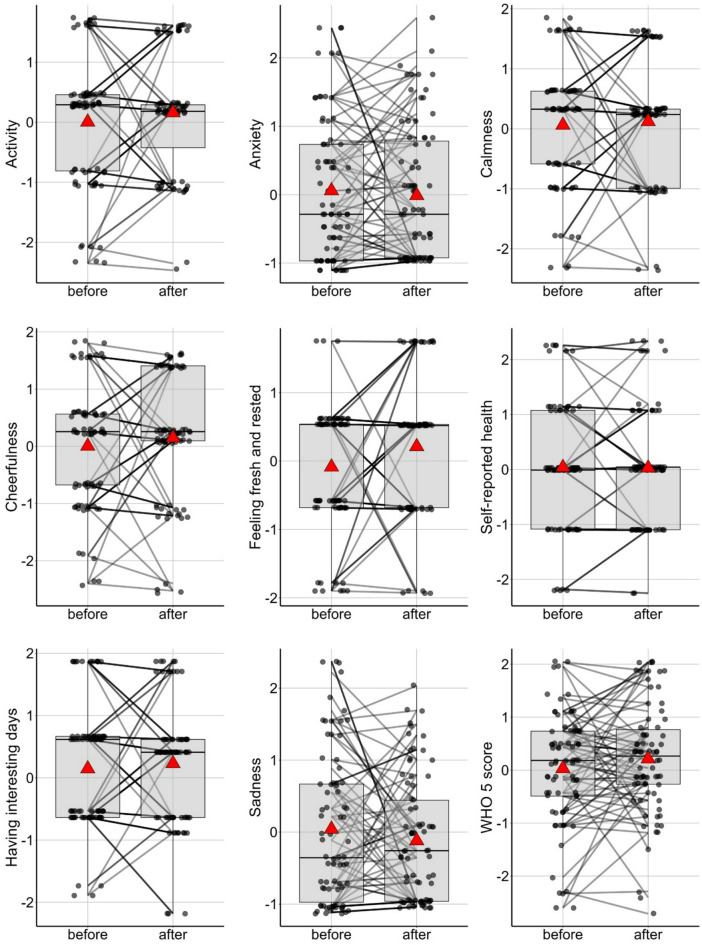 Figure 8
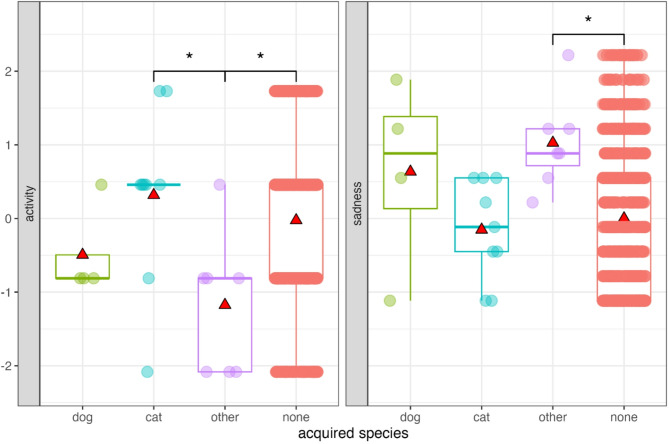 Figure 9
Peer Reviews
No public reviews on file for this paper yet. If you reviewed it on a platform where reviews are public (OpenReview, ICLR, NeurIPS, ICML), you can paste yours below so the community can read it here.
Videos
No videos yet. Explain this paper in a talk, walkthrough, or lecture? Add one.
Taxonomy
TopicsHuman-Animal Interaction Studies · Geographies of human-animal interactions · Psychology of Moral and Emotional Judgment