The impact of haemostatic agent used during robot‐assisted radical prostatectomy on post‐op infection and anastomotic leak
Jamie Krishnan, Rory Brennan, Osman El‐Koubani, Sailantra Sivathasan, Kevin Gallagher, Linda Taylor, Abhishek Sharma, Daniel Good, Alan McNeill

TL;DR
This study compares two haemostatic agents in robot-assisted prostate surgery, finding that one reduces post-op infections and leaks, allowing more selective use of cystograms.
Contribution
The study introduces a novel comparison of haemostatic agents (Oxitamp vs. Arista AH) and their impact on postoperative outcomes in robot-assisted radical prostatectomy.
Findings
Using Arista AH reduced post-op UTIs from 12% to 11% and cystogram leaks from 29% to 15%.
All leaks in the Arista AH group were small, compared to 20% in the Oxitamp group.
Cystograms can be selectively used when Arista AH is applied, except in specific patient cases.
Abstract
Despite the widespread use of robotic‐assisted radical prostatectomy (RARP), considerable variation exists in practice with regard to postoperative cystograms prior to trial without catheter (TWOC). Our practice was to undertake a cystogram at 7–14‐day post‐op and proceed with TWOC if the leak was small or absent. In this study, we evaluate the risk factors for anastomotic leak and post‐op urinary tract infection (UTI), while assessing the impact of using powdered haemostat Arista AH on post‐op UTIs and cystographic leaks to rationalise the use of cystograms. The study was carried out in two phases, the first a retrospective review of 154 patients undergoing RARP between January and October 2022, where Oxitamp (an absorbable haemostat of oxidised regenerated cellulose) was used as the haemostatic agent. The second phase was prospective, involving 62 patients between November and…
Genes, proteins, chemicals, diseases, species, mutations and cell lines named across the full text — each resolved to its canonical identifier and authoritative record.
Click any figure to enlarge with its caption.
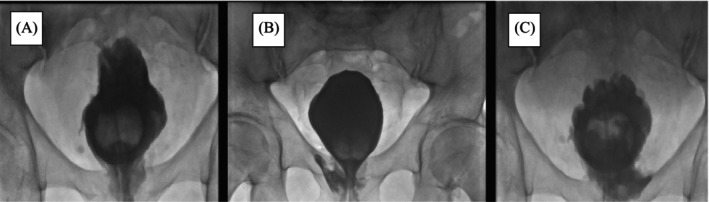 Figure 1
Peer Reviews
No public reviews on file for this paper yet. If you reviewed it on a platform where reviews are public (OpenReview, ICLR, NeurIPS, ICML), you can paste yours below so the community can read it here.
Videos
No videos yet. Explain this paper in a talk, walkthrough, or lecture? Add one.
Taxonomy
TopicsUreteral procedures and complications · Prostate Cancer Diagnosis and Treatment · Urological Disorders and Treatments