Evaluating the Prognostic Value of Kansas City Cardiomyopathy Questionnaire (KCCQ) Scores for 6‐Month Readmissions in Southeast Asian Populations With Heart Failure
Jeanne SY Ong, Ming Fatt Kham, Jonah Goh, Francis Phng, Po Fun Chan, Poay Huan Loh, Christine Wu

TL;DR
The study finds that higher KCCQ scores in Southeast Asian heart failure patients are linked to lower 6-month readmission rates, suggesting they can be used as a clinical indicator.
Contribution
The study evaluates the KCCQ-12's prognostic value for 6-month readmissions in a Southeast Asian HF population using a stepwise model selection approach.
Findings
Higher KCCQ scores were significantly associated with lower 6-month readmission rates (adjusted OR = 0.929, p = 0.0255).
Incorporating KCCQ scores improved the predictive model's AUC from 0.64 to 0.82.
KCCQ-12 scores recorded at the first post-discharge visit effectively predicted 6-month HF readmissions.
Abstract
Heart failure (HF) is a prevalent cause of hospital readmissions. Our study aims to determine the correlation between the Kansas City Cardiomyopathy Questionnaire (KCCQ) scores and 6‐month readmission in our Southeast Asian population. We evaluated KCCQ‐12 in a cohort of 180 patients at first post‐discharge visit after a recent hospitalization for HF with reduced ejection fraction (HFrEF). Logistic regression was used to determine the predictive significance of the KCCQ scores for 6‐month HF readmission. The selection of predictive parameters was performed using Stepwise Akaike Information Criterion (StepAIC). Out of 180 patients, 52 (29%) were readmitted for HF within 6 months. The mean KCCQ score was higher in the non‐readmitted group (78.5) compared to the readmitted group (69.7, p = 0.0129). Multivariate analysis indicated a significant association between higher KCCQ scores…
Genes, proteins, chemicals, diseases, species, mutations and cell lines named across the full text — each resolved to its canonical identifier and authoritative record.
Click any figure to enlarge with its caption.
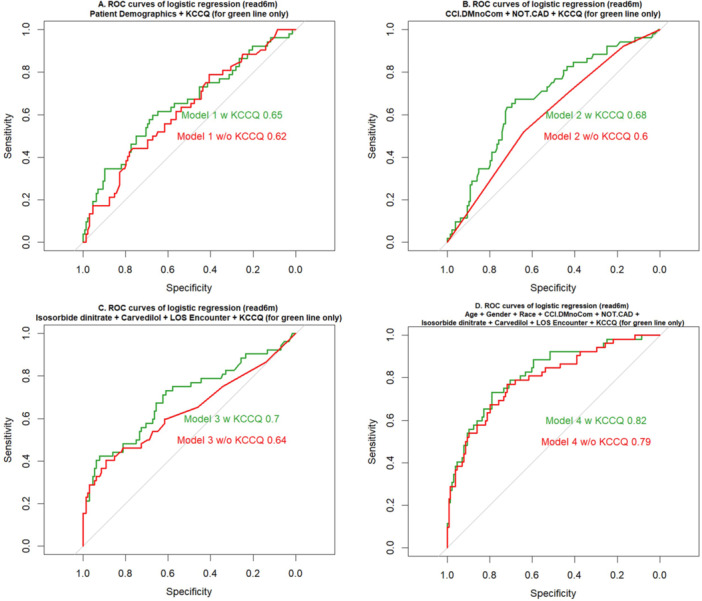 Figure 1
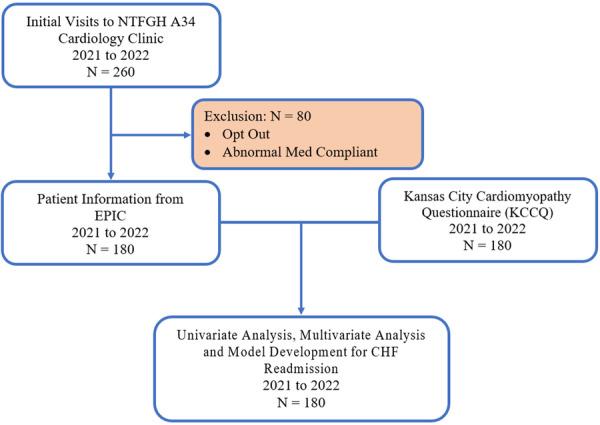 Figure 2
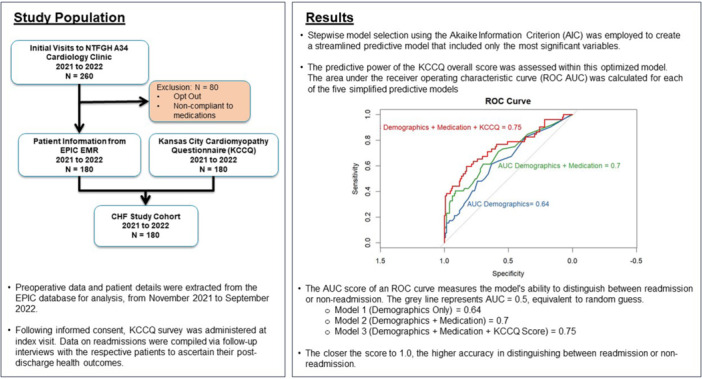 Figure 3
Peer Reviews
No public reviews on file for this paper yet. If you reviewed it on a platform where reviews are public (OpenReview, ICLR, NeurIPS, ICML), you can paste yours below so the community can read it here.
Videos
No videos yet. Explain this paper in a talk, walkthrough, or lecture? Add one.
Taxonomy
TopicsHeart Failure Treatment and Management · Cardiovascular Function and Risk Factors · Cardiovascular Issues in Pregnancy