Acute Lateral Ankle Sprain Impairs Function and Strength Without Altering Muscle or Tendon Stiffness: A Controlled Observational Study
Pedro Bainy Franz, José Roberto de Souza Júnior, Hortência Cordeiro de Lima, Estevão de Souza Diniz, Rogério de Brito Aguiar, Jeam Marcel Geremia, Henrique Mansur, Rita de Cássia Marqueti, João Luiz Quagliotti Durigan

TL;DR
An acute lateral ankle sprain causes pain and reduced function but does not change muscle or tendon stiffness over six weeks.
Contribution
This study is the first to use shear wave elastography to show no stiffness changes in calf muscles and Achilles tendon after acute lateral ankle sprain.
Findings
Acute lateral ankle sprain leads to reduced ankle function, increased pain, and edema.
No significant changes in stiffness of calf muscles or Achilles tendon were observed in sprained ankles.
Plantar flexion strength was lower in the sprained group but improved over time.
Abstract
Acute lateral ankle sprain (LAS) frequently results in persistent functional limitations. Understanding changes in calf muscle and Achilles tendon (AT) stiffness after LAS may shed light on mechanisms underlying impaired function. To investigate the effects of acute LAS on the mechanical properties of the calf muscles and the Achilles tendon, ankle function, pain, edema, and strength. This controlled observational study was conducted from August 2023 to January 2025. Fourteen participants with acute LAS and 14 healthy controls were evaluated twice, 6 weeks apart. Shear wave elastography (SWE) assessed the stiffness of the triceps surae and AT. Ankle function, pain, and edema were evaluated using the Foot and Ankle Outcome Score, Visual Analog Scale, and figure‐of‐eight method. Plantar flexion strength was measured via isometric dynamometry. No significant differences in stiffness…
Genes, proteins, chemicals, diseases, species, mutations and cell lines named across the full text — each resolved to its canonical identifier and authoritative record.
Click any figure to enlarge with its caption.
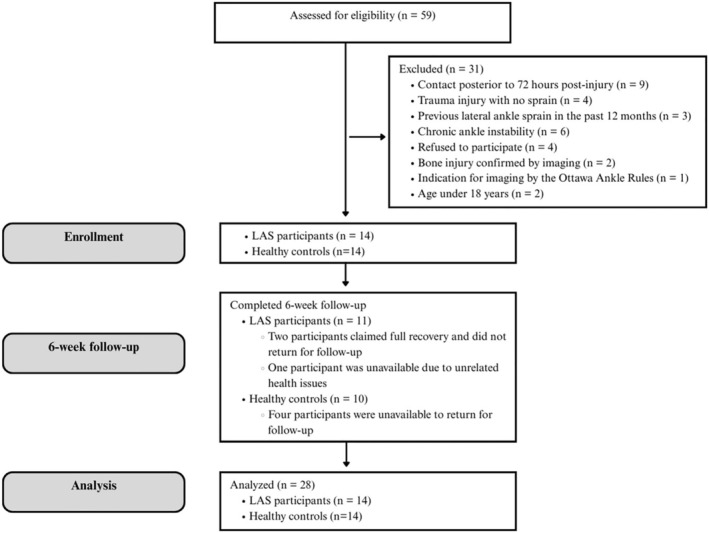 Figure 1
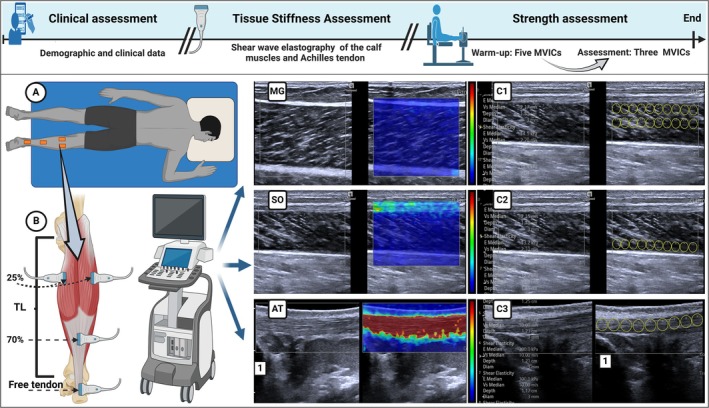 Figure 2
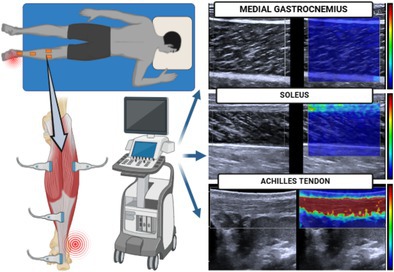 Figure 3
Peer Reviews
No public reviews on file for this paper yet. If you reviewed it on a platform where reviews are public (OpenReview, ICLR, NeurIPS, ICML), you can paste yours below so the community can read it here.
Videos
No videos yet. Explain this paper in a talk, walkthrough, or lecture? Add one.
Taxonomy
TopicsFoot and Ankle Surgery · Tendon Structure and Treatment · Sports injuries and prevention