Quantitative insights into stroke recovery utilizing delayed vessel ratio from color-coded multiphase computed tomography angiography
Yu Lin, Xiaoxiao Zhang, Zhen Xing, Xiefeng Yang, Qingwen Tong, Shaomao Lv, Jinan Wang, Dairong Cao

TL;DR
This study shows that using delayed vessel ratio from color-coded CT angiography can help predict stroke recovery outcomes and improve treatment decisions.
Contribution
The study introduces the use of delayed vessel ratio (DVR) in cmCTA for quantitative assessment of stroke collateral flow and outcome prediction.
Findings
Low DVR and high venous collateral scores correlate with better stroke recovery outcomes.
DVR and DVO have high predictive accuracy for functional independence and excellent recovery.
DVR enhances pre-treatment collateral assessment and outcome prediction in acute ischemic stroke.
Abstract
The color-coded multiphase computed tomography angiography (cmCTA) is an accredited technique that employs color-coding to visually depict the temporal dynamics of collateral blood flow in patients with acute ischemic stroke (AIS). This research aimed to assess the quantification of cmCTA in AIS patients for characterizing arterial and venous collateral flow, and predicting functional outcomes. A retrospective study was performed on a consecutive cohort of AIS patients with large vessel occlusion who underwent cmCTA scan and reconstruction. Collateral ratio and delayed vessel ratio (DVR) were determined through semi-automatic delineation and calculation on the anterior cerebral artery regions and Alberta Stroke Program Early CT (ASPECT) Score regions of cmCTA maps. Deep venous outflow (DVO) and superficial venous outflow (SVO) scores were assessed using a 6-point scale. Logistic…
Genes, proteins, chemicals, diseases, species, mutations and cell lines named across the full text — each resolved to its canonical identifier and authoritative record.
Click any figure to enlarge with its caption.
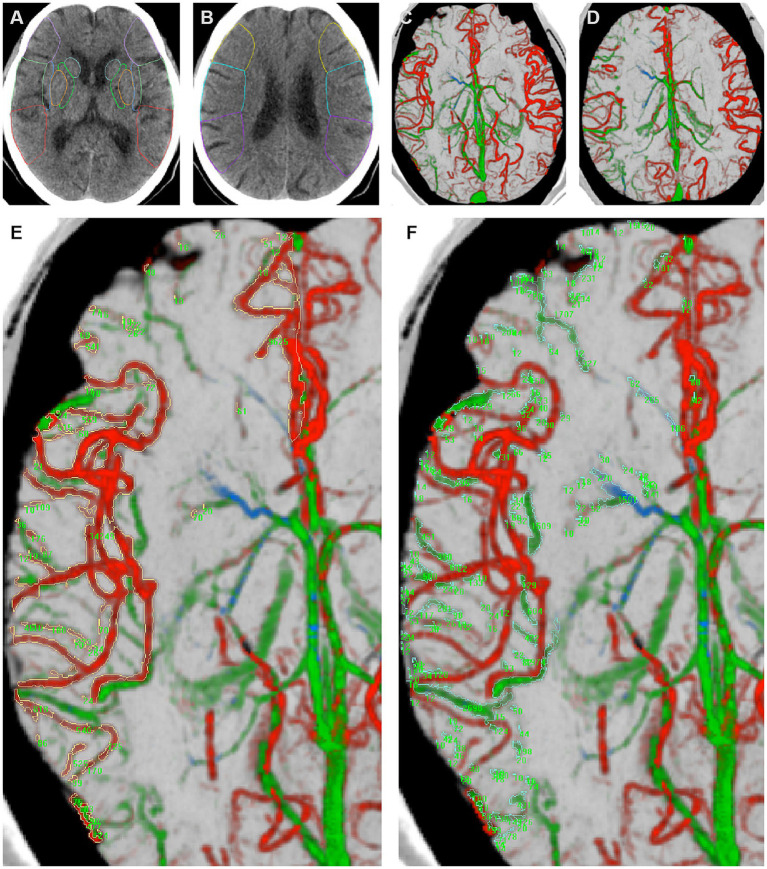 Figure 1
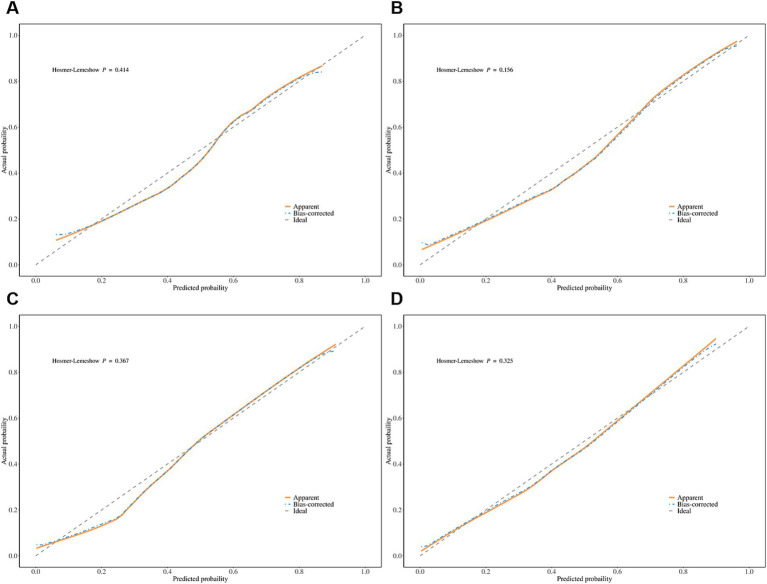 Figure 2
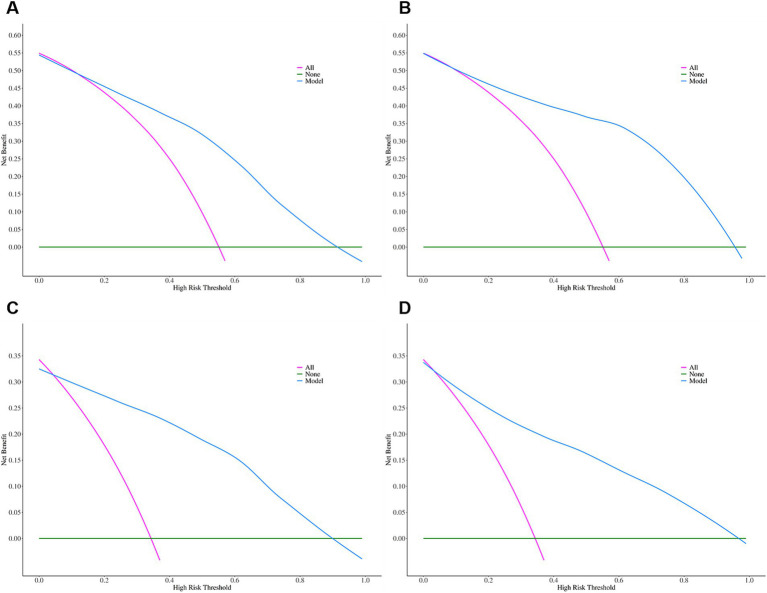 Figure 3
Peer Reviews
No public reviews on file for this paper yet. If you reviewed it on a platform where reviews are public (OpenReview, ICLR, NeurIPS, ICML), you can paste yours below so the community can read it here.
Videos
No videos yet. Explain this paper in a talk, walkthrough, or lecture? Add one.
Taxonomy
TopicsAcute Ischemic Stroke Management · Cerebrovascular and Carotid Artery Diseases · Peripheral Artery Disease Management