Unilateral Idiopathic Hypertrophic Olivary Degeneration: A Case Report
Hasham Ramzan, Aakash Mahajan, Tarun Jain

TL;DR
This case report describes a rare instance of unilateral, idiopathic hypertrophic olivary degeneration in an elderly man with atypical symptoms.
Contribution
The paper presents a unique case of nonlesional HOD without typical clinical signs, expanding understanding of its variability.
Findings
MRI showed hypertrophy of the right medullary olive in an 82-year-old male.
The patient exhibited gait disturbance and cognitive impairment but no typical HOD clinical signs.
The case highlights the need for further research into atypical HOD manifestations.
Abstract
Hypertrophic olivary degeneration (HOD) is a rare type of trans-synaptic degeneration affecting the inferior olivary nucleus (ION), most commonly associated with lesions in the Guillain-Mollaret triangle (GMT). Because of its rarity, HOD remains poorly understood and lacks a comprehensive classification system. We present an unusual case of unilateral, idiopathic, nonlesional HOD in an 82-year-old male who exhibited gait disturbance and cognitive impairment. MRI showed hypertrophy of the right medullary olive without the typical clinical signs usually seen in HOD. This case underscores the variability in HOD presentation and highlights the need for further research into its atypical manifestations.
Genes, proteins, chemicals, diseases, species, mutations and cell lines named across the full text — each resolved to its canonical identifier and authoritative record.
Click any figure to enlarge with its caption.
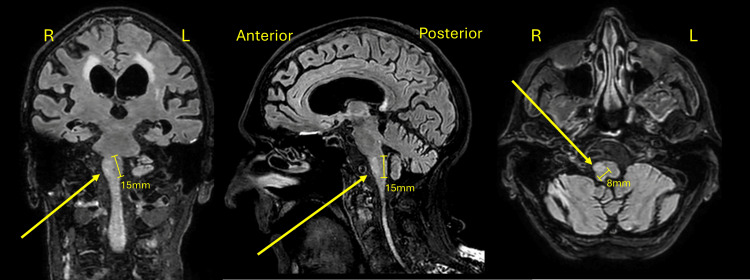 Figure 1
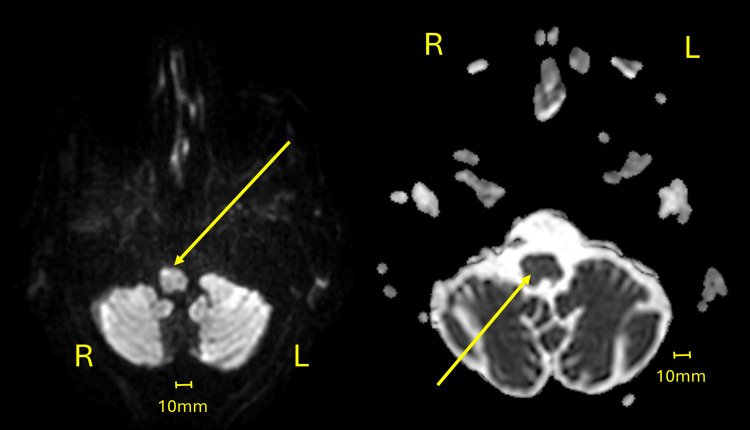 Figure 2
Peer Reviews
No public reviews on file for this paper yet. If you reviewed it on a platform where reviews are public (OpenReview, ICLR, NeurIPS, ICML), you can paste yours below so the community can read it here.
Videos
No videos yet. Explain this paper in a talk, walkthrough, or lecture? Add one.
Taxonomy
TopicsGlycogen Storage Diseases and Myoclonus · Parkinson's Disease Mechanisms and Treatments · Neurological disorders and treatments