NASH-CHECK patient-reported outcome instrument: evaluation of content and face validity for patients with metabolic dysfunction–associated steatohepatitis and compensated cirrhosis
Lynda C. Doward, Matthew Breckons, Maria-Magdalena Balp, James Twiss, Luke Vale, Lorraine McSweeney, Clifford A. Brass, Quentin M. Anstee, Arun J. Sanyal

TL;DR
NASH-CHECK is a questionnaire that was found to be suitable for patients with MASH who have early-stage liver scarring, helping to assess their symptoms and quality of life.
Contribution
The study confirms the suitability of NASH-CHECK for patients with compensated cirrhotic MASH, extending its use beyond non-cirrhotic cases.
Findings
Key symptoms and HRQOL impacts reported by patients with compensated cirrhotic MASH are already included in NASH-CHECK.
Cognitive debriefing confirmed that NASH-CHECK is considered important, relevant, and comprehensive by patients with compensated cirrhotic MASH.
No additional symptoms or HRQOL impacts were deemed relevant for inclusion in NASH-CHECK.
Abstract
NASH-CHECK is a patient-reported outcome measure (PROM) that assesses symptoms and broader health-related quality of life (HRQOL) impacts of metabolic dysfunction–associated steatohepatitis (MASH), previously called non-alcoholic steatohepatitis (NASH). The measure was initially developed and validated for patients with non-cirrhotic MASH. This study describes an evaluation of the suitability of NASH-CHECK for patients with compensated cirrhotic MASH. Concept elicitation (CE) interviews were conducted with patients with clinically confirmed compensated cirrhotic MASH in the United States (US) and United Kingdom (UK) to determine the symptom burden and broader HRQOL impact of MASH. Symptoms and broader HRQOL impacts identified during analysis of the CE data were compared with the key concepts included in NASH-CHECK; any symptoms reported in the CE interviews but not reflected in…
Genes, proteins, chemicals, diseases, species, mutations and cell lines named across the full text — each resolved to its canonical identifier and authoritative record.
Click any figure to enlarge with its caption.
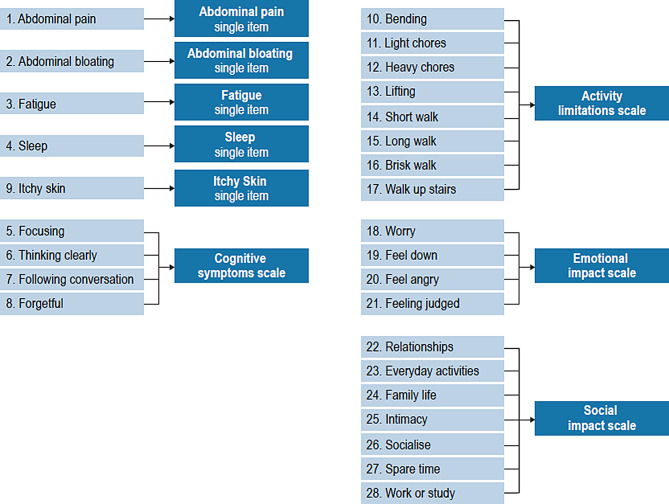 Figure 1
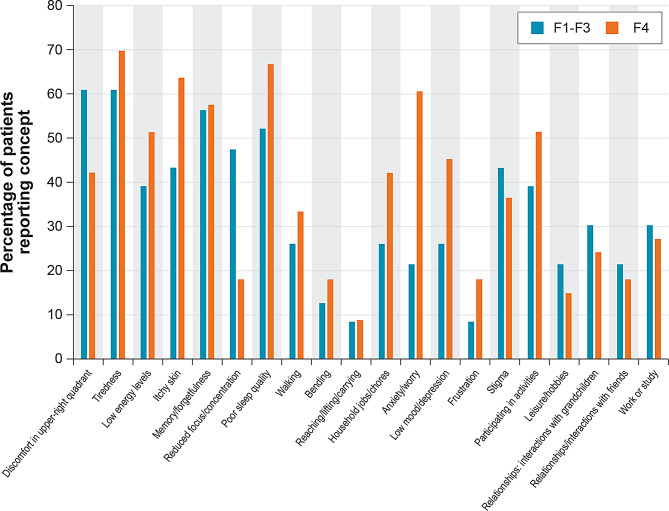 Figure 2
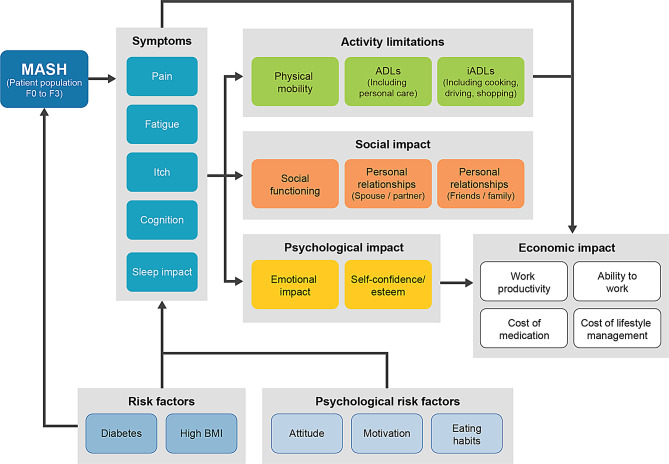 Figure 3
Peer Reviews
No public reviews on file for this paper yet. If you reviewed it on a platform where reviews are public (OpenReview, ICLR, NeurIPS, ICML), you can paste yours below so the community can read it here.
Videos
No videos yet. Explain this paper in a talk, walkthrough, or lecture? Add one.
Taxonomy
TopicsLiver Disease Diagnosis and Treatment · Liver Disease and Transplantation · Liver Diseases and Immunity