Prediction cardiovascular deterioration in a paediatric intensive care unit (PicEWS): a machine learning modelling study of routinely collected health-care data
Dan Fredman Stein, Michael J. Carter, John Booth, Mark J. Peters, Samiran Ray, Neil J. Sebire, Payam Barnaghi, Mario Cortina-Borja

TL;DR
This study uses machine learning to predict cardiovascular deterioration in critically ill children, outperforming existing clinical methods.
Contribution
A novel machine learning model (PicEWS) that uses age-normalized and time-variant features to predict cardiovascular deterioration in PICU patients.
Findings
PicEWS predicted cardiovascular deterioration in 90% of cases with fewer than two false alarms per true alarm.
XGBoost outperformed other models and clinical scores like pSOFA in prediction accuracy.
Key features included blood pressure, bilirubin, and COMFORT score, with variability over time being crucial for model performance.
Abstract
Paediatric intensive care medicine uses fine granular clinical data that describe substantial patient instability to make high-consequence decisions. However, these decisions are also hindered by clinical experts’ ability to interpret longitudinal data along with recent and gradual changes in the vital sign data. Machine learning aided decisions can improve the identification of patient deterioration. Important prior work has predicted outcomes in paediatric intensive care units (PICUs), but has often used non-time series data without age normalisation. Most current work also aims to predict mortality, not potentially treatable clinical inflection points such as cardiovascular deterioration. We extracted telemetry data, alongside laboratory and demographic data, from the Electronic Health Record (EHR) of patients admitted to the general PICU at Great Ormond Street Hospital, London…
Genes, proteins, chemicals, diseases, species, mutations and cell lines named across the full text — each resolved to its canonical identifier and authoritative record.
Click any figure to enlarge with its caption.
 Figure 1
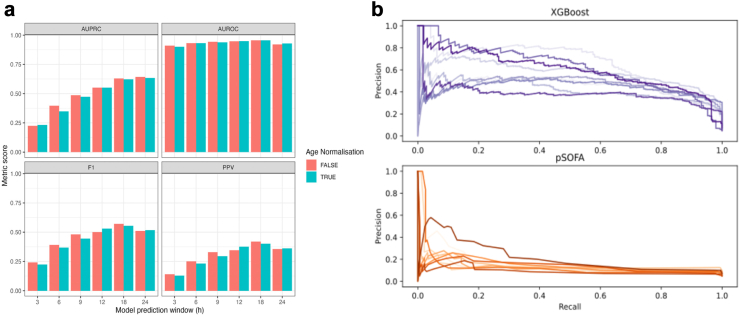 Figure 2
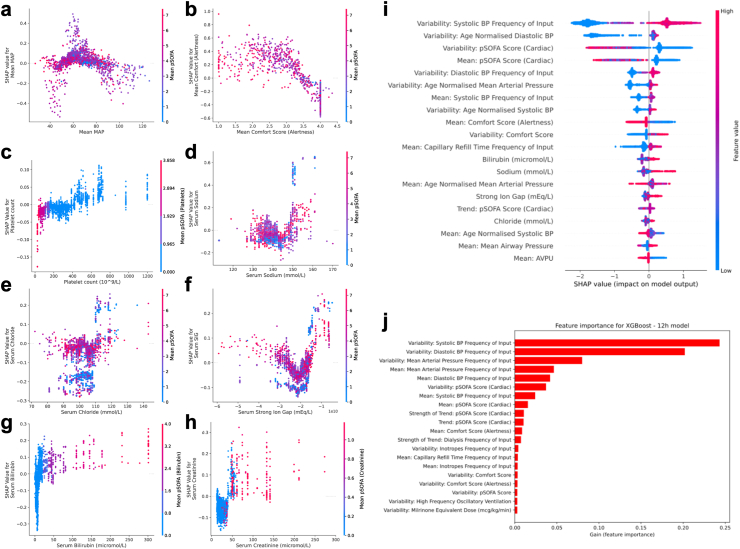 Figure 3
 Figure 4
Peer Reviews
No public reviews on file for this paper yet. If you reviewed it on a platform where reviews are public (OpenReview, ICLR, NeurIPS, ICML), you can paste yours below so the community can read it here.
Videos
No videos yet. Explain this paper in a talk, walkthrough, or lecture? Add one.
Taxonomy
TopicsMachine Learning in Healthcare · Sepsis Diagnosis and Treatment · Healthcare Technology and Patient Monitoring