“Tirer d’eux leurs secrets”: Leibniz on Artisanal Knowledge and “Secret” Geometry
Yoav Beirach, Michael Friedman

TL;DR
This paper explores how Leibniz viewed artisanal knowledge, especially in clockmakers and textile workers, and how he connected it to hidden geometrical principles.
Contribution
The paper reveals how Leibniz saw artisanal machines as embodying a deeper, secret geometry that artisans themselves could not articulate.
Findings
Leibniz believed artisans held 'secrets' that could be extracted for scientific advancement.
Artisans lacked the ability to formulate the geometric principles behind their machines.
Leibniz saw clocks and looms as embodying a 'hidden' or 'deeper' geometry.
Abstract
What was Leibniz’s approach to artisanal knowledge? And how did he consider it with respect to mathematical, and more concretely, to geometrical knowledge? On the one hand, Leibniz emphasizes several times in his writings that one should extract “secrets and inventions” from the artisans. On the other hand, Leibniz points out that such artisans cannot formulate by themselves the geometric principles at the base of their machines. In this paper, we examine these intricate relations between Leibniz’s reflections on artisans, especially clockmakers and textile workers, as well as his thoughts on mechanical and geometric knowledge. Leibniz’s considerations of various artisanal machines, like clocks and looms, lead us to discuss his wish to expand geometry, presenting these machines as embodying a “secret,” “hidden,” or even “deeper” or “more profound” geometry.
Genes, proteins, chemicals, diseases, species, mutations and cell lines named across the full text — each resolved to its canonical identifier and authoritative record.
Click any figure to enlarge with its caption.
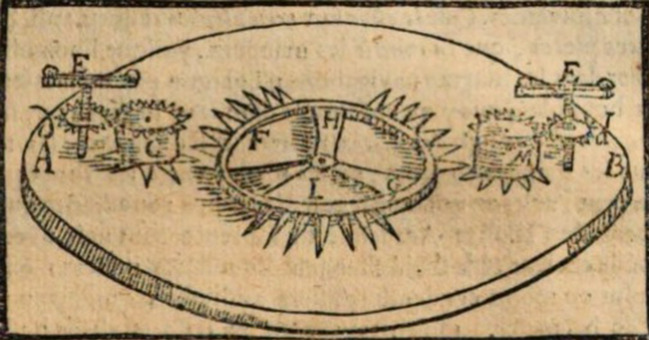 Figure 1
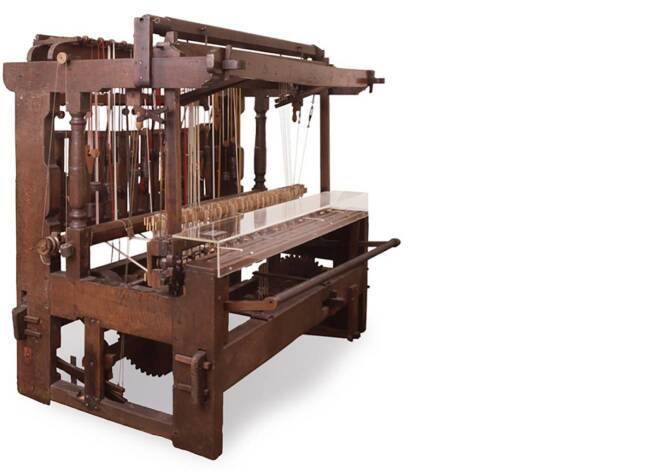 Figure 2
Peer Reviews
No public reviews on file for this paper yet. If you reviewed it on a platform where reviews are public (OpenReview, ICLR, NeurIPS, ICML), you can paste yours below so the community can read it here.
Videos
No videos yet. Explain this paper in a talk, walkthrough, or lecture? Add one.
Taxonomy
TopicsHistorical Philosophy and Science · History and Theory of Mathematics · Architecture and Art History Studies