Safety and effectiveness of endovascular treatment of splenic artery aneurysms: a single centre experience
Laura Lech, Annette Thurner, Dominik Peter, Christoph-Thomas Germer, Sven Flemming, Ralph Kickuth

TL;DR
This study shows that endovascular treatment for splenic artery aneurysms is safe and effective, with high success rates and few complications.
Contribution
The study provides a single-center experience on endovascular treatment of splenic artery aneurysms, adding to the limited literature on this topic.
Findings
Endovascular treatment achieved 100% technical success and 91.30% clinical success.
Mild adverse events occurred in 34.78% of patients, while severe events affected 8.70%.
No deaths were recorded during the study period, showing the procedure's safety.
Abstract
The aim of the study was to analyse the safety and effectiveness of endovascular treatment of splenic artery aneurysms (SAAs), and thereby complement the limited number of publications on this topic in the current literature. Twenty-three patients who underwent endovascular treatment for true splenic aneurysm or pseudoaneurysm at our centre between March 2010 and December 2024 were retrospectively included in the study. Data collection and analysis included technical and clinical success, adverse events, as well as mortality and follow up data. 21 true SAAs and two pseudoaneurysms with a mean diameter of 2.56 ± 0.81 cm (range, 2.0–4.0 cm) were included in the study. One SAA was treated with covered stent implantation, nine with sac embolization, and 13 with intra-aneurysm and aneurysm-bearing artery coil embolization. The technical success rate was 100%. The clinical success rate was…
Genes, proteins, chemicals, diseases, species, mutations and cell lines named across the full text — each resolved to its canonical identifier and authoritative record.
Click any figure to enlarge with its caption.
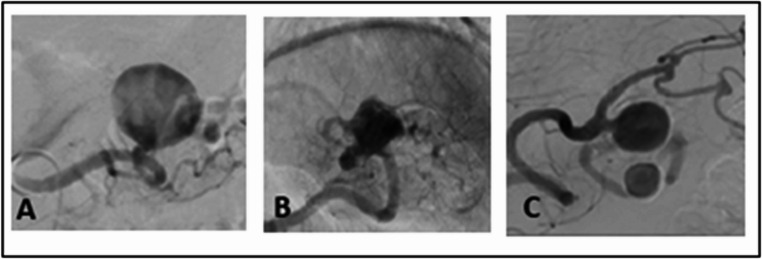 Figure 1
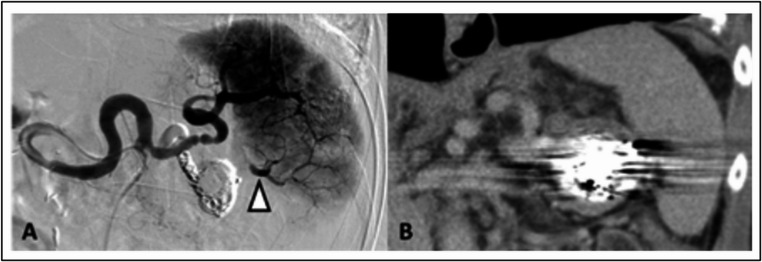 Figure 2
Peer Reviews
No public reviews on file for this paper yet. If you reviewed it on a platform where reviews are public (OpenReview, ICLR, NeurIPS, ICML), you can paste yours below so the community can read it here.
Videos
No videos yet. Explain this paper in a talk, walkthrough, or lecture? Add one.
Taxonomy
TopicsAbdominal vascular conditions and treatments · Liver Disease and Transplantation