Isolation, identification, and production optimization of natural functional pigments produced by Talaromyces atroroseus LWT-1
Xian Xia, Li-Yu Liu, Miao Liu, Guo-Jun Hu, Wen-Ting Li, Zi-Yi Wang, Yao Pei, Yan-He Li, Jing-Jing Li, Yan-Xiang Wang, Xiao-Shan Shi, Jun-Ming Tu

TL;DR
This study isolates and identifies pigments from a fungus, Talaromyces atroroseus LWT-1, and optimizes their production for potential use in various applications.
Contribution
The novel contribution is the isolation and identification of new pigments with cytotoxic activity and the optimization of their production conditions.
Findings
Talaroconvolutins A and B, and talarofuranone were identified as the main pigments from T. atroroseus LWT-1.
Talaroconvolutin A showed cytotoxic activity against cancer cells but was non-toxic to healthy cells.
Optimal fermentation conditions increased pigment yield significantly.
Abstract
Natural microbial pigments are gaining attention for their potential in various applications due to their safety and sustainability. In this study, we isolated a high-yielding pigment-producing fungus identified as Talaromyces atroroseus LWT-1. The predominant pigment compounds were isolated from the culture extract of T. atroroseus LWT-1 through various chromatographic methods and identified as talaroconvolutins A (1) and B (2), and talarofuranone (3). Compounds 1 and 3 exhibited cytotoxic activity against MCF7, Huh-7, and H446 lines with IC50 values ranging from 0.68 ± 0.09 to 4.19 ± 0.71 μM. In contrast, compound 1 was non-toxic to BEAS-2B cells and significantly promoted their proliferation. To optimize pigments yield, we conducted a series of single-factor and orthogonal experiments to determine the optimal fermentation conditions. The optimal conditions were determined to be: SDA…
Genes, proteins, chemicals, diseases, species, mutations and cell lines named across the full text — each resolved to its canonical identifier and authoritative record.
Click any figure to enlarge with its caption.
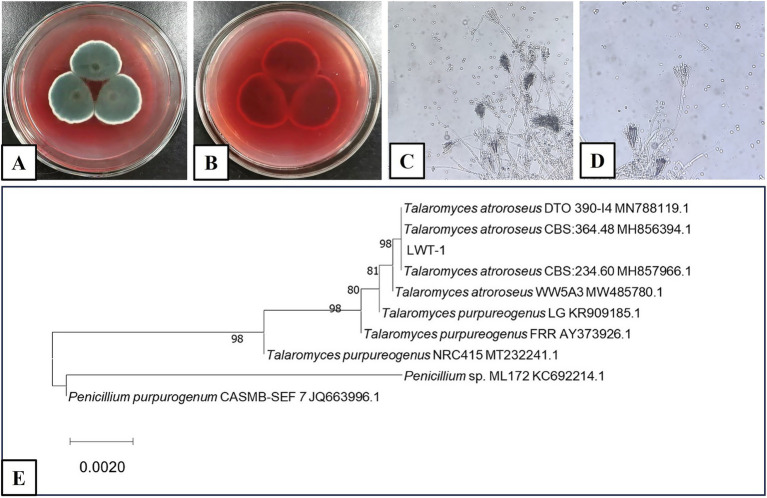 Figure 1
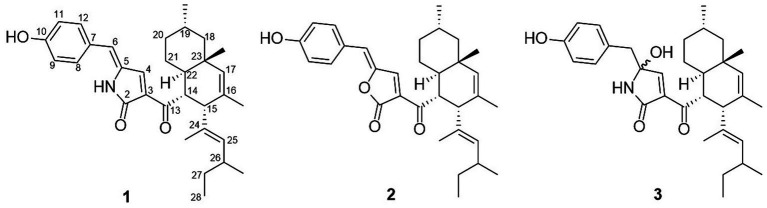 Figure 2
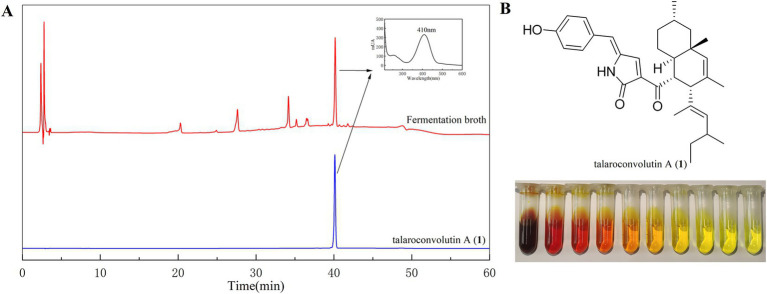 Figure 3
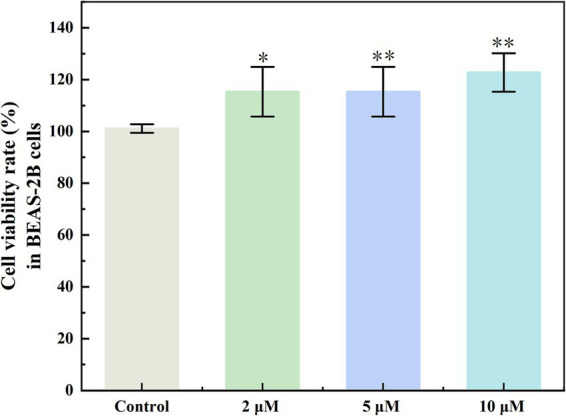 Figure 4
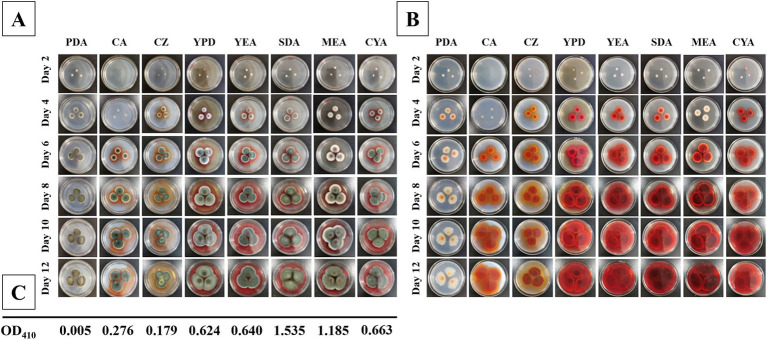 Figure 5
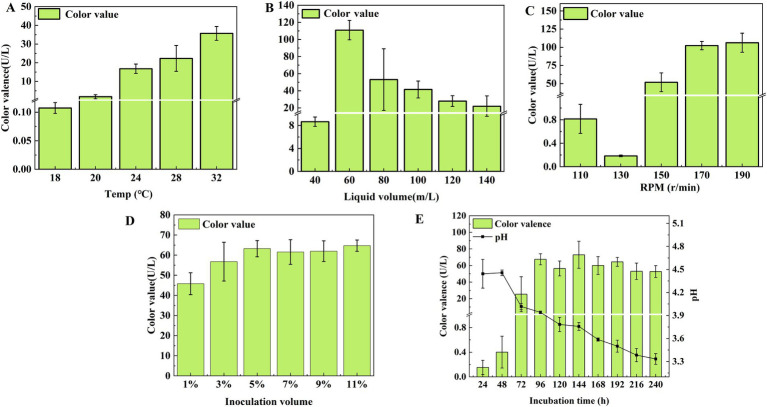 Figure 6
Peer Reviews
No public reviews on file for this paper yet. If you reviewed it on a platform where reviews are public (OpenReview, ICLR, NeurIPS, ICML), you can paste yours below so the community can read it here.
Videos
No videos yet. Explain this paper in a talk, walkthrough, or lecture? Add one.
Taxonomy
TopicsMicrobial Metabolism and Applications · Morinda citrifolia extract uses · Algal biology and biofuel production