Patient-specific modelling of pulmonary arterial hypertension: wall shear stress correlates with disease severity
C. H. Armour, D. Gopalan, B. Statton, D. P. O’Regan, L. Howard, M. R. Wilkins, X. Y. Xu, A. Lawrie

TL;DR
Researchers used patient-specific models to show that wall shear stress in blood vessels correlates with the severity of pulmonary arterial hypertension, suggesting a non-invasive way to diagnose and monitor the disease.
Contribution
This study introduces wall shear stress as a potential non-invasive biomarker for diagnosing and assessing pulmonary arterial hypertension severity.
Findings
Patient-specific CFD models matched in-vivo hemodynamics with a strong correlation (R2 = 0.84) between TAWSS and mean pulmonary pressure.
Low time-averaged wall shear stress correlates with high pulmonary pressure in PAH patients.
The study suggests TAWSS could serve as a computational biomarker for PAH diagnosis and stratification.
Abstract
Pulmonary arterial hypertension (PAH) requires an invasive right heart catheter (RHC) procedure for diagnosis. Patients can present with initial symptoms and interact with healthcare institutes for up to 3 years before referral for diagnosis. Thus, there is a great need to develop non-invasive tools, to better screen patients and improve early diagnosis rates. seven patients diagnosed and treated for PAH were included in this study. Patient-specific computational fluid dynamics (CFD) models were built for all patients, with all model parameters tuned using non-invasive imaging data, including CT, cardiac MR, echocardiogram, and 4D-flow MRI scans–crucially, a 3D inlet velocity profile was derived from 4D-flow MRI. CFD models were quantitatively and qualitatively well matched with in-vivo 4D-flow hemodynamics. A linear correlation of R2 = 0.84 was found between CFD derived time-averaged…
Genes, proteins, chemicals, diseases, species, mutations and cell lines named across the full text — each resolved to its canonical identifier and authoritative record.
Click any figure to enlarge with its caption.
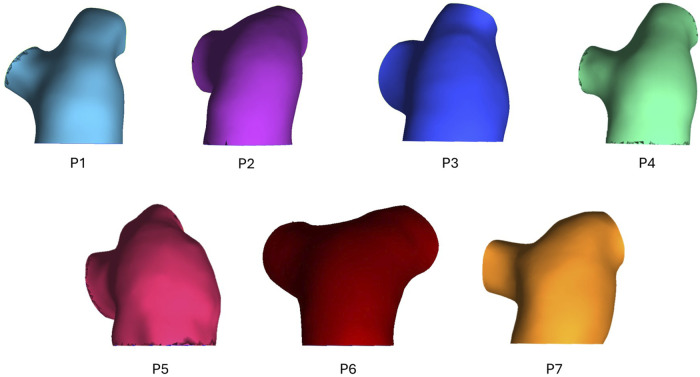 Figure 1
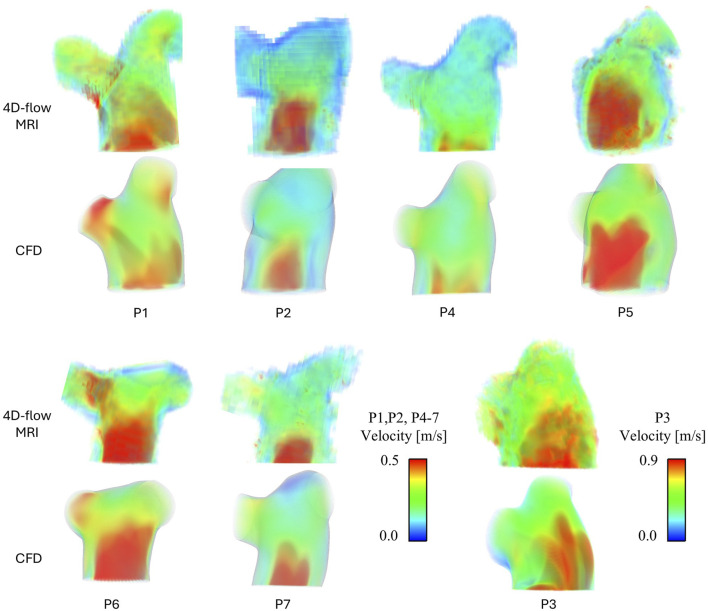 Figure 2
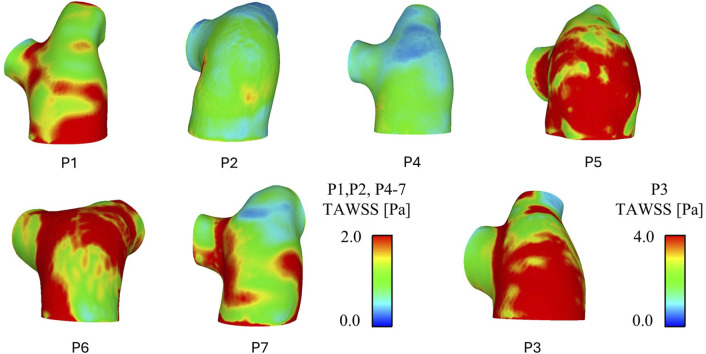 Figure 3
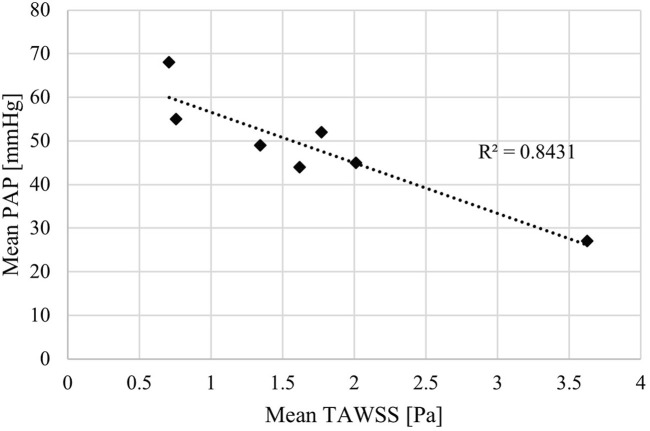 Figure 4
Peer Reviews
No public reviews on file for this paper yet. If you reviewed it on a platform where reviews are public (OpenReview, ICLR, NeurIPS, ICML), you can paste yours below so the community can read it here.
Videos
No videos yet. Explain this paper in a talk, walkthrough, or lecture? Add one.
Taxonomy
TopicsPulmonary Hypertension Research and Treatments · Cardiovascular Function and Risk Factors · Cardiovascular Issues in Pregnancy