Simplified Zenker’s diverticulum endoscopic myotomy performed with a new bipolar scissor device
Eduardo Albéniz, Zacharias Tsiamoulos, Roser Vega, Shi Jie Looi, Fermín Estremera-Arevalo, Marta Gómez Alonso, Sauid Ishaq

Abstract
Genes, proteins, chemicals, diseases, species, mutations and cell lines named across the full text — each resolved to its canonical identifier and authoritative record.
Click any figure to enlarge with its caption.
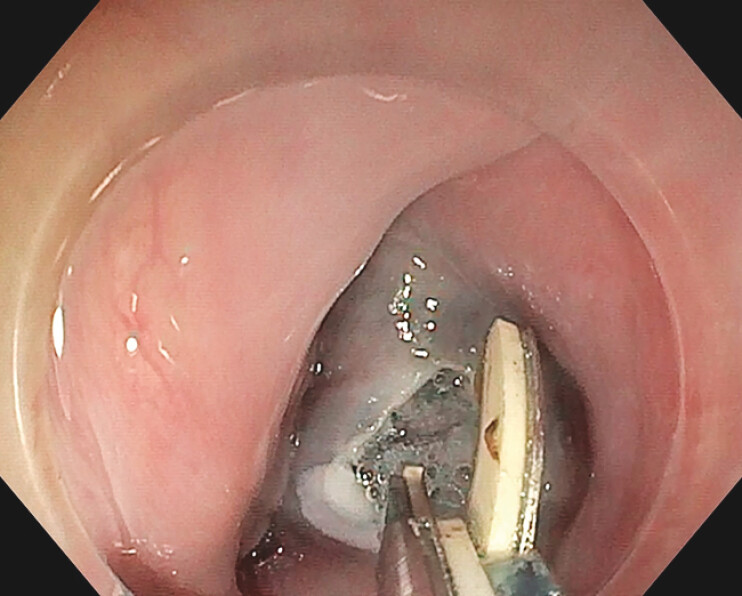 Fig. 1
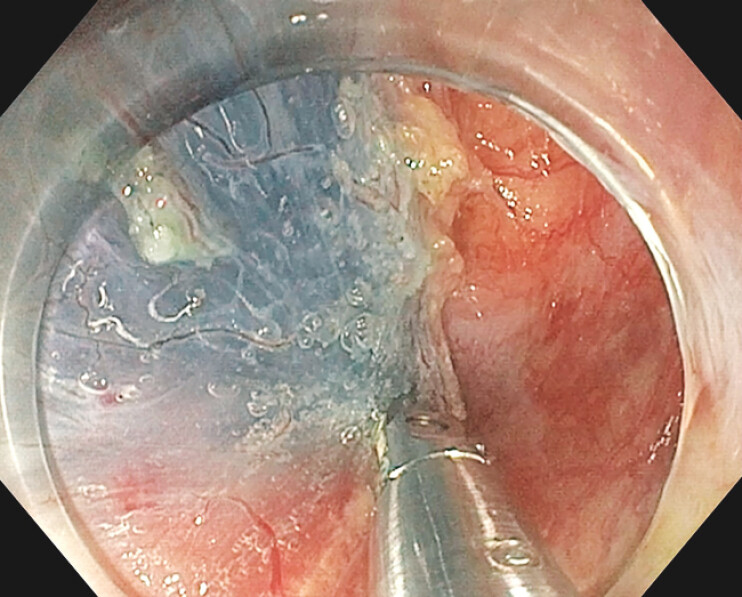 Fig. 2
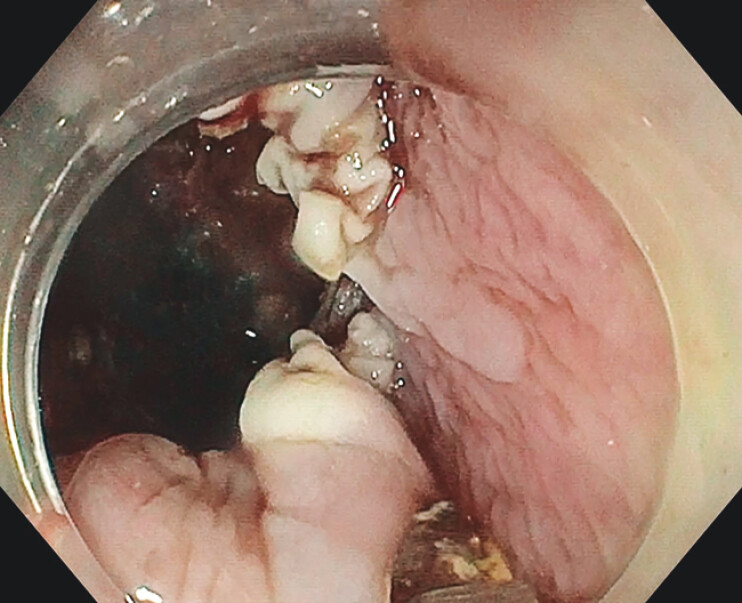 Fig. 3
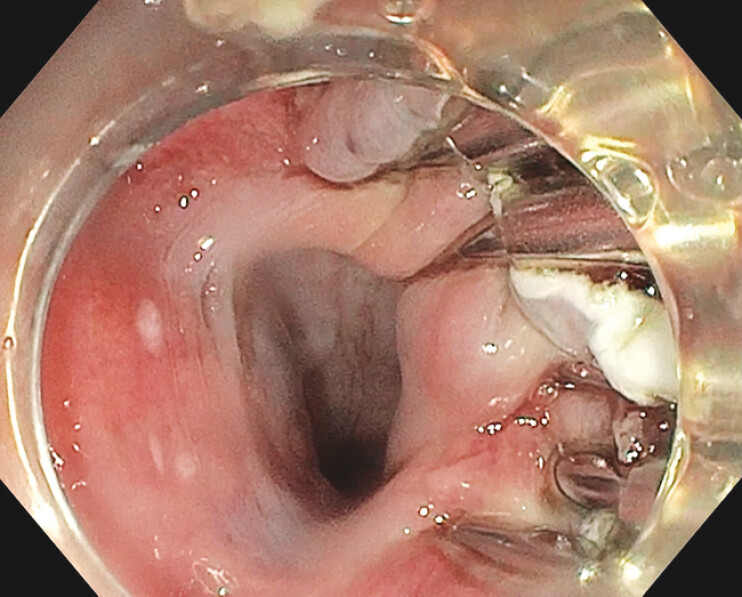 Fig. 4
Peer Reviews
No public reviews on file for this paper yet. If you reviewed it on a platform where reviews are public (OpenReview, ICLR, NeurIPS, ICML), you can paste yours below so the community can read it here.
Videos
No videos yet. Explain this paper in a talk, walkthrough, or lecture? Add one.
Taxonomy
TopicsDysphagia Assessment and Management · Tracheal and airway disorders · Esophageal and GI Pathology
Zenker’s diverticulum (ZD) is a pulsion diverticulum due to abnormal relaxation of the cricopharyngeal muscle (CPM). Several modifications of the flexible endoscopic myotomy technique (Z-POEM) have been reported 1 2 .
We present the case of a 51-year-old man with symptomatic Zenker’s diverticulum ( Video 1 ). This was treated by innovative adaption of the flexible endoscopic myotomy technique (Z-POEM) by using a novel scissor-knife device called Spyderblade (SB), which operates on an electrosurgical system utilizing bipolar radiofrequency energy for cutting and super-high-frequency microwaves for coagulation (Croma platform). We performed a small mucosotomy ( Fig. 1 ) over the septum (smaller than the plastic cap size). The distal SB jaw acts as a tip knife for the initial dissection, transitioning to a scissor mode for other steps.
Simplified Z-POEM performed using a novel bipolar scissor-knife device utilizing bipolar radiofrequency energy for cutting and super-high-frequency microwaves for coagulation.Video 1
Initial mucosotomy.
We began the myotomy on the exposed muscle, relaxing the tension in the area and enabling entry into the submucosal space. Without performing any lateral tunneling, a complete myotomy of the cricopharyngeal muscle (CPM) and the initial esophageal muscularis propria was achieved ( Fig. 2 ). Small amount of injection was needed.
Complete myotomy.
The scissor-type knife isolation of both external jaw sides minimizes the risk of surrounding structures damage. Small vessels were coagulated using the active jaw tip, while larger vessels were addressed in scissor mode offering precise control.
Following the myotomy, a central longitudinal cut extended to the diverticular fundus to complete mucosotomy ensuring the residual mucosal pouch is fully addressed ( Fig. 3 ). Additional lateral mucosotomies were performed as required based on the size of the ZD. Finally, short-stem clips were used to close the entire defect ( Fig. 4 ).
Complete pouch mucosotomy.
Clip closure from esophageal lumen.
In conclusion, minor technical modifications simplify the Z-POEM technique, and the incorporation of bipolar technology reduces the risk of complications and can be used in patients with implantable devices. This approach could make the Z-POEM technique more accessible to endoscopists with less experience in third-space endoscopic procedures.
Endoscopy_UCTN_Code_TTT_1AO_2AP
The reference list from the paper itself. Each links out to its DOI / PubMed record.
- 1Steinway S Zhang L Amundson J Long-term outcomes of Zenker’s peroral endoscopic myotomy (Z-POEM) for treatment of Zenker’s diverticulum Endosc Int Open 202311 E 607E 61210.1055/a-2067-910537397859 PMC 10310448 · doi ↗ · pubmed ↗
- 2Ishaq A Sultan H Siau K New and emerging techniques for endoscopic treatment of Zenker’s diverticulum: State-of-the-art review Dig Endosc 20183044946010.1111/den.1303529423955 · doi ↗ · pubmed ↗