Contraceptive Awareness and Its Usage Practices Among Adults Using Online Dating Apps in Chennai, Tamil Nadu: A Cross-Sectional Study
Jeffrey Joseph, Subhashini Viswanath, Gokul G

TL;DR
This study examines contraceptive use and sexual health practices among online dating app users in Chennai, finding a 67% contraceptive usage rate linked to factors like socioeconomic status and healthcare consultation.
Contribution
The study provides new insights into contraceptive practices and STI testing behaviors among online dating app users in a specific regional context.
Findings
Contraceptive usage prevalence among online dating app users was 67%.
Higher socioeconomic status, alcohol consumption, and healthcare consultation were associated with contraceptive use.
13.3% of participants had never been tested for STIs.
Abstract
Introduction Online dating apps have become pivotal for adults to find relationships, explore their sexual desires, and overcome loneliness. These users sometimes indulge in reckless and unsafe sexual practices, which may lead to unplanned pregnancies and sexually transmitted infections (STIs), thus emphasizing the importance of contraceptive use. Methodology This community-based cross-sectional study was conducted among 270 study participants in Chennai, Tamil Nadu. Study participants were selected by the snowball sampling technique. A pretested, semi-structured questionnaire was used to collect data and was analyzed using MS Excel (Microsoft Corporation, Redmond, Washington, United States) and IBM SPSS Statistics for Windows, Version 21 (Released 2012; IBM Corp., Armonk, New York, United States). Results The prevalence of contraceptive usage among online dating app users was…
Genes, proteins, chemicals, diseases, species, mutations and cell lines named across the full text — each resolved to its canonical identifier and authoritative record.
Click any figure to enlarge with its caption.
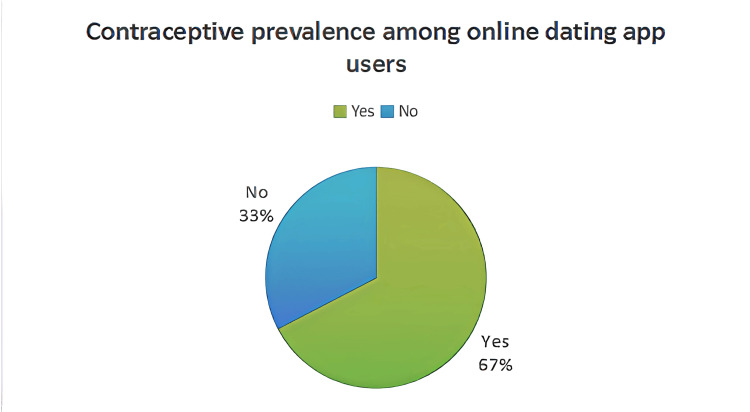 Figure 1
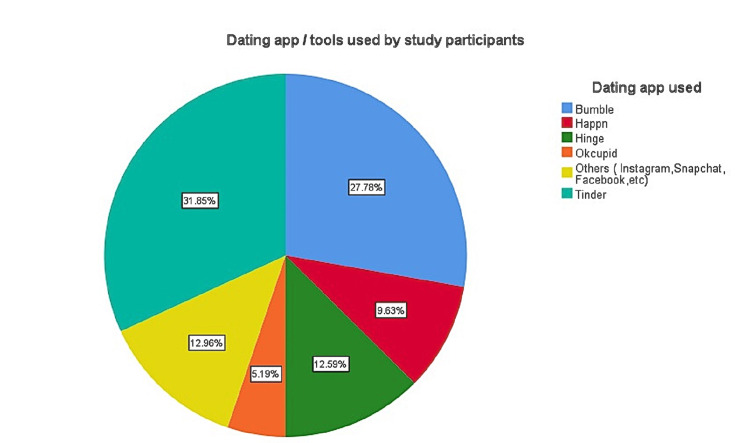 Figure 2
| Variable | Category | Frequency (n = 270) | Percentage (%) |
| Age in years | 18-24 | 99 | 36.6 |
| 25-34 | 163 | 60.3 | |
| 35-44 | 8 | 2.96 | |
| Gender | Male | 160 | 59.3 |
| Female | 110 | 40.7 | |
| Place of living | Urban | 215 | 79.6 |
| Rural | 55 | 20.4 | |
| Living arrangements | Living with father, mother, and sister/brother | 97 | 35.9 |
| Living with father, mother, sister/brother, with their spouse | 65 | 24.1 | |
| Living with father, mother, grandparents, and siblings | 21 | 7.8 | |
| Living with parents, grandparents, married brother or sister in the same house | 19 | 7 | |
| Living alone/living only with dad/ living with mom/others | 68 | 25.2 | |
| Educational qualification | High school | 27 | 10 |
| Higher secondary | 24 | 8.9 | |
| Undergraduate/graduate | 132 | 48.9 | |
| Post graduate | 87 | 32.2 | |
| Employment status | Student | 108 | 40 |
| Unemployed | 32 | 11.9 | |
| Employed | 104 | 38.5 | |
| Part-time jobs/business | 26 | 9.6 | |
| Religion | Hindu | 176 | 65.2 |
| Muslim | 51 | 18.9 | |
| Christian | 43 | 15.9 | |
| Marital status | Single/not dating | 88 | 32.6 |
| In a relationship | 79 | 29.3 | |
| Married | 35 | 13 | |
| Separated/divorced | 12 | 4.4 | |
| Situationship/benching/living together/casual relationship | 56 | 20.7 | |
| Socioeconomic classification [ | Class 1 (upper class) | 123 | 45.6 |
| Class 2 (upper middle class) | 126 | 46.7 | |
| Class 3 (middle class) | 10 | 3.7 | |
| Class 4 (lower middle class)/class 5 (lower class) | 11 | 4.1 | |
| Number of rooms in the place of living | One | 54 | 20 |
| Two | 140 | 51.9 | |
| Three | 76 | 28.1 |
| Variables | Category | Frequency (N = 270) | Percentage (%) |
| Perception toward contraception | It is a preventive measure for pregnancy | 96 | 36 |
| It involves methods that promote safe sexual practices | 117 | 43 | |
| It is a health strategy for population control | 38 | 14 | |
| It has both medical and natural approaches | 12 | 4 | |
| I am not familiar with the concept of contraception | 7 | 3 | |
| Contraceptive methods known | Condoms | 130 | 48 |
| Condoms and emergency contraception | 76 | 28 | |
| Condoms and natural methods | 27 | 10 | |
| Intrauterine devices, oral contraceptive pills, implants/injections | 37 | 14 | |
| Source of information about contraceptives | Friends/family | 94 | 35 |
| School/college | 63 | 23 | |
| Online platforms, media/advertisements | 88 | 33 | |
| Healthcare providers | 25 | 9 | |
| Frequency of using dating apps | Daily | 68 | 25.2 |
| Weekly | 120 | 44.4 | |
| Monthly | 69 | 25.6 | |
| Rarely | 13 | 4.8 | |
| No. of sexual partners met through dating apps | <5 | 182 | 67.4 |
| >5 | 88 | 32.6 |
| Variables | Usage of contraceptives among dating app users | Total (n = 270),(%) | Unadjusted OR (95% CI) | p-value of unadjusted OR | Adjusted OR (95% CI) | p-value of adjusted OR | |
| Yes (n,%) | No (n,%) | ||||||
| Age | |||||||
| Upto 26 years | 105 (38.8) | 40 (14.8) | 145 (54) | 1.636 (0.980-2.732) | 0.04 | - | - |
| Above 26 years | 77 (28.5) | 48 (17.7) | 125 (46) | Ref | - | - | - |
| Socioeconomic classification [ | |||||||
| Upper class/upper middle class | 172 (63.7) | 77 (28.5) | 249 (92) | 2.457 (1.001-6.029) | 0.04 | 2.560 (1.008-6.502) | 0.048* |
| Middle class/lower middle class/lower class | 10 (3.7) | 11 (4) | 21 (8) | Ref | - | Ref | - |
| Smoking | |||||||
| Yes | 115 (42.5) | 49 (18) | 164 (61) | 1.366 (0.814-2.292) | 0.237 | - | - |
| No | 67 (24.8) | 39 (14) | 106 (39) | Ref | - | - | - |
| Alcohol consumption | |||||||
| Yes | 89 (32.9) | 31 (11.4) | 120 (44) | 1.760 (1.041-2.975) | 0.034 | 1.852 (1.078-3.181) | 0.026* |
| No | 93 (34.4) | 57 (21) | 150 (56) | Ref | - | Ref | - |
| Contraceptives are effective in preventing pregnancies | |||||||
| No | 55 (20.3) | 0 | 55 (20) | 1.693 (1.515-1.892) | 0.000 | - | - |
| Yes | 127 (47) | 88 (32.5) | 215 (80) | Ref | - | - | - |
| Specified radius | |||||||
| 1-10 kms | 80 (29.6) | 27 (10) | 107 (40) | 1.772 (1.033-3.039) | 0.037 | - | - |
| 11-25 kms | 102(37.7) | 61(22.5) | 163 (60) | Ref | - | - | - |
| Consulting healthcare professionals | |||||||
| No | 74 (27.4) | 22 (8.1) | 96 (36) | 2.056 (1.167-3.620) | 0.012 | 1.962 (1.084-3.550) | 0.026* |
| Yes | 108 (40) | 66 (24.4) | 174 (64) | Ref | - | Ref | - |
| Reasons for using dating apps | |||||||
| Boredom, casual dating, to find friends & long-term relationship | 119 (44) | 40 (14.8) | 159 (59) | 2.267 (1.349-3.809) | 0.002 | - | - |
| Casual sex & self-confidence boost | 63 (23.3) | 48 (17.7) | 111 (41) | Ref | - | - | - |
| Place of living | |||||||
| Urban | 145 (53.7) | 71 (26.2) | 216 (80) | 0.938 (0.494-1.781) | 0.846 | - | - |
| Rural | 37 (13.7) | 17 (6.2) | 54 (20) | Ref | - | - | - |
| Privacy in the place of living | |||||||
| Present | 141 (52.2) | 67 (24.8) | 208 (77) | 1.078 (0.591-1.966) | 0.807 | - | - |
| Not present | 41 (15) | 21 (7.7) | 62 (23) | Ref | - | - | - |
| Variables | Category | Frequency (n = 270) | Percentage (%) |
| Frequency of getting tested for sexually transmitted infections | Never | 36 | 13.3 |
| Rarely | 70 | 25.9 | |
| Occasionally (once a year) | 121 | 44.8 | |
| Regularly (every 3-6 months) | 43 | 15.9 | |
| Consultation of healthcare professionals regarding contraceptives options | No | 96 | 35.6 |
| Yes | 174 | 64.4 | |
| Online dating apps contributes positively to the usage of contraceptives | No | 55 | 20.4 |
| Yes | 215 | 79.6 |
Peer Reviews
No public reviews on file for this paper yet. If you reviewed it on a platform where reviews are public (OpenReview, ICLR, NeurIPS, ICML), you can paste yours below so the community can read it here.
Videos
No videos yet. Explain this paper in a talk, walkthrough, or lecture? Add one.
Taxonomy
TopicsSexuality, Behavior, and Technology · Adolescent Sexual and Reproductive Health · Reproductive Health and Technologies
Introduction
In the digital age, online dating apps play a vital role in social interactions, especially among young adults. The age group 18-35 has strong emotional and social needs, making these platforms essential for connection. Users seek companionship, like-minded individuals to explore their fantasies and sexual desires. Research indicates that dating apps contribute to self-discovery and relationship-building. The COVID-19 pandemic further increased app usage, as lockdowns heightened the need for virtual interactions. This shift emphasized the growing influence of digital platforms in shaping modern relationships, fostering emotional connections, and providing a space for personal exploration [1]. Few studies have defined a dating app as a smartphone-based digital platform that enables users to create profiles with images and browse others' profiles. These apps allow users to search for potential matches based on shared interests, preferences, or location and communicate with them directly [2,3].
In India, the use of dating apps has increased significantly among unmarried young adults. Chennai, being one of the country’s major urban hubs, reflects this trend with a growing number of adults actively engaging in online dating. These apps have become a popular way for young people to connect [4], helping them overcome feelings of loneliness and a lack of social interaction. The widespread use of dating apps provides an outlet for forming new relationships, making social connections, and fulfilling emotional needs, especially in today's fast-paced, digitally driven world.
The leading dating apps across India are Tinder (66%), Bumble (41%), Hinge (27%), OK Cupid (26%), and others like Happn and Grindr, which are all less than 25% [5]. A statistic states that nearly 60 million monthly users use dating apps like Tinder. In which nearly 60% of Tinder users are under the age group of 35 years, and the majority of the users are male [6].
Research has shown that dating app usage is linked to various sociodemographic and personality traits. Traditionally, men were believed to use these apps more frequently. While men engage more actively, women tend to use them more selectively and effectively, leading to more successful matches [7]. Most studies focus on college students aged 18-24, with research indicating that around 40% of students use Tinder. However, some studies suggest that the average user's age may be closer to 31. Therefore, a direct relationship between college students’ age and dating app usage is expected. Its frequency is not only increased among men and women but has also influenced other groups like the lesbian, gay, and LGBTQ community [8-12].
The problematic use of online dating apps includes mental health disorders like mood modification, tolerance, conflict, withdrawal, lower self-esteem, low levels of bodily satisfaction, anxiety, depression, addiction, and negative behaviors and has also led to more communicable diseases like sexually transmitted diseases due to sexual act and fantasies.
Nowadays, the majority of gay, bisexual, and other men who have sex with men (MSM) utilize dating apps to find romantic and sexual partners. Dating apps make it simple to locate new partners and are often accessible for free, unlike in bars or clubs. Because they facilitate the rapid discovery of new partners, they can also broaden sexual networks. They can accomplish this in locations where dating apps might be the only way to locate partners, as well as in larger cities that already have a number of ways to meet them. Furthermore, a number of studies have discovered that men, women, and MSM who connect with partners online are more likely to engage in condom-free sex, have more male partners, engage in higher-risk sex behaviors, and have higher rates of STDs [13]. It is evident that COVID-19-related disruptions affected a number of MSM and other groups' behaviors, including altering their dating app usage patterns [14]. Contraception refers to methods that are used to prevent pregnancy, including devices, medications, procedures, or behaviors. Barriers for effective contraceptive use include limited access, restricted method choices, fear of side effects, cultural or religious beliefs, poor healthcare services, and gender-based challenges [15]. The primary objective of this study is to estimate the prevalence and to determine the various factors affecting Chennai's online dating app users' use of contraceptives.
Materials and methods
Study design
This is a community-based cross-sectional study.
Study duration
This study was conducted for six months from October 2024 to March 2025 in Chennai, Tamil Nadu.
Sample size
The sample size was determined based on a cross-sectional study done by Dmello et al. [16], which reported that 34.7% of the population were aware about the usage of condoms and other preventive measures. Using this prevalence, with an absolute precision of 6%, the estimated sample size for the study was calculated to be 270.
Sampling technique
The snowball sampling technique was used for the selection of participants.
Inclusion criteria
This study included individuals aged 18 and above who were using online dating apps for the past six months, residing in Chennai.
Data collection
A pretested, semi-structured questionnaire was developed based on a review of the literature. A pilot study was conducted among 25 participants, and with the help of expert opinions in public health, necessary modifications were made to the questionnaire. The participants from the pilot study were excluded from the final analysis. The reliability of the questionnaire was assessed, yielding a Cronbach’s alpha of 0.7. The final validated questionnaire was used to collect data on the usage of contraceptives among online dating app users.
Data analysis
Data were collected, entered, and analyzed using MS Excel (Microsoft Corporation, Redmond, Washington, United States) and IBM SPSS Statistics for Windows, Version 21 (Released 2012; IBM Corp., Armonk, New York, United States).
Statistical analysis
Descriptive statistics were presented using numbers and percentages. The association between sociodemographic variables, awareness, and various factors associated with the usage of contraceptives was assessed using analytical statistics, and the odds ratio was used to establish the statistical significance at a 95% confidence interval. Binary logistic regression analysis was performed to identify independent predictors of contraceptive usage.
Ethical approval
Ethical clearance was obtained from the Institutional Human Ethical Committee (002/SBMCH/IHEC/2024/2329) of a tertiary care hospital.
Results
The study surveyed 270 participants, and most of the participants were in the age group of 25-34 years (163, 60.3%), with the majority of participants being male (160, 59.3%). Most of them resided in urban areas (215, 79.6%). Nearly half of them were undergraduates and graduates (132, 48.9%), and most of the participants were living with their father, mother, and sister/ brother. Most of the participants were students (108, 40%) and employed individuals (104, 38.5%). Among the study participants, many were single (88, 32.6%) or in a relationship (79, 29.3%). Most belonged to upper or upper-middle socioeconomic classes (249, 92.3%), and over half lived in two-room houses (140, 51.9%), as shown in Table 1.
Figure 1 shows the contraceptive prevalence among online dating app users. The majority of the study participants reported using contraceptives (182, 67%), while the rest of the participants did not use contraceptives (88, 33%).
Contraceptive prevalence among online dating app users (n = 270)
Table 2 shows the assessment of 270 individuals regarding their level of contraceptive awareness and their usage behavior. The majority of participants knew that contraception promoted safe sexual practices (117, 43%), while 96 (36%) knew it prevented pregnancy. Condoms were the most common method known (130, 48%), followed by combinations with emergency contraception (76, 28%). Friends and family (94, 35%) and internet platforms/media (88, 33%) were the most common information sources. Only a small percentage (25, 9%) stated healthcare providers as an information source. About 120 (44.4%) use online dating apps on a weekly basis. The majority of the study participants (182, 67.4%) have met <5 sexual partners through online dating apps.
Figure 2 illustrates the various dating apps used by the study participants. Tinder was the most widely used app (31.85%), followed by Bumble (27.78%). The other dating apps, like Instagram, Snapchat, Facebook, Hinge, and Happn, were all used relatively less.
Various dating apps/tools used by study participants (n = 270)
Table 3 shows a binary logistic regression analysis of various factors associated with contraceptive use among online dating app users. Younger age (≤26 years) was found to be significant; however, it was not found statistically significant after adjusting for the odds ratio. The upper/upper-middle socioeconomic class (AOR: 2.56; p = 0.048), and alcohol consumption (AOR: 1.85; p = 0.026) were associated risk factors with contraceptive use. Participants who are not consulting healthcare professionals are at increased risk of not using contraceptives (AOR: 1.96; p = 0.026).
Table 3: Binary logistic regression of various factors associated with contraceptive usage among online dating app usersRef: reference category; * represents p-value of <0.05, which is considered to be statistically significant; unadjusted OR with 95% confidence interval (CI).The significant factors that satisfied p < 0.05 were considered for binary logistic regression analysis, which is represented with adjusted odds ratio (AOR) with 95% CI
Table 4 shows that most of the study participants had consulted healthcare professionals regarding contraceptive options (174, 64.4%). While 121 (44.8%) reported occasional sexually transmitted infection (STI) testing, only 43 (15.9%) did so regularly. However, 36 (13.3%) had never been tested for STIs. About 215 (79.6%) participants felt that dating apps positively influence contraceptive use.
Discussion
With the increasing popularity of online dating apps, the fantasy of romantic and sexual relationships has shifted dramatically in recent years. These platforms have grown in popularity among people looking for both casual and long-term relationships, especially in urban areas like Chennai, Tamil Nadu.
In our study, males (160, 59.3%), single (88, 32.6%), and those in the age group 25-34 (163, 60.3%) were found to be using online dating apps more. Similarly, in a study done by Blanc, it was found that the highest number of online dating app users are males [18]. Another study done in Spain [8] shows that older youths and being single/open-mindedness contributed to higher usage of online dating apps. The similarities in this study, when compared to other studies, are because males usually tend to initiate contact through online dating apps more than females. Also, single or open-minded youths of the age group 25-34 are more inclined to online dating because they are in constant need of relationships and companionship.
In our study, the prevalence of contraceptive use among online dating app users was found to be 182 (67%). Similarly, a study by Stewart et al. has shown that 82% of men have used contraceptives while using online dating apps [19]. Another study done in China shows that the contraceptive use of women using dating apps was found to be 78.9% [20]. Users of dating apps are most probably from urban areas, are well-educated, and have digital knowledge, which aids them in accessing better sexual information. They know all the risks associated, like STIs and unplanned pregnancies due to unprotected sex and multiple sexual encounters, thus leading to better usage of contraceptives. In contrast, a study done by Reeves et al. shows that dating app users engage in more condomless sexual activity [21]. Also, another study done in the United States of America shows that there is less prevalence of contraceptive use among online dating app users [22]. Factors like risky behavior, social stigma, barriers to accessing contraceptives, and substance use may impair the usage of contraceptives. Not all people are health-conscious, and those seeking long-term relationships find it difficult to use contraceptives as they prioritize spontaneous and recreational encounters.
In our study, the usage behavior of dating app users was high on a weekly basis (120, 44.4%), the number of partners met through dating apps is <5 sexual partners (182, 67.4%), and the specified radius is 11-25 km (160, 59.3%). Similarly, a study conducted in the United States of America shows that the average number of sexual partners is 5 [23]. Users practiced constant use of online dating apps while being cautious of the high risk associated with sexual practices. Many users don’t want their partners to be nearby, like within 10 km, and want an expanded potential match over a greater radius. This may be due to broader safety concerns and trust, which are universal considerations. Conversely, a study done by Goedel et al. stated that daily usage is higher among online dating app users [24]. In contrast, a study done by Algarin et al. shows that online dating app users prefer partner-seeking within a one-mile radius [25]. The population with higher engagement in online dating apps prefers their sexual partners to be found in a close proximity radius that is within a one-mile radius, and they use dating apps on a daily basis. Certain geosocial dating apps like Grindr make use of nearby proximity for convenience in densely populated areas.
In our study the people of upper/upper-middle socioeconomic class were considered a risk factor for contraceptive use. In a meta-analysis done by Islam et al. showed that those belonging to upper class of the socioeconomic scale had higher chances of using contraceptives [26]. Even though the upper socioeconomic class participants have better education, the lower usage of contraceptives may be due to partner preference or side effects.
In our study, out of the study participants, 121 (44.8%) reported occasional STI testing, and only 43 (15.9%) did so regularly. However, 36 (13.3%) had never been tested for STIs. Similarly, a study conducted by Parker et al. stated that 35.5% of the study participants never got tested for STIs [27]. Another study done by Frankis et al. shows that only one-third of the participants got tested regularly for STIs [28]. Social stigma, discrimination, lack of access, and cultural norms all hinder the individual's ability to get tested for STIs and also the usage of contraceptives.
Limitations
As it is a cross-sectional study, which relies on self-reported data, it brings about social desirability and recall biases, which may affect accuracy. A causal relationship cannot be established due to the study’s design. The sample may not represent all the online dating app users in Chennai due to selection bias.
Recommendation
Strengthening targeted contraceptive awareness initiatives among online dating app users, with a particular focus on those from lower socioeconomic backgrounds, is recommended. Initiatives for health education ought to emphasize the importance of consulting with healthcare professionals in order to make educated decisions about contraception. Incorporating information about sexual and reproductive health in online dating apps could be a strategic intervention.
Conclusions
This study highlights a relatively high prevalence of contraceptive usage among individuals in Chennai, Tamil Nadu, who use online dating apps. Higher socioeconomic status, alcohol consumption, and consulting healthcare professionals were all substantially associated with the use of contraceptives. Though the prevalence of contraceptive usage among dating app users is high, a portion of participants did not consult healthcare professionals, and a few participants never or rarely get tested for sexually transmitted diseases. These findings highlight the necessity of focused awareness programs and easily available sexual health services for the diverse online dating app-using populations.
The reference list from the paper itself. Each links out to its DOI / PubMed record.
- 1Analysing trends in online dating among young adults in India-before, during, and after COVID 19 pandemic 5 2025 2022 https://www.researchgate.net/publication/363108589_Analysing_Trends_in_Online_Dating_among_Young_Adults_in_India_-_Before_During_and_After_COVID 19_Pandemic
- 2Exploring the impact of COVID‐19 on mobile dating: critical avenues for research Soc Personal Psychol Compass Gibson AF 0152021 https://www.ncbi.nlm.nih.gov/pmc/articles/PMC 8646397/10.1111/spc 3.12643 PMC 864639734899975 · doi ↗ · pubmed ↗
- 3Dating apps as health allies? Examining the opportunities and challenges of dating apps as partners in public health Med Humanit Garcia-Iglesias J Heaphy B Mowlabocus S 0502024 https://pmc.ncbi.nlm.nih.gov/articles/PMC 11503123/10.1136/medhum-2024-012901 PMC 1150312338754966 · doi ↗ · pubmed ↗
- 4The Safe Love Project: leveraging dating apps as a tool to ignite essential conversations about sexual health 5 2025 O’Connor A 2024 https://knowledgesuccess.org/2024/10/01/the-safe-love-project-leveraging-dating-apps-as-a-tool-to-ignite-essential-conversations-about-sexual-health/
- 5Leading dating apps across India as of August 2024 5 2025 2024 https://www.statista.com/statistics/1182904/india-leading-mobile-dating-application/
- 6Tinder statistics 2025 (active users by country)Tinder Statistics 5 2025 Kumar N 2025 Users 2025 https://www.demandsage.com/tinder-statistics/
- 7Dating gone mobile: demographic and personality-based correlates of using smartphone-based dating applications among emerging adults New Media Soc Sumter SR Vandenbosch L 6556732120191 https://journals.sagepub.com/doi/10.1177/1461444818804773
- 8Profiling dating apps users: sociodemographic and personality characteristics Int J Environ Res Public Health CastroÁ Barrada JR Ramos-Villagrasa PJ Fernández-del-Río E 3653172020 https://www.ncbi.nlm.nih.gov/pmc/articles/PMC 7277526/3245598610.3390/ijerph 17103653 PMC 7277526 · doi ↗ · pubmed ↗