Elevated carbon dioxide enhances the growth and reduces the antifungal susceptibility of Histoplasma capsulatum
Qian Shen, Kelsey Steinmetz

TL;DR
Elevated carbon dioxide levels in the human body boost the growth and reduce the antifungal resistance of the fungus Histoplasma capsulatum, which could affect how it causes disease.
Contribution
This study is the first to show that elevated CO2 enhances Histoplasma growth and reduces its antifungal susceptibility.
Findings
Elevated CO2 increases Histoplasma's ability to grow and use amino acids like alanine as a carbon source.
Elevated CO2 reduces the fungus's susceptibility to antifungal drugs in laboratory tests.
The effects of elevated CO2 on Histoplasma are not due to changes in pH.
Abstract
Histoplasma capsulatum is a thermally dimorphic fungal pathogen. It causes approximately 500,000 infections annually in the United States. Histoplasma is present as avirulent mycelia in the soil and transforms into pathogenic yeasts at the human body temperature upon inhalation. This elevated temperature triggers the expression of many virulence factors that enable Histoplasma yeasts to survive and proliferate within immune cells (i.e., macrophages) in the human lungs. In addition to elevated temperature, Histoplasma yeasts also experience other environmental changes within the mammalian host, such as elevated carbon dioxide (CO2) (ambient air vs host tissues) during infection. However, the impact of elevated CO2 on Histoplasma yeasts remains completely unknown. In this study, our results showed that elevated CO2 enhanced Histoplasma’s growth, particularly increasing its ability to…
Genes, proteins, chemicals, diseases, species, mutations and cell lines named across the full text — each resolved to its canonical identifier and authoritative record.
Click any figure to enlarge with its caption.
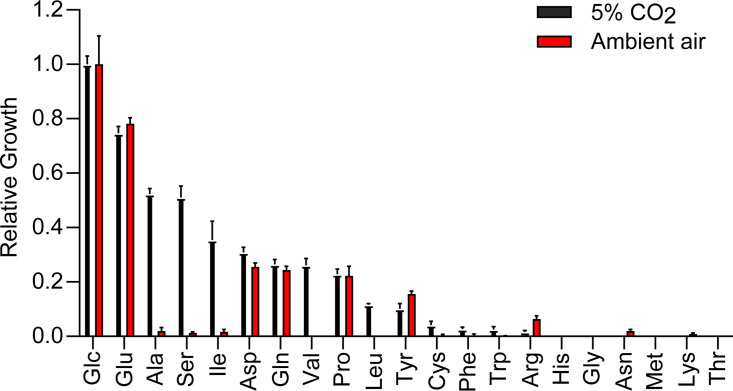 Fig 1
Fig 1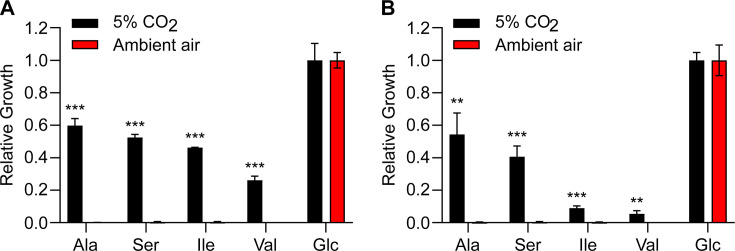 Fig 2
Fig 2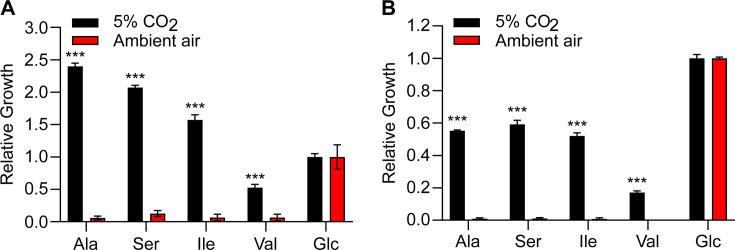 Fig 3
Fig 3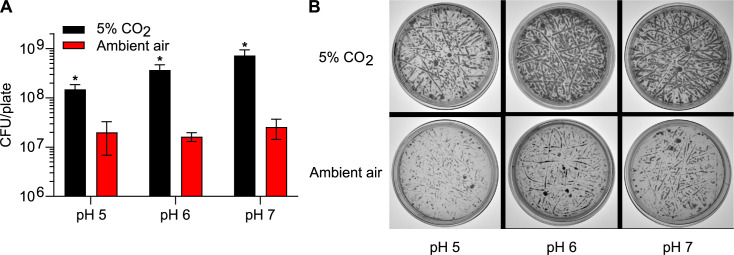 Fig 4
Fig 4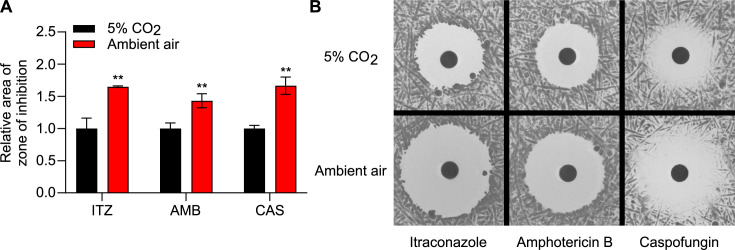 Fig 5
Fig 5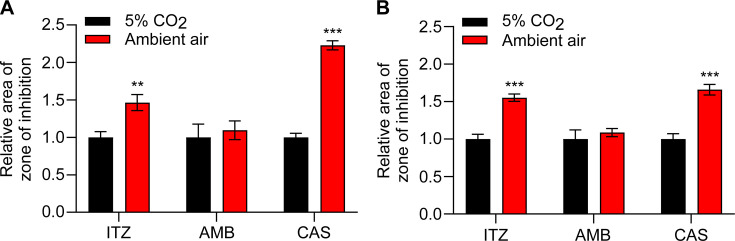 Fig 6
Fig 6- —National Science Foundationhttp://dx.doi.org/10.13039/501100008982
- —National Science Foundationhttp://dx.doi.org/10.13039/501100008982
Peer Reviews
No public reviews on file for this paper yet. If you reviewed it on a platform where reviews are public (OpenReview, ICLR, NeurIPS, ICML), you can paste yours below so the community can read it here.
Videos
No videos yet. Explain this paper in a talk, walkthrough, or lecture? Add one.
Taxonomy
TopicsFungal Infections and Studies · Antifungal resistance and susceptibility · Studies on Chitinases and Chitosanases
INTRODUCTION
Histoplasma capsulatum is a dimorphic fungal pathogen that causes respiratory infection in both immunocompetent and immunocompromised individuals (1). Among individuals who are hospitalized with histoplasmosis, the mortality rates generally range from 5% to 7% (U.S. Centers for Disease Control and Prevention). Immunocompromised individuals (e.g., HIV patients and organ transplant recipients) have the most significant risk of developing a life-threatening systemic infection (2–6). Histoplasma is endemic to many regions of the world, including regions of North, Central, and South America (2, 7) as well as regions of Asia and Africa (8–10). H. capsulatum can be classified into distinct clades that correlate with their region of geographic isolation (11, 12). H. capsulatum can also be classified into two chemotypes based on its cell wall composition. Isolates with or without the polysaccharide α-(1, 3)-glucan in their cell wall are designated chemotype II and chemotype I, respectively (13). H. capsulatum G186A and G217B are the representative strains for chemotype II and chemotype I, respectively.
Histoplasma is found in the soil as mycelia. It produces conidia, which can be inhaled by the mammalian host. The elevated temperatures within the mammalian host prompt the conidia to differentiate into pathogenic yeasts (14–17). Unlike other fungal pathogens (e.g., Candida albicans and Aspergillus fumigatus) that are readily controlled by innate immunity, Histoplasma yeasts proliferate within the phagosomal compartment of alveolar macrophages (5, 18). This phagosomal environment differs greatly from the soil. The temperature of the mammalian host (e.g., 37°C) is higher than that in the soil. Furthermore, the phagosomal compartment within alveolar macrophages is a nutrient-depleted environment (19–21). The temperature-induced morphological change upregulates certain genes that help Histoplasma combat nutritional limitations within the macrophage phagosome (22). For example, Histoplasma yeasts upregulate SID1 (22–24), ZRT2 (22, 25), and CTR3 (22, 26) to acquire sufficient iron, zinc, and copper, respectively, during infection.
In addition to elevated temperature and limited nutrition, Histoplasma yeasts also experience a dramatic increase in CO_2_ levels within the mammalian host. CO_2_ plays an important metabolic role and serves as a crucial signaling molecule in fungi. For instance, the bicarbonate ions generated from CO_2_ by carbonic anhydrases are key substrates for the carboxylation of enzymes (e.g., acetyl-CoA carboxylase), central to many metabolic processes, including fatty acid biosynthesis (27). CO_2_ also impacts various other cellular processes in fungi, including nutrient acquisition and mating (28–30). More importantly, CO_2_ behaves as a signaling molecule to enhance the virulence of several human fungal pathogens (28). For instance, CO_2_ activates adenylyl cyclase to enhance the virulence of C. albicans by promoting the morphological transition from yeast to hyphae (30–32). CO_2_ stimulates capsule production, a major virulence factor, in the fungal pathogen, Cryptococcus neoformans (33, 34). In addition to virulence, elevated CO_2_ alters the susceptibility of Cryptococcus to antifungal drugs such as azoles and flucytosine (35–37). However, the influence of elevated CO_2_ has never been studied in the primary fungal pathogen H. capsulatum. Therefore, this study aims to investigate how elevated CO_2_ impacts Histoplasma’s growth and its antifungal susceptibility.
RESULTS
Elevated CO2 enhances Histoplasma’s growth
Histoplasma yeasts were grown in 3M medium containing individual amino acids as the sole carbon source under either ambient air or 5% CO_2_. The growth of Histoplasma yeasts in alanine, serine, isoleucine, and valine was greatly enhanced under 5% CO_2_ compared to that under ambient air (Fig. 1). Similar results were also observed in the Panama lineage G186A yeasts (Fig. 2). Histoplasma yeasts can grow in 3M medium with alanine, serine, isoleucine, and valine as the sole nitrogen source under ambient air (Fig. S1), indicating that Histoplasma yeasts can uptake these amino acids and utilize the amino group as the sole nitrogen source. Therefore, the lack of growth of Histoplasma yeasts in alanine, serine, isoleucine, and valine under ambient air is largely due to their inability to metabolize the carbon skeleton of these amino acids.
The growth of Histoplasma yeasts in individual amino acid as the sole carbon source. Histoplasma yeasts were inoculated into 3M medium at 2 × 10⁶ yeasts/mL containing each individual amino acid as the sole carbon source. Glucose was used as the positive control. Glucose or each individual amino acid provides 250 mM of carbon source except for cysteine (1.5 mM) and tyrosine (1.25 mM). Yeasts were incubated at 37°C under 5% CO2 or ambient air (0.04% CO2). Yeast growth was measured by determination of the optical density at 595 nm (OD595) after 7 days of incubation and normalized to the growth in glucose. Data represent average relative growth levels ± standard deviations of results from biological replicates (n = 3).
*Elevated CO2 enhances the growth of Histoplasma in amino acids. The yeast growth of two distinct lineages of Histoplasma ((A), G217B; (B), G186A) was determined in alanine (Ala), serine (Ser), isoleucine (Ile), or valine (Val) as the sole carbon source. Histoplasma yeasts were inoculated into 3M medium at 2 × 10⁶ yeasts/mL containing each individual amino acid as the sole carbon source. Glucose was used as the positive control. Each individual amino acid or glucose provides 250 mM of carbon source. Yeasts were incubated at 37°C under 5% CO2 or ambient air (0.04% CO2). Yeast growth was measured by determination of the optical density at 595 nm (OD595) after 7 days of incubation and normalized to the growth in glucose. Data represent average relative growth levels ± standard deviations of results from biological replicates (n = 3). Asterisks indicate significant differences (**, P < 0.01; **, P < 0.001) between 5% CO2 and ambient air as determined by two-tailed Student’s t-test.
In an aqueous solution, elevated CO_2_ increases the concentration of carbonic acid, which dissociates into bicarbonate ions and protons, resulting in acidification of the solution. Therefore, we tested whether the enhanced growth of Histoplasma yeasts in alanine, serine, isoleucine, and valine under 5% CO_2_ is pH-dependent. Histoplasma yeasts showed enhanced growth in these amino acids under 5% CO_2_ compared to ambient air at both pH 5 and 7 (Fig. 3), with enhanced growth overall at pH 5. This demonstrates that the growth advantage in alanine, serine, isoleucine, and valine does not result from CO_2_-induced pH changes.
Enhanced Histoplasma growth in amino acids under elevated CO2 is not pH-dependent. The yeast growth of Histoplasma in alanine (Ala), serine (Ser), isoleucine (Ile), or valine (Val) as the sole carbon source was determined under pH 5.0 (A) or pH 7.0 (B). Histoplasma yeasts were inoculated into 3M medium at 2 × 10⁶ yeasts/mL containing each individual amino acid as the sole carbon source. Glucose was used as the positive control. Each individual amino acid or glucose provides 250 mM of carbon source. Yeasts were incubated at 37°C under 5% CO2 or ambient air (0.04% CO2). The 3M medium with pH 5.0 or 7.0 was buffered by 20 mM MES or 20 mM HEPES, respectively. Yeast growth was measured by determination of the optical density at 595 nm (OD595) after 7 days of incubation and normalized to the growth in glucose. Data represent average relative growth levels ± standard deviations of results from biological replicates (n = 3). Asterisks indicate significant differences (**, P < 0.001) between 5% CO2 and ambient air as determined by two-tailed Student’s t-test.*
Histoplasma yeasts also showed enhanced growth on solid rich medium (Histoplasma-macrophage medium [HMM] agar) under 5% CO_2_ (Fig. 4). This enhanced growth was also observed in the Panama lineage G186A yeasts as well, but to a lesser extent (Fig. S2). This result is qualitative because there is no protocol available to accurately quantify the viable G186A yeast numbers from the HMM agar due to G186A’s tendency to form large clumps. Even though HMM has ample glucose, the enhanced growth of Histoplasma yeasts under 5% CO_2_ suggests that Histoplasma yeasts prefer utilizing certain amino acids (e.g., alanine or serine) for growth in vitro. Surprisingly, while enhanced growth under 5% CO_2_ was observed for both Histoplasma lineages on solid HMM (Fig. 4 and Fig. S2), the growth advantage under 5% CO_2_ disappeared when the yeasts were grown in liquid HMM (Fig. S3). This is potentially due to the CO_2_ generated from cellular respiration being trapped in the liquid medium, thereby increasing the CO_2_ concentration in the liquid medium despite being under ambient air.
Elevated CO2 enhances the growth of Histoplasma on the solid medium. Histoplasma yeasts (5 × 10⁶ yeasts) were inoculated onto the HMM agar with pH 5, 6, and 7, respectively, and incubated at 37°C under 5% CO2 or ambient air (0.04% CO2). Histoplasma yeast growth (dark area) after 72 h on the HMM agar was measured by determining the total viable yeast count on each agar plate. Data represent average total viable yeast count ±standard deviations of results from biological replicates (n = 3). Asterisks indicate significant differences (, P < 0.05) between 5% CO2 and ambient air as determined by Welch’s t-test (A). Representative images of Histoplasma yeast growth after 72 h on the HMM agar with pH 5, 6, and 7, respectively, under 5% CO2 or ambient air were shown (B).*
Elevated CO2 reduces Histoplasma’s antifungal susceptibility
The effect of CO_2_ levels on the antifungal susceptibility of Histoplasma was determined by a disk diffusion assay using itraconazole (azole), amphotericin B (polyene), and caspofungin (echinocandin). Under 5% CO_2_, the susceptibility of Histoplasma yeasts to all three antifungals decreased compared to that under ambient air (Fig. 5). Our previous work suggests that Histoplasma yeasts likely use amino acids as the major carbon source during infection (21). Therefore, we also tested whether the reduced susceptibility of Histoplasma yeasts under 5% CO_2_ still holds true in a medium with amino acids as the only carbon source. We found that elevated CO_2_ reduces Histoplasma’s susceptibility to itraconazole and caspofungin, but not amphotericin B in the amino acid medium (Fig. S4). The Panama lineage G186A yeasts showed reduced susceptibility to itraconazole, but not amphotericin B under 5% CO_2_ (Fig. S5). The effect of CO_2_ on the susceptibility of G186A yeasts to caspofungin was not reported as these yeasts showed high resistance to caspofungin in the disk diffusion assay.
Elevated CO2 reduces susceptibility to antifungals in Histoplasma. The antifungal susceptibility of Histoplasma under 5% CO2 or ambient air (0.04% CO2) was determined using a disk diffusion assay. Suspensions of Histoplasma yeasts (2 × 10⁷ cells) were spread onto the HMM agar (pH 6). Disks containing ITZ (itraconazole, 32 µg/ml), AMB (amphotericin B, 150 µg/mL), and CAS (caspofungin, 6.4 mg/mL) were placed on top of the spread cells. The cells were incubated at 37°C under 5% CO2 or ambient air. The area of the zone of inhibition was measured after 5 days and normalized to the area of the zone of inhibition under 5% CO2. Larger zone of inhibition indicates greater antifungal susceptibility. Data represent average relative area of zone of inhibition ±standard deviations of results from biological replicates (n = 3). Asterisks indicate significant differences (**, P < 0.01) between 5% CO2 and ambient air as determined by two-tailed Student’s t-test (A). Representative images of Histoplasma’s susceptibility to itraconazole, amphotericin B, or caspofungin under 5% CO2 or ambient air (0.04% CO2) were shown (B).
The disk diffusion assay was repeated at both pH 5 and 7 to determine if this reduced susceptibility under 5% CO_2_ is pH-dependent. Under both pH 5 and 7, Histoplasma yeasts consistently showed reduced susceptibility to itraconazole and caspofungin under 5% CO_2_ (Fig. 6). However, the reduced susceptibility of Histoplasma yeasts to amphotericin B under 5% CO_2_ appeared to be pH-dependent (Fig. 6). Interestingly, the decreased antifungal susceptibility under 5% CO_2_ was not observed for Histoplasma yeasts grown in liquid HMM (Fig. S6). This could be due to the trapped CO_2_ from cellular respiration under ambient air, which is consistent with the absence of the enhanced growth phenotype under 5% CO_2_ in liquid HMM (Fig. S3).
*Histoplasma’s reduced susceptibility to itraconazole and caspofungin under elevated CO2 is not pH-dependent. The antifungal susceptibility of Histoplasma under 5% CO2 or ambient air (0.04% CO2) was determined at pH 5.0 (A) or pH 7.0 (B) using a disk diffusion assay. The solid HMM with pH 5.0 or 7.0 was buffered by 20 mM MES or 20 mM HEPES, respectively. Suspensions of Histoplasma yeasts (2 × 10⁷ cells) were spread onto the solid HMM. Disks containing ITZ (itraconazole, 32 µg/mL), AMB (amphotericin B, 150 µg/mL), and CAS (caspofungin, 6.4 mg/mL) were placed on top of the spread cells. The cells were incubated at 37°C under 5% CO2 or ambient air. The area of the zone of inhibition was measured after 5 days and normalized to the area of the zone of inhibition under 5% CO2. Larger zone of inhibition indicates greater antifungal susceptibility. Data represent average relative area of zone of inhibition ±standard deviations of results from biological replicates (n = 3). Asterisks indicate significant differences (**, P < 0.01; **, P < 0.001) between 5% CO2 and ambient air as determined by two-tailed Student’s t-test.
DISCUSSION
Microbial pathogens must adapt to the mammalian host environment to successfully establish infections. The habitat of Histoplasma in the soil is vastly different from the host environment during infection. Differences such as temperature, nutrient availability, and level of CO_2_ can significantly impact the physiology and potentially the virulence of Histoplasma. In this study, we examined the impact of elevated CO_2_ similar to that of the host environment on Histoplasma yeasts. Our data demonstrated that elevated CO_2_ enhances Histoplasma’s growth. A previous study reported similar findings, showing that elevated CO_2_ levels promote the growth of Histoplasma yeasts in liquid media, possibly as a result of pH changes induced by the shift of CO_2_ concentration (38). In Coccidioides immitis, elevated CO_2_ is required for the development and the maintenance of spherules (39, 40).
The enhanced growth under elevated CO_2_ was observed in medium with certain amino acids (i.e., alanine, serine, isoleucine, and valine) as the sole carbon source ([Fig. 1 and 2](#F1 F2)). Interestingly, the catabolism of alanine, serine, isoleucine, and valine converges on the common metabolite pyruvate, which can be converted into oxaloacetate for subsequent gluconeogenesis, a process which is essential for Histoplasma’s growth on amino acids as the sole carbon source. The reaction catalyzed by pyruvate carboxylase requires the substrate bicarbonate, which is the product of dissolved CO_2_. This leads to a model that the lower CO_2_ concentration in ambient air does not provide sufficient bicarbonate for this carboxylation reaction to produce oxaloacetate, resulting in impaired gluconeogenesis when grown in media with amino acids as the only carbon source. This is consistent with our results that amino acids such as glutamate and aspartate that can produce oxaloacetate without pyruvate carboxylase support Histoplasma’s growth under ambient air (Fig. 1). The low CO_2_ concentration in ambient air does not appear to affect other carboxylation processes that are involved in the biosynthesis of fatty acids, arginine, purines, and pyrimidines (27), as Histoplasma yeasts can grow in glucose as the sole carbon source under ambient air (Fig. 1).
In this study, we also found that elevated CO_2_ reduced Histoplasma’s antifungal susceptibility (Fig. 5). This reduced susceptibility under elevated CO_2_ to amphotericin B was pH-dependent, whereas the reduced susceptibility to itraconazole and caspofungin was consistent under all pHs and all types of media tested ([Fig. 5 and 6](#F5 F6)). The reduced susceptibility to caspofungin (Fig. 5) suggests that elevated CO_2_ might have an impact on Histoplasma’s cell wall structure. In C. albicans, the cellular components (Nce103, Rca1, and Sch9) that are responsible for CO_2_ sensing modulate β-1,3-glucan exposure under elevated CO_2_ (41). In contrast to Histoplasma, C. neoformans showed increased antifungal susceptibility under elevated CO_2_ (35–37). This increased susceptibility was consistent among different types of antifungals, including fluconazole, itraconazole, myriocin, and flucytosine (35–37), suggesting increased uptake of antifungals under elevated CO_2_. Consistent with this, the cytosine permease gene (FCY2) in C. neoformans, encoding a flucytosine transporter, was upregulated under elevated CO_2_ (36). The opposite phenotype observed in our study suggests that Histoplasma has a unique cellular response to elevated CO_2_, which is consistent with the fact that Histoplasma (Ascomycota) is evolutionarily quite divergent from C. neoformans (Basidiomycota).
The CO_2_-induced enhanced growth and reduced antifungal susceptibility were not observed when Histoplasma yeasts were grown in the liquid medium (Fig. S3 and S6). Histoplasma yeasts grown in the 96-well plate tend to settle at the bottom of the well, thus experiencing low oxygen concentration due to the lack of constant aeration. Oxygen concentration can affect the growth and the antifungal susceptibility of other fungal pathogens (42–44). It is possible that the cellular response to reduced oxygen concentration (e.g., hypoxia) interferes with the cellular response to elevated CO_2_. In our future studies, we will remove the gene SRB1, encoding a protein involved in adaptation to low oxygen levels, in Histoplasma (45) and determine whether this mutant can restore the CO_2_-induced enhanced growth and reduced antifungal susceptibility in the liquid medium.
Our previous work indicates that amino acids are the major carbon source that can support Histoplasma’s growth within macrophages during infection (21). Therefore, the enhanced growth in certain amino acids in vitro under physiologically relevant CO_2_ might suggest a novel mechanism to promote Histoplasma yeast intracellular growth in an amino acid-sufficient environment during infection. Furthermore, the reduced antifungal susceptibility of Histoplasma under elevated CO_2_ in vitro suggests that antifungal testing under conditions that mimic the host environment provides more accurate information about the drug susceptibility profiles of Histoplasma clinical isolates. The underlying mechanisms by which elevated CO_2_ enhances Histoplasma’s growth and resistance to antifungals are unknown. Since these phenotypes are unlikely caused by the change of pH under elevated CO_2_, future studies should focus on how Histoplasma yeasts sense elevated CO_2_ (e.g., direct CO_2_, bicarbonate, or both), and the network of genes and proteins that mediate the response.
MATERIALS AND METHODS
Histoplasma strains and growth
The Histoplasma strains used in this study were the North American clade 2 clinical isolate G217B and the Panama strain G186A. For general maintenance of strains, Histoplasma yeasts were grown in HMM (46). For growth on solid medium, HMM was solidified with 0.6% agarose and supplemented with 25 µM FeSO_4_. HMM was adjusted to pH 6 unless otherwise noted. For growth curve determination, yeasts were inoculated at 2 × 10^6^ yeasts/mL in 96-well microtiter plates and incubated at 37°C under ambient air or 5% CO_2_ for 5 days with twice-daily agitation (47). Growth of yeasts in liquid culture was quantified by the measurement of culture turbidity (optical density at 595 nm [OD_595_]) every 24 h. The experiments were performed using the North American clade 2 clinical isolate G217B unless otherwise noted.
For growth in amino acid as the sole carbon source, yeasts were grown in 3M medium (46) containing ammonium sulfate as the sole nitrogen source and a limited amount of cysteine (25 µM) as the major sulfur source (21). Each individual amino acid was added into the 3M medium to reach a final carbon concentration of 250 mM unless otherwise noted. Cysteine and tyrosine were used at 1.5 and 1.25 mM, respectively, due to low solubility. Growth in 3M medium with glucose (0.75%, wt/vol) served as a positive control. Yeasts were inoculated at 2 × 10^6^ yeasts/mL in 96-well microtiter plates and incubated at 37°C under ambient air or 5% CO_2_ with twice-daily agitation (47). Growth of yeasts in liquid culture was quantified by the measurement of culture turbidity (OD_595_) after 7 days of incubation. G186A yeasts were treated with 1 M NaOH to disperse clumps before the OD was read. Relative growth in each individual amino acid was calculated by normalizing to the growth in glucose.
For growth in amino acid as the sole nitrogen source, yeasts were grown in 3M medium (46) containing glucose as the sole carbon source and a limited amount of cysteine (25 µM) as the major sulfur source (21). Each individual amino acid was added into the 3M medium to reach a final nitrogen concentration of 7.5 mM unless otherwise noted. Cysteine and tyrosine were used at 1.5 and 1.25 mM, respectively, due to low solubility. Asparagine, histidine, phenylalanine, and methionine were used at 1, 0.25, 0.4, and 0.8 mM, respectively, due to their inhibitory effect at higher concentrations. Growth in 3M medium with 7.5 mM of ammonium sulfate served as a positive control. Yeasts were inoculated at 2 × 10^6^ yeasts/mL in 96-well microtiter plates and incubated at 37°C under ambient air or 5% CO_2_ with twice-daily agitation (47). Growth of yeasts in liquid culture was quantified by the measurement of culture turbidity (OD_595_) after 7 days of incubation. Relative growth in each individual amino acid was calculated by normalizing to the growth in ammonium sulfate.
To quantify growth on solid medium, about 5 × 10^6^ yeasts were spread on petri dishes (60 mm diameter) containing HMM agar and incubated at 37°C under ambient air or 5% CO_2_. After 72 h, the yeasts were harvested by scraping the surface of the HMM agar. Serial dilutions of the yeast cell suspension were plated on solid HMM to determine the viable count. The growth on HMM solid medium was calculated as the total viable yeast cells per HMM plate. The images of Histoplasma yeast growth on HMM plates were captured by the ChemiDoc MP Imaging System (Bio-Rad Laboratories).
Antifungal susceptibility test
Histoplasma’s susceptibility to itraconazole, amphotericin B, and caspofungin was determined by the disk diffusion assay. Approximately 2 × 10^7^ yeasts were spread onto the HMM or casamino acids (2%, wt/vol) agar plates. Paper disks (1/4 in. in diameter) were placed on top of the agar medium. Ten microliters of solution containing DMSO, itraconazole (32 µg/mL, wt/vol), amphotericin B (150 µg/mL, wt/vol), or caspofungin (6.4 mg/mL, wt/vol) were dropped onto the paper disk. The plates were incubated for 5 days at 37°C under 5% CO_2_ or ambient air. The images of Histoplasma growth on agar plates containing antifungals were captured by the ChemiDoc MP Imaging System (Bio-Rad Laboratories). The zone of inhibition was measured using ImageJ (48).
Statistical analysis
All experiments were conducted with at least three biological replicates. Data were analyzed by Student’s t-test or Welch’s t-test (Prism v9.4.1; GraphPad Software) for the determination of statistically significant differences, which are indicated in graphs with asterisk symbols (*, P < 0.05; **, P < 0.01; and ***, P < 0.001).
The reference list from the paper itself. Each links out to its DOI / PubMed record.
- 1Maresca B, Kobayashi GS. 1989. Dimorphism in Histoplasma capsulatum: a model for the study of cell differentiation in pathogenic fungi. Microbiol Rev 53:186–209. doi:10.1128/mr.53.2.186-209.19892666842 PMC 372727 · doi ↗ · pubmed ↗
- 2Adenis A, Nacher M, Hanf M, Vantilcke V, Boukhari R, Blachet D, Demar M, Aznar C, Carme B, Couppie P. 2014. HIV-associated histoplasmosis early mortality and incidence trends: from neglect to priority. P Lo S Negl Trop Dis 8:e 3100. doi:10.1371/journal.pntd.000310025144374 PMC 4140672 · doi ↗ · pubmed ↗
- 3Brown GD, Denning DW, Gow NAR, Levitz SM, Netea MG, White TC. 2012. Hidden killers: human fungal infections. Sci Transl Med 4:165rv 13. doi:10.1126/scitranslmed.300440423253612 · doi ↗ · pubmed ↗
- 4Retallack DM, Woods JP. 1999. Molecular epidemiology, pathogenesis, and genetics of the dimorphic fungus Histoplasma capsulatum. Microbes Infect 1:817–825. doi:10.1016/s 1286-4579(99)80084-710816087 · doi ↗ · pubmed ↗
- 5Deepe GS, Gibbons RS, Smulian AG. 2008. Histoplasma capsulatum manifests preferential invasion of phagocytic subpopulations in murine lungs. J Leukoc Biol 84:669–678. doi:10.1189/jlb.030815418577715 PMC 2516902 · doi ↗ · pubmed ↗
- 6Kauffman CA. 2007. Histoplasmosis: a clinical and laboratory update. Clin Microbiol Rev 20:115–132. doi:10.1128/CMR.00027-0617223625 PMC 1797635 · doi ↗ · pubmed ↗
- 7Deepe GS. 2018. Outbreaks of histoplasmosis: the spores set sail. P Lo S Pathog 14:e 1007213. doi:10.1371/journal.ppat.100721330212569 PMC 6136805 · doi ↗ · pubmed ↗
- 8Antinori S. 2014. Histoplasma capsulatum: more widespread than previously thought. Am J Trop Med Hyg 90:982–983. doi:10.4269/ajtmh.14-017524778192 PMC 4047757 · doi ↗ · pubmed ↗