Dataset of 111 metagenome-assembled genomes from cattle manure, soil and manured soil samples
Eduardo Pérez-Valera, Dana Elhottová

TL;DR
This paper provides 111 genomes from bacteria in cattle manure and soil, useful for studying how antibiotic-treated manure affects bacterial spread in the environment.
Contribution
The novel contribution is a dataset of 111 high-quality metagenome-assembled genomes from non-fermenting Gram-negative bacteria in manure and soil microcosms.
Findings
111 MAGs were reconstructed, including 10 high-quality genomes from Pseudomonadota and Bacteroidota.
Most genomes originated from manure, with Pseudomonas, Stenotrophomonas, and Acinetobacter being the most common genera.
The dataset is publicly available for studying the dispersal and genomic traits of NFGNB in soil.
Abstract
This data report presents 111 metagenome-assembled genomes (MAGs) reconstructed from manure, soil and manured soil samples from microcosms after enriching for non-fermenting Gram-negative bacteria (NFGNB). Two independent microcosm experiments were conducted to investigate the spread of NFGNB from the fresh manure of dairy cows under antibiotic prophylaxis to the pasture soil of two organic farms. After sampling the microcosms on days 2, 14 and 28, the manure and soil samples were plated in duplicate on CHROMagar Acinetobacter medium for NFGNB enrichment and incubated at 28°C for 24 h. DNA was extracted from the cultures and sequenced using the Illumina NovaSeq 6000 platform with 150-bp paired-end reads. Reads were assembled with metaSPAdes both individually and by co-assembly. MAGs were reconstructed using MetaBAT, MaxBin, SemiBin2, COMEbin, and AVAMB, and then de-replicated at >95 %…
Genes, proteins, chemicals, diseases, species, mutations and cell lines named across the full text — each resolved to its canonical identifier and authoritative record.
Click any figure to enlarge with its caption.
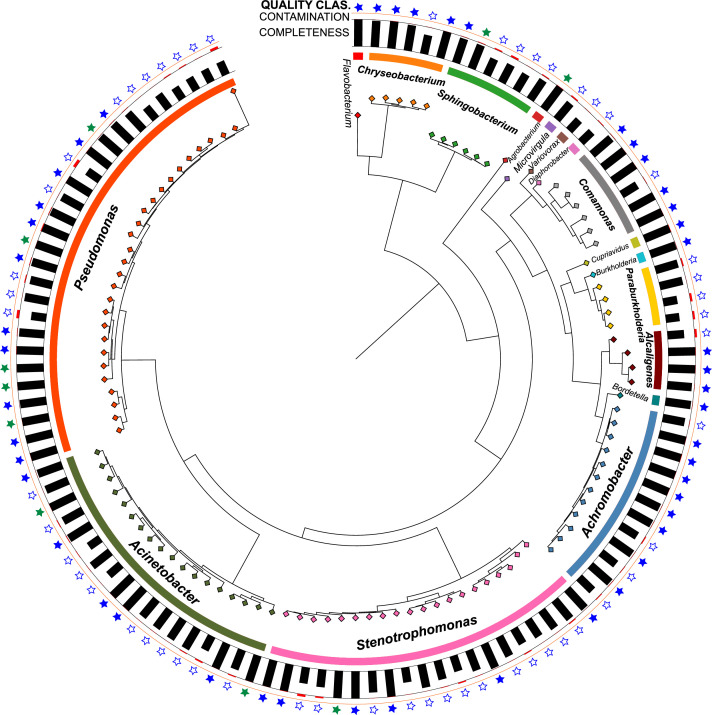 Figure 1
Peer Reviews
No public reviews on file for this paper yet. If you reviewed it on a platform where reviews are public (OpenReview, ICLR, NeurIPS, ICML), you can paste yours below so the community can read it here.
Videos
No videos yet. Explain this paper in a talk, walkthrough, or lecture? Add one.
Taxonomy
TopicsGenomics and Phylogenetic Studies · Microbial Community Ecology and Physiology · Bacteriophages and microbial interactions
Specifications TableSubjectBiologySpecific subject areaMetagenome-assembled genomes of non-fermenting Gram-negative bacteria from manure, soil and manured soil samplesType of dataTable, Figure and FASTA files of MAGsData collectionGenomic DNA was extracted from bacteria from microcosms combining soil and dairy cow manure, following enrichment for NFGNB on CHROMagar Acinetobacter. Genomic DNA was isolated using the Fast DNA Spin Kit and sequenced on an Illumina Novaseq 6000 platform. Sequence reads were quality-checked and assembled using metaSPAdes. MAGs representing 111 non-redundant bacterial species were reconstructed using MetaBAT, MaxBin, SemiBin2, COMEbin, and AVAMB, and de-replicated at >95 % ANI (pairwise comparisons) using dREPData source locationLocation: České Budějovice, Czech Republic. Soil and manure samples for the microcosm experiment were located at 48 °North, 14 °EastData accessibilityRepository name: Dataset of 111 metagenome-assembled genomes from cattle manure, soil and manured soil samplesData identification number: NCBI BioProject PRJNA1231077, ZENODO 10.5281/zenodo.15309541Direct URL to data:NCBI: https://www.ncbi.nlm.nih.gov/bioproject/PRJNA1231077ZENODO: 10.5281/zenodo.15309541Related research article[1] P. Sardar, D. Elhottová, E. Pérez-Valera, Soil-specific responses in the antibiotic resistome of culturable Acinetobacter spp. and other non-fermentative Gram-negative bacteria following experimental manure application. FEMS Microbiol. Ecol. 99 (2023) fiad148. https://doi.org/10.1093/femsec/fiad148.The metagenomic data and a description of the microcosm set up can be found in [1].
Value of the Data
1
- •The dataset provides a comprehensive collection of 111 non-redundant MAGs from non-fermenting Gram-negative bacteria (NFGNB) isolated from soil and manure samples.
- •This collection comprises 10 high-quality (MIMAG standard), 47 putative high-quality, and 54 medium-quality MAGs, representing 17 different genera that include Pseudomonas (28 MAGs), Stenotrophomonas (20 MAGs) and Acinetobacter (18 MAGs).
- •A total of 44 MAGs originated from manure, 38 from manured soil and 29 from soil. High-quality MAGs were predominantly obtained from manure (6 high-quality, 21 putative high-quality), compared to manured soil (3 high-quality, 12 putative high-quality) and soil (1 high-quality, 14 putative high-quality).
- •The genomic resources provided in this dataset can serve as a basis for future research on the survival, dissemination in the environment, and ecological role of bacterial species of potential clinical relevance.
Background
2
Non-fermenting Gram-negative bacteria (NFGNB) are becoming a growing concern due to their role in antimicrobial resistance and as healthcare-associated pathogens [2]. Acinetobacter spp. and other NFGNB such as Pseudomonas are widely distributed in nature, particularly in soil, water and the gastrointestinal tract of animals. These bacteria exhibit inherent resistance to many antibiotics [3] and readily acquire additional resistance mechanisms [4]. This adaptability has made them a key focus in clinical settings [5]. Previous research suggests that fresh manure from antibiotic-treated cattle enriches the soil with antibiotic resistance genes [6]. Acinetobacter spp. is known to thrive in soil following manure application, being a main actor that potentially contributes to the spread of antibiotic resistance in the environment [7]. In our previous study [1], we performed shotgun metagenomic sequencing to analyse the abundance, taxonomic identification and composition of the antibiotic resistome of NFGNB in manure, soil and manured soil samples. Here, we reconstructed 111 non-redundant MAGs from the metagenomes that account for approximately 91 % of the sequencing reads on average. The MAGs we provide can help to unravel the ecological and genomic mechanisms responsible for their spread and the spread of antibiotic resistance in the environment.
Data Description
3
The dataset contains 111 non-redundant (ANI >95 %) metagenome-assembled genomes (MAGs), all of which meet at least the MIMAG standard for medium quality (>50 % completeness and <10 % contamination) defined by Bowers et al. [8]. From these, we report 10 MAGs of high quality (>90 % completeness, <5 % contamination, encoding all 5S, 16S and 23S rRNAs genes and tRNAs for at least 18 of the 20 amino acids), 47 MAGs of putative high quality (>90 % completeness and <5 % contamination) and 54 MAGs of medium quality. High-quality MAGs were almost complete (98.4 ± 0.6 %, average ± SD) and showed low contamination (0.5 ± 0.6 %). Putative high-quality MAGs had a completeness of 97.5 ± 3 % and contamination of 0.6 ± 0.6 %. The remaining medium-quality MAGs had an average completeness of 70 ± 13 % and contamination of 2.6 ± 2.7 %. The dataset comprises MAGs assembled DNA reads as compressed FASTA files (.fasta.gz) and associated metadata in an Excel spreadsheet (MAGs_data.xlsx). The MAGs have been deposited in NCBI under the BioProject PRJNA1231077 and in Zenodo under https://doi.org/10.5281/zenodo.15309541. The Excel file “MAGs_data.xlsx”, included in the Zenodo dataset, details the following information: MAGs name, origin (manure, soil or manured soil), experiment (whether soil S or B), sample name, binning method, detection of 5S, 16S and 23S rRNA genes, number of nucleotides in the tRNAs, quality metrics (completeness, contamination, GC content, N50, genome size, scaffold and contig count, N90, L50 and L90), taxonomic affiliations predicted with GTDB-Tk, including best matching taxonomy and % ANI for the closest placement in GTDB (for MAGs with ANI >95 %), mapping reads in % average and maximum in a sample, NCBI information (i.e., SRA and BioSample accessions, coverage), and 16S rRNA-based identification and sequence. The tools used to extract each feature from the MAGs are also included in the Excel file. A summary of main MAG characteristics is given in Table 1. A phylogenomic tree (Fig. 1) illustrates the relationships among MAGs, their genome completeness, the percentage of contamination, and whether each MAG is a high-, putative high- or medium-quality MAG, as described above.Table 1. General characteristics of the reconstructed NFGNB MAGs from manure, soil or manured soil (M. soil) samples. Taxonomic classifications at the phylum and genus levels were performed using GTDB-Tk [17], and ANI values to the closest reference genomes are provided. ANI values from GTDB-Tk are only reported for MAGs identified at the species level (i.e., all ANIs provided are > 95 %). MAG quality was assessed following the MIMAG standard [8], modified to include putative high-quality MAGs as those with completeness >90 % and contamination <5 %. MAGs names were assigned based on the binning method. MAGs meeting the high-quality MIMAG standard are indicated in bold. A more detailed table, including NCBI accessions and full genome information, is available in the Zenodo dataset (https://doi.org/10.5281/zenodo.15309541).Table 1MAGOriginOriginal samplePhylumGenus (GTDB)Species (GTDB)Closest genome ANI (%)MAG QualityCompleteness (%)Contamination (%)Binning MethodGenome size (bp)S21ManureGT28SEXPseudomonadotaAchromobacterUnknownNot assignedpHigh1001.21SemiBin26,542,997S2M. soilGT14BC2PseudomonadotaAchromobacterUnknownNot assignedpHigh99.90.38SemiBin25,722,719S5ManureGT14BEXPseudomonadotaAchromobacterUnknownNot assignedpHigh94.51.26SemiBin26,165,035V20ManureGT28SEXbPseudomonadotaAchromobacterUnknownNot assignedpHigh93.20.76AVAMB5,921,085C7M. soilGT28BC2PseudomonadotaAchromobacterUnknownNot assignedMedium72.23.29COMEbin5,283,433V10ManureGT28BEXaPseudomonadotaAchromobacter**A. denitrificans99.18pHigh1000.45AVAMB6,582,530V14SoilGT28SAaPseudomonadotaAchromobacter**A. kerstersii98.84pHigh93.20.71AVAMB5,861,663V18SoilGT28SacPseudomonadotaAchromobacter**A. marplatensis97.67pHigh94.50.84AVAMB6,267,628M5ManureGT28BEXcPseudomonadotaAchromobacter**A. mucicolens98.9pHigh99.70.3MaxBin5,857,610C5ManureGT14SEXPseudomonadotaAchromobacter**A. piechaudii98.26Medium68.51.58COMEbin4,666,491C20M. soilGT14BC2PseudomonadotaAchromobacter**A. spanius95.09Medium67.62.39COMEbin4,643,289V41ManureGT14BEXaPseudomonadotaAchromobacter**A. veterisilvae97.99Medium81.71.03AVAMB5,818,176V37ManureGT2BEXbPseudomonadotaAcinetobacterUnknownNot assignedMedium88.50.25AVAMB2,854,542V23M. soilGT2BC2bPseudomonadotaAcinetobacterUnknownNot assignedMedium82.50.77AVAMB2,829,191C6ManureGT14SEXPseudomonadotaAcinetobacterUnknownNot assignedMedium50.71.24COMEbin1,794,093V21M. soilGT2BC2bPseudomonadotaAcinetobacter**A. amyesii97.47pHigh94.60.39AVAMB3,279,076C16ManureGT2SEXPseudomonadotaAcinetobacter**A. baumannii97.68Medium75.83.3COMEbin3,202,536C15ManureGT2BEXPseudomonadotaAcinetobacter**A. bohemicus96.02Medium81.20.49COMEbin2,634,877M13SoilGT2SabPseudomonadotaAcinetobacter**A. calcoaceticus96.32pHigh99.90.13MetaBAT3,801,409C10M. soilGT28BC2PseudomonadotaAcinetobacter**A. calcoaceticus97.12Medium56.74.79COMEbin2,263,300V36ManureGT2BEXaPseudomonadotaAcinetobacter**A. faecalis98.95pHigh95.21.75AVAMB2,344,785S3M. soilGT14BC2****PseudomonadotaAcinetobacterA. gandensis98.68High1000.36SemiBin23,194,030S24M. soilGT2BC2PseudomonadotaAcinetobacter**A. guillouiae97.73Medium86.72.58SemiBin23,781,671S32ManureGT2SEXPseudomonadotaAcinetobacter**A. johnsonii95.78pHigh99.90.41SemiBin23,375,171V35ManureGT2SEXcPseudomonadotaAcinetobacter**A. pseudolwoffii97.93Medium84.00.88AVAMB2,458,038V8SoilGT28BaaPseudomonadotaAcinetobacter**A. schindleri97.71pHigh1000.16AVAMB3,060,448S29M. soilGT2SC2PseudomonadotaAcinetobacterAcinetobacter sp00213543598.93Medium81.22.28SemiBin23,040,298V38ManureGT2BEXcPseudomonadotaAcinetobacterAcinetobacter sp00236559598.16Medium85.60.37AVAMB2,686,145S30ManureGT2SEXPseudomonadotaAcinetobacterAcinetobacter sp01341755595.76Medium58.40.37SemiBin21,796,683M8ManureGT2SEXc****PseudomonadotaAcinetobacterA. vivianii97.38High1000.12MaxBin3,884,090C18SoilGT14BA****PseudomonadotaAgrobacteriumA. fabacearum98.72High99.91.01COMEbin5,070,611M10ManureGT2SEXcPseudomonadotaAlcaligenesUnknownNot assignedMedium61.17.74MaxBin3,792,446M14ManureGT2SEXaPseudomonadotaAlcaligenes**Alcaligenes faecalis98.45pHigh1000.57MetaBAT4,114,606V12ManureGT28BEXcPseudomonadotaAlcaligenes**Alcaligenes nematophilus97.5pHigh90.20.6AVAMB3,979,026V5ManureGT14SEXbPseudomonadotaAlcaligenesAlcaligenes sp02342564597.38pHigh99.30.96AVAMB3,774,399C14ManureGT28SEXPseudomonadotaBordetella**Bordetella trematum99.59pHigh93.70.7COMEbin4,161,353V17SoilGT28SacPseudomonadotaBurkholderia**Burkholderia contaminans98.43pHigh97.80.49AVAMB8,062,764V16SoilGT28SacBacteroidotaChryseobacterium**C. culicis95.33Medium70.30.4AVAMB4,177,414V24M. soilGT2BC2cBacteroidotaChryseobacterium**C. jejuense95.24pHigh1000.61AVAMB5,212,491S22M. soilGT2BC2BacteroidotaChryseobacterium**C. joostei96.37pHigh94.80.13SemiBin24,459,574V31SoilGT2SacBacteroidotaChryseobacterium**C. rhizosphaerae98.08pHigh95.90.1AVAMB5,097,737V15SoilGT28SAaBacteroidotaChryseobacteriumChryseobacterium sp90015693599.37pHigh99.90.14AVAMB5,184,267S15M. soilGT28BC2PseudomonadotaComamonasUnknownNot assignedpHigh90.71.07SemiBin24,586,957C12ManureGT28BEXPseudomonadotaComamonasUnknownNot assignedMedium65.91.09COMEbin1,814,831V2SoilGT14SacPseudomonadotaComamonas**C. koreensis98.91pHigh1000.08AVAMB4,875,248M15ManureGT14BEXbPseudomonadotaComamonas**C. sp00247291598.21pHigh1000.27MetaBAT4,874,396S28M. soilGT2SC2PseudomonadotaComamonas**C. testosteroni98.83pHigh1000.2SemiBin25,095,908M11ManureGT14BEXcPseudomonadotaComamonas**C. tsuruhatensis98.17pHigh1000MaxBin6,154,020S14M. soilGT28BC2PseudomonadotaCupriavidusCupriavidus sp00095578596.49pHigh99.81.22SemiBin27,429,278C8M. soilGT28BC2PseudomonadotaDiaphorobacter**D. nitroreducens98.31Medium54.31.95COMEbin2,384,275V26SoilGT2SabBacteroidotaFlavobacteriumFlavobacterium sp00230388598.08pHigh99.70.08AVAMB5,375,231C9M. soilGT28BC2PseudomonadotaMicrovirgulaUnknownNot assignedMedium77.44.05COMEbin2,880,378C19SoilGT14BAPseudomonadotaParaburkholderia**P. hospita98.85Medium84.94.33COMEbin6,736,010C17SoilGT14BAPseudomonadotaParaburkholderia**P. nemoris97.71Medium52.26.96COMEbin2,366,553C2SoilGT14BAPseudomonadotaParaburkholderia**P. nemoris98.59Medium50.46.75COMEbin4,222,632S1SoilGT14BAPseudomonadotaParaburkholderia**P. terricola99.26Medium85.30.25SemiBin25,799,680V33ManureGT2SEXaPseudomonadotaPseudomonasUnknownNot assignedpHigh97.10.07AVAMB5,154,236S27SoilGT2SAPseudomonadotaPseudomonasUnknownNot assignedMedium83.70.97SemiBin24,956,356M2M. soilGT28BC2cPseudomonadotaPseudomonasUnknownNot assignedMedium55.69.21MaxBin5,220,937M7M. soilGT2SC2bPseudomonadotaPseudomonasUnknownNot assignedMedium52.18.53MaxBin2,442,360C4M. soilGT14SC2PseudomonadotaPseudomonas**P. alloputida96.52Medium52.52.46COMEbin3,936,810S31ManureGT2SEX****PseudomonadotaPseudomonasP. capeferrum99.59High99.50.51SemiBin25,724,253S26ManureGT2SEXPseudomonadotaPseudomonas**P. helleri97.48pHigh99.70.14SemiBin25,310,282S18ManureGT28BEX****PseudomonadotaPseudomonasP. kermanshahensis96.83High92.31.06SemiBin25,678,766V28SoilGT2SacPseudomonadotaPseudomonas**P. laurylsulfatiphila99.66pHigh98.40.07AVAMB6,282,357M9ManureGT2SEXcPseudomonadotaPseudomonas**P. oleovorans96.86pHigh1000.2MaxBin5,542,180S9ManureGT14SEX****PseudomonadotaPseudomonasP. palmensis98.79High1000.16SemiBin25,571,667V32M. soilGT2SC2cPseudomonadotaPseudomonas**P. protegens98.93Medium82.93.03AVAMB5,989,150V29SoilGT2SacPseudomonadotaPseudomonas**P. protegens96.47pHigh93.01.19AVAMB6,564,374V25SoilGT2SAaPseudomonadotaPseudomonas**P. putida97.21Medium55.80.18AVAMB3,376,573C1SoilGT14SAPseudomonadotaPseudomonas**P. putida97.76Medium55.59.77COMEbin1,188,256V22M. soilGT2BC2bPseudomonadotaPseudomonas**P. putida99.25pHigh95.40.41AVAMB5,609,907V27SoilGT2SacPseudomonadotaPseudomonas**P. putida98Medium64.20.09AVAMB4,083,299C3M. soilGT14SC2PseudomonadotaPseudomonas**P. putida97.94Medium50.32.47COMEbin3,664,077S4M. soilGT14BC2PseudomonadotaPseudomonas**P. shirazensis97.29Medium85.30.38SemiBin24,717,260S19M. soilGT28SC2PseudomonadotaPseudomonasPseudomonas sp00095581599.69pHigh95.81.59SemiBin25,181,704V19M. soilGT28SC2bPseudomonadotaPseudomonasPseudomonas sp00142261596.85Medium51.80.63AVAMB2,968,572V9SoilGT28BabPseudomonadotaPseudomonasPseudomonas sp00165561597.24pHigh99.20.93AVAMB6,293,145S10SoilGT28BAPseudomonadotaPseudomonasPseudomonas sp02052028599.26Medium89.70.22SemiBin26,347,120M1ManureGT14SEXb****PseudomonadotaPseudomonasPseudomonas sp02583715597.95High1000MaxBin4,307,444****V39M. soilGT14BC2bPseudomonadotaPseudomonasPseudomonas sp02983927596.98pHigh99.80.1AVAMB5,158,824S20M. soilGT28SC2PseudomonadotaPseudomonasPseudomonas sp90010169598.83pHigh99.12.82SemiBin25,501,807V11ManureGT28BEXbPseudomonadotaPseudomonasPseudomonas sp94391451598.82pHigh94.11.56AVAMB6,141,918V42ManureGT14BEXb****PseudomonadotaPseudomonasP. urmiensis98.08High1000.06AVAMB5,583,077S16M. soilGT28BC2BacteroidotaSphingobacteriumUnknownNot assignedpHigh93.30.87SemiBin25,619,382S13M. soilGT28BC2BacteroidotaSphingobacteriumUnknownNot assignedMedium70.00.41SemiBin24,277,425S23M. soilGT2BC2****BacteroidotaSphingobacteriumS. paramultivorum99.61High92.61.59SemiBin25,603,380C22M. soilGT14BC2BacteroidotaSphingobacterium**S. siyangense97.46Medium65.43.9COMEbin4,334,548V3SoilGT14SacBacteroidotaSphingobacteriumS. sp01996984598.83Medium85.22.8AVAMB3,328,530C13SoilGT28SABacteroidotaSphingobacteriumS. sp02954208597.35Medium73.16.11COMEbin4,923,870S17ManureGT28BEXPseudomonadotaStenotrophomonasUnknownNot assignedMedium80.30.66SemiBin23,719,936S6ManureGT28BEXPseudomonadotaStenotrophomonasUnknownNot assignedMedium73.10.24SemiBin23,028,981M12SoilGT28BacPseudomonadotaStenotrophomonasUnknownNot assignedMedium64.95.1MetaBAT3,278,791V6ManureGT14SEXbPseudomonadotaStenotrophomonas**S. acidaminiphila98.57pHigh94.50.08AVAMB3,473,400C21M. soilGT14BC2PseudomonadotaStenotrophomonas**S. bentonitica97.85Medium59.14.09COMEbin2,872,105V34ManureGT2SEXbPseudomonadotaStenotrophomonas**S. geniculata98.2pHigh1000AVAMB4,536,706M4ManureGT28BEXbPseudomonadotaStenotrophomonas**S. hibiscicola98.03pHigh1000.83MaxBin4,279,084V1SoilGT14SabPseudomonadotaStenotrophomonas**S. indicatrix97.05pHigh1000.08AVAMB4,490,560M6M. soilGT28SC2aPseudomonadotaStenotrophomonas**S. indicatrix95.08Medium59.68.16MaxBin2,601,569M3ManureGT28BEXaPseudomonadotaStenotrophomonas**S. lactitubi95.19pHigh1001.34MaxBin4,408,438V4ManureGT14SEXaPseudomonadotaStenotrophomonas**S. maltophilia97.26Medium86.20.26AVAMB3,538,935S12M. soilGT28BC2PseudomonadotaStenotrophomonas**S. maltophilia99.29Medium79.20.99SemiBin23,729,623S25M. soilGT2BC2****PseudomonadotaStenotrophomonasS. maltophilia98.25High1000SemiBin24,563,766V30SoilGT2SacPseudomonadotaStenotrophomonas**S. rhizophila96.26pHigh96.00.4AVAMB4,608,349V40M. soilGT14BC2cPseudomonadotaStenotrophomonas**S. sepilia95.62Medium79.10.39AVAMB3,707,479V13ManureGT28BEXcPseudomonadotaStenotrophomonasStenotrophomonas sp00247101597.88Medium63.73.24AVAMB2,761,634S8M. soilGT14SC2PseudomonadotaStenotrophomonasStenotrophomonas sp00308677597.15Medium55.00.63SemiBin23,218,735V7ManureGT14SEXbPseudomonadotaStenotrophomonasStenotrophomonas sp00348486598.32Medium71.41.49AVAMB3,313,655C11ManureGT28BEXPseudomonadotaStenotrophomonasStenotrophomonas sp00434811597.75Medium88.53.32COMEbin3,986,901S7M. soilGT14SC2PseudomonadotaStenotrophomonasStenotrophomonas sp03054961596.88Medium80.70.54SemiBin24,060,927S11SoilGT28BAPseudomonadotaVariovoraxVariovorax sp00028263599.08Medium52.60.56SemiBin23,412,441Fig. 1Phylogenomic tree and quality assessment of 111 metagenome-assembled genomes (MAGs) reconstructed from manure, soil and manured soil samples after enrichment with CHROMagar Acinetobacter. The tree was constructed using fastree on the MSA alignment by GTDB-tk using 120 concatenated single-copy bacterial genes. Outer rings show MAG quality classification: filled green stars indicate high-quality MAGs (MIMAG standard), filled blue stars indicate putative high-quality MAGs (>90 % completeness and <5 % contamination), while unfilled stars represent medium-quality MAGs (>50 % completeness and <10 % contamination). Red bars beneath the stars indicate contamination levels (0–10 %), whereas black bars represent completeness (50–100 %) as indicated by CheckM2.Fig 1
Experimental Design, Materials and Methods
4
Metagenome-assembled genomes (MAGs) were obtained from cattle manure, soil and manured soil samples after enrichment via cultivation in CHROMagar Acinetobacter (CHROMagar, Paris, France) as described in [1]. Briefly, microcosms combining fresh manure from a private dairy farm (under antibiotic prophylaxis) and soil from two organic farms were sampled after 2, 14 and 28 days of incubation. Five grams of each of the soil, manure or manured soil samples were used to inoculate plates in duplicate containing CHROMagar Acinetobacter. After incubating the plates at 28°C for 24h, microbial biomass was harvested by resuspending and centrifuging at 12,170 RCF for 5 min. Bacterial DNA was isolated using the Fast DNA Spin Kit (MP Biomedicals, Santa Ana, CA, USA) following the manufacturer's protocol. Shotgun metagenomic sequencing for a total of 52 samples was performed by Novogene (Hong Kong) on a NovaSeq 6000 instrument using 2×150 bp reads.
Raw reads were processed for quality-check, assembly and taxonomic analysis as described in [1]. Briefly, adapters, low-quality and contaminant reads were removed using BBMap and BBduk 38.96 [9]. For the construction of MAGs in this dataset, DNA reads were assembled individually (i.e., 52 assemblies), and co-assembled per soil, treatment and time (18 assemblies) using metaSPAdes 3.14.1. MAGs were obtained using multiple approaches that included AVAMB 4.1 [10], Semibin 2.1.0 [11], MetaBAT 2.17 [12], COMEbin 1.0.4 [13] and MaxBin 2.2.5 [14]. In the case of AVAMB, we used the individual assemblies following the recommendations. For the other binners, we used the co-assembled contigs. We assessed bin completeness and contamination using CheckM2 [15]. All MAGs were then clustered using dRep 3.5.0 [16] at > 95 % ANI (pairwise comparisons). One representative MAG from each cluster was chosen using the default score-based system in dRep. MAGs with >50 % completeness and <10 % contamination that met the MIMAG standard for at least medium quality were kept. MAGs were named sequentially according to the binning software used. Taxonomic assignment of MAGs was performed using GTDB-Tk 2.0 with the database GTDB R220 [17]. Species-level identification is only provided for MAGs with >95 % ANI to genomes in the GTDB reference database. A phylogenomic tree was constructed using fastree on the MSA alignments provided by GTDB-tk. The tree was visualized using iTol [18]. Complete (∼ 1,500 nucleotides) and near-complete (at least 1,200 nucleotides) 16S rRNA sequences were reconstructed from the raw fastq files using RiboTaxa 1.5 [19] using default parameters and linked to MAGs using MarkerMAG 1.1.28 [20].
Limitations
The dataset includes 54 medium-quality MAGs (>50 % completeness, <10 % contamination), which may exhibit a higher degree of fragmentation compared to the 10 high-quality and 47 putative high-quality MAGs (>90 % completeness, <5 % contamination). These MAGs might limit certain types of genomic investigations, such as those requiring complete genomes or genes. Additionally, the use of a cultivation-based enrichment method targeting non-fermenting Gram-negative bacteria might have introduced a bias in the representation of the broader microbial community present in the original manure and soil samples. While this method was specifically chosen to focus on potentially risky NFGNB, other microbial groups might be underrepresented or absent from the resulting dataset.
Ethics Statement
This research did not involve human subjects, animals, or any species requiring ethical approval.
CRediT authorship contribution statement
Eduardo Pérez-Valera: Conceptualization, Methodology, Software, Validation, Formal analysis, Investigation, Resources, Data curation, Writing – original draft, Visualization, Supervision, Project administration, Funding acquisition. Dana Elhottová: Conceptualization, Investigation, Resources, Writing – review & editing, Project administration, Funding acquisition.
The reference list from the paper itself. Each links out to its DOI / PubMed record.
- 1Sardar P.ElhottováD.Pérez-Valera E.Soil-specific responses in the antibiotic resistome of culturable Acinetobacter spp. and other non-fermentative Gram-negative bacteria following experimental manure application FEMS Microbiol. Ecol.992023 fiad 14810.1093/femsec/fiad 14837977851 · doi ↗ · pubmed ↗
- 2Enoch D.A.Birkett C.I.Ludlam H.A.Non-fermentative Gram-negative bacteria Int. J. Antimicrob. Agents 292007 S 33S 4110.1016/S 0924-8579(07)72176-317659210 · doi ↗ · pubmed ↗
- 3Gales A.C.Jones R.N.Forward K.R.Liñares J.Sader H.S.Verhoef J.Emerging importance of multidrug-resistant acinetobacter species and stenotrophomonas maltophilia as pathogens in seriously ill patients: geographic patterns, epidemiological features, and trends in the SENTRY antimicrobial surveillance program (1997–1999)Clin. Infect. Dis.322001 S 104S 11310.1086/32018311320451 · doi ↗ · pubmed ↗
- 4Bonomo R.A.Szabo D.Mechanisms of multidrug resistance in acinetobacter species and pseudomonas aeruginosa Clin. Infect. Dis.432006 S 49S 5610.1086/50447716894515 · doi ↗ · pubmed ↗
- 5Mulani M.S.Kamble E.E.Kumkar S.N.Tawre M.S.Pardesi K.R.Emerging strategies to combat ESKAPE pathogens in the era of antimicrobial resistance: a review Front. Microbiol.10201953910.3389/fmicb.2019.0053930988669 PMC 6452778 · doi ↗ · pubmed ↗
- 6Pérez-Valera E.KyselkováM.Ahmed E.Sladecek F.X.J.Goberna M.ElhottováD.Native soil microorganisms hinder the soil enrichment with antibiotic resistance genes following manure applications Sci. Rep.92019676010.1038/s 41598-019-42734-531043618 PMC 6494816 · doi ↗ · pubmed ↗
- 7Leclercq S.O.Wang C.Sui Z.Wu H.Zhu B.Deng Y.Feng J.A multiplayer game: species of Clostridium, Acinetobacter, and Pseudomonas are responsible for the persistence of antibiotic resistance genes in manure-treated soils Environ. Microbiol.1820163494350810.1111/1462-2920.1333727120080 · doi ↗ · pubmed ↗
- 8Bowers R.M.Kyrpides N.C.Stepanauskas R.Minimum information about a single amplified genome (MISAG) and a metagenome-assembled genome (MIMAG) of bacteria and archaea Nat. Biotechnol.35201772573110.1038/nbt.389328787424 PMC 6436528 · doi ↗ · pubmed ↗