Evidence that cholinergic mechanisms contribute to hyperexcitability at early stages in Alzheimer’s disease
Helen E. Scharfman, Korey Kam, Áine M. Duffy, John J. LaFrancois, Paige Leary, Elissavet Chartampila, Stephen D. Ginsberg, Christos Panagiotis Lisgaras

TL;DR
This paper suggests that early Alzheimer’s disease involves overactive brain cells, and cholinergic neurons may play a key role in this hyperactivity.
Contribution
The paper introduces a novel hypothesis that cholinergic neurons are overly active early in Alzheimer’s disease, contributing to hyperexcitability.
Findings
Mouse models show hyperexcitability occurs before plaque formation and memory loss.
Inhibiting cholinergic receptors or neurons reduces hyperactivity in AD models.
Maternal choline supplementation improves cognition and reduces pathology in AD models.
Abstract
A long-standing theory for Alzheimer’s disease (AD) has been that deterioration of synapses and depressed neuronal activity is a major contributing factor. We review the increasing evidence, in humans and in mouse models, that show that there is often neuronal hyperactivity at early stages rather than decreased activity. We discuss studies in mouse models showing that hyperexcitability can occur long before plaque deposition and memory impairment. In mouse models, a generator of the hyperactivity appears to be the dentate gyrus. We present evidence, based on mouse models, that inhibition of muscarinic cholinergic receptors or medial septal cholinergic neurons can prevent hyperactivity. Therefore, we hypothesize the novel idea that cholinergic neurons are overly active early in the disease, not depressed. In particular we suggest the medial septal cholinergic neurons are overly active…
Genes, proteins, chemicals, diseases, species, mutations and cell lines named across the full text — each resolved to its canonical identifier and authoritative record.
Click any figure to enlarge with its caption.
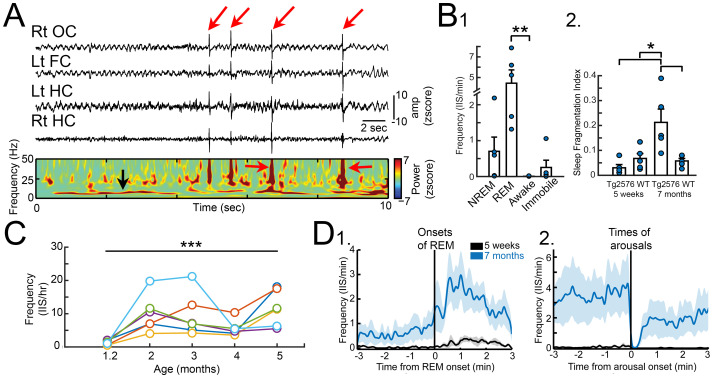 Figure 1
 Figure 2
 Figure 3
 Figure 4
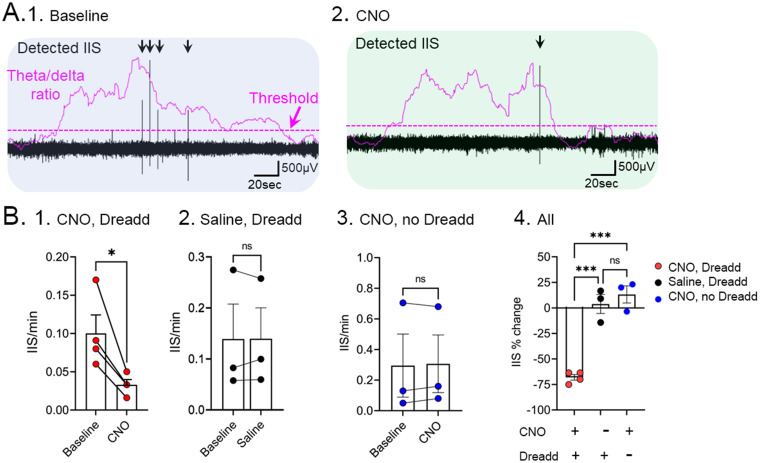 Figure 5
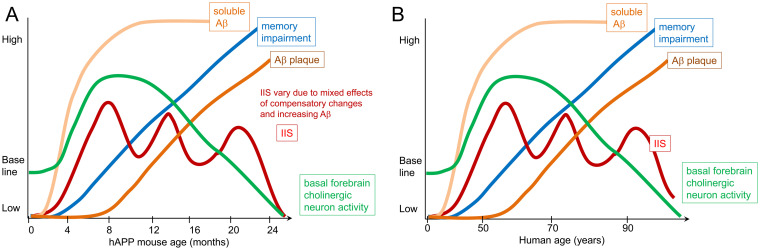 Figure 6
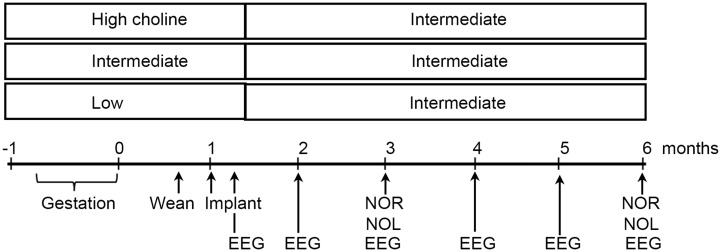 Figure 7
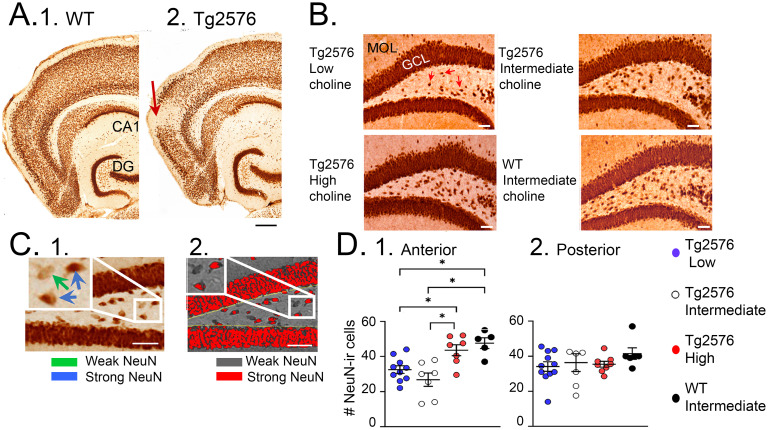 Figure 8
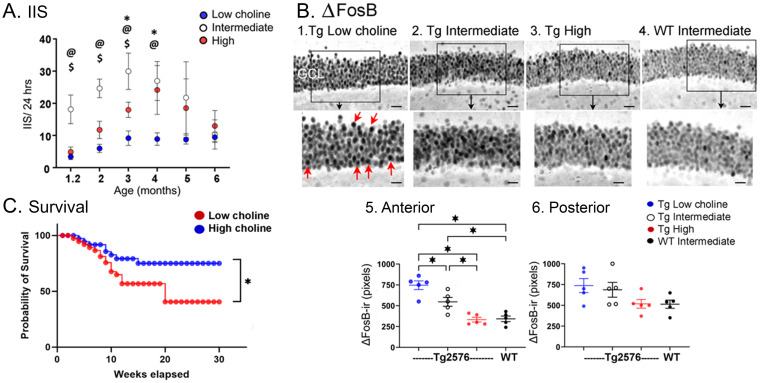 Figure 9
Peer Reviews
No public reviews on file for this paper yet. If you reviewed it on a platform where reviews are public (OpenReview, ICLR, NeurIPS, ICML), you can paste yours below so the community can read it here.
Videos
No videos yet. Explain this paper in a talk, walkthrough, or lecture? Add one.
Taxonomy
TopicsAlzheimer's disease research and treatments · Cholinesterase and Neurodegenerative Diseases · Neuroscience and Neuropharmacology Research