Efficacy and safety of tranexamic acid administration for subarachnoid hemorrhage: a systematic review and meta-analysis
Eriya Imai, Hiroshi Ito, Hiromu Okano, Akihiko Inoue, Takero Terayama, Hiroshi Okamoto, Toru Hifumi, Yoshihisa Fujimoto, Gaku Fujiwara, Yasuhiro Kuroda

TL;DR
This study reviews the use of tranexamic acid in subarachnoid hemorrhage patients and finds it may reduce rebleeding but does not significantly affect mortality.
Contribution
A systematic review and meta-analysis of TXA's efficacy and safety in SAH, providing updated evidence-based insights.
Findings
TXA probably reduces rebleeding in subarachnoid hemorrhage patients.
TXA likely does not reduce mortality or worsen neurological outcomes.
TXA may increase the risk of hydrocephalus but not thromboembolism or delayed cerebral ischemia.
Abstract
Aneurysmal subarachnoid hemorrhage (SAH) carries a high risk of early rebleeding and worsens prognosis. Tranexamic acid (TXA), an antifibrinolytic agent, can prevent rebleeding; however, its effects on mortality and neurological outcomes remain controversial. This review evaluated the efficacy and safety of TXA with SAH. MEDLINE, CENTRAL, EMBASE, ICTRP, and ClinicalTrials.gov were systematically searched for randomized controlled trials (RCTs) and non-randomized studies of interventions (NRSIs) to assess TXA use in SAH. Studies comparing TXA with controls with SAH were included. The primary outcome was the mortality; secondary outcomes included neurological outcomes, rebleeding, thromboembolism, delayed cerebral ischemia (DCI), hydrocephalus, and adverse events. The certainty of evidence was evaluated using the Grading of Recommendations, Assessment, Development, and Evaluations…
Genes, proteins, chemicals, diseases, species, mutations and cell lines named across the full text — each resolved to its canonical identifier and authoritative record.
Click any figure to enlarge with its caption.
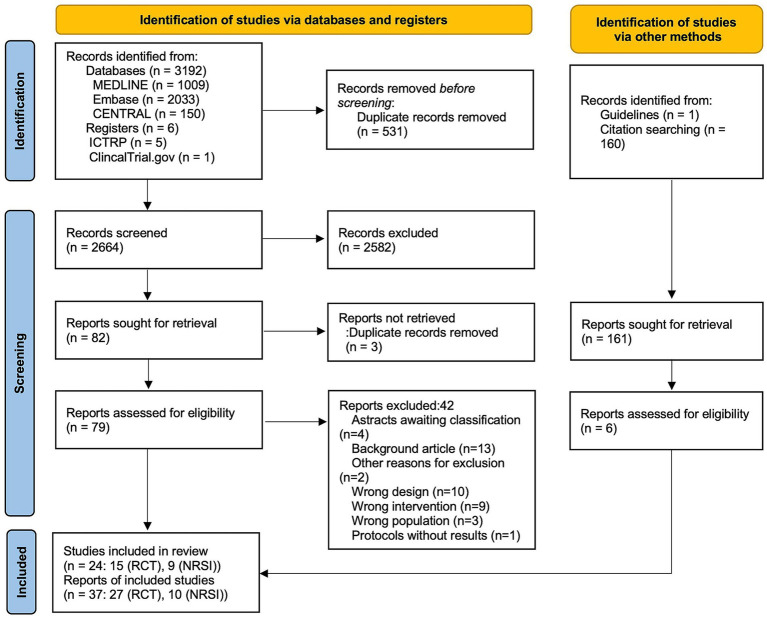 Figure 1
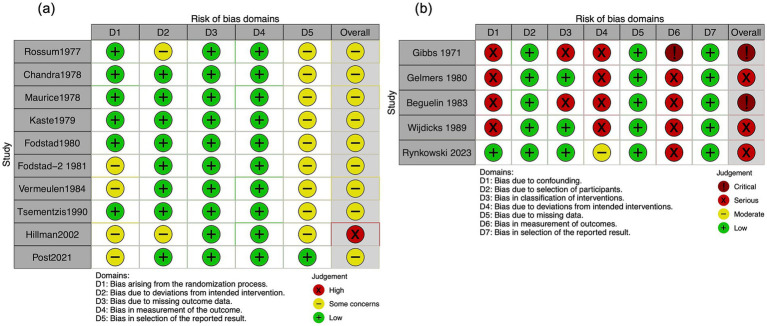 Figure 2
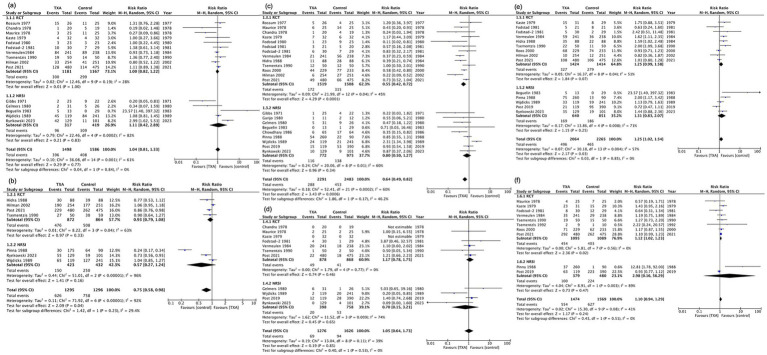 Figure 3
Peer Reviews
No public reviews on file for this paper yet. If you reviewed it on a platform where reviews are public (OpenReview, ICLR, NeurIPS, ICML), you can paste yours below so the community can read it here.
Videos
No videos yet. Explain this paper in a talk, walkthrough, or lecture? Add one.
Taxonomy
TopicsIntracranial Aneurysms: Treatment and Complications · Traumatic Brain Injury and Neurovascular Disturbances · Neurosurgical Procedures and Complications