Contrasting effects of reinforcer rate and magnitude on differential resistance to change in humans
Carlos Eduardo Costa, Karina Pinheiro da Silva, André Connor de Méo Luiz, André Marques Choinski, Kennon A. Lattal

TL;DR
This study explores how different types and amounts of rewards affect how people persist in a computer task when it becomes harder.
Contribution
The study reveals that reward rate, not reward size, influences persistence in human behavior under increased effort.
Findings
Reward magnitude did not affect resistance to change in the first two experiments.
Higher reinforcement rates led to greater resistance to change in the third experiment.
The results highlight the differing impacts of reward rate and magnitude on behavior.
Abstract
The effects of the magnitude of reinforcement on the resistance to change of humans engaged in a computer task were examined in two experiments. In each, responding was disrupted by increasing the force requirement of the required response. In Experiment 1, the participants were exposed to a multiple variable‐interval (VI) VI schedule of reinforcement. Responses meeting the VI requirement resulted in the addition of a monetary value to the computer screen. At the end of each session, the monetary value was exchanged for real money. In Experiment 2, snacks or money provided at the time earned were the reinforcers. There was no differential resistance to change as a function of reinforcer magnitude in either experiment. These findings led to Experiment 3, in which the participants from Experiment 2 were exposed to schedules arranging different reinforcement rates using as reinforcers…
Genes, proteins, chemicals, diseases, species, mutations and cell lines named across the full text — each resolved to its canonical identifier and authoritative record.
Click any figure to enlarge with its caption.
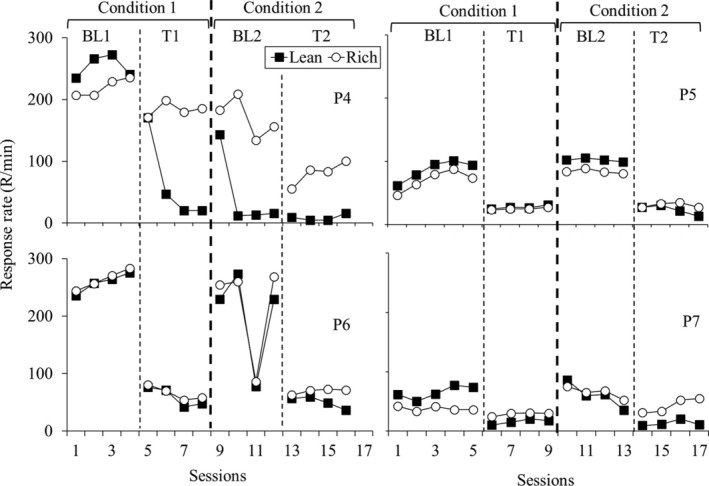 Figure 1
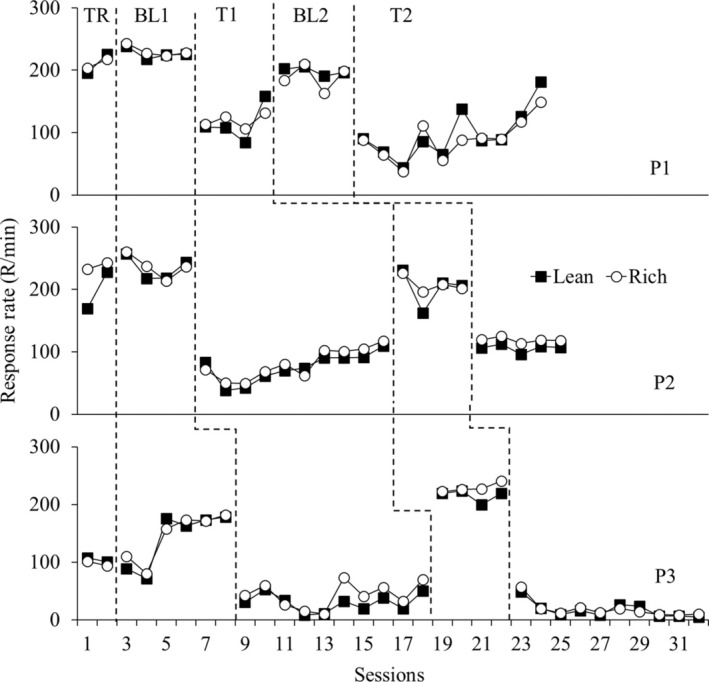 Figure 2
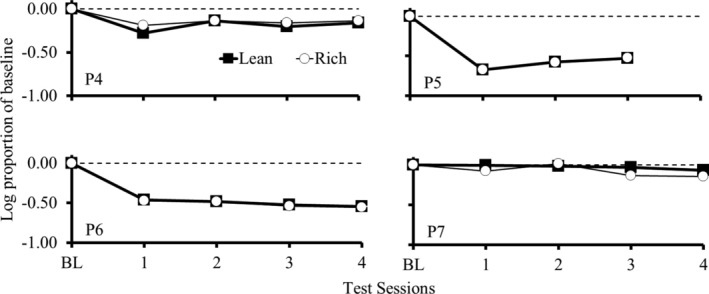 Figure 3
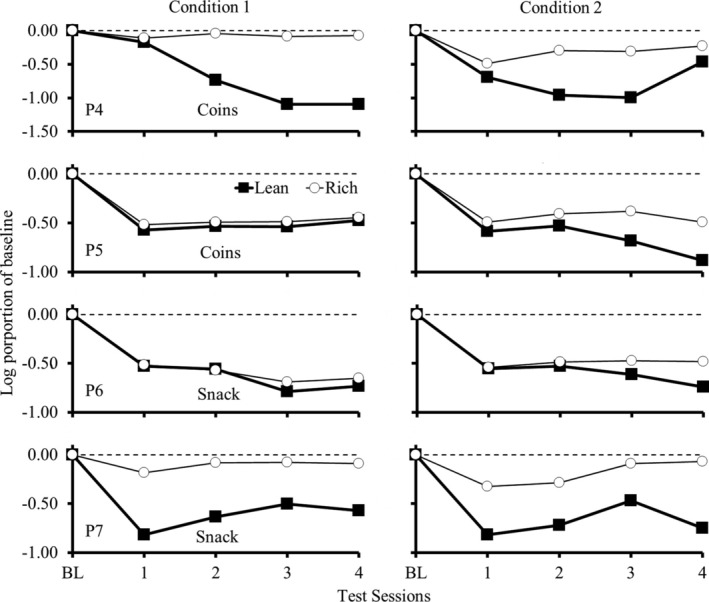 Figure 4
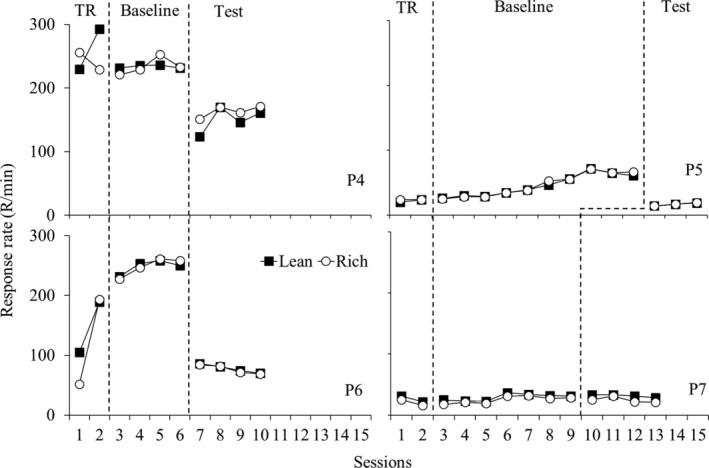 Figure 5
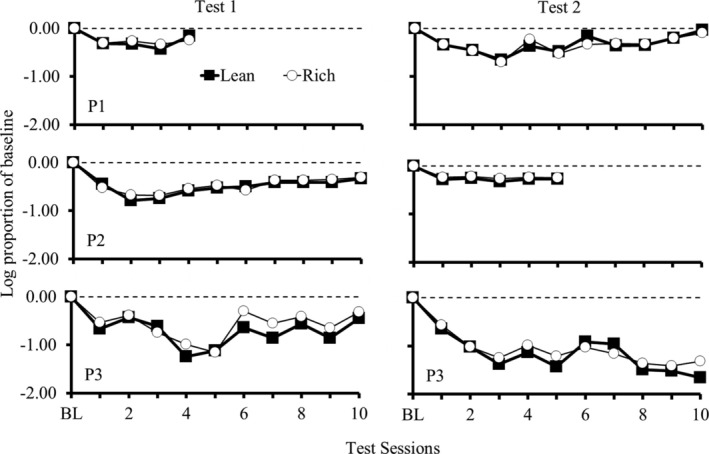 Figure 6
Peer Reviews
No public reviews on file for this paper yet. If you reviewed it on a platform where reviews are public (OpenReview, ICLR, NeurIPS, ICML), you can paste yours below so the community can read it here.
Videos
No videos yet. Explain this paper in a talk, walkthrough, or lecture? Add one.
Taxonomy
TopicsBehavioral and Psychological Studies · Autism Spectrum Disorder Research