What do users in a polycystic ovary syndrome (PCOS) forum think about the treatments they tried: Analysing treatment sentiment using machine learning
Rebecca H. K. Emanuel, Paul D. Docherty, Helen Lunt, Rebecca E. Campbell

TL;DR
This study uses machine learning to analyze PCOS patients' forum discussions, revealing that lifestyle changes and supplements are generally viewed positively, while contraceptives often receive negative feedback.
Contribution
The paper introduces a novel approach to derive patient-reported treatment sentiments from online forums using machine learning, offering insights into real-world treatment perceptions.
Findings
Lifestyle changes and supplements like inositol are associated with positive sentiment and improved mental health outcomes.
Combined oral contraceptives are frequently linked to negative sentiments, particularly for depression, anxiety, and fatigue.
Intermittent fasting and unspecified dieting are perceived as effective for PCOS-related weight loss.
Abstract
Polycystic ovary syndrome (PCOS) is a heterogenous condition that is estimated to effect up to 21% of reproductive aged people with ovaries. In previous work, a dataset of PCOS features was derived from approximately 100,000 PCOS subreddit users via machine learning. In this study, an exploration of treatment response within the PCOS subreddit was undertaken with the derived dataset. The treatment or symptom features in the dataset had sentiment labels indicating when a treatment was perceived to improve or worsen a condition or symptom. When different features were mentioned within two sentences of each other without conflicting sentiment, it could be assumed that they were related. This assumption allowed for a broad analysis of the perceived effect of popular treatments on the most frequently mentioned symptoms. In general, lifestyle changes and supplements were the most positively…
Genes, proteins, chemicals, diseases, species, mutations and cell lines named across the full text — each resolved to its canonical identifier and authoritative record.
Click any figure to enlarge with its caption.
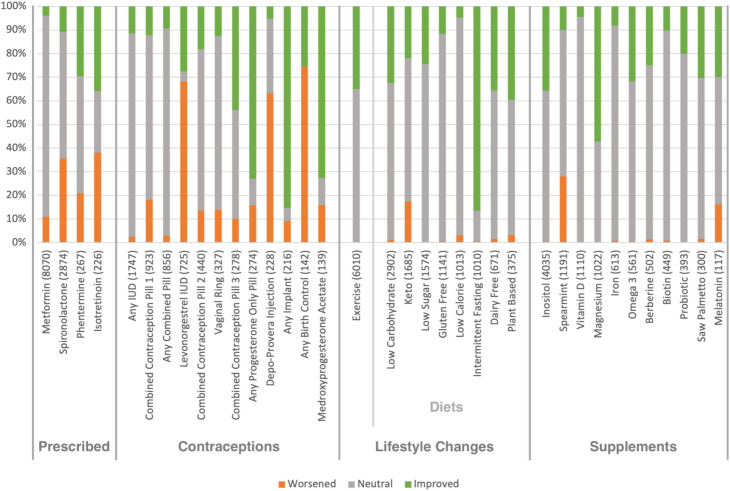 Figure 1
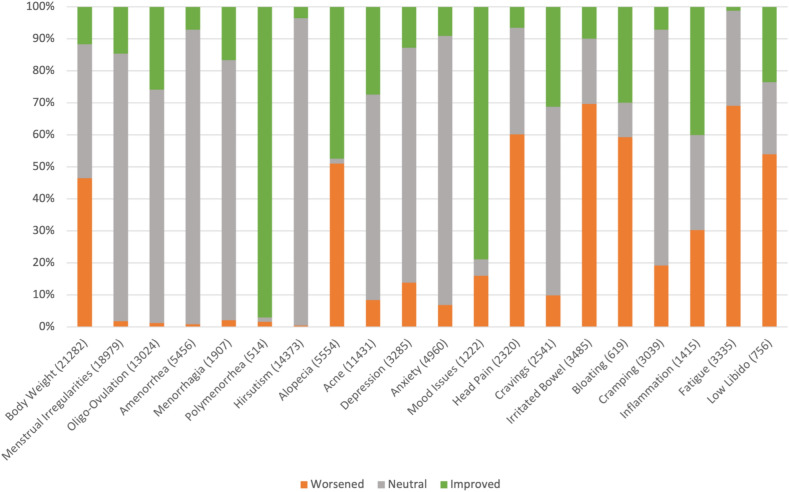 Figure 2
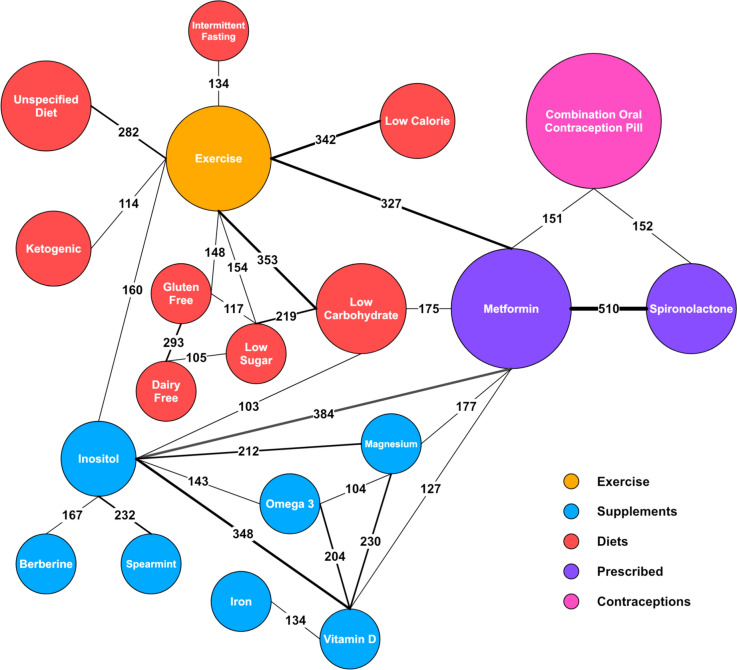 Figure 3
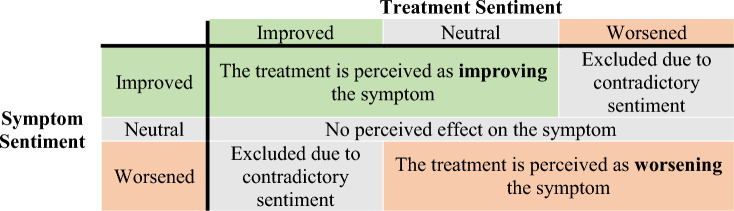 Figure 4
Peer Reviews
No public reviews on file for this paper yet. If you reviewed it on a platform where reviews are public (OpenReview, ICLR, NeurIPS, ICML), you can paste yours below so the community can read it here.
Videos
No videos yet. Explain this paper in a talk, walkthrough, or lecture? Add one.
Taxonomy
TopicsOvarian function and disorders · Sexual function and dysfunction studies · Reproductive Health and Technologies