Vibrio cholerae can Recycle Fatty Acids Via an Acyl-Acyl Carrier Protein Synthetase
Amanda J. Platt, Amy T. Ma, Joris Beld

TL;DR
This paper shows that Vibrio cholerae can use an enzyme called AasS to directly use fatty acids from the environment, bypassing the usual fatty acid synthesis process.
Contribution
The study identifies and characterizes AasS in Vibrio cholerae, revealing a novel mechanism for fatty acid utilization that bypasses β-oxidation.
Findings
AasS in Vibrio cholerae can load diverse fatty acids onto the FAS acyl carrier protein and coenzyme A.
Fatty acid supplementation rescues growth inhibition caused by FAS-targeted antibiotics in wild-type V. cholerae.
An AasS deletion strain can still grow when supplemented with cerulenin and fatty acids, showing alternative utilization pathways.
Abstract
Fatty acids are crucial building blocks for membranes, co-factors, and secondary metabolites, and they are produced by the fatty acid synthase (FAS). Several antibiotics target the bacterial FAS but some bacteria can circumvent FAS inhibition by import and utilization of exogenous fatty acids. The acyl-acyl carrier protein synthetase (AasS) facilitates the direct utilization of fatty acids without the need for breakdown through β-oxidation. Using a combination of unnatural fatty acid supplementation and mass spectrometry we identify here an AasS of Vibrio cholerae. In vitro characterization shows that the enzyme can load diverse fatty acids on the FAS acyl carrier protein as well as on coenzyme A. We show that three different FAS-targeted antibiotics can arrest growth of wild type V. cholerae and that fatty acid supplementation can rescue this inhibition. In an AasS deletion strain,…
Genes, proteins, chemicals, diseases, species, mutations and cell lines named across the full text — each resolved to its canonical identifier and authoritative record.
Click any figure to enlarge with its caption.
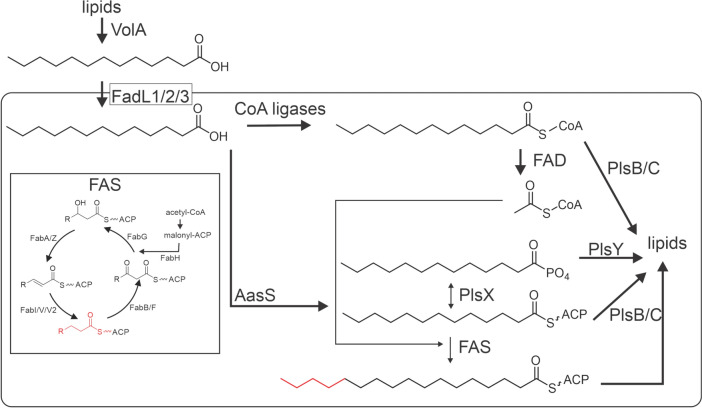 Figure 1
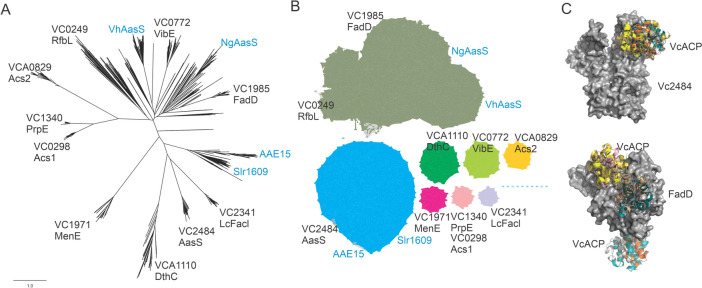 Figure 2
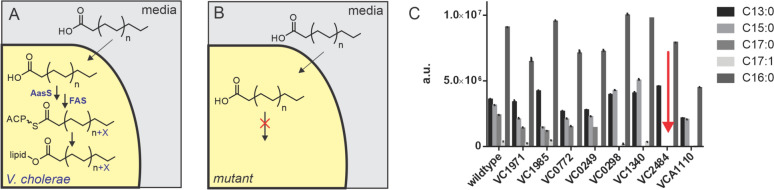 Figure 3
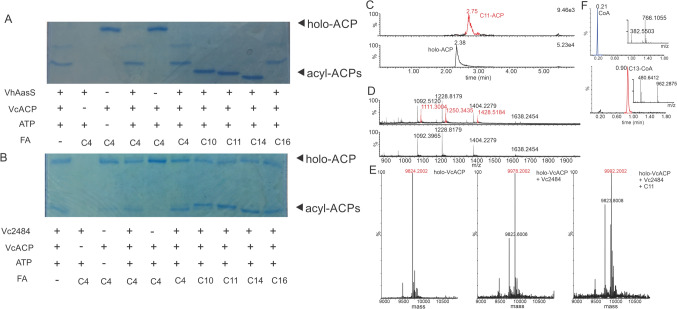 Figure 4
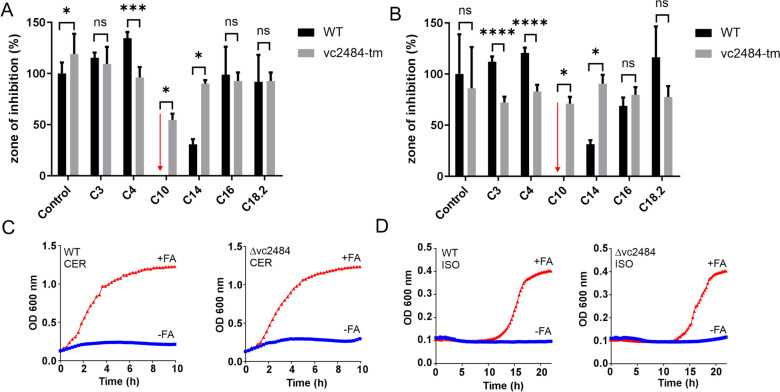 Figure 5
Peer Reviews
No public reviews on file for this paper yet. If you reviewed it on a platform where reviews are public (OpenReview, ICLR, NeurIPS, ICML), you can paste yours below so the community can read it here.
Videos
No videos yet. Explain this paper in a talk, walkthrough, or lecture? Add one.
Taxonomy
TopicsVibrio bacteria research studies · Metabolomics and Mass Spectrometry Studies · Antibiotic Resistance in Bacteria