Tumoral pSMAD2 as a prognostic biomarker in early-stage breast cancer: insights from the randomized SweBCG91RT trial
Axel Stenmark Tullberg, Viktoria Thurfjell, Anikó Kovács, Patrick Micke, Aristidis Moustakas, Fredrika Killander, Emma Niméus, Erik Holmberg, Per Karlsson, Carina Strell

TL;DR
This study shows that high levels of pSMAD2, a marker of TGF-β signaling, are linked to better outcomes in early-stage breast cancer, suggesting a tumor-suppressive role.
Contribution
The study identifies pSMAD2 as a potential prognostic biomarker in early-stage breast cancer, revealing its association with recurrence risk and tumor-infiltrating lymphocytes in Luminal tumors.
Findings
Medium pSMAD2 levels were associated with higher ipsilateral breast tumor recurrence risk compared to high pSMAD2 levels.
In Luminal tumors, higher pSMAD2 levels were inversely correlated with tumor-infiltrating lymphocytes.
Radiotherapy benefit was consistent across all pSMAD2 groups.
Abstract
The TGF-β pathway can influence breast cancer progression and therapy efficacy, exhibiting both pro- and anti-tumoral effects. This study examined the impact of active TGF-β signaling on recurrence and radiotherapy (RT) benefit in early-stage breast cancer, using nuclear phosphorylated Smad2 (pSMAD2) as a marker for pathway activation. Tissue-microarrays from 1178 stage I-IIA breast cancer patients in the SweBCG91RT trial (randomized to breast-conserving surgery with or without RT) were analyzed. pSMAD2 immunohistochemistry was scored as the mean percentage of tumor cells with nuclear staining. Recurrence risk and RT benefit were evaluated. pSMAD2 scores were heavily skewed, with 45% of tumors demonstrating high staining (≥ 80% tumor cells), 38% medium (21–79%), and 17% low (≤ 20%). Low pSMAD2 tumors were associated with higher grade and larger size but not with subtype. Medium pSMAD2…
Genes, proteins, chemicals, diseases, species, mutations and cell lines named across the full text — each resolved to its canonical identifier and authoritative record.
Click any figure to enlarge with its caption.
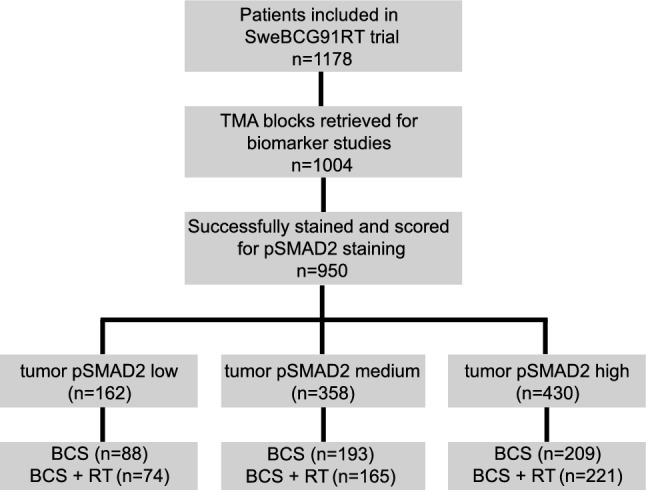 Figure 1
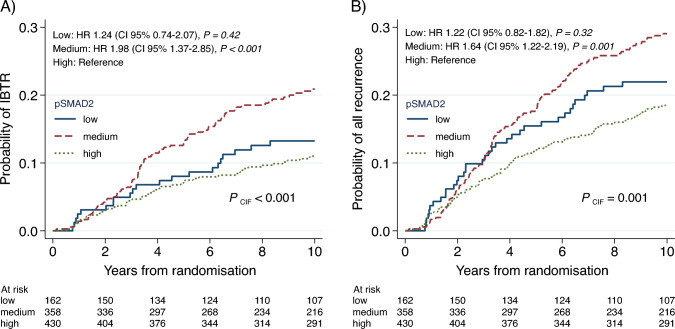 Figure 2
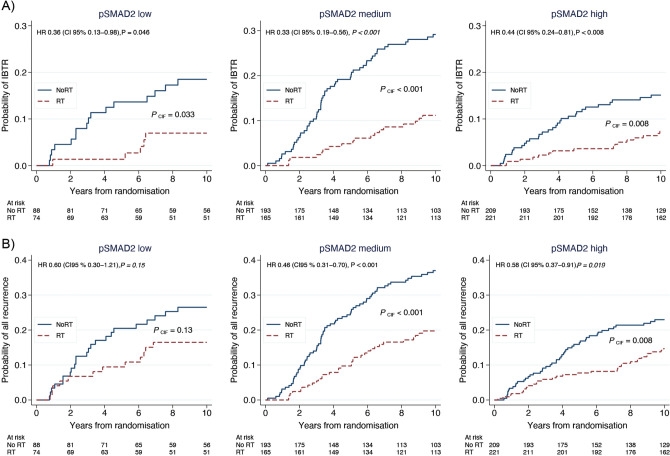 Figure 3
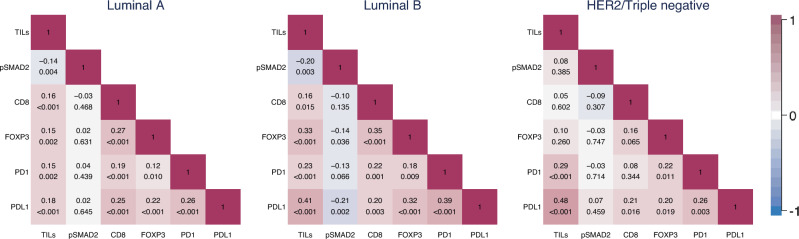 Figure 4
Peer Reviews
No public reviews on file for this paper yet. If you reviewed it on a platform where reviews are public (OpenReview, ICLR, NeurIPS, ICML), you can paste yours below so the community can read it here.
Videos
No videos yet. Explain this paper in a talk, walkthrough, or lecture? Add one.
Taxonomy
TopicsTGF-β signaling in diseases · Genetic factors in colorectal cancer · Ubiquitin and proteasome pathways