Beyond serology: saccharide profiling enables identification of antigenically similar Leptospira and prompts re-evaluation of bacterial lipopolysaccharide evolution
Aleksandra J. Lewicka, Jan J. Lyczakowski, Laura Pardyak, Klaudia Dubniewicz, Dariusz Latowski, Zbigniew Arent

TL;DR
A new method using sugar profiling of bacterial structures helps identify Leptospira strains and reveals insights into their evolution.
Contribution
A novel, non-animal-based method for identifying Leptospira serovars through LPS sugar profiling is introduced.
Findings
LPS sugar profiling can distinguish antigenically similar Leptospira serovars without animal-derived reagents.
LPS structures of Leptospira interrogans and Leptospira borgpetersenii from the same serovar Hardjo differ despite similarities.
Phylogenetic analysis identifies glycosyltransferases linked to LPS structure evolution and potential horizontal gene transfer.
Abstract
Leptospirosis is a zoonotic infectious disease of growing importance in both human and veterinary medicine. Gram-negative spirochetes of Leptospira are traditionally classified into serovars based on their antigenic identity, which must be ascertained to design effective treatment procedures for humans and appropriate vaccination strategies in pets and livestock. Unfortunately, identifying Leptospira serovars is challenging and currently requires access to a wide panel of reference strains, animal-derived antisera, or monoclonal antibodies. Here, we describe a new method for the identification of Leptospira serovars that is based on monosaccharide composition analysis of the polysaccharide part of bacterial lipopolysaccharide (LPS) structures. Our approach requires no animal sacrifice and can be implemented in any laboratory equipped for chromatographic analysis. An LPS sugar…
Genes, proteins, chemicals, diseases, species, mutations and cell lines named across the full text — each resolved to its canonical identifier and authoritative record.
Click any figure to enlarge with its caption.
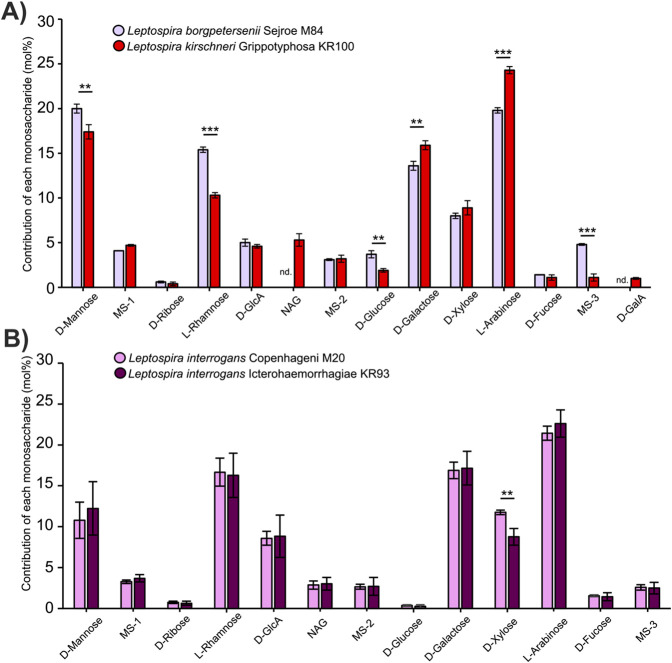 Figure 1
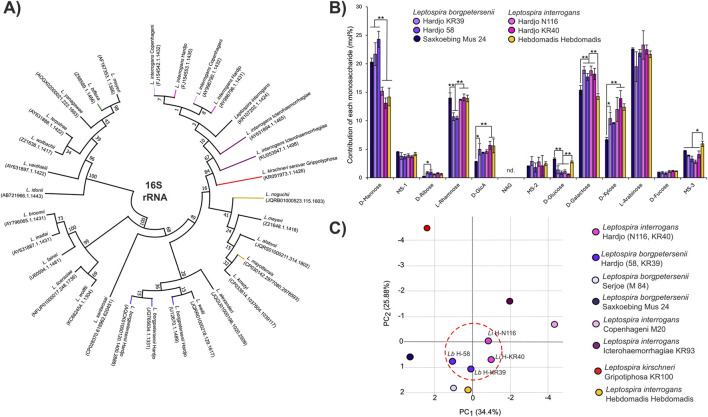 Figure 2
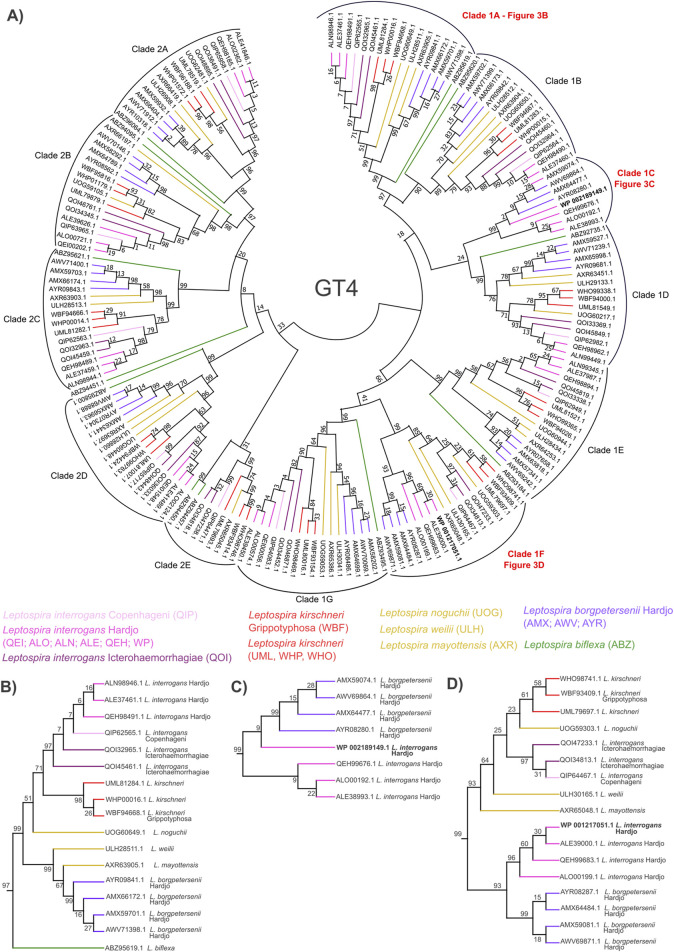 Figure 3
Peer Reviews
No public reviews on file for this paper yet. If you reviewed it on a platform where reviews are public (OpenReview, ICLR, NeurIPS, ICML), you can paste yours below so the community can read it here.
Videos
No videos yet. Explain this paper in a talk, walkthrough, or lecture? Add one.
Taxonomy
TopicsLeptospirosis research and findings · Mycobacterium research and diagnosis · Veterinary medicine and infectious diseases